Strategic Sourcing Guide 07: How to Customize Paper Cups and Bowls with Premium Logo Printing

Quick Summary: Bioleader® provides factory-direct custom printing for paper cups and paper bowls, including logo branding, OEM/ODM support, color printing, material matching, and structured order handling. Based on Bioleader®’s internal project summary, about 70% of custom inquiries begin with logo visibility or brand presentation requirements, while around 75% of repeat orders stay within the 1–4 color range for better cost control and production consistency. Bioleader® also supports a clear customization process from product selection and artwork submission to sample confirmation, mass production, and export delivery.
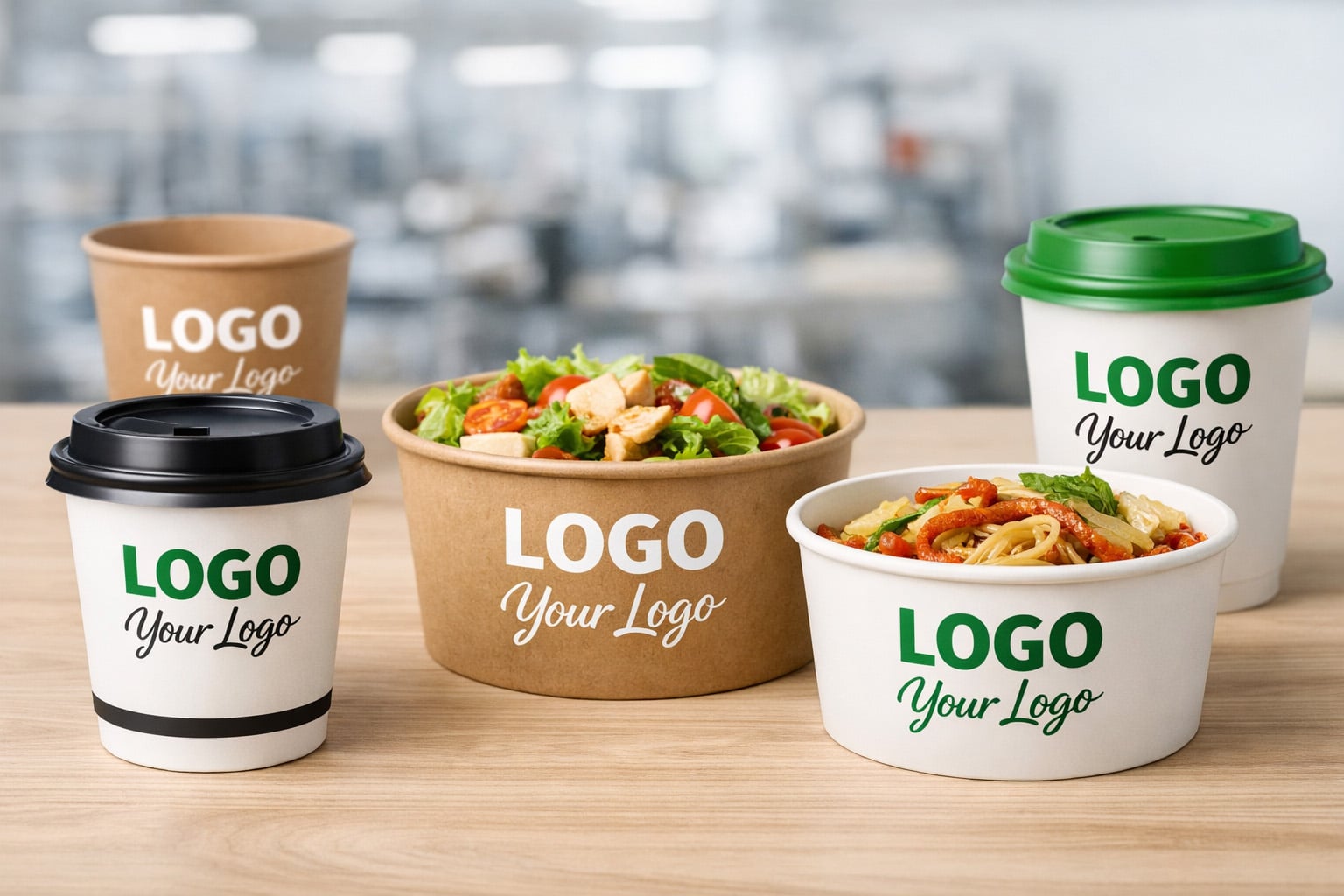
Custom printed paper cups and bowls with logo branding for OEM food packaging
Custom branded paper cups and bowls with logo printing for premium takeaway and foodservice packaging.


In 2026, custom-printed paper cups and paper bowls are no longer treated as simple disposable items. For cafés, takeaway chains, salad brands, dessert stores, and foodservice distributors, they have become part of the brand experience itself. A printed cup or bowl is often the first thing the customer sees, holds, and remembers. That is why buyers now pay much closer attention not only to price, but also to print quality, logo clarity, coating structure, and the supplier’s ability to deliver the same result again in repeat orders.
Bioleader® approaches this as a manufacturing service rather than a simple printing add-on. We provide custom printing for paper cups and paper bowls with logo branding, OEM/ODM support, and coordinated packaging development across multiple sizes and product types. Based on Bioleader®’s internal review of recent custom projects, about 70% of buyers first discuss logo effect, visual positioning, or brand presentation before moving into final price negotiation. This reflects a clear market shift: printed packaging is now expected to support both product function and brand value.
For buyers, the real difference between suppliers is not whether a logo can be printed at all. The real difference is whether the project is handled in a controlled way from the beginning: correct item selection, suitable paper structure, realistic color planning, artwork review, sample confirmation, mass production, and export delivery. Bioleader® builds its custom paper cup and paper bowl service around this process so that branding decisions can be translated into products that are practical for real commercial use, not just attractive in a mockup.

What can Bioleader® customize for paper cups and paper bowls?

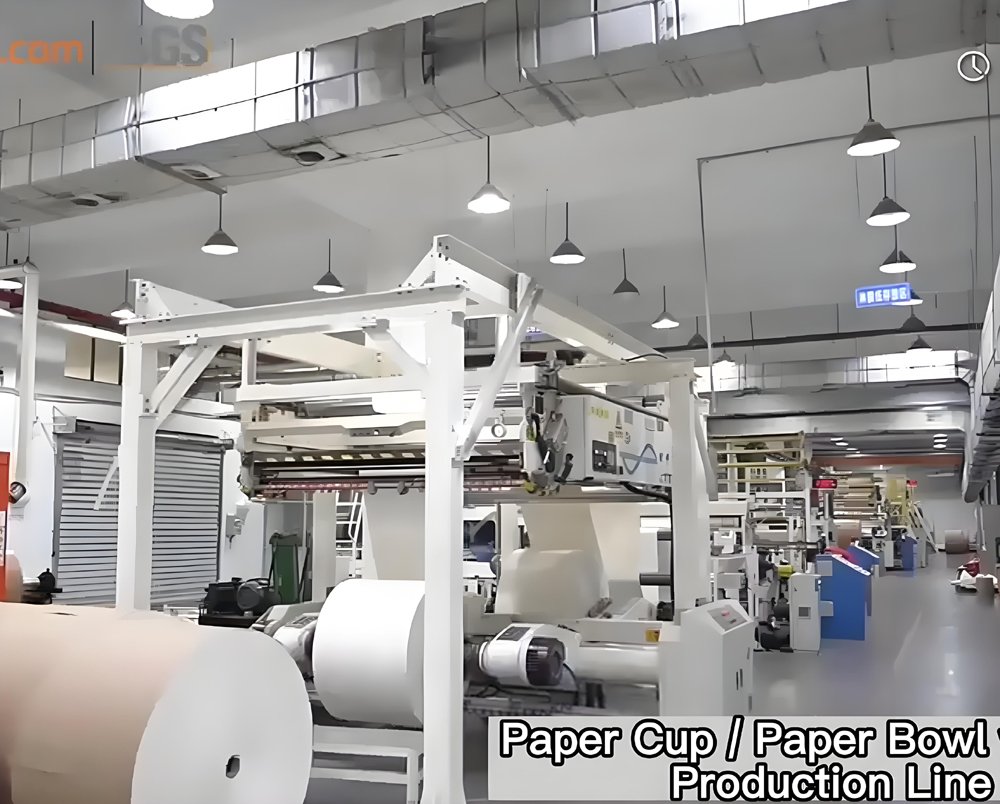
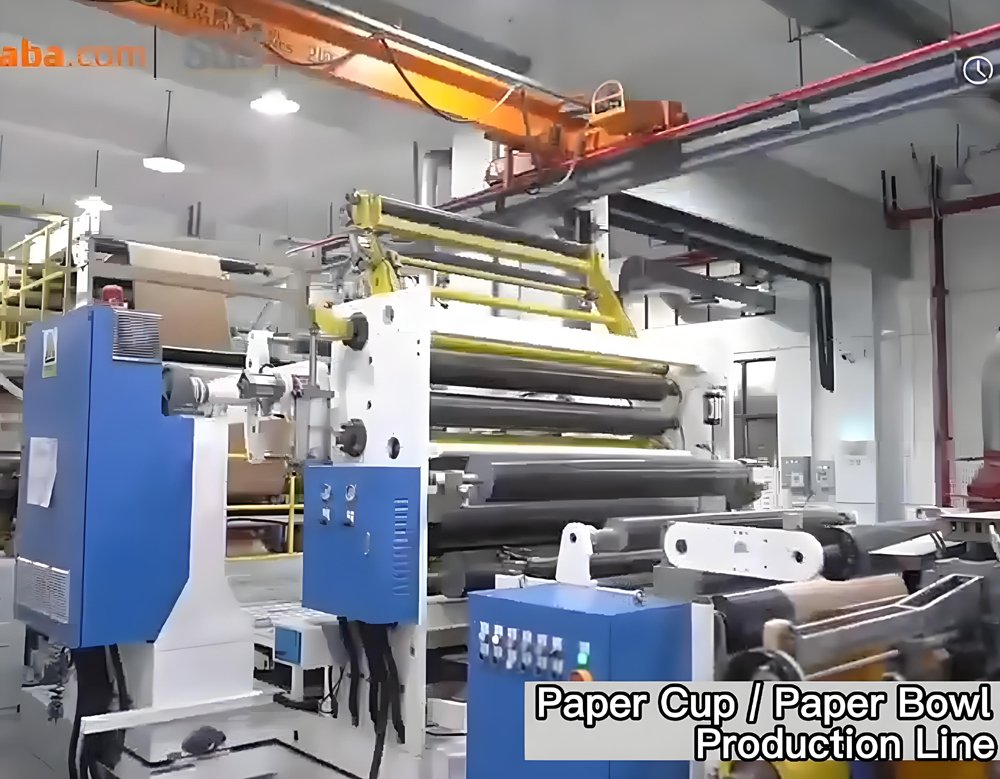
Paper Bowls Produce Process - Aqueous Coating and PLA lining

Aqueous Coating & PLA Lining

How to Customize Paper Cups and Bowls

Customization Process

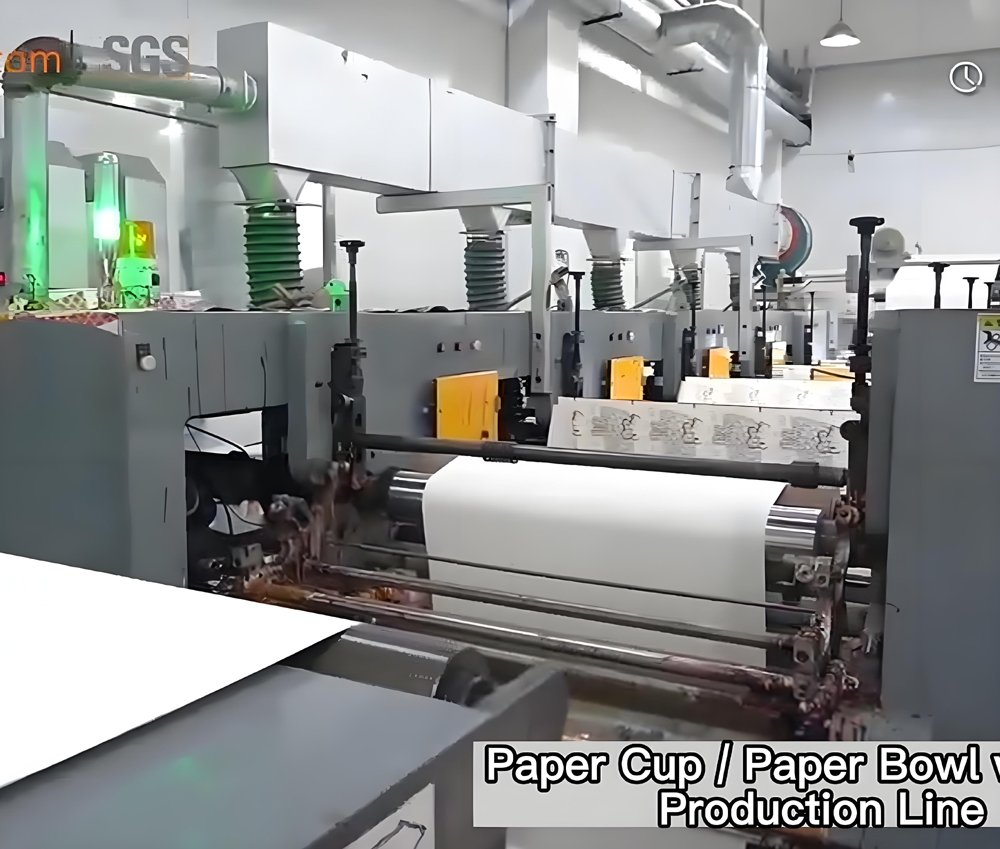
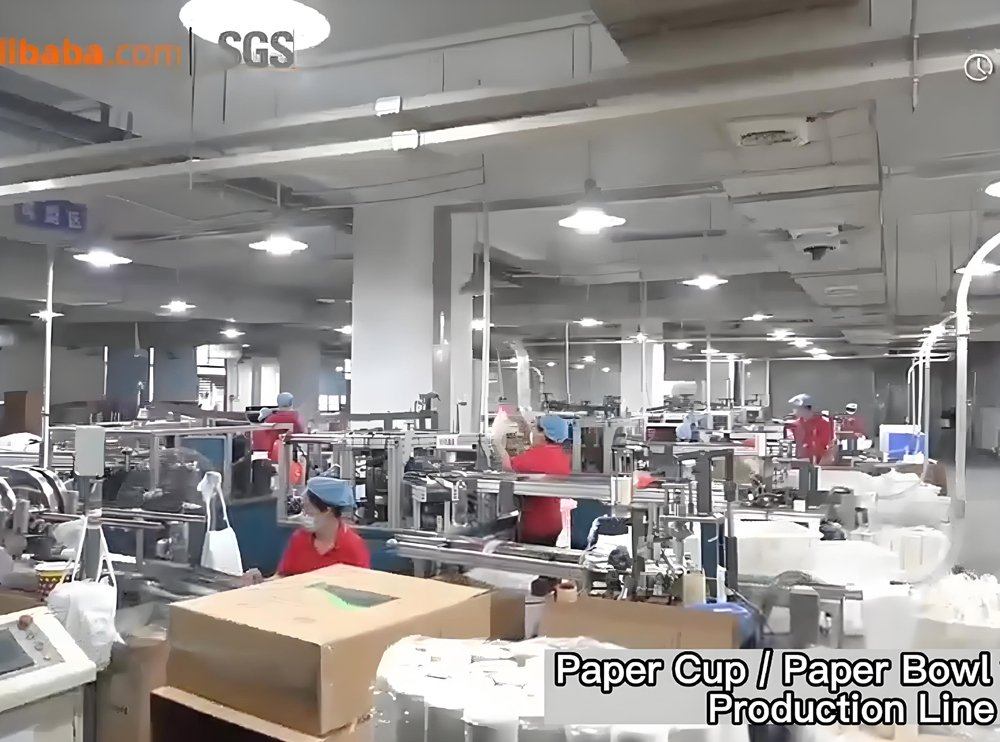
Paper Cup & Bowls Produce Process - Printing

High-Speed Printing

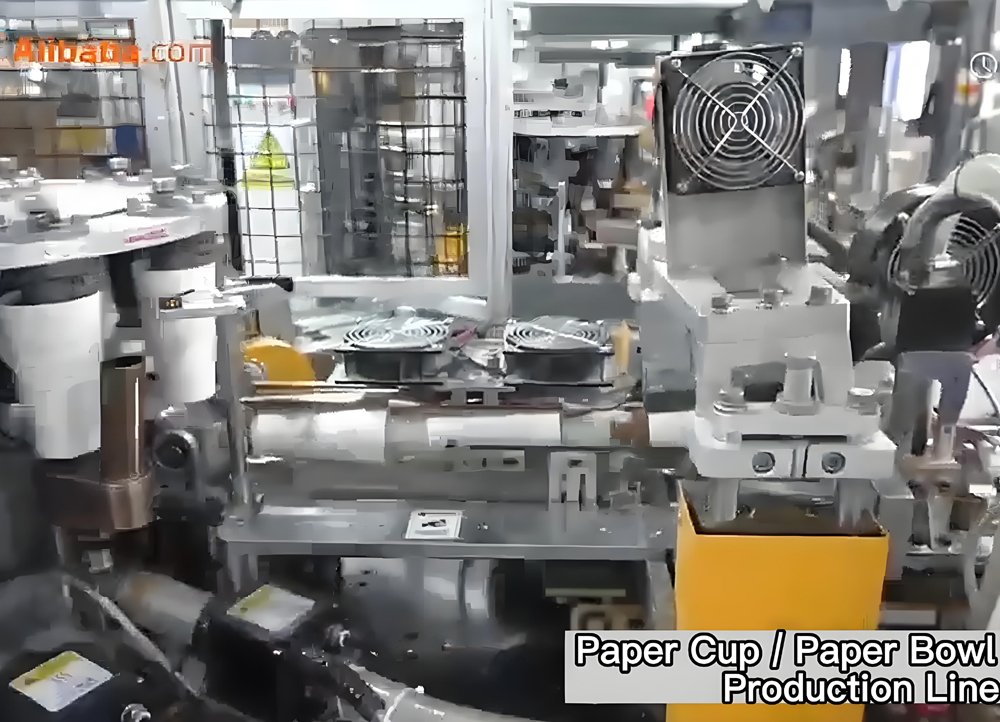
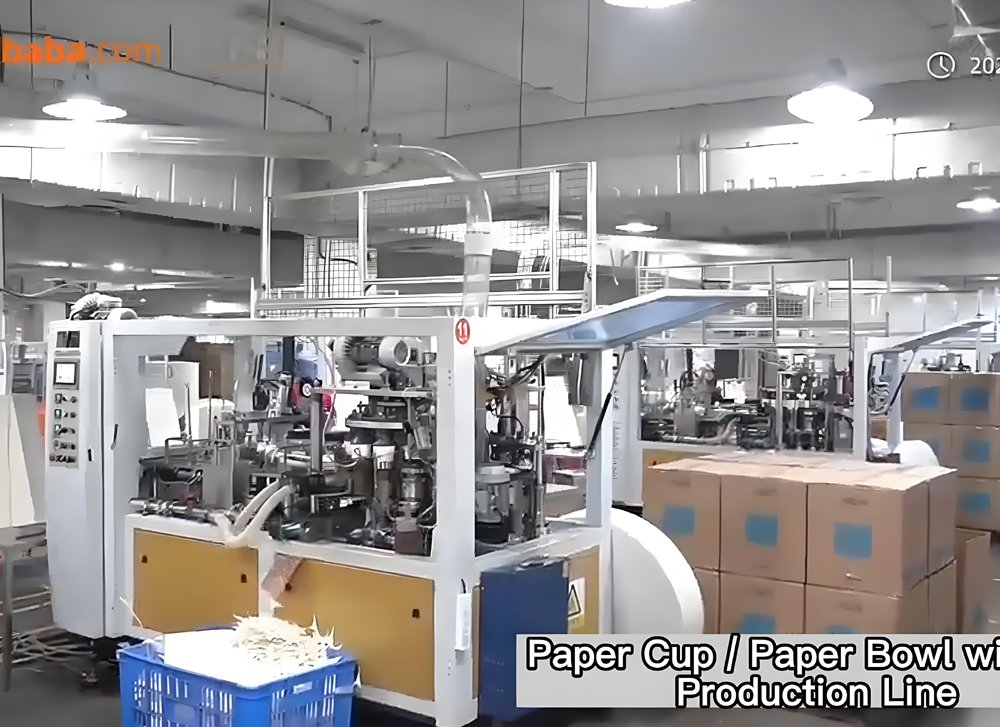
Automated Molding Line

Automated Molding

Custom logo printing across paper cups, soup bowls, salad bowls, and matching paper packaging

Bioleader®’s custom printing service covers more than one single cup or bowl format. We support branded paper cups, paper soup bowls, paper salad bowls, ice cream cups, and related paper food packaging so that buyers can build a more consistent packaging line instead of developing each item separately. Based on Bioleader®’s internal project summary, about 68% of serious branded inquiries involve more than one packaging SKU, which means most commercial customers are planning a packaging system rather than buying one printed item in isolation.
This matters especially for brands that operate across multiple menu categories or sales channels. A coffee chain may need hot drink cups, cold cups, soup bowls, and takeaway bowls to follow the same visual language. A distributor may need one brand identity applied across several sizes for different customers or retail segments. Bioleader® supports this kind of coordinated customization so that the final packaging line feels unified in the market instead of looking pieced together from different sources.

OEM/ODM customization with a clear and practical workflow

Custom printing creates value only when the workflow is clear. Bioleader® handles paper cup and paper bowl customization through a defined order process: first confirm the item and size, then confirm the order details, then submit AI, PDF, CDR, or a clear logo file, the layout is adjusted and reviewed, samples can be arranged if needed, and then the project moves into mass production and export delivery. This process reduces avoidable errors before production begins and gives buyers a more predictable project timeline.
In practice, artwork files often need adjustment before they are ready for production. Based on Bioleader®’s internal review of recent paper cup and paper bowl orders, about 2 out of 3 first-round artwork files require at least one correction, most commonly involving logo proportion, layout density, printable area fit, or color expectations on the chosen paper. That is why technical review before production is an important part of the service. It helps avoid delays, reduces rework, and improves the final appearance of the packaging.

Material and coating matching as part of the customization service

A custom paper cup or paper bowl project is never only about graphics. The final result is influenced by the paper base, the coating structure, the intended food application, and the visual effect expected by the buyer. Bioleader® supports print planning across white paper, kraft paper, PE-lined paper, PLA-lined paper, and selected aqueous-coated directions where suitable. This is important because a logo that looks clean on white paper may not deliver the same effect on kraft paper, and a coating choice that works well for one application may not suit another product or market.
For buyers, this means printing should be discussed together with material selection, not after it. A premium-looking salad bowl, a soup bowl for hot filling, and a coffee cup for takeaway all place different demands on coating, print presentation, and overall packaging balance. Bioleader® helps customers evaluate these factors together so that the finished packaging is not only branded, but also more coherent in structure, appearance, and end use.
Paper Cup & Bowls Produce Process - Rimming and Curling

Rimming & Curling

Paper Cup & Bowls Produce Process - Forming

Final Forming

Paper Cup & Bowls Produce Process - Die-Cut

Precision Die-Cutting

How to Customize Paper Cups and Bowls

Customization & Finishing

Up to 8-color capability, with 1–4 colors as the mainstream commercial choice

Bioleader® supports custom print projects from simple one-color logos to more advanced multi-color branding, with up to 8-color printing capability for suitable jobs. At the same time, most commercial programs do not need that level of complexity. Based on Bioleader®’s internal quotation and reorder summary, about 75% of repeat custom orders stay within the 1–4 color range. This range usually gives the best balance between brand visibility, production stability, cost control, and repeat-order consistency.
For most paper cups and paper bowls, the key question is not how many colors can be added, but how clearly and consistently the logo can be reproduced on the chosen substrate over time. In many practical cases, a well-controlled 2-color or 4-color layout performs better than an overcomplicated design that is harder to stabilize in mass production. Bioleader® therefore recommends color planning based on actual use, brand identity, and reorder needs rather than on visual complexity alone.

Production control that improves print clarity, consistency, and delivery reliability

Print quality depends on more than the artwork file. It also depends on the full production sequence behind it, including paper selection, coating preparation, printing, forming, curling, inspection, and final quality control. Bioleader® positions its production setup around the results buyers care about most: clearer logo presentation, more stable product quality, better repeat-order consistency, and stronger support for bulk branded orders. That is the practical value of a factory-led customization service.
From a buyer’s perspective, this kind of control is often more important than a slightly lower quoted unit price. Based on Bioleader®’s internal custom-print workflow average, more than 60% of artwork-related issues are resolved before production when layout fit, structure, and print feasibility are reviewed early. In commercial terms, that means faster approval, less avoidable waste, and a better chance of keeping the final packaging close to the original brand expectation.
Paper Cup & Bowls Produce Process - Testing

Rigorous Quality Testing

Paper Cup & Bowls Produce Process - Packaging

Automated Packaging

Paper Food Packaging Finished Products

Finished Food Packaging

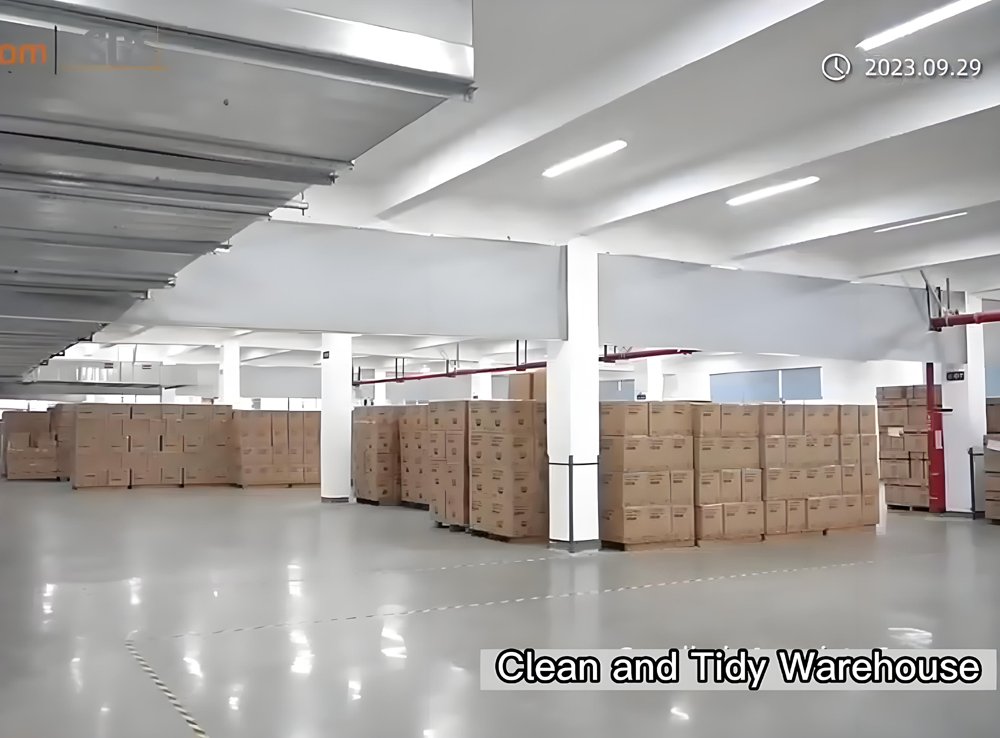
Paper Cup & Bowls Produce Process - Clean Stock

Hygienic Warehouse Storage

Why this matters in real purchasing decisions

When buyers source custom-printed paper cups or paper bowls, they are not simply buying ink on paper. They are buying a complete process: product matching, printable area planning, material selection, artwork handling, sample review, production scheduling, and shipment execution. Bioleader® builds its service around that full process, which is why our custom printing offer is best understood as a manufacturing solution for branded paper food packaging rather than as a basic print option.

How to make your logo look premium on paper cups and bowls

Disposable paper cups in 4–20oz sizes arranged from small to large, suitable for customized logo wholesale orders.
A clean display of 4–20oz disposable paper cups arranged by size for wholesale branding and foodservice operations.

Start with the right visual priority, not with more design elements

A premium-looking paper cup or paper bowl does not begin with more graphics. It begins with a clearer visual priority. In real takeaway use, customers usually notice the logo first, the color block second, and all small text last. That is why Bioleader® generally advises buyers to build the layout around one strong primary logo area instead of filling the whole cup wall or bowl body with slogans, icons, and excessive decoration. Based on Bioleader®’s internal artwork review summary, about 64% of first-round custom designs look more premium after simplification, not after adding more elements.
For buyers, this means the most effective design is often not the busiest one. A logo that is large enough, clean enough, and placed in the correct viewing area will usually perform better than a complicated layout with weak recognition. Bioleader® helps customers adjust logo scale, text density, and layout hierarchy before production so that the final paper cup or paper bowl looks more branded in real use, not just more crowded on screen.

Choose white paper or kraft paper based on the brand effect you actually want
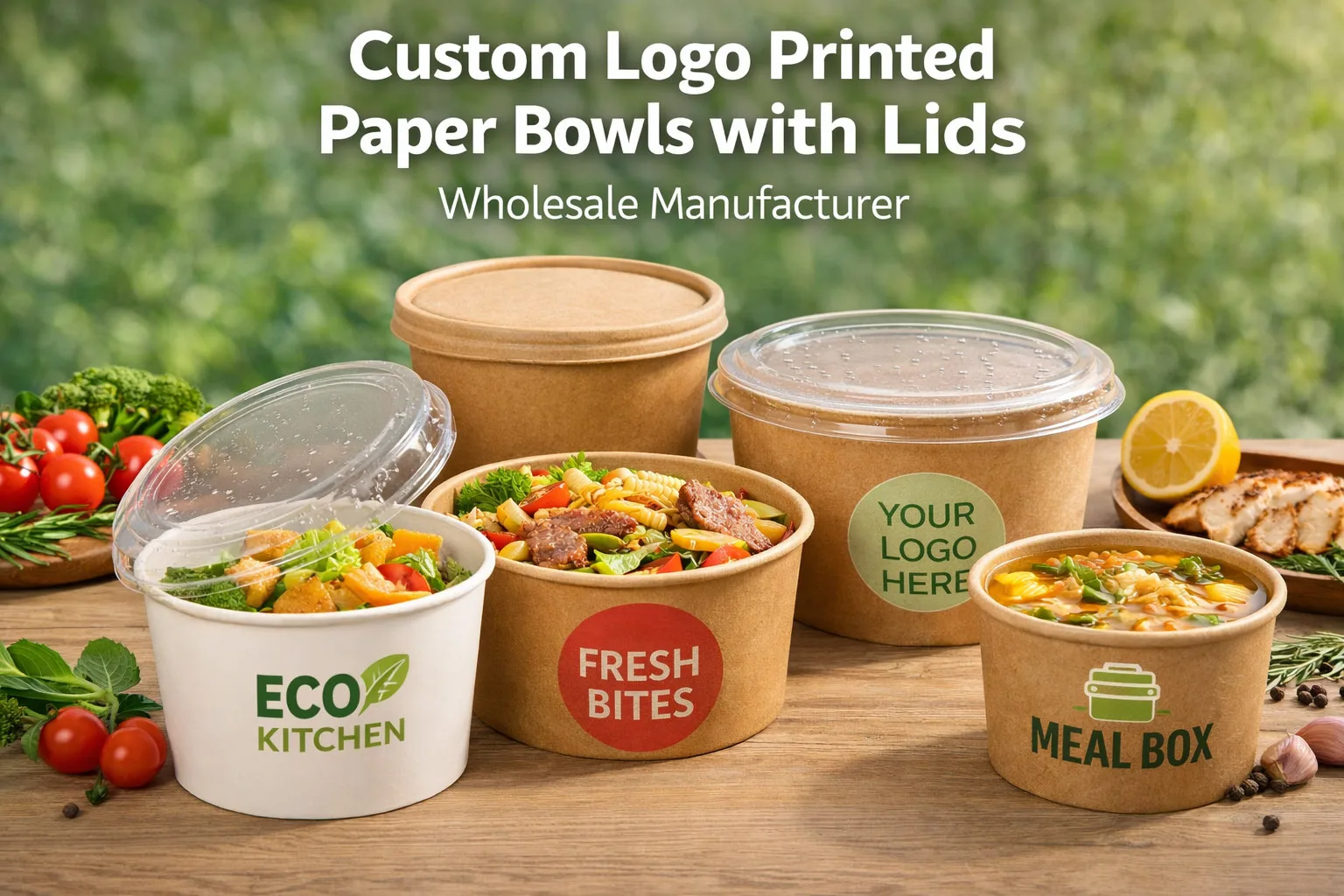
Customized Paper Bowls with Lids | Logo Printed Bowls | Bioleader® Manufacturer

Paper color changes logo presentation more than many buyers expect. White paper usually gives a sharper and cleaner print effect, especially for high-contrast logos, bright color blocks, and modern retail-style branding. Kraft paper creates a warmer, more natural look, but it also affects how light tones, low-saturation colors, and fine contrast appear. Based on Bioleader®’s internal sample adjustment summary, about 52% of kraft-based custom projects require at least one color correction before final approval, mainly because the original artwork was prepared as if it would be printed on white stock.
This is exactly why Bioleader® discusses paper choice together with logo design instead of treating them separately. If the customer wants a clean, bright, modern coffee-shop effect, white paper is often the safer base. If the brand prefers a natural, organic, earthy image, kraft paper may be more suitable. The key is to make that choice early. When the substrate is chosen correctly, the print result looks intentional and premium; when it is chosen late, even a good design can look visually off-target.

Keep the color count realistic for mass production

Many buyers assume that more colors automatically create a more premium result. In practice, that is not always true. For most custom paper cups and paper bowls, the strongest commercial result comes from a controlled color structure that is easy to reproduce clearly across repeat orders. Bioleader® supports up to 8-color printing for suitable projects, but based on our internal reorder average, about 75% of successful repeat programs stay within 1–4 colors. This range is usually the most efficient for brand recognition, print stability, and cost control.
For buyers, the real goal is not maximum color complexity. The real goal is a logo that stays sharp, recognizable, and consistent in bulk production. Bioleader® therefore recommends color planning based on the actual paper structure, the brand’s visual style, and the expected order volume. In many cases, a disciplined 2-color or 4-color layout looks more premium in the market than an overloaded design that becomes harder to control at production scale.

Respect the printable area and the curved surface

A paper cup or paper bowl is not a flat poster. It is a formed product with a curve, a seam area, and a practical viewing angle. That means layout planning has to follow the product structure. Logos placed too low, too close to the sealing area, or too near the curve transition often lose visual impact after forming. Based on Bioleader®’s internal project review, about 58% of first-round cup artworks and 46% of bowl artworks need printable-area repositioning before they are ready for production.
This is where factory-side artwork checking adds real value. Bioleader® reviews the printable area before mass production and helps buyers adjust logo position, safe margins, and layout balance according to the actual product shape. On some paper bowl programs, printable branding can also extend beyond the side wall to other suitable areas such as the bottom or selected paper lid top areas, depending on the chosen structure and project requirement. When these areas are planned correctly, the final packaging looks more deliberate, more balanced, and more commercially polished.

Use packaging structure to support the logo, not to fight against it

The logo does not work alone. It works together with cup shape, bowl depth, lid choice, and the overall packaging combination. A shallow salad bowl, a tall soup bowl, and a hot drink cup all present the brand differently in the customer’s hand. Bioleader® already supplies paper salad bowls in multiple sizes from 500ml to 1300ml and paper cup systems across broader size ranges, which makes it possible to build a more unified brand appearance across different menu formats through one manufacturing partner.
For buyers, this means premium branding should be discussed at line level, not item by item. A logo may look right on one 12oz cup but too small on a larger cold cup, or a bowl design may feel balanced with a paper lid but visually incomplete with a clear PET lid unless the artwork is adjusted. Bioleader® helps customers align print layout with cup or bowl proportions so that the full packaging line feels coordinated rather than inconsistent from size to size.

Premium print quality also depends on front-end correction, not only on final production

One of the biggest differences between ordinary printing and serious branded packaging is what happens before production starts. Bioleader® does not treat artwork review as a formality. We use pre-production review to catch issues in logo size, line thickness, visual spacing, substrate fit, and overall print feasibility. Based on Bioleader®’s internal workflow summary, more than 60% of artwork-related problems are solved before production when the file is reviewed early and adjusted properly.
This is also where production equipment should be understood through outcomes rather than through model descriptions. The value of a stronger printing setup is not the machine itself. The value is better print effect, more stable quality, improved output efficiency, and stronger repeat-order consistency. Bioleader® positions its custom paper cup and paper bowl service around those results, because that is what buyers actually purchase: not a machine story, but a better branded packaging outcome.

What buyers should do before approving a premium logo project?

Before final approval, buyers should confirm five things clearly: the target paper type, the intended color count, the main viewing area, the real printable zone, and the expected reorder consistency. These five points are more important than adding decorative details late in the process. When they are confirmed early, the final cup or bowl usually looks cleaner, more premium, and more commercially reliable.
Bioleader® helps buyers complete this step through structured pre-production support rather than simple file acceptance. The practical goal is straightforward: turn a brand concept into a paper cup or paper bowl that still looks right after forming, printing, packing, and shipping. That is the difference between a design that looks good in theory and a custom packaging program that works in the real market.

Aqueous coating vs. PE lining vs. PLA lining for branded paper cups and bowls
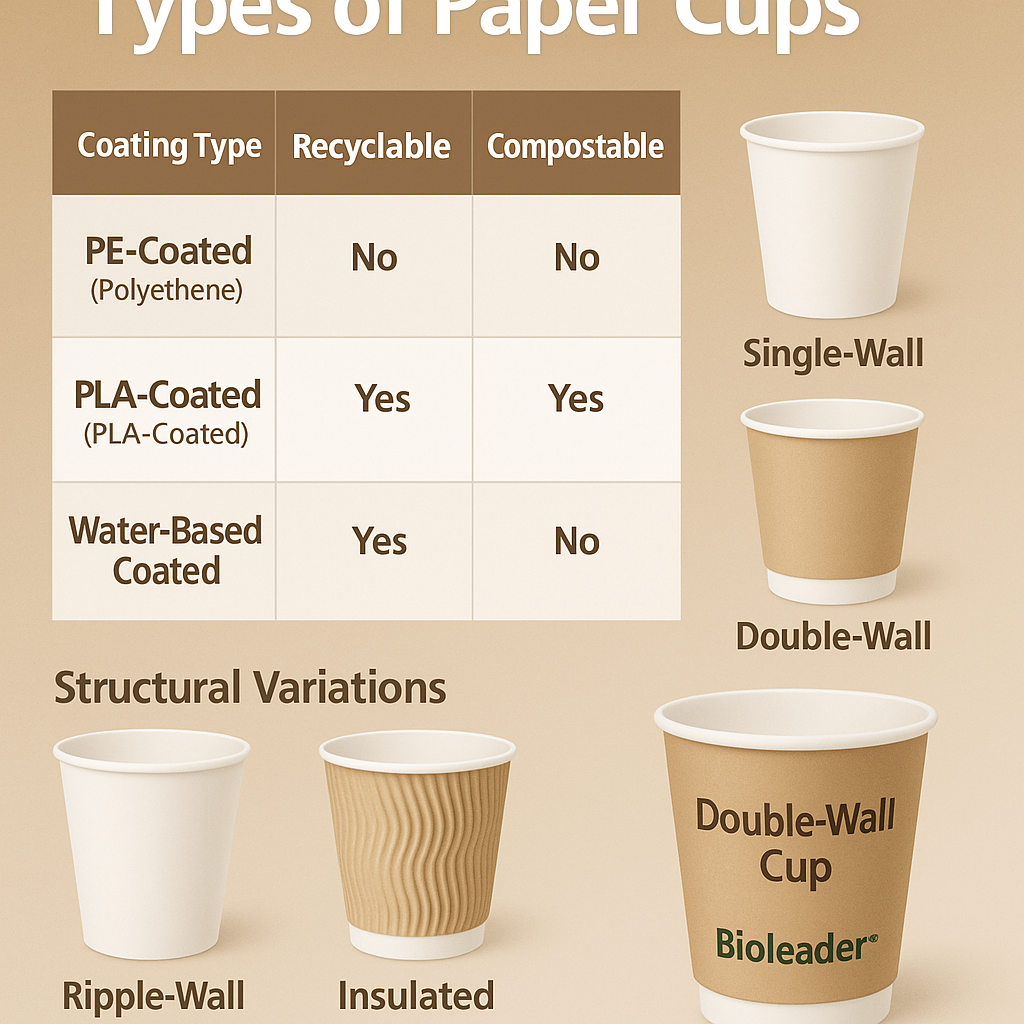
Infographic showing three types of paper cups—PE-coated, PLA-coated, and water-based coated—along with recyclability, compostability comparison, and structural variations like single-wall, double-wall, ripple-wall, and insulated cups.

Coating choice affects not only performance, but also how the brand is perceived

For custom printed paper cups and paper bowls, coating is not a background detail. It directly affects barrier performance, surface feel, print presentation, and the overall market message of the package. A buyer choosing PE lining, PLA lining, or an aqueous-coated direction is not only making a technical decision; they are also shaping how the finished product will be positioned in foodservice, retail, and export markets. Based on Bioleader®’s internal inquiry summary, about 55% of EU-facing paper cup and paper bowl projects now ask about coating type before final artwork approval, which shows that coating has become part of the branding discussion, not just part of the factory specification.
Bioleader® therefore treats coating selection as part of the custom printing service. We do not separate the logo from the structure behind it. A clean logo on the wrong coating system may still create the wrong commercial result, while a well-matched coating can improve both application fit and brand consistency. For buyers, this means coating should be discussed together with product use, print expectations, and target market from the start.

PE lining remains the practical mainstream choice for many volume programs

PE lining is still widely used because it offers a familiar balance of liquid resistance, converting efficiency, and commercial practicality. On Bioleader®’s paper salad bowl product page, the standard film-coated option is listed as single PE 18gsm, while a double-PE structure is also offered for colder or more demanding applications. For many large-volume paper cup and bowl orders, PE lining remains the most straightforward structure when the priority is stable production, functional barrier performance, and broad packaging familiarity across markets.
For buyers, the practical advantage of PE lining is predictability. It is often the easier route when the project is focused on everyday takeaway performance, operational cost control, and proven filling applications. At the same time, buyers should understand that market messaging can differ by region. The European Commission’s guidance on single-use plastic rules makes clear that paper-based products with plastic lining or coating are treated as being partly made of plastic under that framework. This does not make PE “wrong,” but it does mean the buyer should evaluate it with both application needs and market positioning in mind.

PLA lining is usually chosen when compostable positioning matters more

PLA coated compostable paper cup with a green band reading “PLA Cup 100% Biodegradable,” displayed with wood, bamboo, and sugarcane paper cup options.

PLA lining is commonly selected when the buyer wants a stronger compostable packaging direction and a different market message from conventional plastic-lined paper. Bioleader®’s paper salad bowl page lists a single PLA 31gsm option and describes it as biodegradable and compostable, which makes it an important option in projects where brand positioning, sustainability claims, and material story are part of the sales value. In practical sourcing, PLA lining is often discussed more carefully because buyers usually connect it with premium environmental positioning rather than only with basic functional performance.
For buyers, PLA lining should be chosen with realistic expectations. It is most useful when the product, the target market, and the brand narrative are aligned around that material direction. Bioleader® helps customers evaluate whether PLA-coated paper cups suits the actual project instead of using it as a generic upgrade label. Based on Bioleader®’s internal custom project review, about 1 in 3 premium-brand inquiries that initially ask for “eco cups” or “eco bowls” eventually compare PE and PLA side by side before deciding, which shows that compostable positioning still needs practical commercial judgment.

Aqueous-coated directions attract buyers who want a cleaner paper-based packaging story
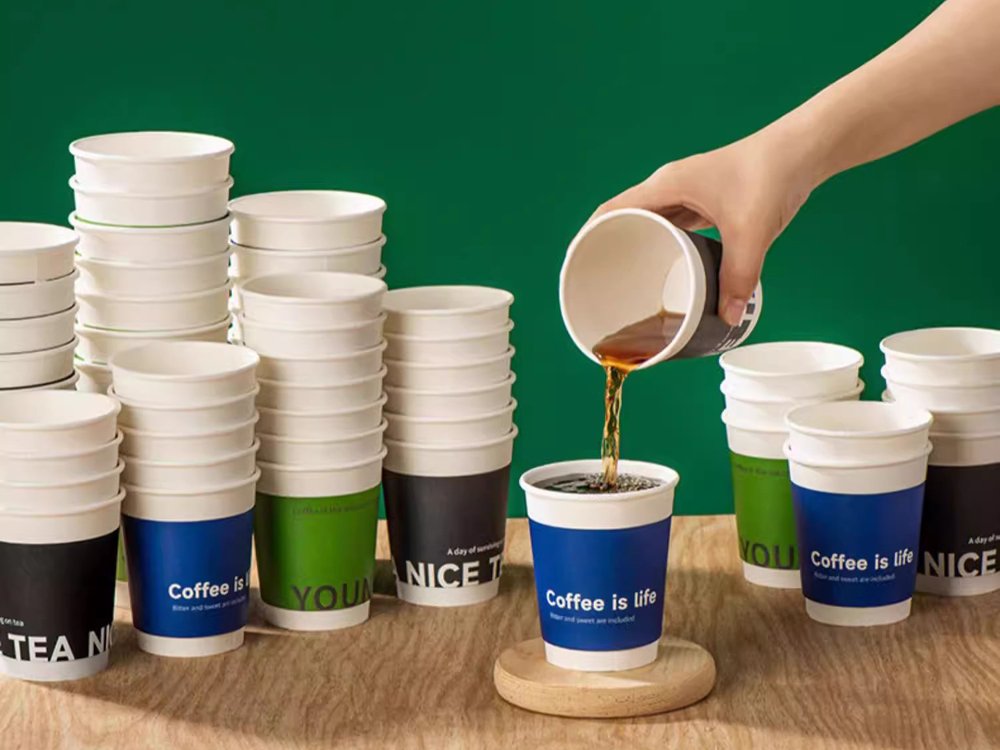
Disposable Coffee Cups with Lids
Aqueous-coated paper cups and bowls are receiving more attention because many buyers now want a lower-plastic packaging story without moving too quickly into claims that are difficult to support in every market. In practical branding terms, aqueous-coated directions are often discussed when the buyer wants the package to feel more paper-based, more modern, and easier to position within a fiber-led packaging strategy. Bioleader® treats this as a targeted project direction rather than as a universal answer, because the final decision still depends on filling conditions, grease level, storage requirements, and market expectations.
Buyers should also understand that recyclability and circularity discussions depend on more than one layer alone. The CEPI paper-based packaging recyclability guidelines note that inks, substrates, coatings, and additional treatments all influence recycling behavior and deinkability. That is why Bioleader® recommends reviewing coating choice together with print design, food application, and sales market. Based on our internal estimate, projects that discuss coating and branding together in the early stage usually need fewer structural revisions later than projects where the coating decision is delayed.
Water-Based Coated Paper Cups

Water-Based Coated Paper Cups

Plastic-free solution for custom branding and modern beverage packaging.

View Product

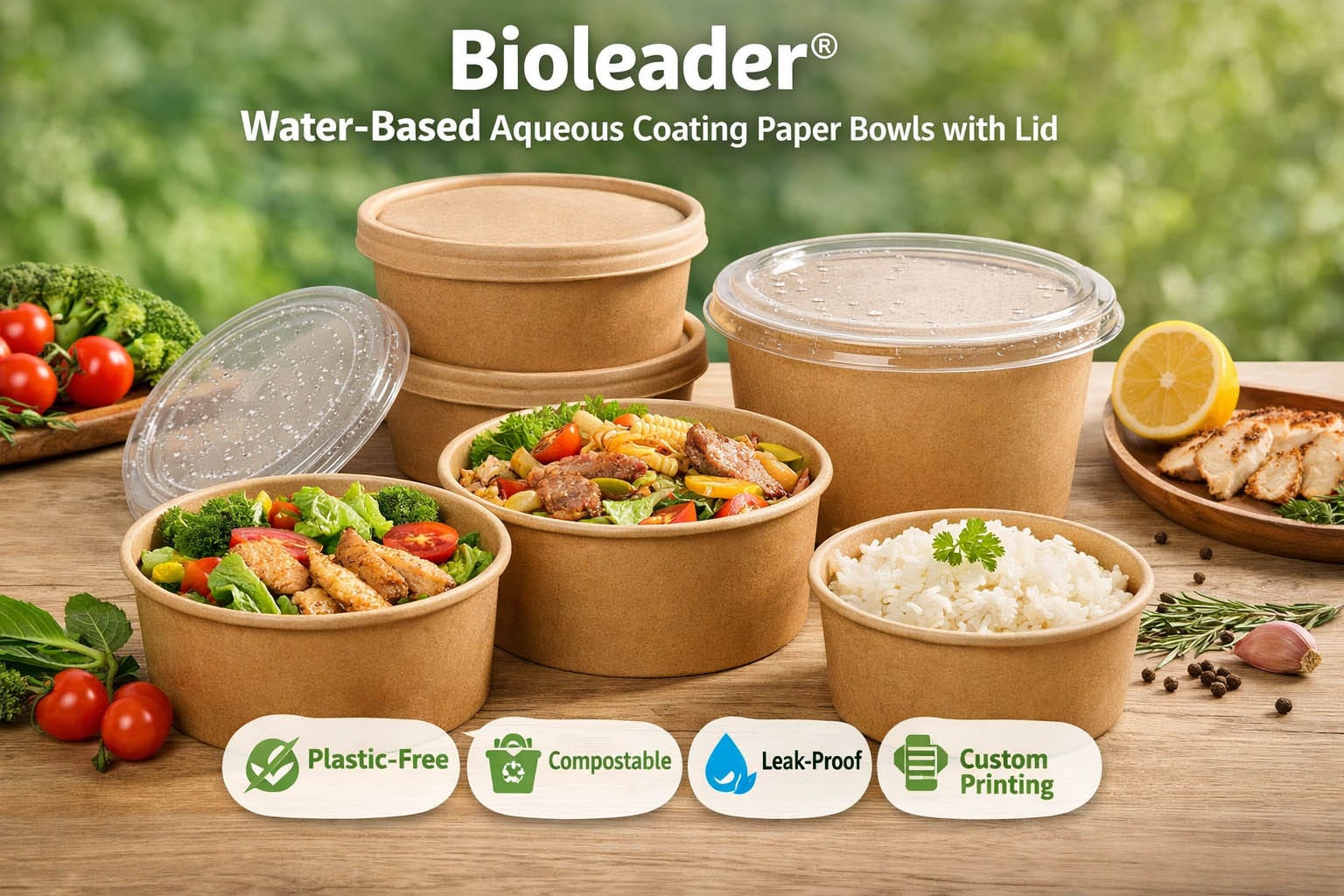
Water-based aqueous coating paper bowls

Water-based Aqueous Coating Bowls

Custom printed paper bowls with lids for takeaway, salad, and foodservice.

View Product

The best coating is the one that matches both the food use and the brand promise

In real purchasing decisions, there is no single coating that is automatically the best in every case. A fast-moving takeaway soup program, a premium salad concept, a dessert chain, and a private-label retail launch may all require different balances between barrier performance, print effect, sustainability positioning, and cost. Bioleader® therefore helps customers choose coating based on actual use: what food goes inside, whether the package is for hot or cold service, how the buyer wants the brand to be perceived, and what kind of repeat-order stability is expected.
This is where Bioleader®’s value is practical rather than theoretical. We combine paper structure, print planning, and order workflow into one customization discussion so that the final paper cup or paper bowl does not look premium on the surface while creating mismatch underneath. For buyers, that usually leads to a stronger result: better visual consistency, fewer late-stage changes, and a packaging program that is easier to explain to customers, distributors, and internal procurement teams.

What buyers should confirm before locking in the coating direction

Before finalizing PE, PLA, or an aqueous-coated direction, buyers should confirm five things clearly: the target food application, hot or cold use, required barrier performance, intended market positioning, and the exact sustainability claim they plan to communicate. These five points are more important than choosing a coating name first and trying to justify it later. Bioleader® helps customers complete this review during the front-end customization stage so that coating, print, and commercial positioning remain aligned from the beginning.
For most projects, the strongest result comes from disciplined matching rather than from trend chasing. PE may still be the right commercial choice for one order. PLA may fit another. Aqueous coating may be the better direction for a third. The key is that the choice should support both the real use of the package and the real message of the brand. That is how a custom printed paper cup or paper bowl becomes more than a printed container—it becomes a packaging solution that makes commercial sense.

Food-grade inks, printing methods, and production control for custom paper cups and bowls

Food-grade ink discipline matters because the package is still a food-contact product

For branded paper cups and paper bowls, printing is not only a visual matter. It is part of a food-packaging process. That is why serious buyers increasingly ask not just how the logo will look, but also whether the ink system, print handling, and production control are managed with food-contact awareness. The EuPIA Good Manufacturing Practice guidance for printing inks used with food contact materials emphasizes process control, transparency, and risk awareness as central principles. Bioleader® follows this practical logic by treating custom printing for paper cups and bowls as part of a packaging manufacturing workflow rather than as a simple decorative step.
Based on Bioleader®’s internal export inquiry summary, about 42% of medium- and high-spec custom projects now raise questions related to ink safety, food-contact suitability, or print-process discipline before artwork is finalized. This is especially common in projects for cafés, premium takeaway programs, supermarket-ready food packaging, and distributors selling into more compliance-sensitive markets. For buyers, that means food-grade print handling is no longer a hidden factory issue; it is part of the purchasing decision itself.

Offset, flexographic, and digital proofing each serve a different role in a real custom project

Not every custom print job should be handled the same way. In real paper cup and paper bowl programs, the right print route depends on order volume, color complexity, approval speed, and repeat-order needs. Bioleader® treats offset printing, flexographic printing, and digital proofing as different tools for different stages of the project. Large-volume orders usually need stronger stability and better repeatability. Early-stage layout confirmation often benefits from faster proofing and visual checking. The goal is not to make the process sound technical. The goal is to use the right print path for the right commercial outcome.
Based on Bioleader®’s internal custom-print workflow summary, about 61% of artwork adjustments are completed before production when the print route is matched correctly at the beginning. That improves both efficiency and final quality. For buyers, this means the most useful supplier is not the one that mentions the most printing terms, but the one that knows when to use each method and how to convert the design into a stable production result.

Better equipment matters only when it improves print effect, quality stability, and delivery efficiency

When buyers ask about printing equipment, what they really want to know is not the machine model itself. They want to know whether the factory can deliver cleaner logo edges, more stable color reproduction, stronger repeat-order consistency, and higher production efficiency for bulk orders. That is how Bioleader® presents its production capability. Our equipment and workflow are valuable because they improve the final packaging result: better-looking print, more controlled quality, and more reliable output for branded paper cups and paper bowls.
In Bioleader®’s internal custom project summary, programs with clear front-end print planning and controlled production sequencing show a noticeably lower rate of rework than projects where design, substrate, and print method are discussed too late. In practical terms, that means a better printing setup should translate into three things buyers can feel directly: clearer visual effect, better batch consistency, and smoother bulk delivery. That is the only machine story that matters in a purchasing conversation.

Production control begins before printing and continues after forming

For a custom paper cup or paper bowl, print quality is not created by one single printing moment. It is created by the full production chain behind it. On Bioleader®’s paper salad bowl product page, the manufacturing logic is clearly shown as paperboard selection, coating preparation, printing, cutting, forming, curling, and final inspection and quality control Paper Salad Bowl | Bioleader® Paper Food Packaging. That sequence is important because it shows that the final logo result depends on the structure of the whole process, not only on the design file.
For buyers, this matters because many visual problems blamed on “printing” actually begin earlier or later in the line. Incorrect paper choice can change color effect. Poor layout fit can weaken logo placement after forming. Weak inspection can allow visible variation to pass into packed goods. Bioleader® therefore manages custom paper cup and paper bowl printing as a linked production system. Based on our internal workflow average, more than 60% of preventable visual issues are addressed before final packing when structure, print, forming, and QC are reviewed as one process rather than as separate tasks.

Why this printing approach adds value for premium branded packaging

Premium packaging is not defined only by how attractive the artwork looks on a screen. It is defined by whether the same logo still looks right after printing, forming, stacking, packing, shipping, and final use. That is why Bioleader® combines food-contact-aware ink planning, practical print-method selection, and production control into one customization service. For buyers, this reduces the gap between design intention and delivered product.
In commercial terms, this approach usually leads to a better overall result: fewer late corrections, faster approval, better repeat-order stability, and a more professional brand appearance at the point of use. That is especially valuable for customers developing long-term private-label or OEM paper cup and paper bowl programs, where consistency matters more than one good-looking first sample.

From artwork to shipment: Bioleader®’s custom paper cup and paper bowl workflow

Custom Printed Paper Cups

Step 1: confirm the right product, size, and application before discussing the final artwork
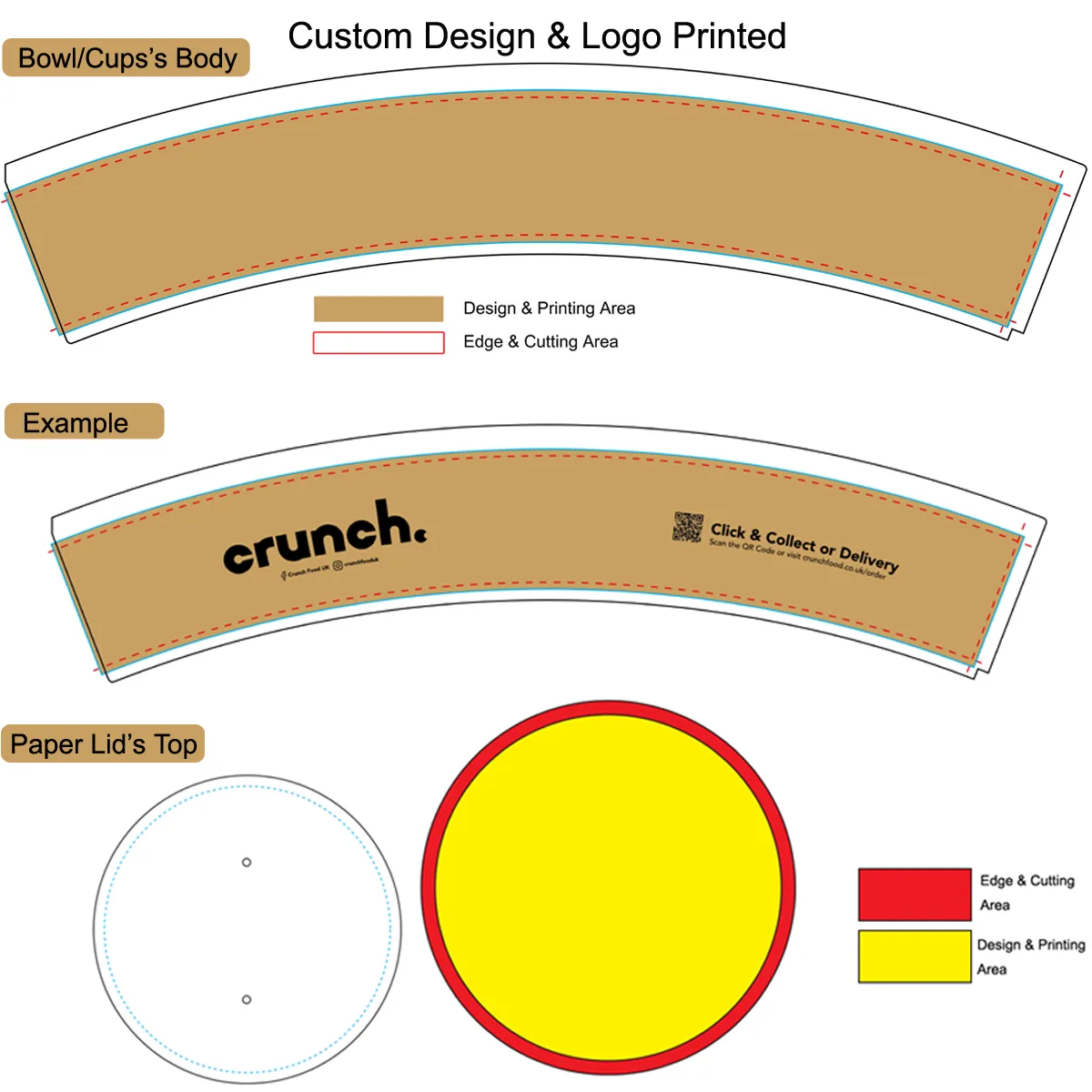
A custom print project should always begin with product matching, not with color discussion alone. The buyer first needs to confirm which cup or bowl is actually being customized: hot drink cup, cold drink cup, soup bowl, salad bowl, dessert cup, or takeaway paper container. Size, lid option, paper type, and coating structure should also be discussed at this stage. Bioleader® already works with paper salad bowl sizes from 500ml to 1300ml and broader paper cup size systems, which means the logo layout must be built around the real product geometry, not around a generic mockup.
Based on Bioleader®’s internal inquiry review, about 1 in 2 first-time buyers initially focus too much on logo style before fully confirming size, paper type, or lid combination. In practice, this often leads to avoidable adjustments later. For buyers, the better order is simple: first lock the structure, then refine the branding on the correct structure.
Custom Printed Paper Bowls and Lids

Step 2: submit a usable artwork file and let the factory review production feasibility

Once the product direction is confirmed, the next step is artwork submission. Bioleader® accepts common working formats such as AI, PDF, CDR, or a clear logo file for layout development. This stage is not a formality. It is where the artwork is checked against printable area, layout fit, color practicality, and the actual shape of the chosen cup or bowl. A design that looks clean in a flat file may still need correction before it can be printed well on a formed product.
Based on Bioleader®’s internal review of recent custom paper cup and bowl projects, about 67% of first-round files need at least one technical adjustment before moving forward, most commonly in logo proportion, information density, color expectation, or printable-area fit. For buyers, this review stage is not a delay. It is one of the strongest protections against rework, mismatch, and disappointing final appearance.

Step 3: confirm samples or layout details before moving into bulk production

After artwork correction, the project moves into confirmation. Depending on the item, complexity, and buyer requirement, this can involve layout approval, digital reference, or sample checking before final production. Bioleader® uses this stage to make sure the buyer is not approving a design in theory only, but approving a version that is realistic for actual paper cup or paper bowl production. This is especially important for kraft paper projects, multi-size packaging lines, or orders where lid style changes the overall visual balance.
For premium branded programs, this confirmation stage is often where the biggest commercial difference is made. Based on Bioleader®’s internal project summary, orders that complete a structured pre-production confirmation stage show a clearly lower rate of post-production appearance complaint than orders that skip directly from artwork submission into mass production. The reason is simple: the earlier the key variables are checked, the fewer surprises remain later.

Step 4: move into mass production with print, forming, and QC aligned

Once the design and structure are confirmed, the custom project enters full production. At this stage, the value of a factory-led workflow becomes more obvious. Printing, converting, forming, curling, and inspection all need to remain aligned so that the final paper cup or bowl still matches the approved brand direction. Bioleader® treats this as one connected process, not as isolated steps handled without communication.
For buyers, this is where consistency becomes more important than visual excitement. A premium logo is valuable only if it can survive real production conditions across the full order quantity. Based on Bioleader®’s internal repeat-order summary, projects with earlier structure review and artwork correction show stronger batch stability in later production than projects that begin with incomplete front-end confirmation. In practical sourcing, that means better preparation usually leads to better-looking bulk goods.

Step 5: final packing, export handling, and repeat-order continuity

The last stage of a custom paper cup or paper bowl project is not only final packing and shipment. It is also the start of repeat-order continuity. Buyers who build long-term branding programs need the next order to look consistent with the first one. Bioleader® therefore treats order history, approved layout direction, and production records as part of the broader service value. This is especially important for customers running chain stores, distribution channels, or seasonal replenishment cycles.
From a purchasing perspective, this is one of the biggest differences between one-off printing and real brand packaging manufacturing. A successful order should not only arrive on time. It should also create a repeatable standard for the next order. That is why Bioleader® structures its custom printing service around product confirmation, artwork review, sample confirmation, production control, and delivery continuity rather than around price alone.

What buyers should check before placing a custom printed paper cup or paper bowl order
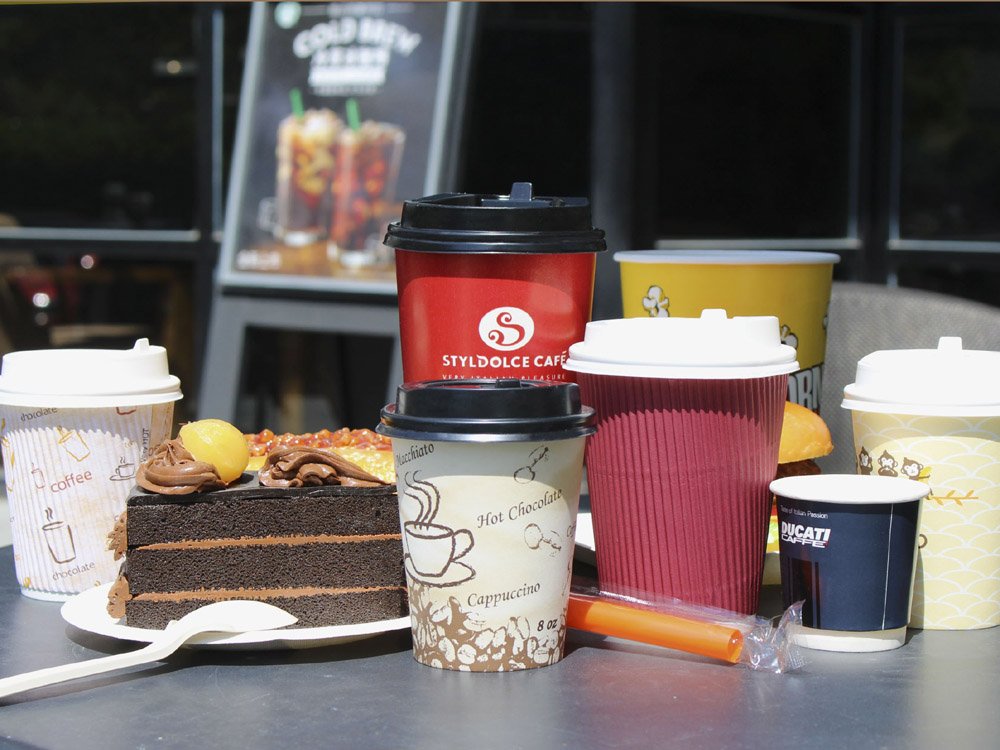
Disposable Coffee Cups with Lids

Confirm the real food application before confirming the print plan

The first thing a buyer should confirm is not the logo size. It is the actual use of the product. A hot drink cup, a soup bowl, a salad bowl, and a dessert cup do not place the same demands on paper structure, coating, lid match, and print balance. Bioleader® usually starts custom projects by confirming what food or beverage will be packed, whether it is for hot or cold use, whether the package must handle oil or moisture, and whether the brand is selling through takeaway, dine-in, retail, or distribution channels. Based on Bioleader®’s internal inquiry summary, about 57% of first-time custom buyers adjust at least one packaging specification after discussing the real application in more detail.
For buyers, this step is essential because premium branding only works when the structure underneath it is correct. A logo may be visually strong, but if the selected cup or bowl does not suit the filling condition, the overall project still becomes weaker. Bioleader® helps customers match the print plan to the product’s actual use so the final packaging is both branded and practical.

Confirm the printable area, artwork file, and layout expectations early

Many custom projects slow down because the buyer sends a logo file without first confirming the real printable area or the visual hierarchy needed for the chosen item. Bioleader® reviews cup wall, bowl body, safe margins, and other practical branding zones before production so the artwork can be adapted to the actual product rather than forced onto it later. On certain paper bowl projects, printable branding may also extend to the bottom or selected paper lid top areas depending on the structure and customization scope.
In practical terms, buyers should prepare an editable AI, PDF, or CDR file whenever possible, and they should clarify whether the design priority is logo recognition, a more premium retail look, a natural kraft-paper effect, or stronger consistency across multiple sizes. Based on Bioleader®’s internal workflow review, about 67% of first-round files need at least one layout or printable-area correction before moving forward. That is normal in serious custom projects, and it is much better handled before production than after the goods are made.

Confirm color range, MOQ, and repeat-order expectations before approval

Color count, order volume, and reorder needs should be discussed together. Bioleader® supports up to 8-color capability for suitable projects, but most commercial paper cup and paper bowl programs perform best in the 1–4 color range. This is especially true when the order needs stable repetition over time. For MOQ, Bioleader®’s current paper salad bowl customization page states 50,000 pcs per item for OEM/ODM logo or color printing, which gives buyers a realistic reference for how custom projects are structured at factory level Paper Salad Bowl | Bioleader® Paper Food Packaging.
For buyers, this means premium customization should be approved as a supply program, not as a one-time artwork exercise. If the customer expects replenishment, multi-size continuity, or long-term private-label supply, then consistency standards matter as much as first-order appearance. Bioleader® helps buyers define the practical print direction early so the first order can become a stable benchmark for future orders rather than a one-off packaging experiment.

Confirm food-contact expectations and packaging claims realistically

When buyers choose branded paper cups or paper bowls for export or branded retail use, they should also confirm what claims or positioning they intend to communicate. Is the priority conventional performance, compostable positioning, a lower-plastic narrative, or a stronger paper-based image? The answer affects both coating direction and how the product should be discussed commercially. The U.S. FDA explains that food contact substances include packaging and its components, which is a useful reminder that buyers should treat print, material, and food-contact suitability as part of one packaging decision rather than three separate conversations.
Bioleader® supports this review from the front end of the project. Instead of treating branding and structure as unrelated topics, we help customers choose a more suitable balance between print effect, application need, and market positioning. In commercial practice, this usually reduces misunderstanding and shortens the approval cycle because the packaging story is clearer from the start.

Why brands choose Bioleader® for custom printed paper cups and paper bowls
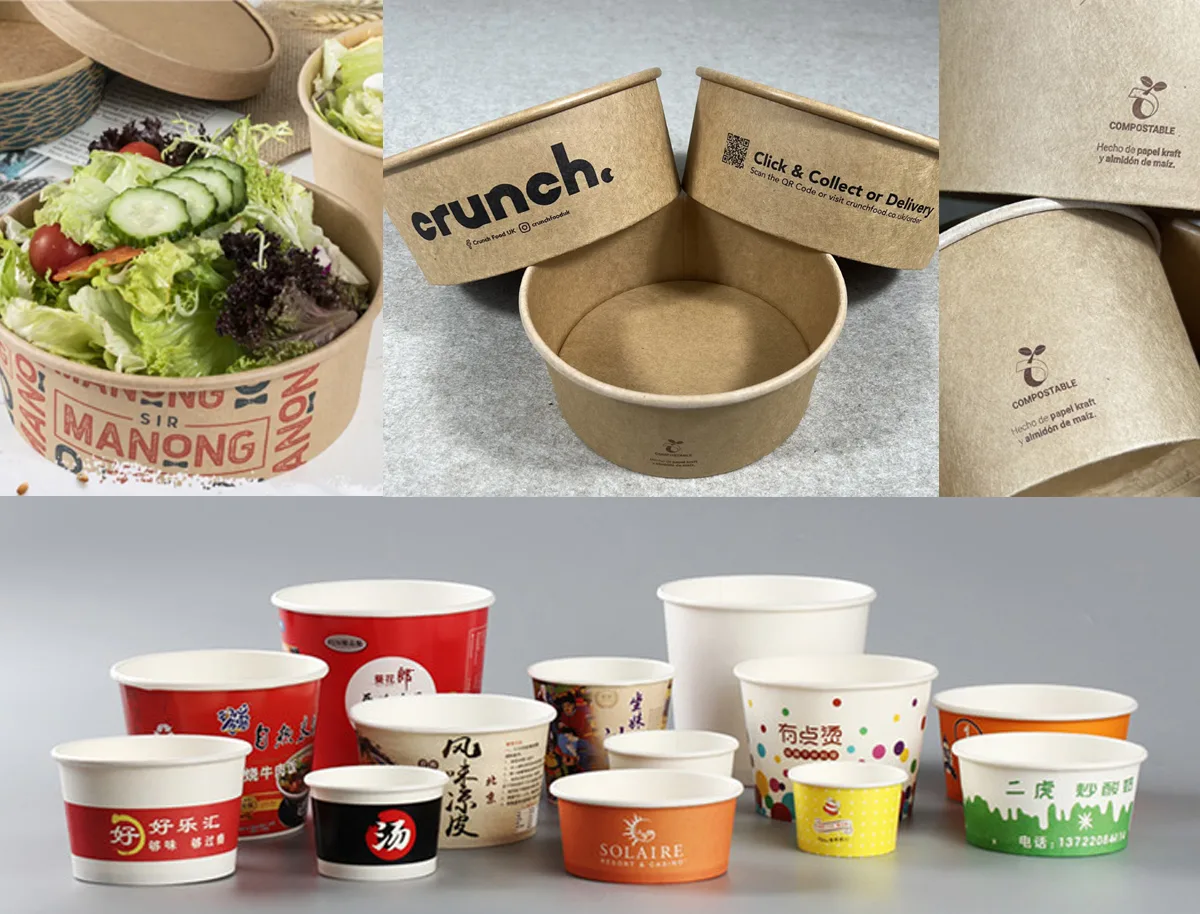
Custom Print Show Case 3
Biodegradable paper bowls printing show-3

Factory-direct customization across multiple paper packaging formats

One of the biggest practical advantages of working with Bioleader® is that the customization service is not limited to one isolated item. We support coordinated branded paper cups, paper bowls, and selected related paper packaging categories so that customers can build a more unified visual line across beverages, soups, salads, desserts, and takeaway meals. Based on Bioleader®’s internal project review, about 68% of branded inquiries involve more than one packaging SKU, which makes factory-level coordination far more valuable than item-by-item customization.
For buyers, this reduces inconsistency and helps create stronger brand recognition across the full packaging line. A coordinated system is easier to manage, easier to reorder, and usually more convincing in the market than a brand program assembled from multiple unrelated suppliers.

Practical pre-production support that improves the final result

Bioleader® does not treat artwork review as a routine administrative step. We use it to improve the real commercial result of the project. That includes checking logo size, color count, layout density, paper compatibility, coating suitability, and printable-area fit before mass production starts. Based on Bioleader®’s internal workflow average, more than 60% of artwork-related issues are solved before production when structure and layout are reviewed together.
This matters because the buyer is not paying for a file transfer. The buyer is paying for a better packaging result. In many cases, one correction before production is worth far more than one round of complaint after production. Bioleader® positions its custom service around this simple principle: solve more problems early so the final paper cup or paper bowl looks closer to the brand expectation in the real market.

A stronger balance between branding, structure, and delivery execution

Custom paper packaging succeeds only when three things work together: the logo must look right, the product structure must suit the food application, and the delivery process must stay commercially workable. Bioleader® combines these three elements in one project flow. That is why our service covers product matching, artwork adjustment, coating discussion, print planning, production control, and export handling as one connected process rather than separate tasks.
For buyers, this creates a more dependable supply model. It is especially useful for customers building private-label food packaging programs, chain-store systems, or distributor-level packaging lines where the next order matters almost as much as the first one. A custom printed cup or bowl should not only arrive looking good once. It should remain reproducible, manageable, and commercially logical over time.

Final thoughts

In 2026, custom printed paper cups and paper bowls should be sourced as a manufacturing solution, not as a decorative extra. A premium logo is only valuable when it is supported by the right paper structure, the right coating, a realistic print plan, disciplined artwork review, and stable production control. That is why the strongest packaging programs begin with a practical discussion of product use, branding goals, and order workflow rather than with visual complexity alone.
Bioleader® provides that kind of factory-led custom service. We help customers turn paper cups and paper bowls into branded packaging systems that are more coordinated, more professional, and easier to repeat across real commercial orders. For buyers who want logo printing to deliver not only visual impact but also long-term supply value, that difference matters.

FAQ

Can Bioleader® print my logo on both paper cups and paper bowls?

Yes. Bioleader® supports custom logo printing across paper cups, paper soup bowls, paper salad bowls, ice cream cups, and selected related paper packaging lines. This allows buyers to build a more consistent branded packaging system instead of customizing each item separately.

What file format should I send for custom printing?

Bioleader® generally works with AI, PDF, CDR, or a clear logo file for layout development. Editable vector artwork is always the better option because it improves speed, reduces correction time, and makes it easier to adjust the design to the actual printable area.

How many colors are best for custom paper cups and bowls?

Bioleader® supports up to 8-color printing for suitable projects, but for most commercial orders, 1–4 colors remain the most practical range. This usually gives the best balance between brand visibility, print stability, repeat-order consistency, and cost control.

Can the same logo design be used on both white paper and kraft paper?

Not always without adjustment. White paper usually gives a cleaner and brighter print effect, while kraft paper creates a warmer and more natural look but can shift light or low-contrast colors. In many cases, the same logo needs color or layout adjustment to maintain the intended brand effect on both substrates.

Can Bioleader® help me choose between PE lining, PLA lining, and aqueous-coated directions?

Yes. Bioleader® helps buyers compare these options based on actual food use, hot or cold application, brand positioning, and market expectations. The best choice depends on the balance between barrier performance, sustainability narrative, and commercial practicality rather than on one material name alone.

What is the MOQ for custom printed paper bowls and cups?

MOQ depends on the product type and customization scope. On Bioleader®’s current paper salad bowl customization page, OEM/ODM logo or color printing starts from 50,000 pcs per item. For other paper cup or paper bowl formats, the exact MOQ should be confirmed according to size, artwork complexity, and order structure.

Can samples be arranged before mass production?

Yes, sample confirmation or layout checking can be arranged depending on the project. This step is especially useful for kraft-paper designs, multi-size branded programs, and higher-spec custom orders where appearance consistency is important before bulk production begins.

Why is artwork review important before production?

Because many files that look fine on screen are not yet suitable for real production. Artwork review helps correct issues such as logo size, layout density, printable-area fit, color expectations, and substrate mismatch before mass production starts. This usually reduces rework, shortens approval time, and improves final packaging quality.

What makes Bioleader® different from a supplier that simply prints the file as received?

Bioleader® provides a factory-led customization workflow rather than a basic print acceptance service. That means product matching, material and coating review, artwork adjustment, print planning, production control, and delivery continuity are handled as one connected process. For buyers, this usually leads to a more stable and more professional branded packaging result.
Junso Zhang Founder of Bioleader® & Sustainable Packaging Expert
Junso Zhang

Founder of Bioleader® | Sustainable Packaging Expert

15+ years of expertise in advancing sustainable food packaging. I provide one-stop, high-performance solutions—from Sugarcane Bagasse & Cornstarch to PLA & Paper—ensuring your brand stays green, compliant, and cost-efficient.

Table of Contents

Contact Us Here
The more details you share, the faster and more accurate our quotation will be.