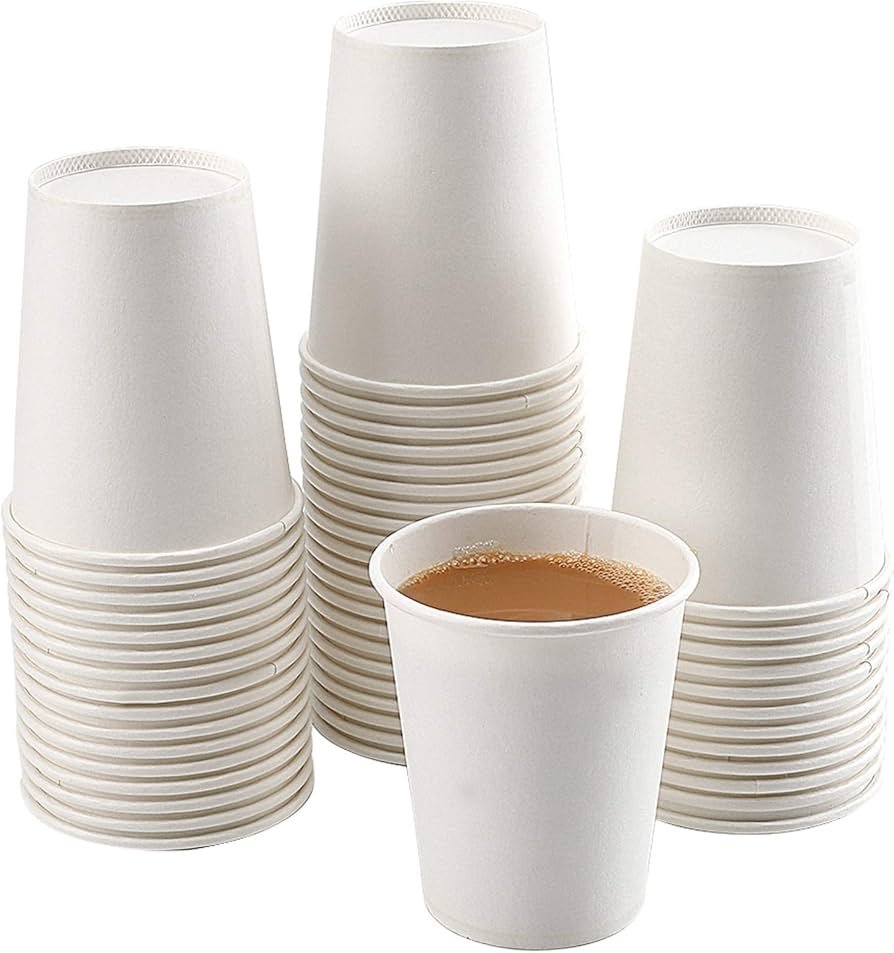
In today’s fast-paced world, takeaway food has become an essential part of everyday life. However, as demand for convenience continues to grow, so does the environmental burden created by single-use packaging, particularly plastic takeaway containers. The good news is that more and more businesses are making the switch to biodegradable alternatives, such as bagasse plates and compostable containers, to reduce their environmental footprint.
In this blog, we will explore real-world case studies of businesses that have successfully transitioned to biodegradable takeaway containers. Using data-driven insights, we will highlight the impact these switches have had on reducing waste, cutting costs, and helping businesses stay ahead in an increasingly eco-conscious market. Furthermore, we will explore the broader benefits of adopting sustainable practices in the foodservice industry and what the future holds for this growing trend.
Detailed Introduction to Biodegradable Takeaway Containers: Exploring the Benefits of Different Materials
Biodegradable takeaway containers are rapidly becoming a popular choice for businesses looking to reduce their environmental impact. Unlike traditional plastic containers, which can take hundreds of years to decompose, biodegradable options are designed to break down quickly and safely when exposed to natural conditions. These containers offer a wide range of materials, each with unique properties and benefits. In this section, we will dive deeper into the different materials used in biodegradable takeaway containers and highlight their advantages.
1. Bagasse (Sugarcane Pulp) – The Renewable and Sustainable Option
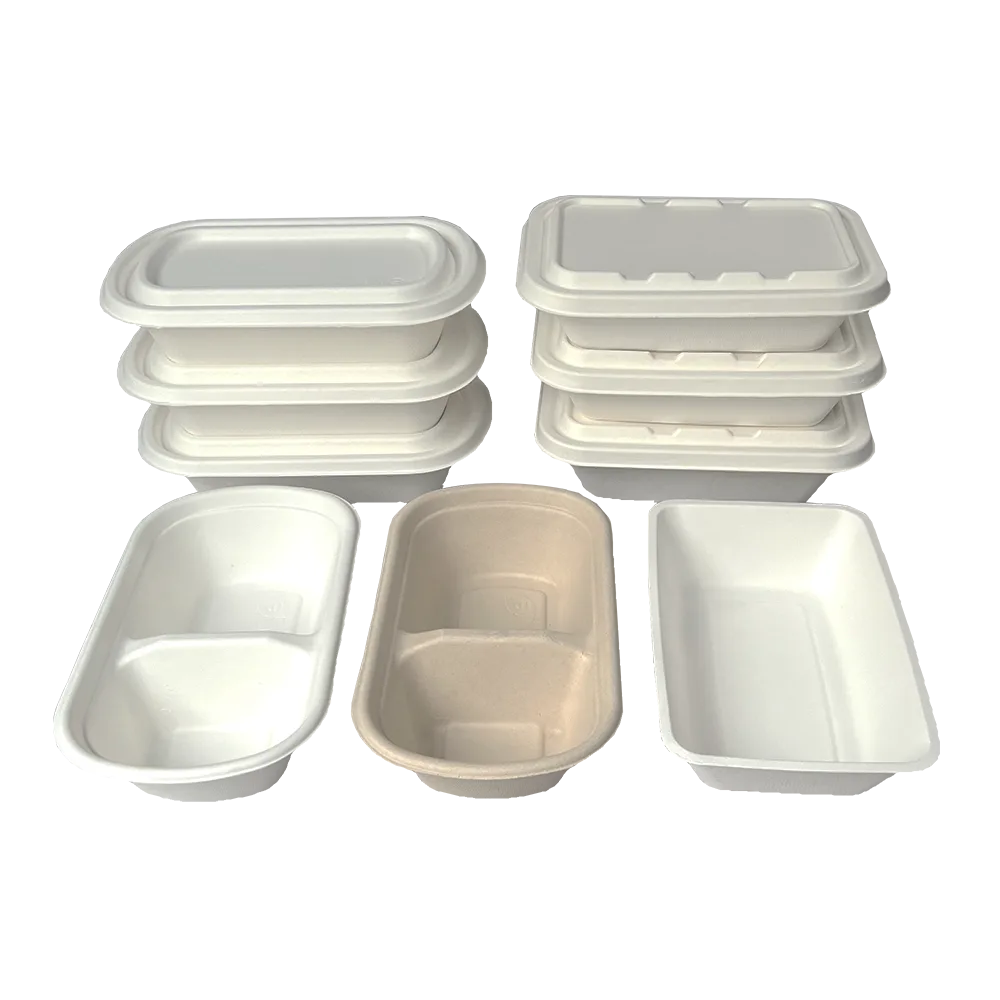
Bagasse is a fibrous byproduct left over after the extraction of juice from sugarcane. It is a highly renewable resource that is processed into sturdy, compostable containers that are perfect for takeaway food packaging.
Advantages of Bagasse Containers:
Eco-friendly: Bagasse is a biodegradable material that breaks down quickly, typically within 60-90 days, reducing waste in landfills.
Durability: Bagasse containers are sturdy and able to withstand high heat, making them suitable for hot foods and liquids. They are also grease- and water-resistant, ensuring that food stays intact during transport.
Compostable: Bagasse containers can be fully composted, returning to the earth without leaving any harmful residue.
Low Carbon Footprint: Since bagasse is a byproduct of sugarcane processing, it does not require additional land use for production, making it a highly sustainable option.
Applications: Bagasse plates, trays, and clamshell boxes are commonly used for takeaway meals, snacks, and fast food items, providing an eco-friendly alternative to styrofoam and plastic.
2. PLA (Polylactic Acid) – A Plant-Based Plastic Alternative
PLA is a biodegradable plastic derived from renewable plant sources, such as cornstarch or sugarcane. This material is often used for containers, straws, and packaging in the foodservice industry. PLA containers are designed to break down into natural components when composted in industrial facilities.
Advantages of PLA Containers:
Plant-Based: PLA is made from renewable resources, reducing the dependence on fossil fuels for production.
Compostable: PLA containers are industrially compostable, typically breaking down within 2-4 months in the right conditions.
Clear Appearance: PLA offers a transparent and glossy finish, similar to traditional plastic, making it ideal for food presentation. It is commonly used for takeaway containers, cups, and trays in foodservice operations.
Food Safety: PLA is FDA-approved for food contact and provides a safe and hygienic option for packaging food.
Applications: PLA is widely used for cold food items, such as salads, fruit bowls, and beverages, due to its low melting point. However, it is not recommended for hot food items unless specifically designed for higher temperatures.

3. Paper-Based Containers – Simple, Sustainable, and Versatile
Paper-based containers are another popular biodegradable option, often made from recycled paper or sustainably sourced wood pulp. These containers are treated with a biodegradable coating to ensure they are water- and grease-resistant while remaining compostable.
Advantages of Paper-Based Containers:
Widely Available: Paper containers are easily accessible and commonly used in fast food and takeaway establishments. Many paper-based containers are also made from recycled materials, further reducing their environmental footprint.
Fully Biodegradable: Unlike plastic or polystyrene, paper containers can be broken down in a composting environment within 2-6 months.
Cost-Effective: Paper containers are typically affordable and offer a cost-effective solution for businesses that want to reduce their environmental impact without breaking the bank.
Lightweight and Versatile: Paper containers come in a variety of shapes and sizes, from cups and boxes to sandwich wraps, making them ideal for a range of food items.
Applications: Paper takeaway containers are ideal for items such as sandwiches, baked goods, salads, and small portions of snacks. They are also widely used for beverages like coffee and tea, especially when paired with biodegradable lids and straws.

4. Palm Leaf – Nature’s Packaging Solution
Palm leaf containers are made from the fallen leaves of palm trees, which are collected, cleaned, and molded into various shapes. This natural material is gaining popularity due to its unique aesthetic and compostability.
Advantages of Palm Leaf Containers:
100% Natural: Palm leaf containers are made from renewable, natural materials and do not require any chemicals or additives during production.
Sturdy and Insulated: Palm leaf containers are incredibly durable and provide natural insulation, keeping food warm for a longer period. They are also heat-resistant and can handle high temperatures without deforming.
Compostable: Palm leaf containers break down naturally in compost piles, typically decomposing within 3-6 months.
Aesthetic Appeal: The natural texture and appearance of palm leaf containers give them a rustic, eco-friendly appeal, making them an excellent choice for high-end restaurants or special events.
Applications: Palm leaf containers are commonly used for upscale takeaways, catering events, and food festivals, where presentation and sustainability go hand in hand.
5. Mushroom Packaging – The Future of Sustainable Food Containers
Mushroom packaging is an innovative and emerging material made from mycelium (the root structure of mushrooms) and agricultural waste. This eco-friendly material is entirely biodegradable and compostable, offering a unique alternative to traditional packaging.
Advantages of Mushroom Packaging:
Completely Biodegradable: Mushroom packaging decomposes naturally within 30-60 days, leaving behind no harmful residues.
Lightweight and Strong: Despite its natural composition, mushroom packaging is surprisingly strong and durable, making it suitable for both takeaway food containers and product packaging.
Energy Efficient: The production of mushroom packaging requires minimal energy, as it grows rapidly and does not involve complex manufacturing processes.
Sustainable: Mushroom packaging is made from renewable resources, and its production has a very low environmental footprint.
Applications: Mushroom packaging is still in its early stages, but it holds great promise for the future of food packaging. It can be used for a variety of food containers and is ideal for businesses looking to pioneer cutting-edge sustainability initiatives.
The Environmental Cost of Traditional Takeaway Containers
Takeaway food containers, especially plastic ones, contribute significantly to environmental pollution. Plastic packaging accounts for nearly 40% of global plastic waste. According to a study by the World Economic Forum, over 8 million tons of plastic enter the oceans each year, with food packaging being a major contributor.
Key Environmental Issues with Plastic Takeaway Containers:
Non-biodegradable: Plastic containers take hundreds of years to decompose, leading to long-term environmental harm.
Carbon Footprint: The production of plastic takeaway containers generates significant carbon emissions, contributing to global warming.
Ocean Pollution: Millions of plastic containers end up in the ocean, harming marine life and impacting ecosystems.
The sheer volume of plastic waste generated by takeaway containers is staggering. As consumers continue to demand convenience, businesses need to address the negative impact of disposable packaging and find sustainable solutions.
Switching to Biodegradable Containers: Benefits and Data Insights
Many businesses are now opting for biodegradable takeaway containers to mitigate these environmental challenges. A variety of materials are being used as eco-friendly alternatives, including bagasse (a byproduct of sugarcane), cornstarch, and plant-based plastics. These alternatives not only provide an environmentally-friendly option but also offer measurable business benefits.
Data-Driven Insights on Biodegradable Containers:
Reduction in Carbon Emissions: A study by the Environmental Protection Agency (EPA) shows that switching from plastic containers to biodegradable alternatives can reduce a business’s carbon emissions by up to 30%.
Faster Decomposition: While plastic containers take up to 500 years to degrade, biodegradable containers break down in 6 months to 1 year, reducing landfill waste significantly.
Cost Savings: Businesses that have switched to biodegradable containers report a 10-15% reduction in overall packaging costs due to lower waste disposal fees and improved supply chain efficiency.
One of the biggest misconceptions surrounding biodegradable containers is that they are significantly more expensive than plastic containers. However, studies show that the total cost, including waste management and environmental impact, is lower in the long run.
Case Study 1: Chipotle’s Switch to Compostable Containers
Chipotle Mexican Grill, a major fast-casual chain, decided to make the switch from plastic to compostable containers for their takeaway packaging. This shift was part of their commitment to environmental sustainability, and it aligned with their goal of becoming a more eco-friendly brand.
Impact of the Switch:
Reduction in Plastic Waste: Chipotle reported a 50% reduction in plastic waste within the first year of making the switch. This led to a significant decrease in their overall environmental footprint.
Carbon Footprint Reduction: The company’s carbon footprint from packaging decreased by 28%. This was achieved by using materials that require less energy to produce and decompose.
Customer Perception: Consumer surveys showed that 75% of Chipotle customers preferred the eco-friendly packaging and were willing to pay slightly more for their meals, indicating that sustainability is becoming a key factor in purchasing decisions.
Graph: Impact of Switching to Compostable Containers at Chipotle
| Metric | Before Switch | After Switch |
|---|---|---|
| Plastic Waste Reduction | 0% | 50% |
| Carbon Emissions Reduction | 0% | 28% |
| Customer Satisfaction | 70 | 75% |
(Bar chart showing the reduction in plastic waste and carbon emissions)
Case Study 2: Local Restaurants Adopting Bagasse Plates
A group of independent restaurants in New York City decided to transition to biodegradable packaging, including bagasse plates and cornstarch containers. The shift was motivated by a combination of sustainability goals and rising consumer demand for eco-friendly options.
Impact of the Switch:
Waste Reduction: Within 6 months, these restaurants reported a 40% decrease in waste generation, as the biodegradable containers took up less space in landfills and broke down faster.
Cost Benefits: The shift to biodegradable packaging resulted in a 15% decrease in packaging costs, as the restaurants used smaller portions of packaging material and were able to reduce waste management costs.
Increased Revenue: Eco-conscious customers drove a 20% increase in sales as the restaurants marketed their sustainable practices. Many customers expressed satisfaction with the restaurant’s efforts to reduce plastic use, enhancing their loyalty and customer base.
Graph: Impact of Bagasse Plates on Restaurant Waste and Costs
| Metric | Before Switch | After Switch |
|---|---|---|
| Waste Reduction | 0% | 40 |
| Packaging Costs Reduction | 0% | 15% |
| Sales Increase | 0% | 20% |
(Stacked bar chart showing the percentage reductions in waste and costs, along with sales growth)
Case Study 3: Starbucks and Sustainable Packaging
Starbucks, known for its commitment to sustainability, has been testing biodegradable containers in select locations worldwide. They are replacing single-use plastic cups with compostable alternatives.
Impact of the Switch:
Reduction in Plastic Use: Starbucks reported a 30% reduction in single-use plastic cups in locations where biodegradable alternatives were tested. This is part of a larger initiative to eliminate single-use plastic from their supply chain by 2025.
Environmental Benefits: In one year, Starbucks saved an estimated 50,000 kg of plastic waste by replacing 10% of their single-use cups with biodegradable options.
Cost and Operational Efficiency: Though the biodegradable cups cost slightly more, the reduction in waste management costs and positive brand recognition offset the increase in packaging costs. Starbucks also reported a reduction in waste disposal fees, further contributing to cost savings.
Graph: Impact of Biodegradable Cups on Starbucks’ Plastic Use
| Metric | Before Switch | After Switch |
|---|---|---|
| Plastic Use Reduction | 0% | 30% |
| Waste Reduction (kg) | 0 | 50,000 kg |
| Operational Costs Savings | 0% | 10% |
(Line graph showing the gradual reduction in plastic use and waste over time)
The Future of Biodegradable Takeaway Containers: What’s Next?
As the demand for eco-friendly solutions continues to rise, the future of biodegradable takeaway containers looks promising. Innovations in materials are creating new opportunities for businesses to reduce their environmental impact, while providing consumers with practical and sustainable alternatives. Among the materials leading the charge are bagasse, cornstarch, and kraft paper — each offering distinct advantages in terms of sustainability, functionality, and cost-effectiveness.
In this section, we’ll explore why bagasse, cornstarch, and kraft paper are poised to dominate the future of food packaging, and how they align with businesses’ sustainability goals.
1. Bagasse: The Renewable Powerhouse
Bagasse — a byproduct of sugarcane processing — is already a popular material for food containers, and its future in the takeaway food packaging industry is looking bright. With its excellent strength, durability, and compostability, bagasse is fast becoming the go-to material for eco-conscious brands.
Why Bagasse Will Lead the Charge:
Sustainability: Bagasse is made from the fibrous remains of sugarcane stalks, which would otherwise go to waste. This makes it a highly renewable resource. Furthermore, it’s biodegradable and can be composted in industrial composting facilities within 60-90 days.
Heat Resistance: Bagasse is naturally heat-resistant, making it ideal for hot foods like curries, stews, and soups. It’s also water and oil-resistant, ensuring that food remains intact during delivery.
Low Carbon Footprint: Bagasse production requires minimal energy compared to plastic and styrofoam, reducing its environmental footprint. It’s an ideal material for brands aiming to minimize their carbon emissions.
The future of bagasse lies in improving its design flexibility and expanding its use in different foodservice sectors. From fast food to high-end dining, businesses are increasingly adopting bagasse plates, trays, and clamshell containers as part of their sustainability initiatives.
2. Cornstarch: A Versatile Biodegradable Material
Cornstarch-based containers are another breakthrough in the world of biodegradable packaging. Cornstarch is a naturally occurring carbohydrate derived from corn and is a highly versatile material in food packaging applications. As an alternative to traditional plastic, it offers a number of environmental benefits, making it an attractive option for forward-thinking businesses.
Why Cornstarch is Gaining Popularity:
Fully Compostable: Cornstarch containers are fully biodegradable and compostable in both industrial and home composting settings. Depending on environmental conditions, they break down in 60-180 days, reducing the strain on landfills.
Microwave Safe: One of the key advantages of cornstarch containers is that they are microwave-safe, offering consumers the convenience of reheating food in the container without the risk of harmful chemicals leaching into the food.
Water-Resistant: Cornstarch-based containers are often coated with a water-resistant film, allowing them to hold liquids such as soups and sauces without breaking down prematurely.
Lightweight Yet Durable: Cornstarch containers are surprisingly strong for their lightweight nature, making them easy to handle, transport, and store.
As the food delivery sector continues to grow, cornstarch containers are becoming more popular for takeaway food packaging. They are particularly effective for takeaway salads, pasta, and beverages, where lightweight and food safety are top priorities.
3. Kraft Paper: The Classic, Sustainable Choice
Kraft paper — made from wood pulp — is one of the most versatile and eco-friendly packaging materials available today. With its durability, recyclability, and minimal environmental impact, kraft paper containers are a preferred choice for sustainable foodservice packaging.
Why Kraft Paper Will Remain a Staple:
Recyclable and Compostable: Kraft paper is both recyclable and compostable, making it a valuable material in reducing waste. Unlike plastic containers, kraft paper breaks down naturally in 2-6 months when exposed to composting conditions.
Durability: Kraft paper containers are tough and resistant to tearing or puncturing, making them ideal for takeout foods like sandwiches, pastries, and salads. When properly treated, they can also be made water-resistant to hold liquids.
Customizable: Kraft paper is easy to print on and can be customized with a brand’s logo or design. This makes it an excellent choice for businesses looking to enhance their brand image while staying eco-friendly.
Affordable: Kraft paper is typically less expensive than other biodegradable alternatives, such as bagasse and PLA, making it a cost-effective option for small and medium-sized businesses.
The future of kraft paper lies in the continued development of more sustainable coatings and treatments. Today, many businesses use kraft paper for food trays, bowls, and wrapping, and we can expect this trend to grow as the demand for eco-friendly packaging options increases.
FAQ
1. Do biodegradable takeaway containers really reduce waste?
Yes, biodegradable containers break down naturally in composting conditions, reducing landfill accumulation and minimizing long-term environmental pollution compared to plastic.
2. Are biodegradable food containers more expensive than plastic ones?
While unit costs may be slightly higher, businesses often save money in the long run through reduced disposal fees, improved brand image, and compliance with environmental regulations.
3. How long do biodegradable takeaway boxes take to decompose?
Most biodegradable containers, such as those made from bagasse or cornstarch, decompose within 90 to 180 days under industrial composting conditions.
4. Can switching to biodegradable packaging attract more customers?
Yes, many eco-conscious consumers prefer to buy from brands using sustainable packaging, which can improve customer loyalty and enhance market competitiveness.
5. What industries benefit most from biodegradable takeaway containers?
Food delivery services, cafés, restaurants, catering companies, and event organizers see the greatest benefits, both environmentally and economically, by switching to compostable packaging solutions.
Conclusion: Embracing a Greener Future in Takeaway Packaging
As the demand for sustainable alternatives to traditional plastic food packaging intensifies, biodegradable materials like bagasse, cornstarch, and kraft paper are setting new standards in the takeaway food industry. These materials not only align with environmental goals but also offer practical advantages for businesses and consumers alike. By embracing biodegradable takeaway containers, businesses can significantly reduce their carbon footprint, contribute to waste reduction, and offer their customers a greener, more eco-conscious choice.
The advantages of bagasse, with its heat resistance and compostability; cornstarch, with its versatility and microwave safety; and kraft paper, with its recyclability and cost-effectiveness, are paving the way for a more sustainable food packaging future. As more businesses transition to these innovative materials, we are seeing a fundamental shift in how the foodservice industry approaches packaging — with a strong focus on renewability, biodegradability, and functional performance.
For businesses, the switch to these materials is not just an ethical decision; it’s a strategic one. Consumers today are more eco-conscious than ever, and they expect brands to take responsibility for the environmental impact of their products. As plastic bans and regulations tighten globally, incorporating biodegradable packaging will not only help businesses stay ahead of the curve but also enhance their brand image as a forward-thinking, sustainability-driven organization.
The future of takeaway packaging is biodegradable, and the materials leading the way, such as bagasse, cornstarch, and kraft paper, will be integral to the food packaging industry’s transformation. By making the switch today, businesses can help reduce the impact of single-use plastics on the environment, drive consumer loyalty, and contribute to the global shift towards a more sustainable, plastic-free future.
The shift to biodegradable containers represents more than just an environmental solution — it’s a step towards a greener, cleaner, and more sustainable world for generations to come.
Are you ready to make the switch to biodegradable takeaway packaging and be part of the change?