The cosmetics industry is at a crossroads with premium products requiring more environmentally friendly production methods. Beauty and cosmetics companies are now finding that consumers are willing to pay a premium for their products, provided that the packaging is eco-friendly. With this in mind manufacturers are developing premium eco-friendly packaging. With increasing scrutiny on the environmental impact of consumer goods the cosmetic industry is undergoing a sea change in its approach to product packaging.
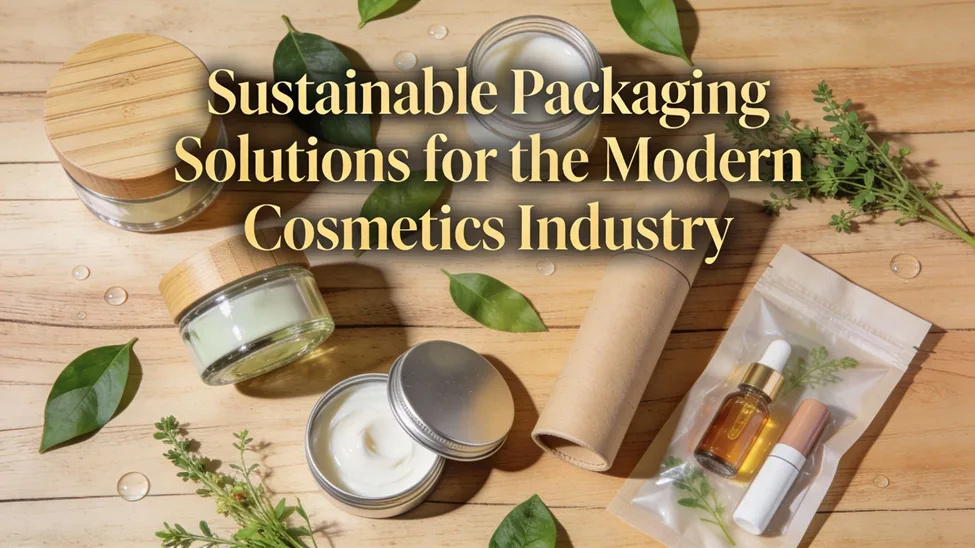
The Sustainability Imperative in Cosmetics Packaging
Of those purchasing cosmetic products, 73% said that the impact on the environment played a role in their purchasing decision. Consumers are also willing to pay extra for goods that have minimal impact on the environment. 68% said they would pay extra for such products. Today, consumers increasingly expect a brand’s products to be sustainable, leading to sustainability being a key factor in a company’s market share and how much customers are loyal to it.
Key drivers of sustainable packaging adoption:
- Regulatory pressure from governments implementing extended producer responsibility
- Retail requirements for reduced plastic and increased recyclability
- Consumer activism and social media amplification of environmental concerns
- Corporate sustainability commitments and ESG reporting requirements
- Competitive differentiation in saturated beauty markets
Cosmetics companies are compelled to rethink their packaging policies in response to the two conflicting demands of sustainability and growth.
Material Innovation in Sustainable Cosmetics Packaging
There has been a significant step-up in the shift from conventional plastic-heavy packaging to more eco-friendly options. This acceleration is due to progress in material sciences and manufacturing technologies.
Cardboard and Paperboard Solutions
Cosmetics are beginning to rely heavily on a type of packaging that has some surprising qualities. This is cardboard, a material that can be reused, is biodegradable and can be used in a variety of ways.
Advantages of cardboard-based packaging:
- Recyclability: Widely accepted in all municipal recycling programs around the world, it is
- Renewable sourcing: FSC-certified materials from responsibly managed forests
- Lower carbon footprint: The production process emits fewer harmful chemicals into the atmosphere in comparison to making the product with plastic
- Consumer perception: Immediate visual communication of environmental values
- Customization capability: This paper’s excellent printability makes it an ideal choice for high-end applications such as premium finishing and printing
Innovations in cardboard engineering allow the product to have similar properties as plastic, including water resistance from bio-plastic coatings, reinforcement to prevent the goods from being damaged during transportation, and protection of the sensitive items inside from the environment.
Bio-Based and Compostable Materials
With a view to reducing dependence on traditional paperboard, there are several bio-based materials which are now available – these include:
Material innovations:
| Material Type | Source | End-of-Life | Best Applications |
| PLA (Polylactic Acid) | Corn starch, sugarcane | Industrial composting | Windows, inserts, trays |
| Mushroom packaging | Agricultural waste, mycelium | Home composting | Protective cushioning |
| Seaweed-based films | Marine algae | Biodegradable | Wrapping, sachets |
| Bagasse | Sugarcane fiber | Recyclable/compostable | Rigid containers |
Cosmetics companies can achieve virtually zero environmental impact while ensuring that the products remain of high quality throughout the distribution and retail process with the help of these materials.
Balancing Luxury Perception with Sustainability
The cosmetics industry faces difficulties when it changes from elaborate packaging to sustainable materials because of its long history of equating luxury with elaborate packaging. Innovative design approaches have shown that it is not impossible to be premium and also sustainable.
Premium Sustainable Design Strategies
Minimalist sophistication:
- The minimalist approach of uncluttered lines and considerable space conveys luxury through subtle elegance
- Inkjet printing on natural fibres matches traditional materials in quality
- Paperboard finished with tactile finishes such as embossing, foil stamping, or spot varnishing gives a sensory experience to the consumer
- A two-dimensional print can become a three-dimensional art piece with embossing and debossing techniques. Foil and spot varnish add another aspect. These techniques can be combined in numerous ways
Strategic material choices:
- Heavy cardboard conveys a high-quality feel due to the substantial weight of the box
- They convey the genuine and eco-friendly nature of a product
- They add a highly modern look to any printed product with the matte finish
- Metallic foils add a premium feel to products when sourced responsibly
Those luxury brands that can successfully adapt to the use of eco-friendly materials discover they enhance their luxurious image when the focus is placed on quality and style.
Luxury cosmetic manufacturers who also operate in the premium beauty market utilise eco-friendly materials in their custom luxury cosmetic packaging. This is so that consumers of luxury goods will receive the look they desire for their products while still adhering to environmental guidelines.
Structural Design Considerations
Careful thought has to be given to the structural design of the product’s packaging to allow for minimal use of materials, while also ensuring the goods are adequately protected in transit.
Design Optimization Principles
Material efficiency:
- Right-sizing: Cut down on superfluous packaging – this means reducing waste from excessive packaging
- Single-material construction: The design should aim to incorporate materials from one origin, such as wood or steel. This minimises the variety of materials to recycle, simplifying the process
- Nested design: The components are grouped in modules, which are shipped together, thus reducing the need for a great number of shipping items
- Flat-pack capability: Reduced transportation emissions are achievable through efficient packing of goods in space
Functional excellence:
- Secure product retention: Protecting Goods in Transit – Reduced Damage and Return Rates through Secure Packaging Methods and Products
- Easy opening mechanisms enhancing user experience
- Resealability extends product life and reduces waste
- Display-ready design reduces additional retail packaging
Protection without the sacrifice of privacy or liberty:
While the sustainability of packaging is a priority, cosmetics must be preserved for the whole shelf life, hence needing protection against contamination, physical shock, temperature variations and light exposure.
Business Benefits Beyond Environmental Impact
Not only does eco-friendly packaging positively affect the environment, but it also gives a company many financial benefits.
Economic and Operational Advantages
Cost optimization:
- Reduced material weight: Using recycled materials cuts down on the material’s weight, leading to lower shipping costs
- Simplified manufacturing processes decrease production time
- Lower storage requirements: The need for these designs can be reduced by utilising compact flat-pack structures
- Decreased damage rates: Incorporating improved structural designs in construction has been shown to decrease damage rates
Market positioning:
- Premium pricing support from sustainability-conscious consumers
- Enhanced brand reputation: Engaging in corporate social responsibility helps to improve the reputation of the company and also builds long-term relationships with the customers
- Differentiation in competitive beauty markets
- Positive media coverage: Influencers at the launch received widespread and positive media coverage. They posted updates about the event on their social media channels, thus enhancing its public awareness
Regulatory Compliance:
- Anticipation of increasingly stringent packaging regulations
- Simplified reporting for corporate sustainability metrics
- Reduced risk of future legislative penalties
- Alignment with retailer sustainability requirements
Implementation Strategies for Cosmetics Brands
Switching to sustainable packaging necessitates the consideration of several factors, including a company’s communication with consumers, their supply chain’s capabilities, the financial implications, and the timeframe available.
Phased Transition Approach
Phase 1: Assessment and planning (2-3 months)
- Review the packaging on all products currently available to the company
- Identify highest-impact replacement opportunities
- Engage with packaging suppliers to look at sustainable packaging options
- Develop sustainability criteria and priorities
Phase 2: Testing and validation (3-6 months)
- Order samples of sustainable packaging options
- Accelerated environmental and use testing could be conducted to demonstrate the product’s compliance with regulatory requirements
- Gather consumer feedback through focus groups
- Following the results of testing, the designs undergo adjustments so as to strengthen their performance
Phase 3: Limited rollout (6-12 months)
- We will introduce sustainable packaging to our selected products
- Checking and analysing performance metrics and customer responses is essential
- Address any supply chain or quality issues
- The lessons learned from this pilot should be documented in a manner that can be used by other health districts in their own implementation of the software
Phase 4: Full integration (12-24 months)
- By incorporating eco-friendly materials across the whole range of products, the company should be able to achieve its long-term objective of totally sustainable packaging
- By working with industry leaders, we can improve logistics and the flow of sustainable materials through the supply chain. We are optimising for speed, cost and carbon emissions
- Communicate the sustainability story to consumers
- Establish continuous improvement processes
Consumer Communication and Transparency
Investing in eco-friendly packaging gives the greatest returns when this is clearly displayed to consumers who expect to be informed about the products they buy.
Effective communication strategies:
On-package messaging:
- Clear recycling instructions with universal symbols
- Sustainability certifications and third-party validations
- Percentage of recycled or renewable content
- End-of-life disposal guidance
Digital engagement:
- QR codes linking to detailed sustainability information
- Social media campaigns highlighting packaging innovations
- Brand website sustainability sections with metrics and progress
- Influencer partnerships amplifying environmental messaging
Retail activation:
- Point-of-sale materials educating consumers
- Staff training on sustainability features
- In-store displays highlighting packaging innovations
- Promotional campaigns featuring sustainable attributes
The Role of Customization in Sustainable Solutions
Tailoring of packaging allows a more effective use of material than standard solutions, thus allowing companies to package their product exactly as it requires.
Customization advantages:
- Exact sizing: Each plywood sheet should be a fraction of an inch larger than the cabinet dimensions to allow for cutting and shaping into the desired shape
- Brand-specific printing: Brands have the opportunity to communicate their own sustainability story through custom-printed products
- Structural designs: These designs are tailored to meet the requirements of specific products, like protection against shock, vibration, chemicals, temperature extremes, moisture, dust, pressure, and other environmental conditions
- Material selection: Innovative material solutions designed to match a product’s performance and aesthetic characteristics as well as a brand’s values and unique identity
Brands of cosmetic goods discover that custom cardboard boxes allow them to implement green packaging strategies that suit their product needs as well as their corporate green objectives.
Future Trends in Sustainable Cosmetics Packaging
The packaging industry is experiencing a great deal of change with the latest technological advancements as well as eco-friendly packaging methods, resulting in lessened detrimental effects on the environment.
New technologies are continually being developed:
- Refillable systems: Systems where the dispensing system is refilled: refillable cartridges with durable outer packaging containing replaceable inserts, which are the product itself
- Waterless formulations: Formulations with a minimal requirement for packaging are concentrated waterless ones
- Zero-waste design: The product is packaged in compostable materials which, when disposed of, are converted into carbon dioxide, water, and a small amount of biomass
- Smart packaging: Digital integration reducing physical material needs
- Circular economy models: Circular economy models, such as a take-back system which enables true material recycling, are vital for the future of our planet
Conclusion
The cosmetics industry’s use of sustainable packaging is about more than legal requirements and advertising tactics. A fundamental shift occurs in how beauty products reach the end-user through methods that provide greater environmental benefits, enhancing the company’s image and improving operational efficiency.
By making the move towards sustainable packaging, businesses can strengthen their customer loyalty, their market position, and their operations in anticipation of consumer demands and future legislation.
Companies that are successful in adapting to this shift view eco-friendly packaging as a chance to improve the environment and also advance their business. The trend towards accelerated material innovation, coupled with increasing consumer demands, will lead to sustainable packaging becoming a differentiator for beauty companies.
The main issue confronting luxury cosmetics companies is the speed and extent of their implementation of eco-friendly packaging, which meets the expectations of the environmentally conscious luxury cosmetics buyer.
This article reflects the perspective of packaging manufacturers working with premium beauty and cosmetics brands on sustainable packaging transitions