Buffet food stays safe and waste drops when you serve in smaller batches, protect displays, and rotate on a tight schedule. Control portions, monitor temperature, track demand. Fresh food stays on the line, not in the bin.
Buffets are designed to look generous, but excess often turns into loss. During a busy service, trays dry out, guests lift lids constantly, and untouched pans get dumped at closing. Food waste continues to cost the hospitality industry billions each year, and buffets are one of the biggest pressure points.
Operators who rethink the setup see fast gains. Smaller pans swapped frequently keep dishes vibrant. Proper shields and covers limit exposure. Live tracking sharpens prep for the next shift. The spread still feels abundant, just smarter and far less wasteful.
Set Safe Temperature Zones From Kitchen To Line
Food safety and waste reduction are tightly connected. Once food drifts out of safe holding ranges, it must be discarded, even if it looks untouched.
Buffet layouts should define clear hot and cold zones. Hot entrees stay above safe thresholds, cold salads remain chilled, and room temperature exposure is tightly controlled.
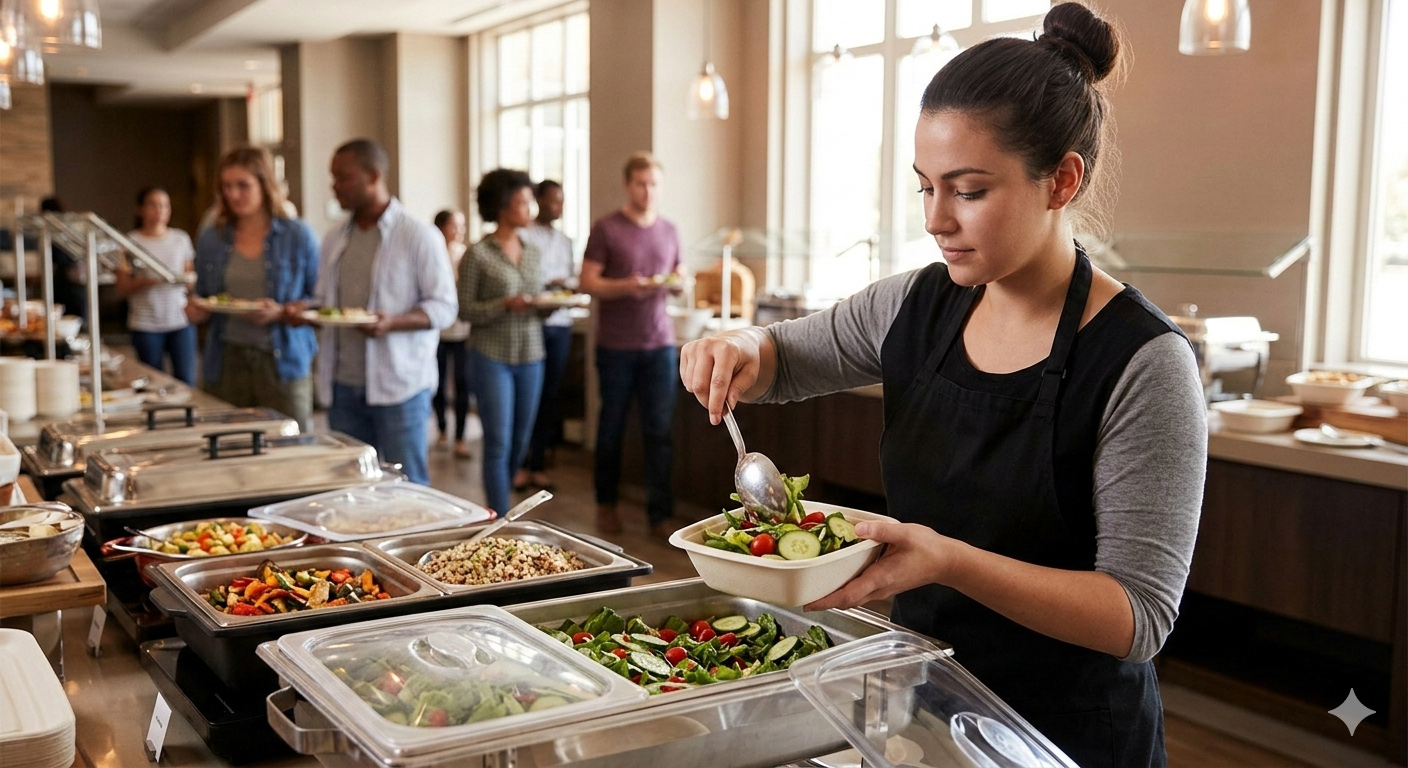
Commercial warming and holding equipment is essential during transitions from prep area to service. Equipment designed to hold food at serving temperature keeps proteins, starches, and vegetables stable while guests circulate.
Key temperature control strategies include:
- Preheating chafing dishes before food placement
- Using insulated carriers during transport from kitchen to floor
- Monitoring with calibrated thermometers
- Rotating smaller pans more frequently instead of loading full hotel pans
- Keeping backup trays in heated cabinets rather than under tables
These practices protect guests and prevent the costly disposal of improperly held food.
Choose Heat-Resilient Compostable Serveware
Serveware does more than carry food. It stabilizes temperature, prevents spills, and shapes how much guests take in a single pass.
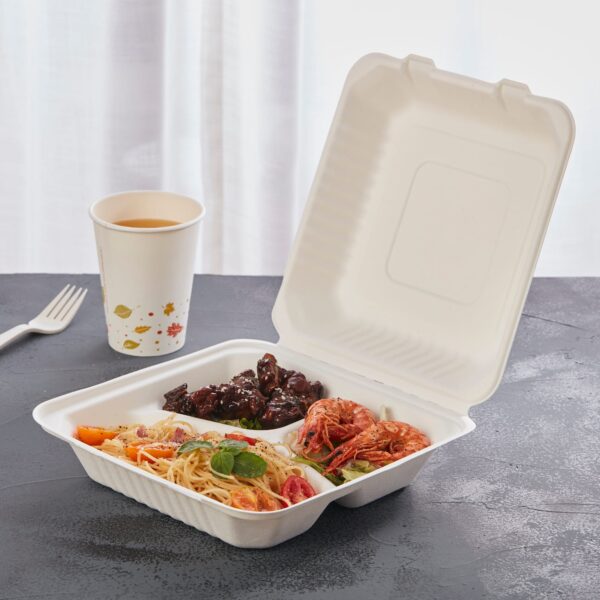
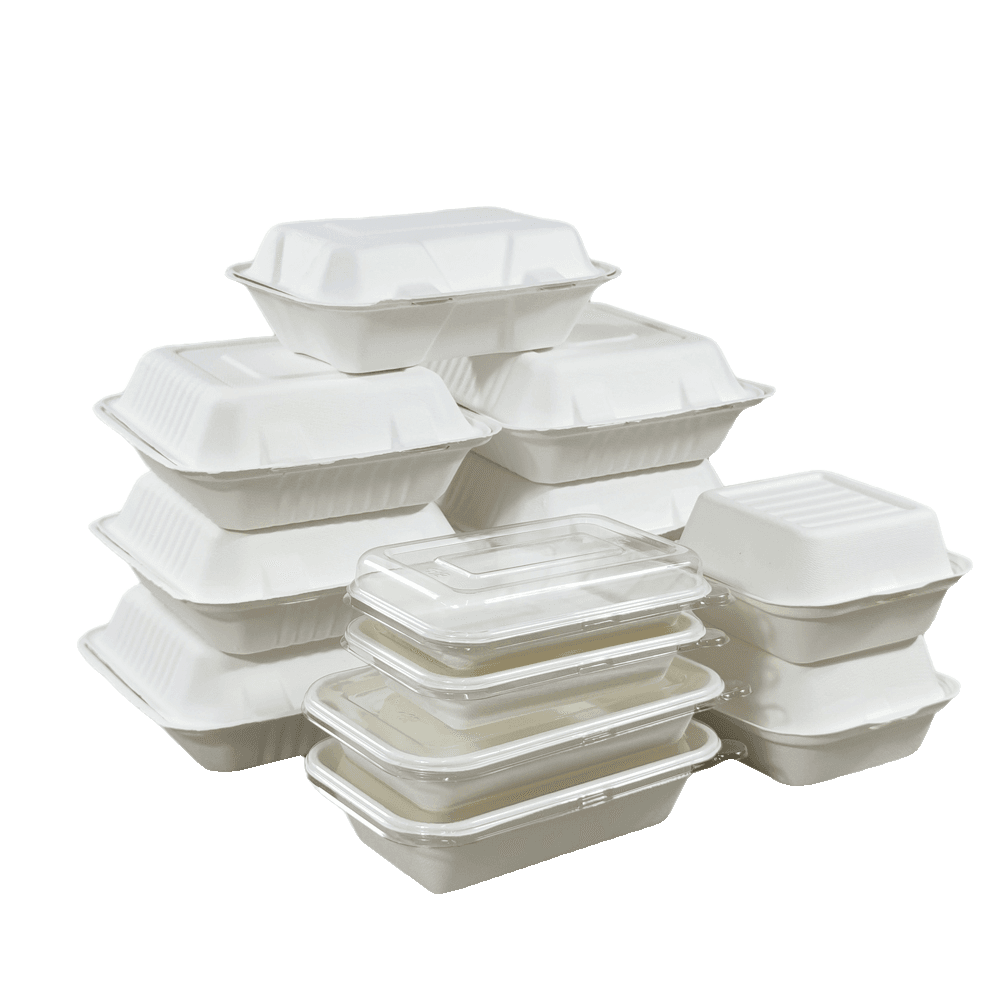
Heat-resistant compostable trays, bowls, and lids maintain structure under warm sauces, steam, and heavier portions. Thin materials can warp or sag, leading to spills that increase waste and slow down service.
When selecting buffet serviceware, look for:
- Molded fiber bowls rated for hot foods
- Compostable lids that trap steam without collapsing
- Partitioned trays that separate moist and dry items
- Reinforced rims that prevent bending under weight
- Stackable designs that reduce breakage during setup

Sustainable materials also support post-event composting plans. That combination of durability and disposal flexibility makes eco-focused events easier to manage without compromising food safety.
Pair Chafers With Insulated Carriers
Many buffets fail between the kitchen door and the first serving spoon. Even short walks across a convention hall can reduce internal food temperatures significantly.
Insulated carriers reduce that drop. Pairing them with chafers creates a seamless transition that limits exposure time.
Event teams should consider:
- Loading chafers only once they are in final position
- Keeping lids closed until service begins
Refilling with fresh smaller batches instead of topping off partially cooled trays - Positioning backup carriers near the line for fast rotation
- Assigning one staff member to monitor refill timing
Operational discipline at this stage prevents soggy textures and temperature swings that lead to waste.
Right Size Portions And Plate Diameters
Oversized plates and deep serving bowls encourage guests to take more than they can comfortably finish. Portion psychology matters in buffet design.
Smaller plates nudge reasonable portions while still allowing guests to return for seconds. Shallow pans also make trays look full longer, reducing the impulse to overproduce.
Consider these portion control tools:
- Nine-inch plates instead of twelve-inch plates
- Serving spoons with measured capacity
- Pre-portioned desserts instead of self-cut cakes
- Smaller ladles for high-cost proteins
- Clearly labeled menu cards that describe portion suggestions
Design Smarter Traffic Flow
Crowded buffet lines slow service and increase contamination risk. Guests lean over trays, lids stay open too long, and food dries out.
Strategic traffic flow protects product quality. Stations should move in a logical progression that separates high-demand items from specialty dishes.
A strong buffet flow often includes:
- Placing plates at the start of the line, not mid-table
- Separating beverage stations from food stations
- Creating dual-sided access for large guest counts
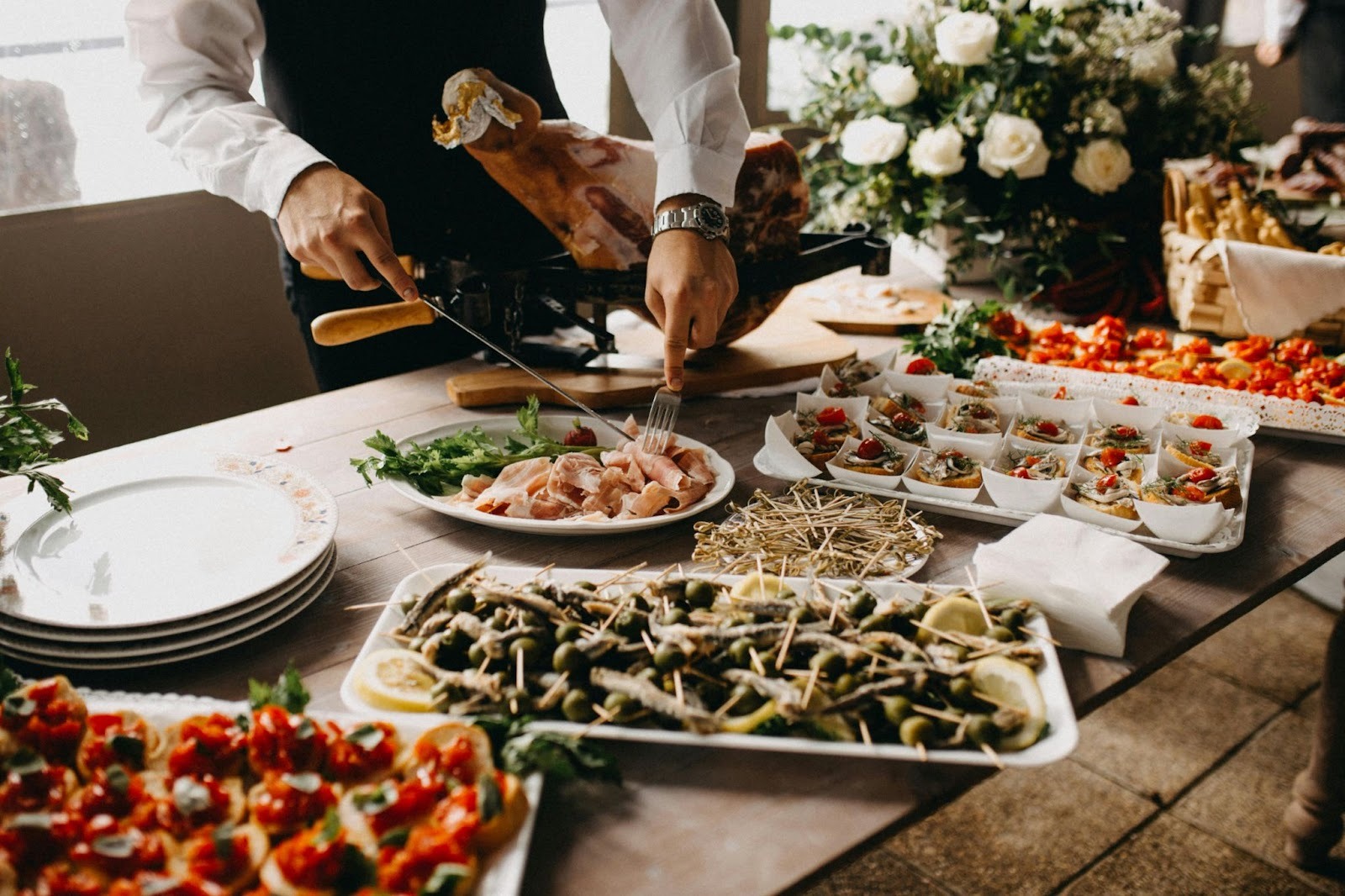
- Positioning carving stations away from self-serve salads
- Allowing clear exit space so guests do not bottleneck
Good flow shortens exposure time for hot dishes and reduces unnecessary contact with serving utensils.
Plan Leftovers Recovery And Composting
No buffet is perfect, but recovery planning reduces landfill impact and financial loss. Surplus planning should begin before the event menu is finalized.
Start with realistic attendance projections. Factor in dietary preferences, seasonal appetites, and event timing.
A thoughtful leftovers strategy can include:
- Donating safe untouched food through approved local partners
- Rapid chilling protocols for items suitable for reuse
- Composting certified materials with local facilities
- Separating liquids from solids to simplify processing
- Tracking leftover volumes to refine future ordering
Clear signage near waste stations also helps guests sort responsibly. When compostable serveware matches the recovery plan, post-event cleanup becomes faster and more environmentally responsible.
Build A Buffet Strategy That Protects Food And Margins
Buffets do not have to mean excess. With the right tactics, teams can protect buffet food and cut waste while maintaining a polished guest experience.
If your team is rethinking buffet operations for sustainability and efficiency, start by evaluating your current materials and holding systems. Small adjustments in equipment and layout can deliver measurable results at your next event.