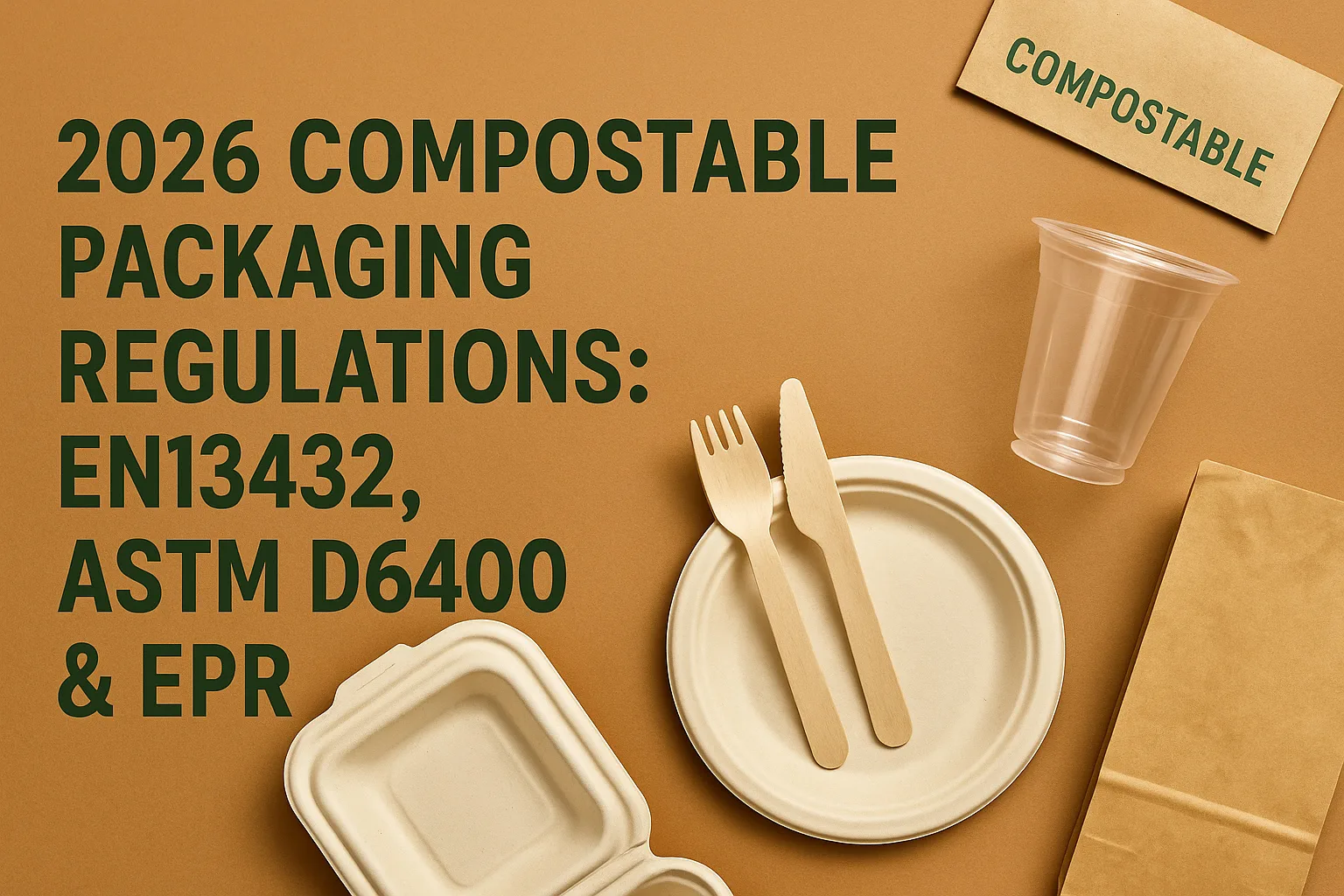
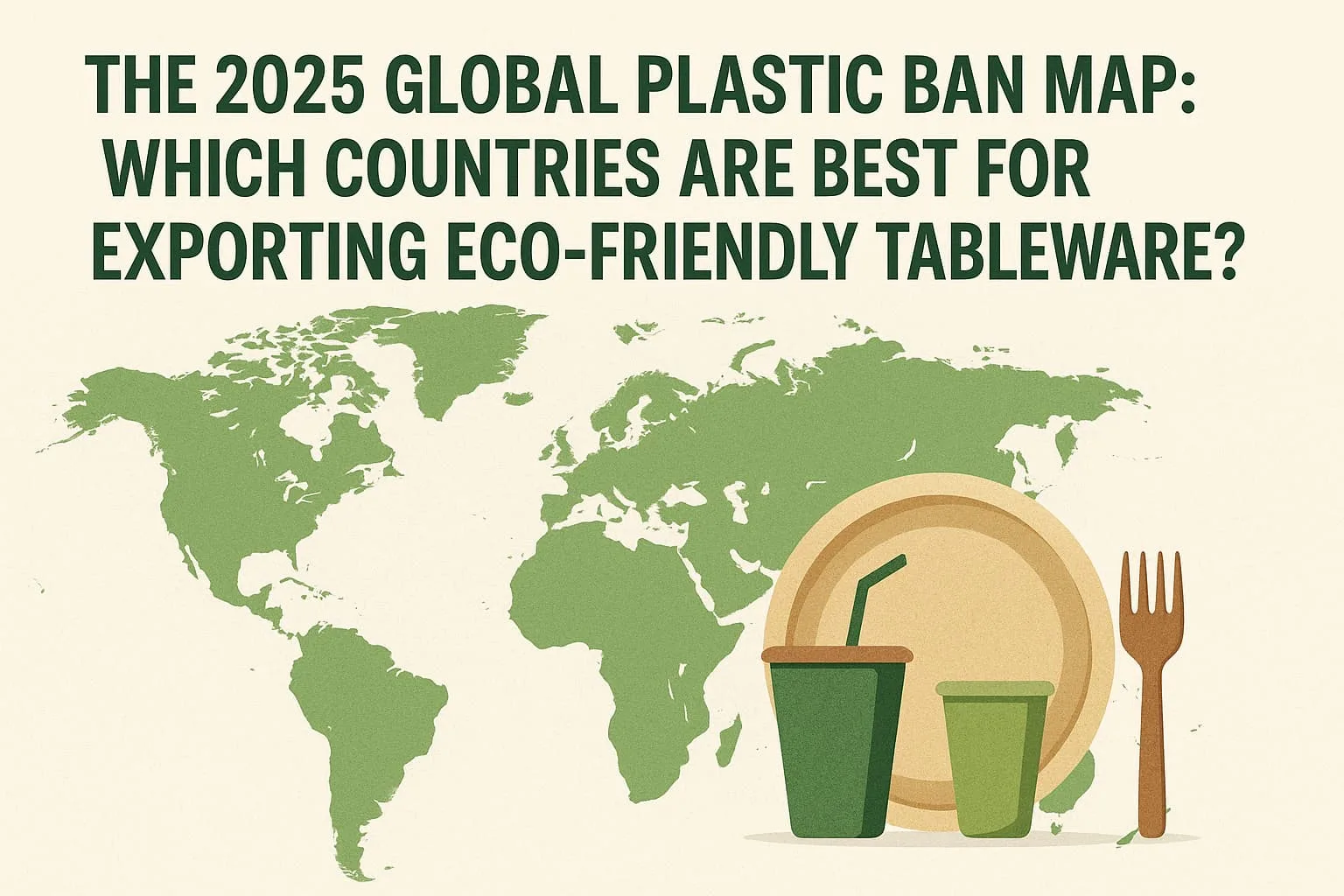
Introduction: Why 2026 Is a Turning Point for Disposable Food Packaging
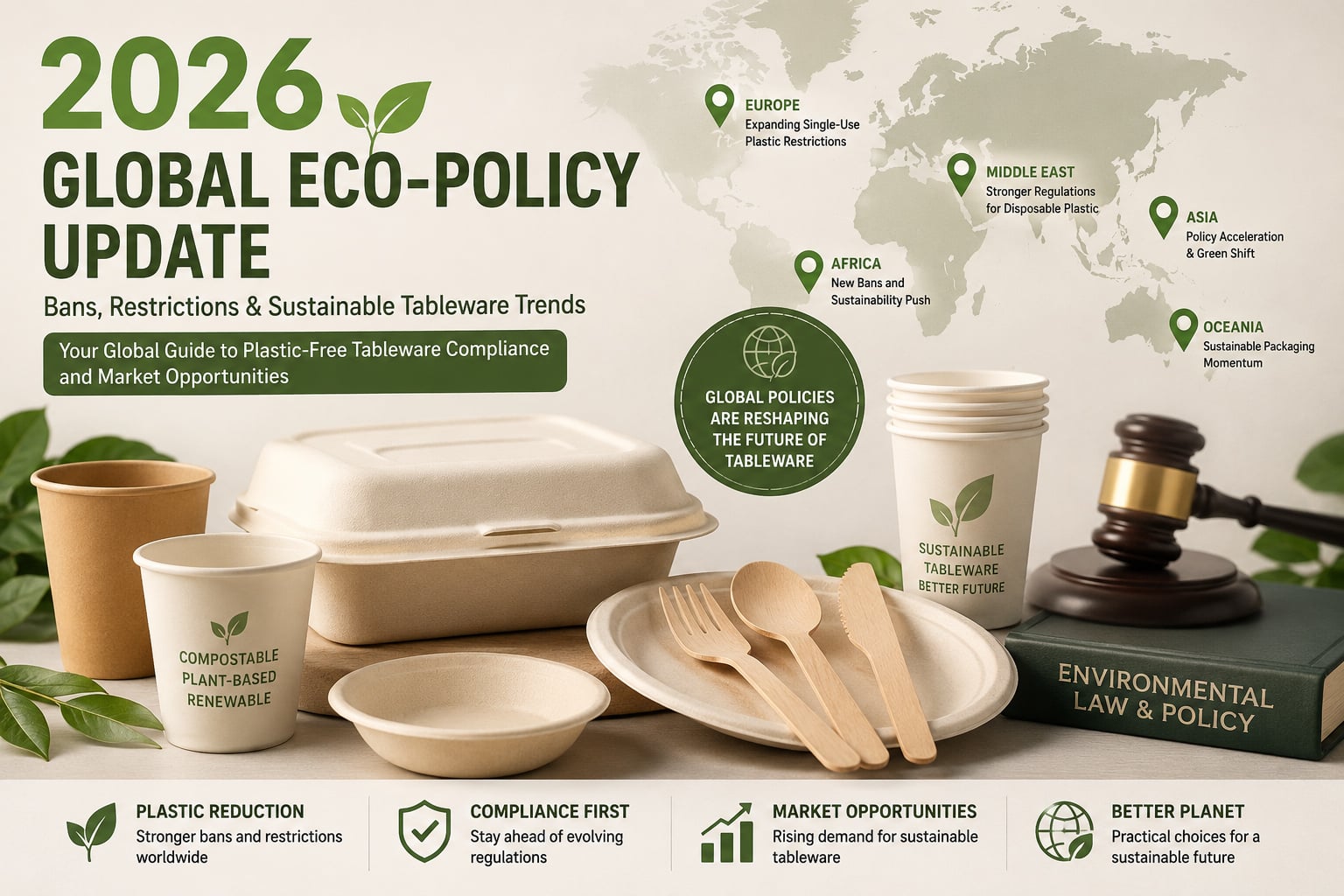
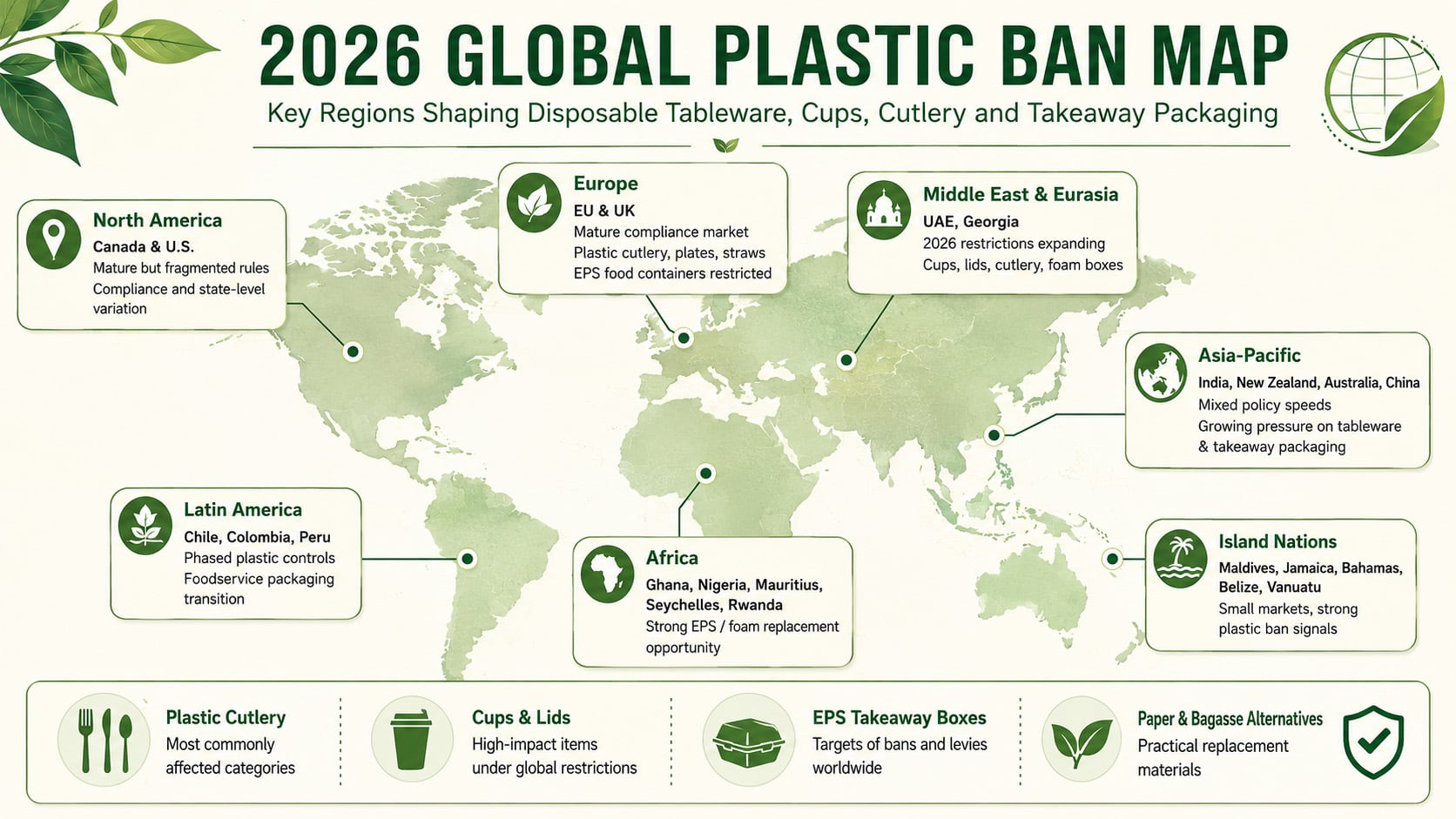
Quick Summary: 2026 Global Plastic Tableware Policy Update
- Disposable foodservice packaging is becoming a priority category in global plastic policy.
- Plastic cutlery, plastic plates, plastic cups, straws, stirrers and EPS foam food containers are among the most frequently restricted items.
- Europe and Canada are mature compliance markets, where documentation and packaging claims are closely reviewed.
- Georgia and the UAE are important 2026 examples of new restrictions affecting foodservice plastics.
- Africa’s most practical opportunity is the replacement of EPS / Styrofoam takeaway boxes, especially in countries such as Ghana, Seychelles, Mauritius, Rwanda and Nigeria.
- Asia-Pacific is highly diverse: India and New Zealand have stricter restrictions, while Southeast Asia is moving more gradually through phased plastic reduction and tourism-driven demand.
- For global buyers, the safest strategy is a mixed-material portfolio: sugarcane bagasse, paperboard, kraft paper, plastic-free coated paper, wooden cutlery and certified compostable materials where accepted.
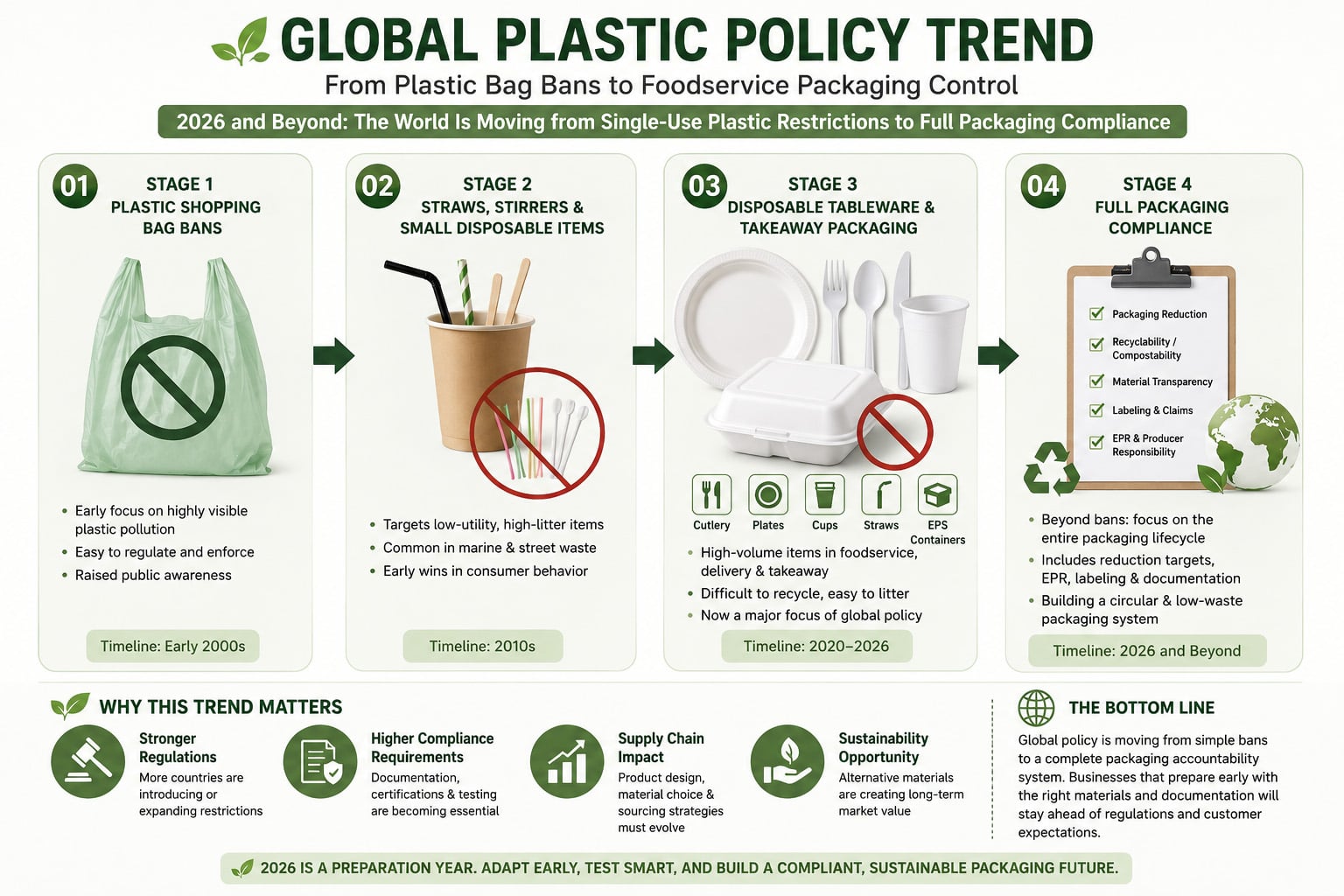
1. Global Policy Trend: From Plastic Bag Bans to Foodservice Packaging Control
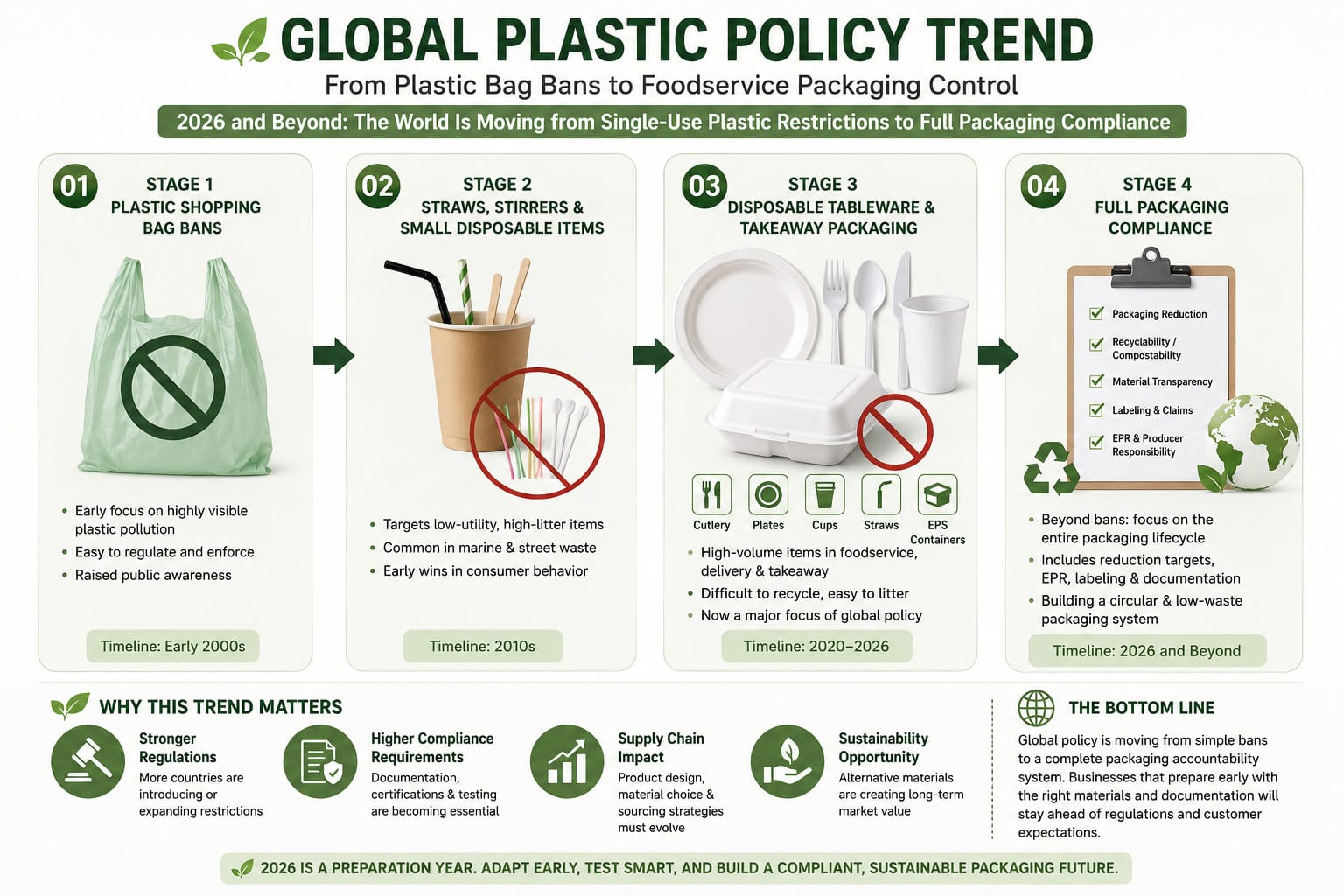
Over the past decade, plastic regulation has evolved in clear stages. Many countries began with plastic shopping bags because they were visible, lightweight and widely littered. The next stage targeted plastic straws, stirrers and other small-format items with low functional value but high environmental visibility. By 2026, the policy focus has moved into a more commercially important area: disposable foodservice packaging.
This shift matters because foodservice packaging is used at scale. A single restaurant chain, coffee shop network, airline caterer, food delivery platform or hotel group may consume millions of cups, lids, trays, bowls, plates, cutlery sets and takeaway containers each year. When governments restrict these products, buyers cannot simply remove one item from a shelf. They must rebuild packaging specifications, test alternative materials, check local disposal systems, confirm food-contact safety, and secure stable supply before regulations are fully enforced.
Four stages of global plastic packaging regulation
Stage 1: Plastic shopping bags
Early plastic policies often focused on lightweight carry bags. These measures created public awareness and gave governments experience in regulating high-volume single-use products.
Stage 2: Straws, stirrers and small disposable items
Plastic straws and beverage stirrers became early targets because they are often unnecessary, difficult to recycle and frequently found in marine litter and street waste.
Stage 3: Disposable tableware and takeaway packaging
Plastic cutlery, plastic plates, plastic bowls, plastic cups, EPS foam clamshells and food containers are now being regulated more aggressively because of their direct connection to restaurants, takeaway meals and food delivery.
Stage 4: Full packaging compliance
Mature markets are expanding from bans to complete compliance systems, including recyclability, compostability, labeling, food-contact safety, EPR, packaging reduction targets and environmental claim control.
Why 2026 is different from earlier plastic bans
Earlier plastic bans were often simple: stop using a specific bag, straw or foam box. The 2026 policy environment is more technical. Regulators and buyers are asking whether packaging is reusable, recyclable, compostable, fiber-based, plastic-coated, PFAS-free, industrially compostable or suitable for local waste collection. This is especially important for products such as coated paper cups, molded fiber bowls, compostable plastic cutlery and clear PLA cups.
A product labeled as “biodegradable” is not automatically accepted in every market. Some countries allow certified compostable plastic materials under certain conditions. Others still classify PLA, CPLA or other bioplastic items as single-use plastic. This is why global buyers should avoid a one-material strategy. A more resilient procurement approach is to combine molded fiber, paper, kraft board, plastic-free coatings, wood and certified compostable materials according to each destination market.
Bioleader® Insight: Compliance is now part of product performance
For B2B food packaging buyers, a disposable container is no longer judged only by price, leak resistance or appearance. Compliance performance is becoming equally important. A practical packaging solution must answer four questions: Is it legally acceptable in the destination market? Is it safe for direct food contact? Is the end-of-life claim supported by evidence? Can the supplier provide consistent quality and documentation at export scale?
Product categories most affected by 2026 policy pressure
| Produktkategorie | Why It Is Targeted | Common Alternatives | Buyer Risk Point |
|---|---|---|---|
| Plastik-Besteck | Used once, difficult to recycle and common in takeaway waste. | Wooden cutlery, CPLA cutlery, cornstarch cutlery, paper-wrapped cutlery kits. | Compostable plastic cutlery may still be restricted in some markets. |
| Plastic plates and bowls | High-volume items in catering, events, food courts and outdoor dining. | Sugarcane bagasse plates, bagasse bowls, molded fiber trays, paper bowls. | Buyers must confirm heat, oil and sauce resistance for real food applications. |
| Plastikbecher und Deckel | Heavy consumption in coffee shops, juice bars, events and delivery channels. | Paper cups, plastic-free coated paper cups, PLA cups where accepted, fiber lids. | PLA cups are cold-use products and may not be exempt from all plastic bans. |
| EPS / Styrofoam food containers | Bulky, low-value, difficult to recycle and highly visible in litter streams. | Bagasse clamshells, bagasse trays, kraft paper food boxes, molded fiber containers. | Replacement products must match real takeaway needs: heat, oil, moisture and stacking. |
| Plastikstrohhalme und Rührstäbchen | Low-utility items that often become litter and marine debris. | Paper straws, bagasse straws, wooden stirrers, CPLA straws where allowed. | Drink type, soaking time and customer experience must be tested before bulk buying. |
For global buyers, the strategic lesson is clear: 2026 is a preparation year. Even in markets where enforcement is gradual, foodservice brands and distributors are already evaluating alternatives. Early preparation gives buyers time to test packaging with hot meals, oily foods, soups, salads, chilled drinks, delivery routes and storage conditions before regulations or customer requirements become urgent.
Bioleader® supports this transition with a broad portfolio of Geschirr aus Zuckerrohr-Bagasse, paper food packaging and compostable cutlery designed for foodservice buyers who need practical alternatives to conventional plastic and foam packaging. The strongest product strategy is not to replace every plastic item with one single material, but to match each product category with the most suitable material and market requirement.
2. Europe: Mature Regulations and Higher Compliance Requirements
Europe is one of the most mature regions for plastic tableware regulation. The European Union’s Single-Use Plastics framework already restricts a series of items such as plastic cutlery, plates, straws, stirrers, expanded polystyrene food containers and expanded polystyrene beverage cups. The newer Verordnung über Verpackungen und Verpackungsabfälle also moves Europe toward a more comprehensive packaging compliance model, with stronger attention to reduction, recyclability, reuse, labeling and producer responsibility.
This means that Europe should not be treated as a simple “plastic ban” market. It is a compliance market. Buyers are not only asking whether a disposable product is eco-friendly; they are asking whether it is supported by test reports, food-contact declarations, compostability certificates, PFAS-free statements and precise material information. In practical terms, a supplier that understands documentation can be more valuable than a supplier offering only a low unit price.
European policy direction by market
| Markt | Policy Direction | Foodservice Packaging Impact | Recommended Buyer Focus |
|---|---|---|---|
| Europäische Union | SUP restrictions plus broader PPWR packaging compliance. | Plastic cutlery, plates, straws, stirrers, EPS cups and EPS food containers are key affected categories. | EN13432, food-contact compliance, recyclability or compostability evidence, material labeling. |
| Vereinigtes Königreich | Single-use plastic restrictions include plastic cutlery and polystyrene food and drink containers. | Buyers are cautious about plastic-coated items and compostable plastic claims. | Clear material declarations, food-contact safety and non-plastic alternatives where possible. |
| Frankreich | Strong anti-waste and circular economy policy direction. | Foodservice operators face pressure to reduce disposable plastics and improve packaging end-of-life performance. | Reusable, recyclable, compostable and paper-based alternatives with credible evidence. |
| Deutschland | Strict packaging compliance culture and documentation expectations. | Importers usually require technical files, product specifications and compliance documents. | Food-contact testing, migration reports, packaging registration awareness and traceability. |
| Italien | Compostability and foodservice packaging rules are closely linked to waste-management systems. | Certified compostable products may have opportunities, but vague environmental claims are risky. | Certified materials and locally acceptable disposal instructions. |
| Spanien | Plastic reduction and packaging tax pressure support demand for alternatives. | Foodservice buyers are evaluating paper, molded fiber and compostable options. | Cost-effective sustainable packaging with strong documentation. |
| Niederlande | Strong focus on circular packaging and reduction of disposable plastics in foodservice. | Disposable cups, containers and takeaway packaging face close scrutiny. | End-of-life clarity, recyclability or compostability proof, and practical foodservice performance. |
Europe’s real buyer question: Can the product survive a compliance review?
In Europe, “biodegradable” is not enough. A professional importer may ask for EN13432 certification for compostable products, EU food-contact compliance, migration testing, Declaration of Compliance, PFAS-related statements, product specification sheets, coating information, carton details and traceability data. If the product is a paper cup, the buyer may ask whether the lining is PE, PLA, water-based aqueous coating or another barrier system. If the product is molded fiber, the buyer may ask whether it is PFAS-free, microwave-safe, oil-resistant and suitable for hot foods.
This makes Europe a strong market for technically prepared suppliers. For example, Bagasse-Mehrschalenkästen can be positioned as a direct alternative to EPS foam containers and plastic takeaway boxes, but the sales argument should go beyond sustainability. Buyers also need information on leak resistance, heat performance, lid closure, stacking stability, PFAS-free status and compliance documents.
Bioleader® Insight of European
The European market rewards verifiable claims. Exporters should avoid vague wording such as “green,” “eco-safe” or “fully biodegradable” without evidence. Stronger wording includes the material, intended use, applicable temperature range, coating type, food-contact status, compostability pathway and disposal limitations.
Best-fit alternatives for European buyers
Geschirr aus Zuckerrohr-Bagasse
Best suited for replacing EPS clamshells, plastic plates, disposable bowls and takeaway trays. It is a strong option for restaurants, catering, delivery meals and quick-service food packaging.
Lebensmittelbehälter aus Papier
Kraft paper boxes, soup cups, salad bowls and paper takeaway containers remain important for European foodservice. The coating type and food-contact compliance should be clearly stated before import.
Plastic-free coated paper cups
Where plastic-coated packaging is under scrutiny, water-based or plastic-free coated paper cups may provide stronger positioning for coffee chains, events and corporate foodservice.
Wooden and certified compostable cutlery
Wooden cutlery is widely accepted as a simple non-plastic option. CPLA and cornstarch cutlery can be considered where industrial compostable plastics are accepted by local rules and waste systems.
A strong Europe strategy should include product documentation from the beginning, not after the buyer has already requested it. For exporters, this means building a compliance file for every major product category: bagasse clamshells, paper bowls, paper cups, trays, plates and cutlery. For buyers, it means comparing suppliers not only by price but also by documentation readiness, product consistency and ability to support audits or retailer requirements.
3. Middle East and Eurasia: 2026 Becomes a Stronger Enforcement Window
The Middle East and Eurasia are becoming more active in single-use plastic regulation. Historically, these markets were often viewed as import-driven foodservice markets with strong demand for plastic cups, plastic cutlery, foam boxes and takeaway packaging. In 2026, that picture is changing. The UAE and Georgia are two important examples where policy pressure is becoming more specific and product-level restrictions are affecting foodservice packaging.
For packaging distributors, hospitality suppliers and restaurant chains, this creates an early-mover opportunity. Buyers that prepare before enforcement becomes fully mature can test alternatives, negotiate stable supply, redesign branded packaging and avoid sudden shortages when restricted items are removed from the market.
Key Middle East and Eurasia markets to watch
| Markt | 2026 Policy Direction | Main Affected Products | Business Opportunity |
|---|---|---|---|
| Vereinigte Arabische Emirate | Restrictions are expanding to more single-use plastic consumer products in 2026. | Plastic cups, lids, plates, cutlery, straws, stirrers and Styrofoam food containers. | Premium foodservice packaging for hotels, cafés, catering and restaurant chains. |
| Georgia | 2026 restrictions affect single-use plastic food-contact products and EPS items. | Plastic forks, knives, spoons, chopsticks, plates, straws, stirrers, EPS containers, cups and lids. | Direct replacement demand for bagasse, paper and compostable foodservice products. |
| Saudi-Arabien | Plastic waste reduction and sustainability are gaining stronger government and corporate attention. | Foodservice disposables, takeaway packaging and retail food packaging should be monitored. | High-volume hospitality, QSR, supermarket and catering channels. |
| Katar | Hospitality, catering and event sectors are increasingly linked to sustainability requirements. | Meal boxes, plates, cups, cutlery sets and event catering disposables. | Premium packaging for hotels, events, airports and corporate catering. |
| Oman | Plastic reduction policies are progressing gradually, especially around single-use items. | Plastic bags, foodservice packaging and takeaway disposables. | Distributor-led growth for paper, bagasse and compostable alternatives. |
| Bahrain | Packaging sustainability is becoming more relevant for foodservice and import channels. | Plastic cups, straws, plates and restaurant takeaway packaging. | Eco packaging product lines for restaurant supply companies. |
| Turkey | Plastic bag restrictions and packaging sustainability discussions support gradual transition. | Paper cups, food boxes, takeaway bags and sustainable food packaging. | Regional sourcing, branded foodservice packaging and export distribution. |
Why the UAE and Georgia matter in 2026
The UAE is important because its 2026 restrictions reach directly into common foodservice products such as plastic cups, lids, plates, cutlery and Styrofoam food containers. This has strong commercial relevance because the country has a large hospitality sector, a premium restaurant market, significant catering operations and a strong café culture. Buyers in this market often care about packaging appearance, brand customization and reliable delivery performance.
Georgia is important because it is a clear 2026 case where plastic food-contact products are being restricted. The product scope includes items that foodservice distributors understand immediately: forks, knives, spoons, chopsticks, plates, straws, stirrers, EPS food containers, cups and lids. This creates direct demand for alternative product lines, especially for importers who need to supply restaurants, cafés, supermarkets and takeaway operators.
Supplier note for B2B buyers
For markets such as Georgia and the UAE, a complete product portfolio is more useful than one isolated SKU. Bioleader® can support buyers with Lebensmittelverpackungen aus Papier, sugarcane bagasse containers, paper cups, kraft food boxes and compostable cutlery for foodservice replacement programs.
Recommended product strategy for this region
For plastic cup restrictions
Paper cups, double-wall cups, ripple-wall cups and water-based coated cups are suitable for coffee shops, hotels and takeaway beverage service. PLA cold cups may be considered only where local rules accept compostable plastics.
For plastic plate and bowl replacement
Bagasse plates and bowls are practical for buffets, events, takeaway meals and food courts. They offer a more direct non-plastic alternative than compostable plastics in stricter markets.
For EPS takeaway box replacement
Bagasse clamshells and kraft paper food boxes are the most direct replacements for foam meal boxes used for rice dishes, grilled food, burgers, sandwiches and ready-to-eat meals.
For plastic cutlery restrictions
Wooden cutlery, CPLA cutlery, cornstarch cutlery and paper-wrapped cutlery kits can support takeaway meals, airline catering, hospitality service and restaurant delivery programs.
In the Middle East, the strongest opportunity is not always the lowest-cost product. Many buyers want packaging that looks clean, modern and brandable while still supporting sustainability targets. This makes custom-printed paper cups, kraft food boxes, premium bagasse plates and wrapped cutlery kits particularly relevant for hotels, cafés and catering groups.
4. Asia-Pacific: Large Markets, Different Policy Speeds
Asia-Pacific is one of the most important regions for disposable food packaging, but it is also one of the most complex. The region includes large manufacturing economies, dense urban food delivery markets, island tourism destinations, highly regulated developed markets and fast-growing foodservice sectors. As a result, single-use plastic rules do not move at the same speed in every country.
Some countries have broad restrictions that include disposable tableware. India has restricted a range of single-use plastic items such as plates, cups, cutlery, straws, trays and stirrers. New Zealand has banned single-use plastic plates, bowls and cutlery, including items made from recyclable, biodegradable or compostable plastic. Australia uses a state-based approach, with many states restricting plastic cutlery, plates, bowls, straws and EPS foodservice items. China continues to reduce non-degradable single-use plastic products in foodservice and retail channels. Southeast Asia is moving more gradually, but tourism, urban waste pressure and food delivery growth are accelerating demand for alternatives.
Asia-Pacific policy landscape
| Markt | Policy Direction | Packaging Opportunity | Strategic Caution |
|---|---|---|---|
| China | Restrictions on non-degradable single-use plastic products continue in foodservice and retail. | Paper cups, paper bowls, bagasse food containers and compliant biodegradable alternatives. | Policies vary by application and region; product claims should be precise. |
| Indien | Single-use plastic restrictions include food-contact disposables such as plates, cups, cutlery, straws and trays. | Large-volume demand for cost-controlled paper, molded fiber and compostable alternatives. | Price sensitivity is high; product performance and loading efficiency matter. |
| Japan | Strong focus on plastic resource circulation, waste reduction and responsible packaging use. | Premium paper packaging, precise specifications and food-safe alternatives. | Documentation and material declaration are critical. |
| Südkorea | Plastic reduction is connected with recycling, waste sorting and reduced disposable use. | Paper-based food containers, cups and verified sustainable packaging. | Local disposal pathways and labeling expectations should be checked. |
| Thailand | Plastic waste reduction remains important, especially in retail, tourism and urban foodservice. | Paper cups, kraft boxes, bagasse containers and hotel foodservice packaging. | Not all single-use tableware categories are restricted equally. |
| Vietnam | Packaging responsibility and plastic waste management are becoming stronger policy themes. | Paper bowls, bagasse boxes and takeaway alternatives for cafés and delivery brands. | Policy development is gradual; market education is important. |
| Malaysia | Plastic reduction advances through phased policies and local initiatives. | Foodservice distributors may seek alternatives for takeaway packaging and beverage cups. | Check state-level and city-level implementation before quoting. |
| Singapur | Packaging waste reduction and resource efficiency drive sustainable foodservice practices. | Premium paper bowls, bagasse containers and compact packaging systems for urban takeaway. | Buyers value quality consistency, clean design and reliable logistics. |
| Indonesien | Plastic reduction varies by city and region, with strong pressure in tourism and coastal areas. | Bagasse, paper and kraft packaging for restaurants, hotels and beverage chains. | Local rules and enforcement differ by region. |
| Philippinen | Local governments and environmental policies are increasing pressure on single-use plastics. | Eco alternatives for quick-service restaurants, cafés and island tourism markets. | Compliance expectations may vary between cities and buyers. |
| Australien | State-level bans cover many single-use plastic items, including cutlery, plates, bowls, straws and EPS foodservice containers. | Bagasse, paper, cardboard and wooden alternatives for foodservice distribution. | Each state may have different timing, exemptions and product definitions. |
| Neuseeland | Plastic plates, bowls and cutlery are restricted, including recyclable, biodegradable and compostable plastic versions. | Paperboard, molded fiber, bagasse and wooden alternatives are more reliable. | Do not assume PLA or compostable plastic is automatically accepted. |
Asia-Pacific requires product-by-product positioning
A common mistake is to describe Asia-Pacific as one market. This is not accurate. India’s high-volume demand is different from Japan’s documentation-driven procurement. New Zealand’s strict approach to plastic tableware is different from Southeast Asia’s phased and city-level restrictions. Australia’s state-based system requires careful review before making compliance claims. For exporters, the winning strategy is to build flexible product positioning by destination, material and application.
In markets where compostable plastics are accepted, PLA-Becher can serve cold beverage applications such as iced coffee, juice, smoothies and event drinks. However, PLA should never be presented as universally exempt from plastic bans. In stricter markets, paper cups, molded fiber cups, bagasse bowls and plastic-free coated paper options may be safer choices.
Bioleader® Insight of Asia-Pacific
The correct question is not “Which material is the most eco-friendly?” The stronger buyer question is “Which material is accepted in my destination market, suitable for my food type, supported by documents and commercially stable at the quantity I need?”
Recommended strategy by buyer type
For high-volume importers
Focus on bagasse clamshells, paper cups, paper bowls, kraft food boxes and compostable cutlery. Container loading efficiency, carton size and mixed-SKU planning can strongly affect landed cost.
For cafés and beverage chains
Paper cups, ripple-wall cups, cold drink cups, cup lids and branded sleeves are essential. Coating type should be selected according to local policy and customer sustainability targets.
For hotels and tourism markets
Premium kraft boxes, bagasse plates, bagasse bowls and wrapped cutlery kits can support breakfast service, events, room service, beach dining and takeaway meals.
For delivery and meal prep brands
Bagasse containers, paper salad bowls, paper soup bowls and trays with lids should be tested for sealing, stackability, reheating, oil resistance and delivery movement.
In Asia-Pacific, the most commercially resilient suppliers will not push one material for every customer. They will help buyers choose between paper, bagasse, cornstarch, CPLA, wood and PLA according to market rules, food application and buyer positioning. This is especially important for food delivery and takeaway businesses, where sustainability must still work under real operational pressure.
5. Africa: EPS Takeaway Box Replacement Is the Most Practical Opportunity
Africa deserves special attention in 2026 because several countries are moving beyond plastic bag control and into broader restrictions on single-use plastics, foam food packaging and disposable foodservice items. However, the African market should not be described too broadly. The strongest commercial opportunity is not necessarily a continent-wide plastic tableware ban. The most practical opportunity is the replacement of EPS / Styrofoam takeaway boxes.
EPS foam containers are widely used in many African foodservice markets because they are cheap, lightweight and familiar to local restaurants. At the same time, they are difficult to recycle, bulky in waste streams and highly visible in street and coastal litter. This makes them an easy policy target. For suppliers of molded fiber and paper-based packaging, this creates direct demand for bagasse clamshells, bagasse trays, kraft paper food boxes and paper bowls.
Africa policy and opportunity map
| Markt | Policy Direction | Affected Products | Best-Fit Alternatives |
|---|---|---|---|
| Seychelles | Early and strict restrictions on plastic utensils and polystyrene boxes. | Plastic forks, spoons, knives, plates, bowls, cups, trays and polystyrene takeaway boxes. | Bagasse plates, bagasse clamshells, paper cups, paper bowls and wooden cutlery. |
| Mauritius | Single-use plastic product controls cover several foodservice items. | Cups, spoons, forks, knives, straws, bowls, trays, hinged containers, stirrers and lids. | Bagasse containers, paper bowls, kraft boxes and wrapped cutlery kits. |
| Rwanda | One of Africa’s strongest plastic reduction markets, with broad restrictions on single-use plastic items. | Plastic bags, food containers, cutlery, straws and other single-use plastics. | Molded fiber packaging, paper food containers and non-plastic tableware. |
| Kenia | Strong plastic bag policy and restrictions on single-use plastics in protected areas. | Plastic bottles, cups, plates, cutlery and straws in tourism and protected-area contexts. | Hotel and tourism packaging: bagasse plates, paper cups, kraft boxes and wooden cutlery. |
| Ghana | National Styrofoam / EPS product ban announced for 2027, making 2026 a preparation year. | Styrofoam takeaway packs, foam bowls, foam cups and related polystyrene food packaging. | Bagasse clamshells, bagasse trays, paper food boxes and paper soup bowls. |
| Nigeria / Lagos | Large market with growing restrictions and enforcement pressure on foam and single-use plastics. | Styrofoam food containers, plastic plates, cutlery, straws and takeaway packaging. | Cost-controlled bagasse boxes, paper containers and distributor-ready tableware lines. |
| Senegal | Plastic product and waste management rules support a wider reduction direction. | Foodservice plastics, drink containers and packaging items should be monitored. | Paper, bagasse and recyclable or compostable food packaging alternatives. |
| Ethiopia | Plastic bag restrictions are strengthening, with broader waste-management reforms. | Current focus is mainly plastic bags, but single-use packaging pressure may grow. | Early-stage market education for paper and molded fiber alternatives. |
| Tanzania | Plastic carrier bag restrictions are established; foodservice policy is more gradual. | Main focus is plastic bags, with sustainability pressure in tourism and hospitality. | Tourism foodservice packaging, paper bags, bagasse plates and takeaway containers. |
| Südafrika | Packaging sustainability and problematic plastic discussions are increasing. | EPS foodservice packaging, plastic cutlery and disposable packaging should be monitored. | Retail-ready paper packaging, molded fiber containers and certified alternatives. |
| Zimbabwe | Past policy pressure has targeted EPS / foam food containers. | Foam meal boxes and takeaway packaging. | Bagasse clamshells and kraft paper meal boxes. |
Why Africa is a strong bagasse market
For African foodservice buyers, the replacement product must be practical. It must hold hot rice, fried foods, grilled meat, sauces, beans, stews and takeaway meals. It must also be affordable enough for distributors and food vendors. This is why sugarcane bagasse packaging is commercially relevant. It offers a fiber-based alternative to foam containers and can be used for clamshell boxes, trays, bowls and plates.
Bioleader®s Bagasse-Lebensmittelbehälter are especially relevant for markets replacing Styrofoam meal boxes. For buyers in Ghana, Nigeria, Mauritius, Seychelles and Rwanda, the key selling point is not only compostability. It is the ability to replace foam packaging with a food-safe, microwave-friendly, oil-resistant and export-ready molded fiber solution.
Bioleader® Insight of Africa
The African opportunity should be described carefully. Some countries have strict national bans. Others have regional, phased or product-specific controls. The most accurate and commercially useful message is: “EPS and single-use plastic food packaging are becoming priority targets, creating demand for practical non-plastic alternatives.”
Commercial strategy for African distributors
For Ghana and Nigeria
Focus on foam takeaway box replacement. Build a product mix around bagasse clamshells, bagasse trays, kraft paper food boxes and cost-controlled cutlery options.
For Mauritius and Seychelles
Position products for tourism, hotels, restaurants, cafés and catering. Premium appearance and food-safe documentation are more important than only low price.
For Rwanda and Kenya
Focus on policy-aware buyers, hospitality channels and distributors that want alternatives to disposable plastic foodservice items.
For price-sensitive markets
Recommend mixed-container strategies, standard sizes, non-customized SKUs and efficient carton loading to reduce landed cost.
Africa’s 2026 opportunity is not a simple story of “all plastic is banned.” It is a story of policy pressure, urban waste challenges, tourism sustainability and the gradual replacement of foam and plastic foodservice items. For exporters, this makes Africa an important region for practical packaging solutions rather than only premium sustainability claims.
6. Latin America: Phased Plastic Controls Are Expanding Into Foodservice Packaging
Latin America is moving through a phased plastic reduction model. Many countries began with plastic bags and straws, but the policy direction is increasingly connected to foodservice packaging, single-use utensils, disposable cups, plastic plates, EPS containers and delivery packaging. For B2B buyers, this region is important because many regulations are not only environmental statements; they are beginning to influence restaurant operations, retail packaging and importer product selection.
The Latin American market is also commercially diverse. Some buyers serve premium food chains and supermarkets, while others supply local takeaway restaurants, food courts and street food vendors. This means the right solution must balance sustainability, price, performance and local compliance.
Latin America policy and opportunity map
| Markt | Policy Direction | Foodservice Items to Watch | Packaging Opportunity |
|---|---|---|---|
| Chile | Law limits single-use products in food establishments and promotes reusable, recyclable or compostable alternatives. | Cups, bowls, cutlery, plates, boxes, trays, straws, sachets and lids. | Certified compostable, paper, bagasse and molded fiber foodservice packaging. |
| Kolumbien | Law 2232 phases out multiple single-use plastic products through staged implementation. | Plastic bags, straws, stirrers, cutlery, plates and other foodware categories over time. | Early replacement product lines for distributors and foodservice operators. |
| Peru | Law 30884 regulates single-use plastics and disposable containers. | Plastic bags, straws, foam packaging, plastic tableware and disposable containers. | Kraft food boxes, bagasse clamshells, paper cups and compostable cutlery. |
| Mexiko | Plastic restrictions vary by state and city, with growing pressure on single-use items. | Plastic bags, straws, foam containers and foodservice disposables in some regions. | Region-specific product strategies for restaurant distributors and retailers. |
| Costa Rica | Environmental policy direction favors plastic reduction and sustainable alternatives. | Plastic foodservice items, bags and hospitality packaging should be monitored. | Tourism and eco-hospitality packaging solutions. |
| Panama | Plastic reduction measures and sustainability pressure support alternative packaging demand. | Plastic straws, bags and foodservice disposables in phased contexts. | Paper cups, bagasse plates, kraft food boxes and cutlery kits. |
| Ecuador | Local and national plastic reduction efforts support broader sustainability positioning. | Plastic bags, foodservice packaging and disposable items should be watched. | Paper and molded fiber alternatives for retailers and foodservice distributors. |
| Argentina | Plastic rules often develop through provincial or city-level measures. | Plastic bags, straws and selected foodservice items depending on location. | Market education and distributor-led sustainable packaging portfolios. |
| Brasilien | Large market with city and state-level plastic reduction initiatives. | Plastic straws, bags, foam containers and foodservice packaging in certain jurisdictions. | High-volume paper cups, kraft boxes, molded fiber trays and custom food packaging. |
Latin America needs practical alternatives, not only premium eco products
Buyers in Latin America often need packaging that can compete in price while still supporting sustainability claims. A premium compostable product may be attractive to high-end restaurants or supermarkets, but a distributor serving thousands of small restaurants may need standard sizes, stable supply and competitive landed cost. This is where product standardization becomes important.
Zum Beispiel, Lebensmittelkartons aus Kraftpapier can serve burgers, noodles, rice meals, snacks, fried foods and takeaway combos. They are easy to brand, efficient for foodservice, and familiar to customers. Bagasse clamshells and trays can then cover hot meals and foam-box replacement. This mixed portfolio gives importers more flexibility than relying on one material.
Bioleader® Insight of Latin America
In phased regulatory markets, buyers should not wait until every restricted item is fully enforced. The smarter strategy is to introduce alternative SKUs early, test customer acceptance and build supplier relationships before demand increases suddenly.
Recommended product mix for Latin America
- Bagasse clamshells: best for foam box replacement, hot meals and takeaway combos.
- Paper food boxes: suitable for burgers, snacks, noodles, rice meals and branded takeaway.
- Paper cups: useful for coffee, cold beverages and event catering.
- Paper soup bowls and salad bowls: strong fit for delivery, meal prep and food courts.
- Compostable or wooden cutlery: relevant where plastic forks, knives and spoons are restricted.
Latin America is a region where importers should combine policy awareness with commercial realism. The best-performing packaging strategy will usually include several material categories rather than one “perfect” product. This allows distributors to serve restaurants at different price levels while still moving away from conventional plastic and foam.
7. Island Nations and Tourism Markets: Small Countries, Strong Plastic Ban Signals
Island nations are often among the fastest movers in plastic restrictions because they experience marine plastic pollution directly. Waste management capacity may be limited, tourism is highly visible, and beaches are central to the national economy. For these countries, plastic straws, cups, cutlery, plates and foam takeaway boxes are not only waste problems; they affect tourism image and coastal ecosystems.
These markets may not always generate the largest container volumes, but they are important for high-value foodservice, hotels, resorts, airports, events, cruise catering and eco-tourism brands. For exporters, island markets can also serve as proof points for sustainable packaging adoption.
Island and tourism markets to watch
| Markt | Policy Signal | Commonly Affected Items | Best-Fit Solutions |
|---|---|---|---|
| Maldives | Phased single-use plastic elimination linked to marine protection and tourism. | Plastic straws, cups, plates, cutlery and other single-use items. | Premium paper cups, bagasse plates, kraft boxes and wrapped cutlery kits. |
| Vanuatu | Known for strong plastic restrictions among Pacific island nations. | Plastic bags, straws, plates, cutlery and polystyrene food containers. | Bagasse clamshells, paper food containers and non-plastic tableware. |
| Fiji | Plastic reduction is connected to tourism and marine protection. | Plastic bags, straws, takeaway packaging and foodservice disposables. | Hotel and resort packaging lines using paper and molded fiber. |
| Samoa | Pacific island plastic reduction efforts support alternatives to disposable plastics. | Plastic bags, straws and foodservice packaging in policy focus areas. | Paper cups, bagasse plates, bowls and takeaway boxes. |
| Jamaica | Expanded restrictions cover certain single-use plastic food containers, including PE, PP and PLA containers. | Plastic food containers, EPS food containers and related single-use items. | Bagasse containers, paper food boxes and non-plastic food packaging. |
| Barbados | Disposable plastic restrictions support non-plastic foodservice alternatives. | Single-use plastic containers, cutlery and straws. | Bagasse tableware, paper cups and wooden cutlery. |
| Bahamas | Restrictions cover several plastic and polystyrene foodservice items. | Polystyrene cups, plates, food containers, plastic cutlery and straws. | Bagasse clamshells, paper cups and fiber-based food containers. |
| Belize | Restrictions target plastic and foam foodservice packaging. | Plastic clamshells, plates, bowls, cups, lids, cutlery and straws. | Paper, bagasse and compostable foodservice packaging. |
| Mauritius | Tourism-driven island market with single-use plastic controls. | Cups, bowls, trays, cutlery, hinged containers and lids. | Premium bagasse, paper bowls, kraft boxes and hotel packaging. |
| Seychelles | Early strict restrictions on plastic utensils and polystyrene boxes. | Plastic cups, plates, bowls, trays, cutlery and polystyrene boxes. | Bagasse plates, clamshells, paper cups and wooden cutlery. |
Why island markets are strategically useful
Island markets are often smaller, but their sustainability requirements are highly visible. Hotels, resorts and tourism operators may be more willing to adopt premium packaging if it protects brand image and aligns with environmental commitments. This makes island markets suitable for customized paper cups, branded kraft boxes, premium bagasse plates and complete takeaway packaging sets.
Bioleader®s Pappbecher and molded fiber tableware can support hotels, resorts, catering companies and beverage chains that want to reduce single-use plastic exposure without compromising service quality. For these buyers, packaging should be both functional and presentation-ready.
Bioleader® Insight of Island Market
Island nations show why plastic policy is not only about legislation. It is also about marine pollution, tourism reputation, limited landfill capacity and customer expectations. For exporters, these markets require reliable quality, clean design and practical sustainability claims.
8. North America: Mature but Fragmented Regulation
North America is a mature market for sustainable food packaging, but it is not one uniform regulatory environment. Canada has a more centralized federal framework for certain single-use plastic items, while the United States is fragmented across state, city and local rules. For this reason, a U.S. buyer may face different requirements depending on whether products are sold in California, New York, Washington, New Jersey or another jurisdiction.
For B2B exporters, the key is to avoid oversimplification. The United States does not have one nationwide plastic tableware ban that applies uniformly to all foodservice packaging. Instead, buyers often deal with state-level bans, municipal foam restrictions, retailer requirements, PFAS-related rules, procurement standards and sustainability commitments from restaurant chains or supermarkets.
North America policy and opportunity map
| Markt | Policy Direction | Foodservice Packaging Impact | Buyer Strategy |
|---|---|---|---|
| Kanada | Federal single-use plastic regulations restrict checkout bags, cutlery, certain foodservice ware, ring carriers, stir sticks and straws. | Importers need alternatives to problematic plastic foodservice ware and cutlery. | Use certified, well-documented paper, molded fiber and compostable alternatives. |
| Vereinigte Staaten | Fragmented state and city regulations, plus retailer and foodservice chain requirements. | EPS bans, straw rules, plastic bag laws, PFAS restrictions and compostability labeling rules vary by market. | Confirm destination-state rules before quoting or making compliance claims. |
| Kalifornien | One of the strongest policy environments for packaging, recycling, labeling and PFAS-related concerns. | Foodservice packaging buyers often require strong documentation and careful claims. | PFAS-free molded fiber, paper packaging and verified compostable products where accepted. |
| New York | Restrictions on foam food containers and broader plastic reduction pressure. | EPS takeaway packaging replacement remains relevant. | Bagasse clamshells, molded fiber trays and paper food containers. |
| Washington | Strong packaging sustainability and PFAS-related policy direction. | Foodservice packaging must be reviewed for material safety and environmental claims. | PFAS-free products and clear technical documentation. |
| New Jersey | Single-use bag and foam container restrictions influence foodservice packaging choices. | Takeaway food containers and foodservice disposables are affected by local restrictions. | Paper, bagasse and fiber-based alternatives with food-contact documentation. |
North American buyers look beyond the ban itself
In North America, a buyer may ask questions that go beyond whether a product is legally allowed. They may ask whether molded fiber packaging is PFAS-free, whether compostable products are accepted in local composting programs, whether the product can be labeled as compostable, whether it meets retailer standards, and whether China-origin molded fiber products are exposed to additional trade remedies or tariffs.
This makes North America a high-opportunity but high-requirement market. Packaging must be practical, cost-efficient, well-documented and aligned with local labeling rules. Bagasse-Schalen mit Deckeln, clamshell boxes, paper bowls and compostable cutlery can all be strong options, but the buyer should verify the destination state’s rules and import cost structure before placing large orders.
Bioleader® Insight of North America
In the U.S. market, compliance is not only environmental. It may also include state-specific packaging rules, PFAS requirements, compostability labeling rules and customs duty exposure. Buyers should work with their local customs broker and legal advisor before making final claims or import decisions.
9. Which Materials Are Most Practical for Global Buyers?
No single material can solve every market requirement. The best global packaging strategy is a portfolio strategy. Buyers should select materials according to product use, destination market, local disposal infrastructure, budget, certification needs and customer expectations.
Material comparison for 2026 plastic restriction markets
| Material | Beste Anwendungen | Stärken | Compliance Caution |
|---|---|---|---|
| Zuckerrohr-Bagasse | Clamshells, plates, bowls, trays, food containers. | Strong replacement for EPS and plastic food containers; good for hot meals and takeaway. | PFAS-free status and food-contact documentation should be verified. |
| Kraft paper and paperboard | Food boxes, soup bowls, salad bowls, paper cups and takeaway containers. | Brandable, familiar to foodservice buyers and suitable for many takeaway formats. | Coating type matters; PE, PLA and water-based coatings may be treated differently. |
| Plastic-free coated paper | Paper cups, paper bowls and food containers where plastic coatings are under scrutiny. | Stronger positioning in markets concerned about plastic-lined packaging. | Performance, recyclability and certification claims must be supported by testing. |
| Holz | Cutlery, stirrers and small foodservice utensils. | Simple, non-plastic and widely accepted in many strict markets. | Customer experience, splinter control and food-contact quality should be checked. |
| CPLA / cornstarch | Cutlery, meal kits, wrapped utensil sets and selected foodservice items. | Useful where compostable plastics are accepted and industrial composting exists. | May still be classified as plastic in some bans; destination-market review is required. |
| PLA | Cold drink cups, clear beverage cups, salad and dessert packaging in accepted markets. | Clear appearance and plant-based material positioning for cold beverage service. | Not suitable for hot drinks; not automatically exempt from plastic bans. |
Why bagasse is often the safest replacement for EPS foam
EPS foam food containers are one of the most common policy targets because they are difficult to recycle and highly visible in waste streams. For this category, sugarcane bagasse is often the most practical replacement. It is fiber-based, suitable for many hot food applications, and can be molded into clamshells, trays, bowls and plates.
Buyers evaluating foam replacement can also review Bioleader®’s field-oriented discussion, Are Sugarcane Bagasse Clamshell Boxes Reliable?, which focuses on practical performance factors such as leak resistance, delivery movement, reheating and food compatibility. These real-use questions are exactly what importers should test before switching from foam to fiber.
Bioleader® product direction
For buyers preparing for 2026 plastic restrictions, Bioleader® recommends building a core replacement portfolio around bagasse clamshells, bagasse plates, paper cups, kraft paper boxes, paper soup bowls, paper salad bowls and compostable cutlery. This combination covers most regulated foodservice categories without relying on one material for every application.
10. What Should Importers and Food Brands Do in 2026?
The most important decision for 2026 is not simply choosing a “green” product. Importers and food brands should create a compliance-ready packaging roadmap. This roadmap should identify which current products are at risk, which materials are acceptable in each destination market, what documentation is required and how alternative products perform in real foodservice conditions.
Practical sourcing checklist
- Confirm the destination market: plastic rules may differ by country, state, city or foodservice channel.
- Identify the restricted product category: cutlery, cups, plates, bowls, straws, lids, EPS containers and coated paper products may be treated differently.
- Check whether compostable plastics are accepted: PLA and CPLA may be allowed in some markets but restricted in others.
- Request material documentation: ask for material composition, coating type, food-contact safety and compostability evidence where relevant.
- Test real food applications: hot soup, oily food, curry, fried food, chilled salad, delivery movement and microwave reheating should be tested before bulk orders.
- Review PFAS requirements: molded fiber food packaging should be checked for PFAS-free status where required by buyers or local rules.
- Calculate landed cost: unit price, carton volume, container loading, freight, duty and local handling charges all affect final competitiveness.
- Build a mixed product portfolio: combine bagasse, paper, kraft, wood and compostable materials instead of relying on one material.
Recommended procurement roadmap
| Schritt | Käufer Aktion | Warum es wichtig ist |
|---|---|---|
| Schritt 1 | Map current plastic and foam SKUs. | Helps identify which products are most exposed to policy risk. |
| Schritt 2 | Select replacement materials by application. | Prevents the mistake of using one material for every food type. |
| Schritt 3 | Request samples and technical documents. | Allows performance testing and compliance review before purchasing. |
| Schritt 4 | Test food compatibility and delivery performance. | Reduces complaints caused by leaking, softening, deformation or lid failure. |
| Schritt 5 | Confirm local import and labeling requirements. | Avoids customs, retailer or marketplace compliance issues. |
| Schritt 6 | Place trial orders before large-scale conversion. | Gives distributors time to collect customer feedback and adjust the product mix. |
For food brands and distributors, the most resilient approach is to start with high-risk categories: EPS foam boxes, plastic cutlery, plastic plates, plastic cups, plastic straws and plastic-coated takeaway packaging. Once these categories are mapped, buyers can build a structured transition plan using bagasse, paper, kraft and cutlery alternatives.
11. Bioleader® Solutions for Global Plastic Restriction Markets
Bioleader® supplies disposable foodservice packaging for global buyers preparing for plastic restrictions, foam container bans and sustainable packaging transitions. The company’s product portfolio covers multiple replacement paths instead of relying on one single material. This is important because different countries treat plastic, compostable plastics, paper coatings and molded fiber differently.

For importers, packaging wholesalers, restaurant chains, catering suppliers and food delivery brands, Bioleader® can support product selection by application, including hot meals, soups, salads, cold drinks, takeaway combos, catering trays, cutlery sets and customized branded packaging.
Core product lines for 2026 policy-driven demand
Sugarcane bagasse containers and clamshells
Suitable for replacing EPS foam takeaway boxes, plastic meal containers and disposable trays. Recommended for restaurants, food delivery, meal prep, fast food and catering.
Bagasse plates, bowls and trays
Practical for catering, hotels, buffets, events and quick-service dining. These products support hot food applications and molded fiber packaging strategies.
Paper cups and paper bowls
Suitable for beverage service, soup, noodles, salads, desserts and takeaway meals. Coating options should be selected according to market requirements and food application.
Kraft paper food boxes
Brandable and versatile for burgers, rice meals, snacks, fried food, bakery products and delivery packaging.
Kompostierbares Besteck
CPLA, cornstarch and wrapped cutlery kits can support markets restricting plastic forks, knives, spoons and meal service accessories.
Custom packaging support
Bioleader® supports custom printing, private label packaging, product specification matching and export-ready carton planning for B2B buyers.
Buyers who need a full cutlery replacement line can explore Bioleader®’s biologisch abbaubares und kompostierbares Besteck range, including forks, spoons, knives and wrapped sets for takeaway meals, catering and foodservice distribution. For buyers focused on soups, salads and delivery meals, Papiersuppenschalen mit Deckeln and paper salad bowl solutions can provide practical alternatives to plastic bowls and foam containers.
Need a policy-ready packaging portfolio?
Bioleader® can help importers and distributors build a mixed product strategy for 2026 plastic restriction markets, including sugarcane bagasse tableware, kraft paper food boxes, paper cups, paper bowls and compostable cutlery. For accurate quotation, buyers should prepare target market, product type, quantity, lid requirement, printing requirement and preferred certification documents.
12. Final Outlook: 2026 Is the Year to Prepare, Not Wait
The global direction is clear: disposable foodservice packaging is becoming a regulated category. Governments are not only targeting plastic bags and straws; they are increasingly focusing on plastic cutlery, cups, plates, bowls, lids, takeaway containers and EPS foam packaging. For B2B buyers, the best response is not to wait for the final enforcement date. The best response is to prepare early, test alternatives and build a packaging portfolio that can adapt to different regional rules.
The most reliable strategy is material diversification. Sugarcane bagasse is a strong replacement for foam and plastic meal containers. Kraft paper and paperboard are effective for branded takeaway packaging. Plastic-free coated paper can support markets concerned about plastic linings. Wooden cutlery is simple and widely accepted. CPLA, cornstarch and PLA products may be useful where compostable plastics are legally accepted and supported by proper disposal systems.
In 2026, sustainable food packaging is no longer only a marketing message. It is becoming part of regulatory compliance, brand protection and supply-chain resilience. Buyers who act early can reduce risk, secure stable suppliers, test products properly and build stronger sustainability claims before the market becomes more crowded.
FAQ: 2026 Plastic Tableware Regulations and Sustainable Alternatives
1. Are all countries banning plastic tableware in 2026?
Nein. Die Vorschriften für Plastikgeschirr sind je nach Land, Bundesland und Stadt unterschiedlich. Einige Märkte beschränken bereits Plastikbesteck, Teller, Becher und EPS-Behälter, während andere sich noch auf Plastiktüten oder die schrittweise Reduzierung von Plastik konzentrieren. Käufer sollten sich vor der Einfuhr über den Zielmarkt informieren.
2. Are PLA cups always allowed under plastic bans?
Nein. PLA ist auf pflanzlicher Basis und unter geeigneten industriellen Bedingungen kompostierbar, aber einige Vorschriften stufen PLA immer noch als Kunststoff ein. PLA-Becher sollten nur dort verwendet werden, wo lokale Vorschriften kompostierbare Kunststoffprodukte zulassen und wo Kaltgetränke verwendet werden können.
3. What is the best replacement for EPS foam takeaway boxes?
Sugarcane bagasse clamshells and molded fiber food containers are among the most practical replacements for EPS foam takeaway boxes. Kraft paper food boxes can also be suitable depending on the food type, sauce level and delivery requirements.
4. What documents should importers request for eco tableware?
Importers should request product specifications, food-contact test reports, material declarations, compostability certificates where relevant, PFAS-free statements for molded fiber packaging, carton details and any documents required by the destination market.
5. Which regions offer the strongest 2026 opportunities for sustainable tableware?
Strong opportunity regions include Europe, the UAE, Georgia, India, Australia, New Zealand, Ghana, Nigeria, Mauritius, Seychelles, Chile, Colombia, Canada and island tourism markets. The product opportunity differs by region, so buyers should build a mixed-material portfolio.
6. Is bagasse tableware suitable for hot food?
Yes, quality sugarcane bagasse tableware is widely used for hot meals, rice dishes, noodles, fried foods and takeaway applications. Buyers should still test oil resistance, moisture resistance, lid closure and microwave performance according to their own food application.
7. Should food brands switch all packaging to one material?
No. A single-material strategy is usually not the best approach. Food brands should combine bagasse, paper, kraft paper, wooden cutlery and certified compostable materials according to product type, local regulation, disposal pathway and customer expectations.
References and Further Reading
- European Commission: Single-use plastics
- European Commission: Packaging and Packaging Waste Regulation
- UK Government: Single-use plastics bans and restrictions
- Government of Canada: Single-use Plastics Prohibition Regulations
- New Zealand Ministry for the Environment: Plastic products banned from July 2023
- Ministry of Environmental Protection and Agriculture of Georgia: 2026 food-contact plastic restrictions
- Seychelles Official Gazette: Plastic utensils and polystyrene boxes restriction
- Mauritius: Control of Single Use Plastic Products Regulations 2020
- Jamaica: Fourth phase of single-use plastic ban
- CMS Expert Guide: Plastics and packaging laws in Chile