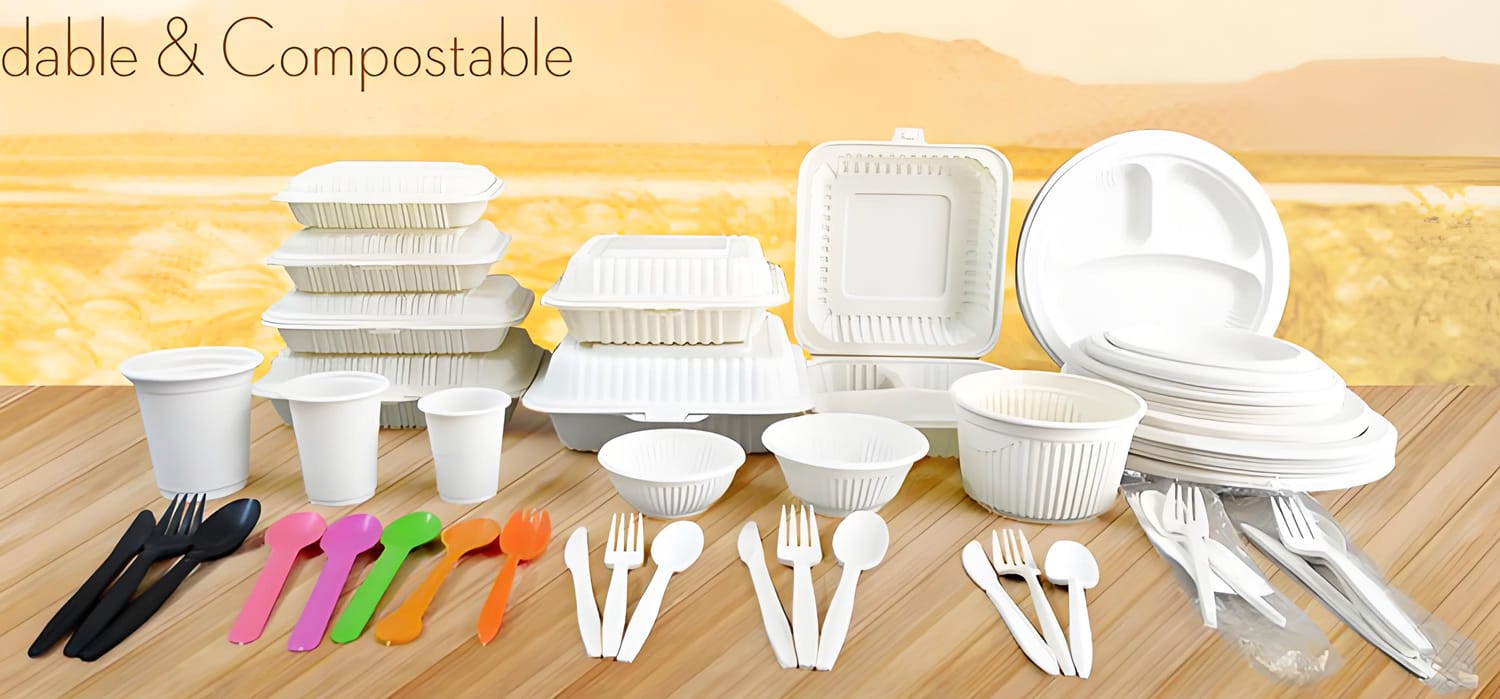
Bagasse tableware is eco by nature, but coatings such as plastic can break certification in 2025. Only PLA coatings pass industrial compostability tests (EN 13432, ASTM D6400, AS 4736), while PE coatings fail here and damage compost quality. Likewise, inks must be water-based or vegetable for safety. Export-ready products need certified plating, traceable inks, and documentation to access markets in EU, NA, AU, and Asia—avoiding non-compliance, recalls, or greenwashing.
Can coated bagasse tableware still be considered eco-friendly? As global regulations tighten on what qualifies as compostable or biodegradable, manufacturers must ensure that even small details—like coatings and inks—don’t violate certification standards. While bagasse itself is a sustainable material derived from sugarcane waste, adding a plastic or PLA lining could disqualify a product from passing key certifications such as EN13432, ASTM D6400, or AS 4736. This guide explores how bagasse packaging with coatings can still meet environmental and export compliance, backed by scientific testing protocols and expert insights.
In 2025, staying competitive in the global eco tableware market requires more than just going plastic-free—it demands full legal alignment with compostability regulations across the EU, North America, and Oceania. Whether you’re a manufacturer, supplier, or export consultant, this article will help you understand exactly what’s required to ensure your coated bagasse tableware qualifies as biodegradable and export-ready.
Why Bagasse Tableware Isn’t Automatically Export-Ready
Though bagasse is plant-based, products using this material must meet specific standards for biodegradability and safety before they can legally enter many international markets.
According to the European Bioplastics Association (2023), over 72% of compostable product rejections in the EU were due to non-compliant coatings or inks. In Australia, improper labeling caused at least 3 major supermarket recalls in 2022.
Here’s the problem: “Compostable” is a legal term, not just a marketing one. Products must pass rigorous tests to bear that label.
Three Types of Coatings and Their Global Compliance Outlook
1. PE (Polyethylene) Coated Bagasse
Properties: PE provides excellent moisture/oil resistance.
Compostability: ❌ Not compostable; PE is petroleum-derived.
Global Status: Banned or restricted in most of Europe and Canada.
Scientific View: According to a 2021 study in Environmental Science & Technology, PE residues persisted in compost for over 3 years, impacting soil microbial health.

2. PLA (Polylactic Acid) Coated Bagasse
Properties: Made from corn starch; provides decent barrier for hot/cold use.
Compostability: ✅ Under industrial composting conditions only.
Global Status:
EN13432-compliant in EU with OK Compost INDUSTRIAL labeling.
ASTM D6400-compliant in U.S. (BPI-certified).
AS 4736-compliant in Australia (Seedling logo).
Caveat: Not home compostable unless separately tested (e.g., OK Compost HOME).
Science Insight: PLA biodegrades in 90–180 days under conditions of 58°C and 60% humidity, per TÜV Austria standards.

3. Uncoated Bagasse
Properties: Completely plastic-free; suitable for dry/short-term food storage.
Compostability: ✅ Fully biodegradable in home and industrial composting.
Global Status: Favored in Nordic countries and among zero-waste brands.
Limitation: Limited water/oil resistance and shelf life.
Printing and Ink Regulations: The Silent Compliance Barrier
Many exporters overlook the fact that non-compliant inks and adhesives can disqualify even a compostable product from certification.
Key Legal References:
EN13432 (EU): Limits heavy metals like lead, mercury, and chromium to <0.01% by dry weight.
Directive (EU) 2019/904: Prohibits vague environmental claims and mandates traceable labeling.
FDA 21 CFR 176.170 (U.S.): Ensures ink safety for food-contact surfaces.
Approved Inks:
✅ Water-based
✅ Vegetable-oil-based
✅ UV-curable food-safe inks (with compostability tests)
A 2022 TÜV Austria report showed that 47% of failed certifications were due to ink toxicity, even when the base material passed.
Regional Certification Standards Compared
| Region | Standard | Requires Certification | Label Required | Home Compost Allowed? |
|---|---|---|---|---|
| EU | EN13432 | ✅ Yes | OK Compost INDUSTRIAL / HOME | ❌ (for PLA) |
| USA | ASTM D6400 | ✅ Yes | BPI | ❌ |
| Canada | SOR/2022-138 + ASTM | ✅ Yes | BPI or equivalent | ❌ |
| Australia | AS 4736 / AS 5810 | ✅ Yes | Seedling / Home Compost Logo | ✅ (AS 5810 only) |
| Japan | Plastic Resource Circulation Act | ✅ Yes | Recyclability or LCA proof | ❌ |
Real-World Export Case Studies
1. Bioleader® × French Organic Retailer
Product: PLA-coated bagasse dinner plates
Markets: France, Belgium
Certification: EN13432 + OK Compost INDUSTRIAL
Compliance Note: Used water-based ink approved by DIN CERTCO
Results: Approved by 3 major supermarket chains, 1.2M units exported
2. Bioleader® × Australian Meal Kit Brand
Product: Uncoated bagasse trays
Certification: AS 4736 + AS 5810 (OK Compost HOME)
Advantage: Met Australia’s dual composting standard (industrial + home)
Sales Data: Over 5 million units used across 2023–2024

3. Bioleader® × Japanese Foodservice Group
Product: PLA-coated microwave-safe containers
Regulations Met: Japanese Food Sanitation Act + Life Cycle Analysis (LCA)
Custom Labeling: Conformed to Japan’s Plastic Resource Circulation Act
Outcome: Expanded into over 200 stores in 2024
Export Certification Process: Step-by-Step Breakdown
Select Material & Process
Choose coating/ink that aligns with target region’s standards.
Choose a Certification Body
Common agencies: TÜV Austria, DIN CERTCO, BPI, ABA (Australia)
Submit Documentation
Product specs, coating composition, printing details, MSDS sheets
Sample Testing
Tests include:
Disintegration: <10% residue after 12 weeks
Biodegradation: >90% conversion to CO₂ within 180 days
Eco-toxicity: No growth inhibition in soil organisms
Heavy metals: <0.01% of total dry mass
Certification & Renewal
Duration: 3–6 months
Cost: USD $6,000–$12,000 depending on testing region
Renewal every 3 years or after process changes
Expert Viewpoint: Certifications Are a Strategic Investment
“We no longer view certifications as hurdles—they’re a pathway to premium pricing and global credibility. Buyers now ask for EN13432 before they even ask about MOQ.”
— Dr. Helen Mohr, Lead Environmental Compliance Officer, DIN CERTCO
Why Choose Bioleader® for Export-Ready Tableware?
✅ Full Certification Portfolio
EN13432, ASTM D6400, AS 4736, OK Compost INDUSTRIAL and HOME

✅ Flexible Coating Options
From plastic-free trays to PLA-coated food boxes

✅ Safe Printing Standards
All inks used are compliant with EU and U.S. food-contact safety
✅ Global Export Support
Regulatory guidance, labeling templates, logistics documentation
✅ Proven Track Record
Clients in 38+ countries, export volume exceeding 40 million units/year
Conclusion: Processing Is the Proof of Sustainability
In the race for sustainable food packaging, bagasse offers a credible, renewable solution. But as regulations tighten globally, coating and printing are no longer afterthoughts—they are gatekeepers.
To access high-potential markets in Europe, Australia, and beyond, manufacturers must embed compliance into their processes from the start. That means choosing the right coating, using certified inks, applying traceable labels, and partnering with reliable certification bodies.
At Bioleader®, we help you do exactly that—sustainably, globally, and profitably.
FAQ
1. Can bagasse tableware with PLA or PE coatings still be considered biodegradable?
Bagasse tableware coated with PLA can still be classified as industrially compostable if certified under EN13432 or equivalent standards. However, PE-coated bagasse is generally not compostable and may disqualify the product from eco-labeling in the EU or US unless the coating is bio-based and tested for full disintegration and toxicity.
2. What certifications are needed for exporting bagasse packaging to Europe?
To export compostable packaging to Europe, products must meet EN13432 certification, often verified by notified bodies like TÜV Austria or DIN CERTCO. Some countries also require extended producer responsibility (EPR) registration (e.g., Germany’s VerpackG, France’s Triman labeling).
3. Is printing ink on bagasse plates regulated under compostability standards?
Yes. Under EN13432, any applied printing ink must be non-toxic, biodegradable, and heavy-metal free. Eco-friendly inks like water-based or vegetable inks are often recommended. Improper inks may cause test failure in eco-toxicity evaluations.
4. What are the main reasons bagasse products fail compostability certification?
The most common reasons include non-biodegradable coatings, toxic ink residues, lack of full disintegration, or elevated levels of heavy metals. Even minor elements like glue or foil stamping can cause rejection under EN13432 or ASTM D6400.
5. How long does it take to certify a bagasse tableware product for EU export?
Typically, 8–12 weeks, depending on the testing institution, product complexity, and required retests. Certification includes lab testing for biodegradability (90% in 180 days), eco-toxicity (plant growth impact), and disintegration in compost.
References
European Commission – “Directive (EU) 2019/904 on the reduction of the impact of certain plastic products on the environment”
https://eur-lex.europa.eu/legal-content/EN/TXT/?uri=CELEX:32019L0904TÜV Austria – “What is EN13432?”
https://www.tuv-at.be/ok-compost-seedling-en13432/DIN CERTCO (TÜV Rheinland Group) – “Biodegradable Products Certification”
https://www.dincertco.de/din-certco/en/main-navigation/products-and-services/certification/plastics/biodegradable-productsEuropean Bioplastics – “Industrial compostability: EN 13432 explained”
https://www.european-bioplastics.org/standards/certification/compostability/ASTM International – “ASTM D6400 – 23 Standard Specification for Compostable Plastics”
https://www.astm.org/d6400-23.htmlAustralian Bioplastics Association – “AS 4736 and AS 5810 Home Compost Standards”
https://bioplastics.org.au/standards/Bioleader® – “Can Bagasse Tableware with Coatings Still Be Eco-Friendly?”
https://www.bioleaderpack.com/blog/
Expert Compliance Guide: Coated Bagasse Tableware That’s Truly Eco-Friendly
What’s the issue? While bagasse is compostable, coatings matter: PE (polyethylene) fails composting tests and harms soil; PLA (polylactic acid) passes industrial composting standards when certified; uncoated bagasse is fully compostable even at home.
Why coatings and inks matter: In nearly 75% of EU failures, non-compliant coatings/inks were the culprit. EU bans vague claims, and compliance requires testing for heavy metals and eco-toxicity. Safe ink choices include water-based, vegetable oil, or UV-curable, tested for compost safety.
How to ensure exportability:
- Choose certified materials: Use PLA coatings with valid EN 13432, ASTM D6400/BPI, or AS 4736 certification—as per target region.
- Use safe inks: Only deploy inks tested for heavy metals and compost compatibility.
- Align with local standards: For Europe, apply OK Compost label; in Australia use Seedling / Home Compost marks.
- Provide documentation: Maintain certification files, lab test results, and export-ready labels for customs and auditing.
Real-world cases:
• PLA-coated bagasse bowls (OK Compost Industrial) succeeded in EU export.
• Dual AS standards (industrial + home compost) enabled Australian success using uncoated trays.
• PLA-coated trays with sanitized inks met Japanese sanitation laws and lifecycle requirements.
Key takeaway: Effective certifications must consider coating and printing. The full sustainable app lifecycle—from production to export shelf—depends equally on material, ink, label, and proof. Make no compromises.