


Bioplastic Tableware | Cornstarch | Bioleader® Cornware
Bioleader® Bioplastic Tableware on this page refers to the Cornware collection of cornstarch-based foodservice articles, including boxes, trays, bowls, cups and plates. “Bioplastic” is a broad purchasing term, so an enquiry needs to identify both the material description and the finished model. Use the current product cards to select an article, then confirm its composition, dimensions, closure and food-use specification. This page helps importers and distributors translate a general bioplastic request into a product line they can sample, compare and order.

What Bioplastic Means in the Cornware Range
Bioplastics can be described by material origin, biodegradation characteristics or both; the term does not identify one universal polymer. A biobased material is not automatically compostable, and the word cornstarch does not disclose the complete formulation of a finished item.
Bioleader uses Cornware as the collection name here. Do not automatically substitute the specification of clear PLA drinkware or CPLA cutlery for a Cornware bowl or box. Start with the selected model and ask which material declaration applies. Detailed end-of-life evaluation belongs in the compostable plastic tableware buyer guide.
You might also like
Bioleader Cornstarch-Based Tableware Models

Cornstarch Food Box 1200ml / 9"x9" 3-C

Cornstarch Food Box 1200ml / 9"x9" 1-C

Cornstarch Lunch Box 1000ml / 8"x8" 3-C

Cornstarch Lunch Box 1000ml / 8"x8" 1-C

Cornstarch Food Container 1000ml
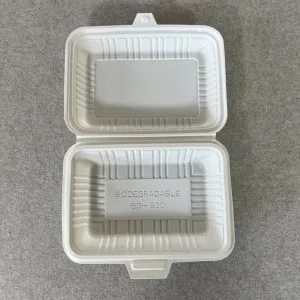
Cornstarch Food Container 800ml

Cornstarch Plate 10 Inch

Cornstarch Plate 10 Inch 3-C

Cornstarch Plate 9 Inch

Cornstarch Plate 9 Inch 3-C

Cornstarch Plate 8 Inch

Cornstarch Plate 7 Inch

Cornstarch Cup 4oz/120ml

Cornstarch Cup 6oz/170ml

Cornstarch Cup 8oz/250ml

Cornstarch Cup 12oz/350ml

Cornstarch Cup 16oz/470ml

Cornstarch Bowl 5oz/150-170ml

Cornstarch Bowl 8oz/250-270ml

Cornstarch Bowl 12oz/350-400ml

Cornstarch Bowl 15oz/450ml

Cornstarch Bowl 22oz/650ml

Biodegradable Plastic Cups for Hot

Cornstarch Bowl with Lid 12oz/350ml

Cornstarch Bowl with Lid 15oz/450ml

Cornstarch Bowl with Lid 32oz/1000ml

Cornstarch Square Bowl with Lid150z/450ml
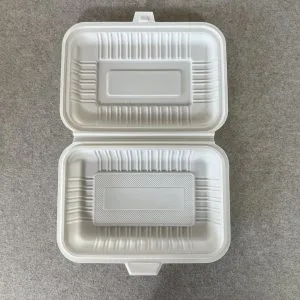
Cornstarch Food Container 600ml
Turn a Bioplastic Request into a Product Specification
A useful specification connects the commercial name to a physical product. These fields help prevent two quotations using the same “bioplastic” label for different articles.
| Enquiry field | Write down | Why it changes the comparison |
|---|---|---|
| Material identification | The supplier material description and declaration for the finished article | A broad feedstock name does not establish polymer composition or renewable content |
| Finished model | Model code, shape, nominal capacity and dimensions | Articles with the same capacity can have different footprints and serving geometry |
| Construction and closure | Attached lid, separate lid, open plate or compartment layout | Tooling and rim design affect how the product is filled, closed and handled |
| Intended food use | Food or drink, temperature, contact time and any reheating proposal | The intended conditions must be matched to the model rather than inferred from the family name |
| Supply configuration | Quantity by model, lid inclusion, carton contents and branding | A like-for-like quotation needs the same finished specification and packing basis |
Specify the Material and Finished Article Together
A material description is not an order code
For example, Bioleader lists BLR-350 as a 350ml round bowl with dimensions W127 × H52mm. That model reference identifies a particular article more clearly than “bioplastic bowl”. It still does not, on its own, establish the polymer formulation, a compatible lid code or every permitted use condition.
Appearance and geometry are product attributes
Compare the actual color, surface, wall shape, rim and rigidity on a sample. Do not use the appearance of one bioplastic family as a requirement for another. For a cross-format comparison of the Cornware collection, use the cornstarch tableware product range.
Bodies, lids and utensils can have different specifications
A coordinated order may contain several materials or constructions. Identify each lid and accessory separately and ask which declaration and use instructions apply to it. A matching color or brand name does not prove identical material composition.

Keep Material Identity and Certificate Scope Separate
Keep the material declaration, food-contact evidence and any compostability documentation as separate parts of the technical file. Match each to the finished model, lid and intended destination. The images in the certificate gallery remain reference documents; verify their holder, scope and validity before using a claim in a quotation or label.
Do not describe the whole Cornware range as plastic-free or assign one decomposition period to it. Material origin alone is not evidence of a disposal outcome, and a management-system certificate does not prove the performance of every finished article.




One Material Brief, Several Finished Articles
Define the range without duplicating every specialist catalog
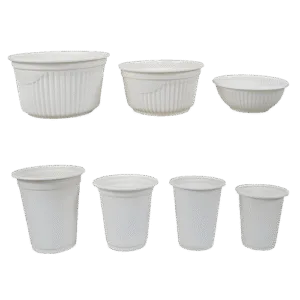
An importer may need a material-consistent brand program across a meal box, side bowl, cup and plate. Record the selected model and material description for each line, then compare samples as a group. Keep model-specific size and lid choices in their relevant product ranges.
Assign applications after the product is identified
For kitchen packing and transport questions, use cornstarch food packaging for takeaway. For the plate, bowl, cup and utensil arrangement used by the diner, compare disposable dinnerware for takeout service. This keeps material identification separate from the operational task each article must perform.

OEM and Wholesale Enquiries for a Defined Product Line
Send Bioleader a material brief together with model references or a clear finished-product drawing. Include dimensions, capacity, lid, proposed food use, appearance requirements and quantity by item. This gives the sample and quotation discussion a defined basis rather than relying on the word bioplastic alone.
For OEM requests, distinguish a new shape or mold requirement from a logo, embossing or outer-carton print. Ask which option is available for the selected model and confirm artwork, samples, packing, MOQ and timing in the quotation. Do not assume an existing model can accept every branding or tooling change.
Keep a Product Identity Record for Repeat Orders
- Supplier model and the current material description or declaration.
- Approved sample, dimensions, capacity, lid and appearance.
- Intended food use and the documents applying to that article.
- Carton contents, artwork version, quantity and agreed change-control points.
Bioplastic Tableware Buying FAQ
Does bioplastic tableware mean one particular material?
No. Bioplastic is a broad term and does not identify a single formulation. Ask for the material description and declaration for the finished model rather than inferring composition from the commercial name.
Is Bioleader Cornware the same product line as clear PLA drinkware?
This page presents the Cornware cornstarch-based tableware collection. Do not transfer the material, appearance or use specification of a separate clear PLA drinkware line to these products. Confirm the exact item and its documentation.
Why should I provide a model code as well as a material name?
A model code connects the enquiry to a particular shape, capacity, dimensions and construction. For example, BLR-350 identifies a listed 350ml bowl, while the material declaration and lid reference must still be confirmed separately.
Can a bioplastic bowl and its matching lid be treated as the same material?
Do not assume that a matching body and lid have the same formulation or use conditions. Record both components and confirm the applicable material, food-contact and any end-of-life evidence for each.
Does biobased automatically mean biodegradable, compostable or plastic-free?
No. Material origin and end-of-life characteristics describe different things. Assess any biodegradability or compostability claim against the exact product and specified conditions; do not infer it from the feedstock name.
What should an OEM bioplastic tableware enquiry include?
Include the finished model or drawing, dimensions, material requirement, lid, intended use, appearance, quantity and destination. Separate new tooling requests from logo or packing changes, and confirm available options, samples and current supply terms with Bioleader.
Contact Us Now
Address: No.39 Xinglong Road, Xiamen, Fujian, China
Contact: Junso Zhang(Mr.)
Phone & What’sapp: +86-15980856610
Wechat: bioleader
Email: info@bioleaderpack.com