Introduction
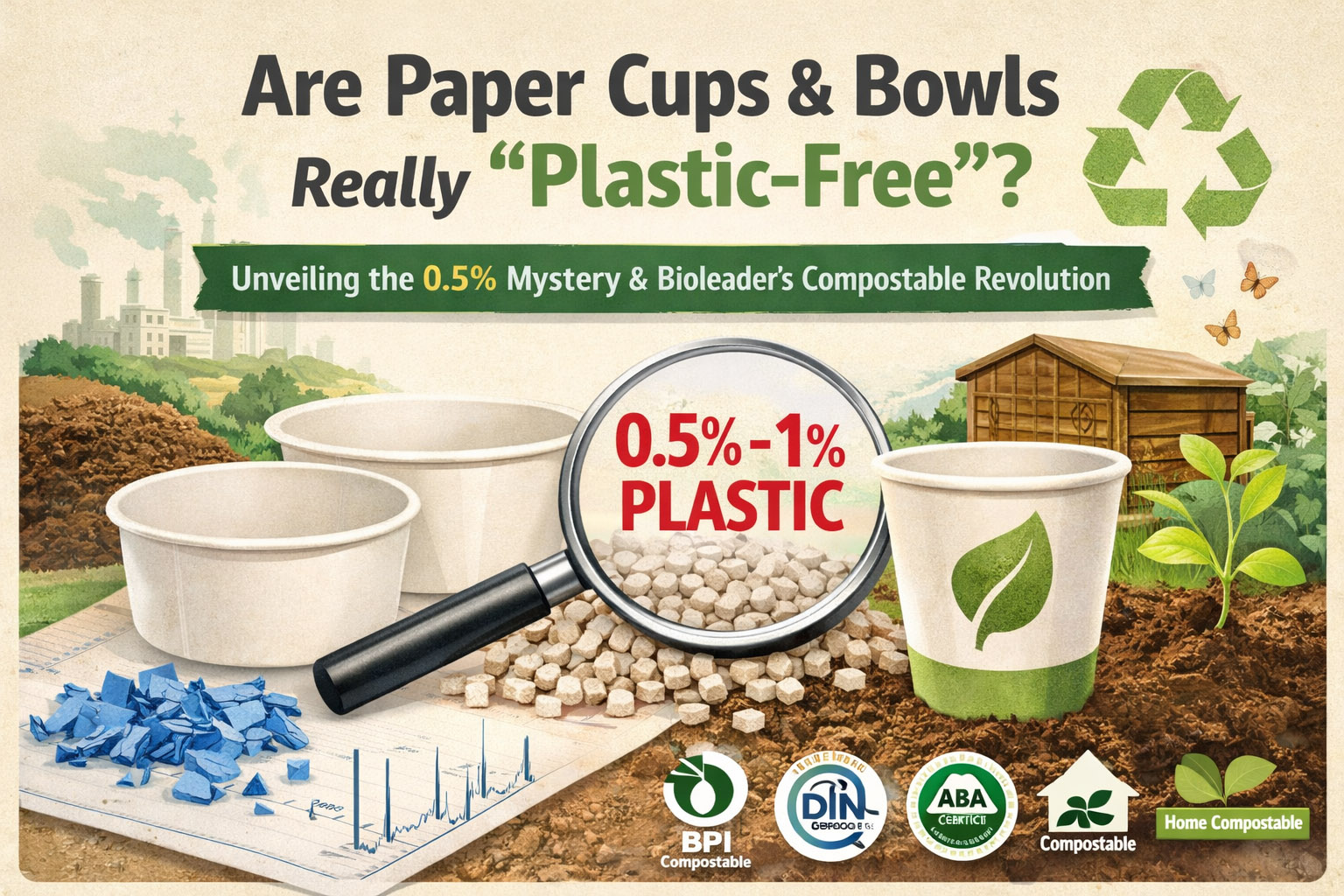
In the global journey toward true sustainability, many brands claim their packaging is “plastic-free.” However, a perplexing reality often surfaces in the lab: many of these “eco-friendly” paper cups and bowls still reveal a lingering 0.5% to 1% plastic content.
While this small percentage may seem negligible, it has long been the “physical barrier” required to maintain water and oil resistance. At Xiamen Bioleader (厦门彼利得), we believe in bridging this 1% gap—moving beyond “nearly” eco-friendly to a future that is truly home compostable. As an industry leader, Bioleader is breaking this final barrier with our exclusive bio-based aqueous coating technology, offering businesses a high-performance solution that meets the world’s strictest home and industrial composting standards.
The Industry Reality: Why Do Coated Paper Cups & Bowls Still Contain 0.5%-1% Plastic?
According to research by PackagingStrategies, the explanation for this issue lies in material definitions, detection methods, and the industry’s varying perceptions of “plastic.” Despite claims of being plastic-free, many paper cups and bowls still contain trace amounts of plastic due to the nature of coating and lamination processes.
1. Coating vs. Lamination: Why the Method Matters
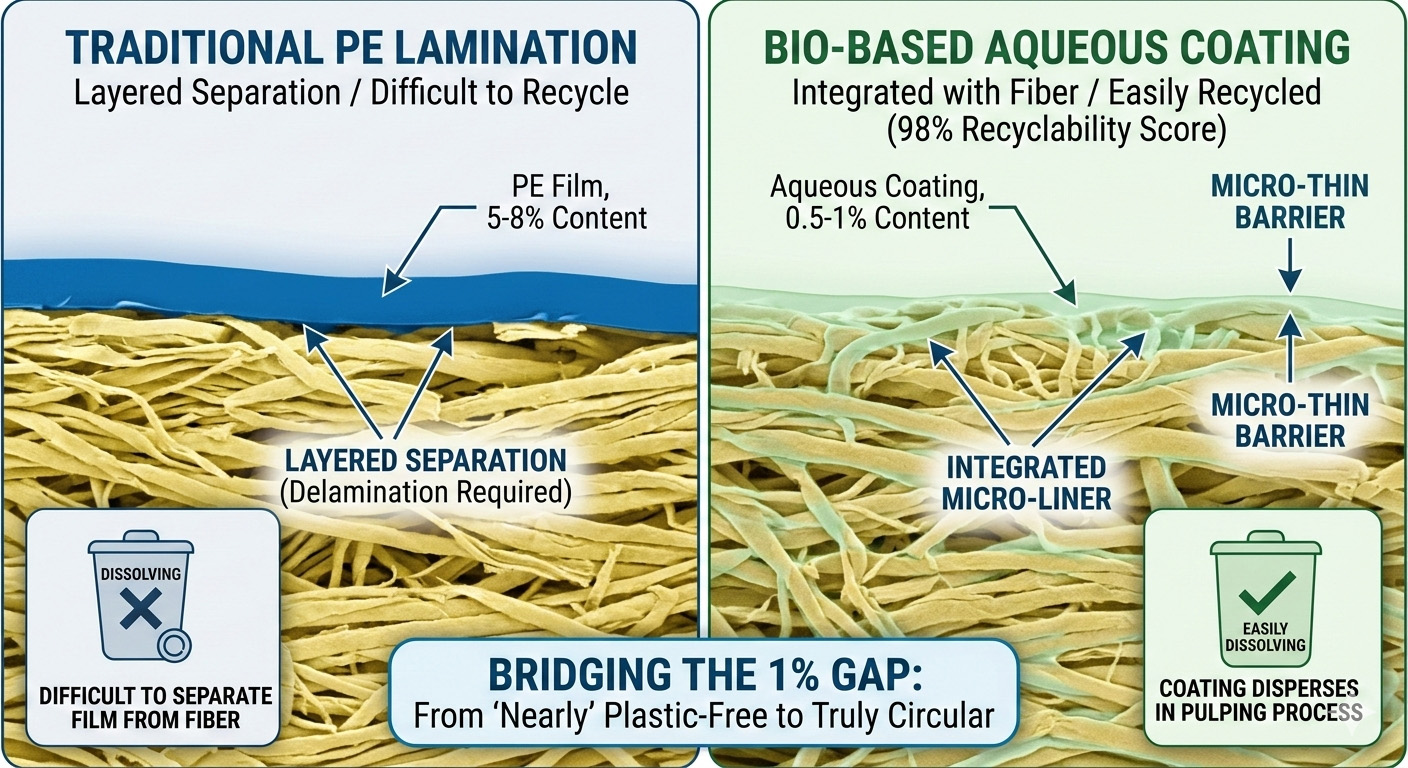
Coating: Coating is a thin, liquid application on paper that forms a protective layer when dried. The most common example in eco-friendly packaging is aqueous coating, which is water-based and widely used for paper products.
Lamination: Lamination involves bonding a plastic film to paper, creating a thicker protective layer. This method often uses PE (polyethylene) or other synthetic materials, which makes it harder to degrade or recycle.
2. PLA and PHA Laminates: The Challenge of Bio-Based Materials
Many so-called “plastic-free” cups and bowls use PLA (Polylactic Acid) laminates or PHA (Polyhydroxyalkanoates) laminates. These are bio-based materials often marketed as environmentally friendly, but when tested under strict standards, they are still categorized as plastics. The key challenge is that, while they may be bio-based, they still behave like polymers, which means they are not fully compatible with home composting.
PLA Laminates: These materials degrade well under industrial composting conditions but do not break down efficiently in home compost piles.
PHA Laminates: Known for their excellent biodegradability, PHA can decompose even in home compost, making it a desirable material. However, due to its high cost, PHA is typically used in premium products or niche markets.
3. Aqueous Coatings: The Closest to “Plastic-Free”
Among the available options, water-based aqueous coatings come closest to being truly plastic-free. These coatings are made from bio-based resins and create a thin, effective protective layer. While they are often classified as containing plastic, the actual content is typically limited to 0.5%-1%, which is much lower than traditional coatings or laminates. These coatings are water-based, making them an eco-friendly alternative, but the polymer additives used to create the film may still be detected as “plastic” by strict testing methods.
4. The “Zero Tolerance” Approach to Detection Standards
Modern detection techniques, such as Py-GC/MS (Pyrolysis-Gas Chromatography-Mass Spectrometry), are highly sensitive and can identify even minute traces of plastic. This “zero tolerance” approach means that even tiny amounts of polymers—such as those found in the additives used to enhance paper strength, whiteness, or water resistance—are detected. This leads to products being flagged as containing plastic, even if the amount is negligible.
5. The Definition Debate: “Plastic-Free” vs. “Plastic”
There’s often confusion between the marketing definition of “plastic-free” and the scientific definition. For example:
Marketing Definition: Many manufacturers consider products “plastic-free” as long as they don’t contain traditional petroleum-based plastics like PE/PP or are labeled “degradable” or “recyclable.”
Scientific Definition: As long as the material’s molecular structure is classified as a polymer, it is detected as plastic, regardless of whether the polymer is made from petroleum or plant-based materials like corn or sugarcane.
Comparative Table: PE Laminate, PLA Laminate, PHA Laminate, and Aqueous Coating
| Coating Type | Plastic Content | Degradation Time | Suitable for Home Composting | Certification Standard | Environmental Rating | Cost |
|---|---|---|---|---|---|---|
| PE Laminate | 5%-8% | Hard to Degrade | No | None | Difficult to degrade, high recycling cost | Low |
| PLA Laminate | 4%-6% | Industrial Compost | No | EN13432 | Industrial composting, not home compostable | Medium |
| PHA Laminate | 0% Petroleum-based Plastic | Home Compostable | Yes | Home Compost Certification | High performance, natural degradation | High |
| Aqueous Coating | 0.5%-1% | Home Compostable | Yes | BPI, DIN CERTCO | Most eco-friendly, recyclable in paper streams | Medium |
Xiamen Bioleader: Leading the True Eco-Friendly Packaging Revolution
Xiamen Bioleader stands as a pioneer in the field of bio-based aqueous coatings, offering a unique solution that effectively addresses the issue of plastic content in paper cups and bowls. As a leading manufacturer of sustainable packaging, Bioleader’s innovative aqueous coating technology allows businesses to provide packaging that is not only high-performing but also fully compostable and recyclable.

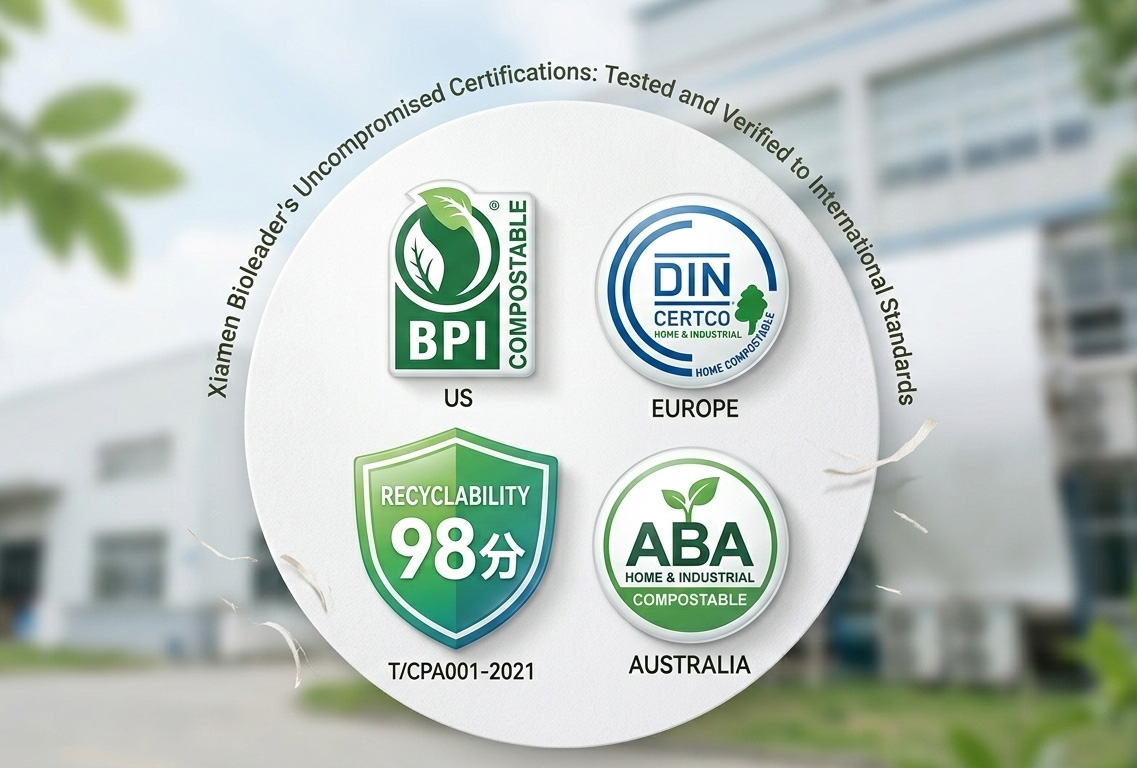
1. Global Certifications:
USA: BPI Industrial Composting Certification.
Europe: DIN CERTCO Home and Industrial Composting Certification (meets EN13432 standards).
Australia: ABA Home and Industrial Composting Certification.
China: T/CPA001-2021 Recyclability rated 98 points (paper cups, bowls, lids).
2. From Laboratory to Home Composting:
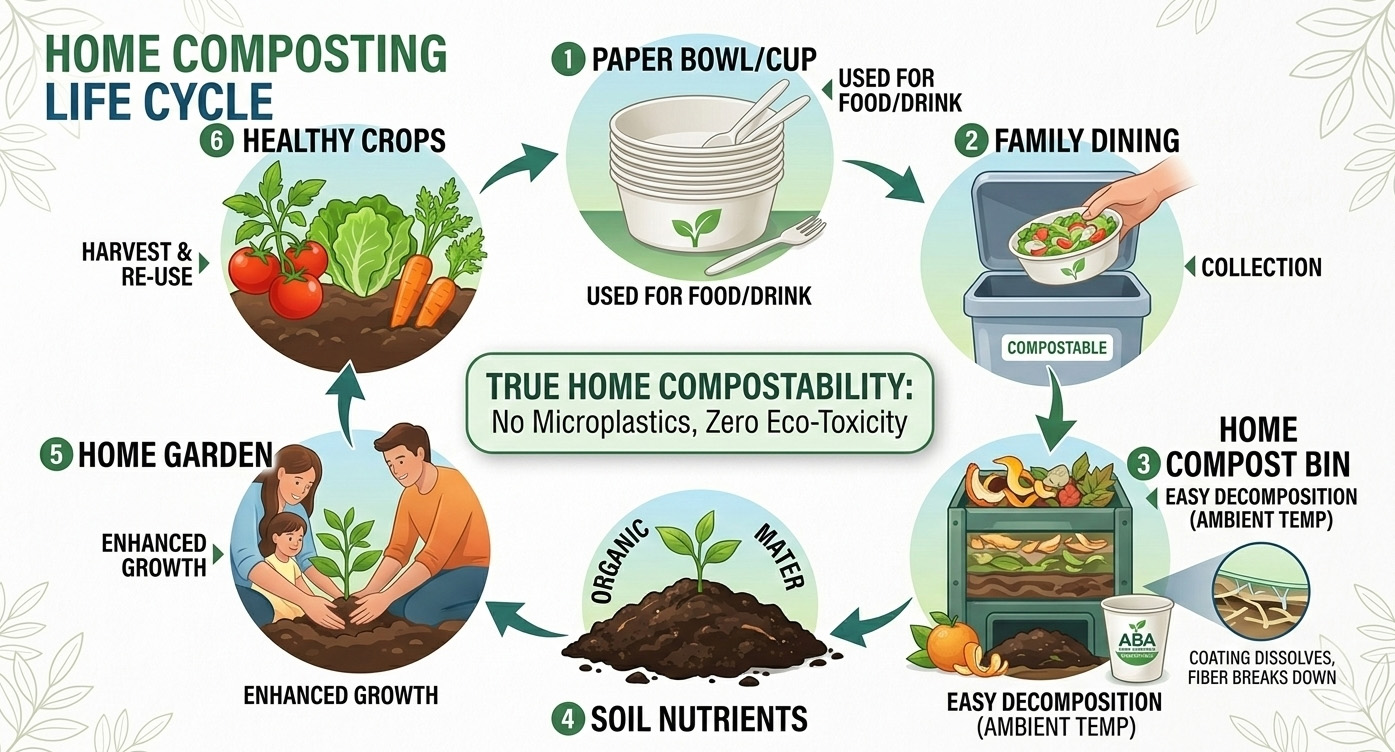
Unlike conventional coating methods that require industrial composting facilities, Bioleader’s aqueous coatings are fully home compostable. Our products meet strict global standards like ASTMD6400-23, D6868-21, and EN13432:2000, ensuring they break down safely and naturally without leaving microplastics behind.
3. Bio-Based Aqueous Coating Series Paper Cups & Bowls: The True Eco-Friendly Choice:
Bioleader offers a range of bio-based aqueous-coated paper cups and bowls that can be processed in home composting bins or even backyard compost piles. Our products ensure a sustainable lifecycle, contributing to a cleaner planet without compromising on quality or performance.
Explore Our Sustainable Solutions:
Water-Based Aqueous Coating Paper Cups: The ultimate plastic-free solution for hot and cold drinks.
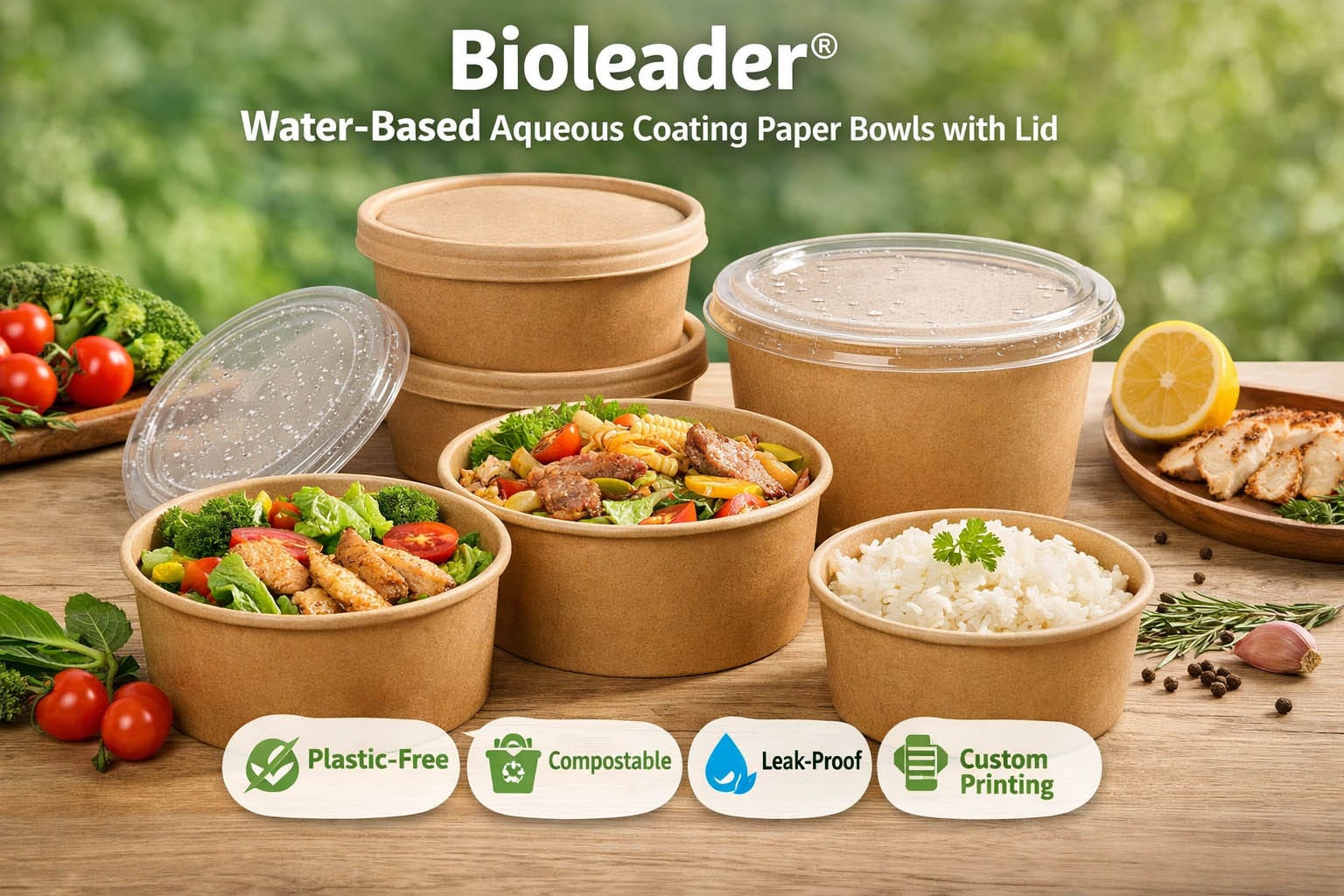
Aqueous Coating Paper Bowls with Lids: High-performance, grease-resistant packaging for the modern food industry.
Conclusion: Achieving True Green Packaging
While 0.5%-1% plastic content may still be present in some products due to technological limitations, Bioleader provides an advanced solution with its bio-based aqueous coatings. Our products not only meet the highest composting and recycling standards but also deliver superior performance, ensuring that your packaging is both eco-friendly and functional.
Frequently Asked Questions (FAQs)
1. If a product contains 0.5% plastic, can it still be called “Plastic-Free”?
Technically, this is where marketing meets strict regulation. While many suppliers use “Plastic-Free” as a marketing term for products without PE/PP, global testing standards (like Py-GC/MS) are sensitive to any polymer structure. At Bioleader, we focus on “Bridging the 1% Gap”—even if trace amounts of bio-polymers are detected, our aqueous coatings are designed to be fully biodegradable and leave zero microplastics, ensuring they are environmentally “zero-burden.”
2. Why is “Home Compostable” (ABA/DIN CERTCO) a bigger deal than just “Industrial Compostable”?
Industrial composting requires high-heat, controlled environments (above 58°C) that don’t exist in nature. Many “eco” cups (like PLA) stay intact in oceans or soil for years. Bioleader’s Home Compostable certification proves our cups and bowls break down in your backyard compost pile at ambient temperatures, making them a truly “circular” solution for households.
3. Does the “Aqueous Coating” affect the recyclability of the paper?
Quite the opposite! Traditional PE-lined cups are a nightmare for paper mills because the plastic film clogs machinery. Bioleader’s bio-based aqueous coating is water-soluble during the repulping process. In fact, our series achieved a 98/100 Recyclability score (T/CPA001-2021), meaning they can be recycled alongside regular newspapers and cardboard.
4. How do Bioleader products handle hot coffee or greasy soups without a thick plastic lining?
It’s all about the science of the Bio-based Aqueous Resin. Our proprietary coating creates a dense, cross-linked barrier that provides the same grease and heat resistance as PE-lamination. Whether it’s a boiling 100°C soup or an oily takeaway salad, our bowls maintain their structural integrity without “leaking” or “softening.”
5. Are these bio-based coatings compliant with the EU Single-Use Plastics (SUP) Directive?
Yes. Our bio-based aqueous series is designed to align with the evolving global regulations, including the EU SUP Directive and various plastic bans in the USA and Australia. By replacing fossil-fuel plastics with certified compostable bio-polymers, we help international brands navigate customs and environmental taxes (like the UK Plastic Packaging Tax) seamlessly.