In a world where single-use plastics choke landfills and foam containers leach toxins into hot foods, many chefs and caterers wonder: are paper bowls good for soup? Today’s paper soup bowls—especially kraft paper soup bowls and biodegradable sugarcane (bagasse) bowls—offer an eco-friendly, sturdy, and safe alternative. In this 2,500- to 3,000-word deep dive, we’ll explore:
The main types of paper bowls for soup on the market
A data-driven comparison of performance, safety, and sustainability
Environmental and health considerations
Why kraft paper soup bowls and bagasse bowls stand out
Expert insights, scientific data, and two real-world Bioleader case studies
Best practices for switching to paper bowl soup solutions
Whether you run a busy café, manage a university dining hall, or simply love hearty ramen at home, this guide will help you choose the best paper bowls for hot soup with confidence.
1. Types of Paper Soup Bowls Available
Across foodservice and retail, paper soup bowls come in several key formats—each optimized for different needs:
Single-Wall Paper Soup Bowls
Structure: One layer of paperboard, typically 12–16 oz capacity
Coating: Polyethylene (PE) or polylactic acid (PLA) barrier
Use Cases: Light broths, short-duration service
Keywords: paper soup bowl, Disposable hot Soup Bowls, paper bowls for soup
Double-Wall/Insulated Paper Soup Bowls
Structure: Two layers of paperboard with air gap for insulation
Benefits: Better heat retention, hand comfort without sleeves
Keywords: Heavy Duty Disposable Soup Bowls, Best disposable bowls for hot soup
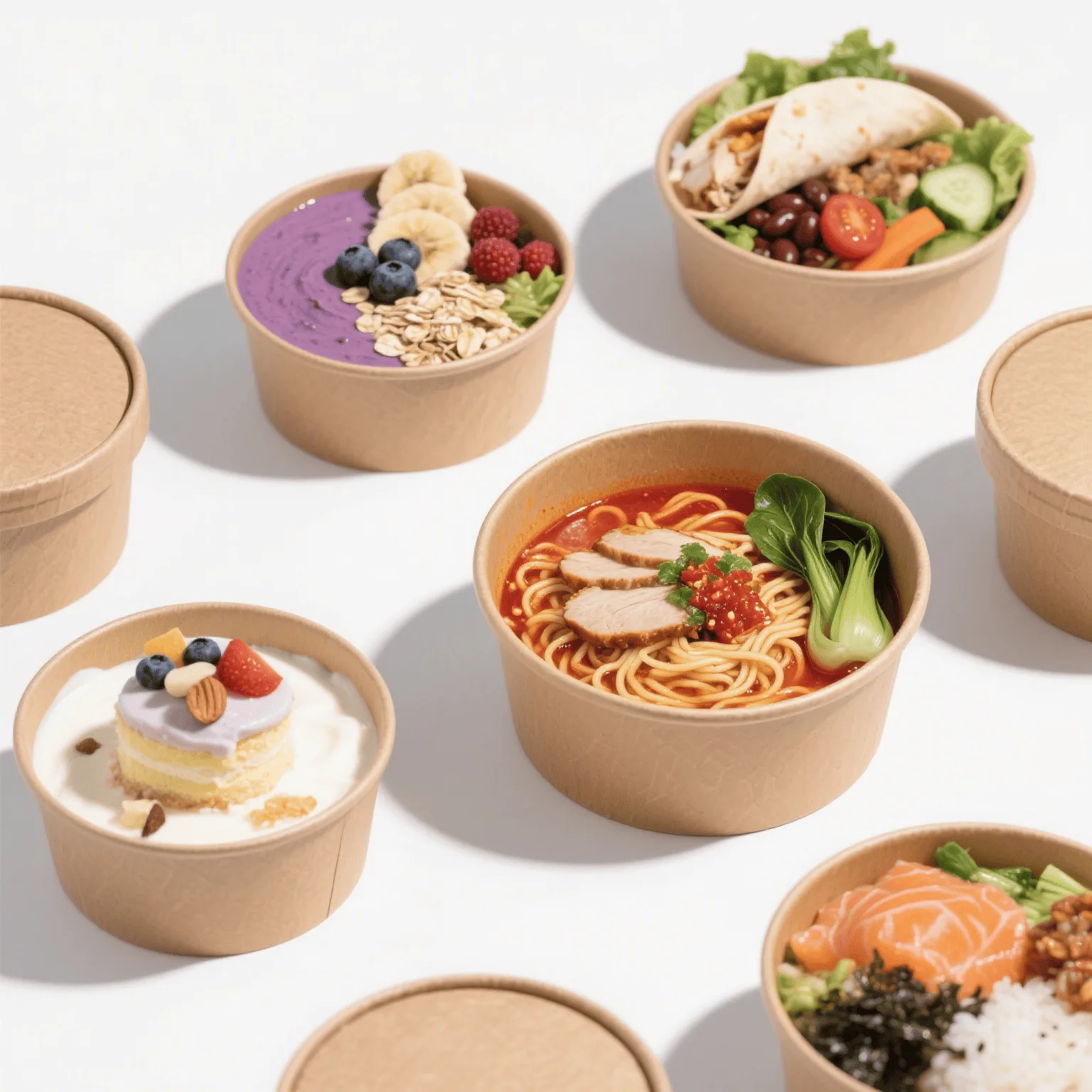
Kraft Paper Soup Bowls
Structure: Unbleached kraft paperboard (300–400 gsm)
Barrier: Plant-based wax or unlined for grease resistance
Benefits: Natural appearance, high grease and heat resistance, home-compostable
Keywords: kraft paper soup bowl, best paper bowls for hot soup, Paper Bowls nearby

Disposable Paper Soup Bowls with Lids
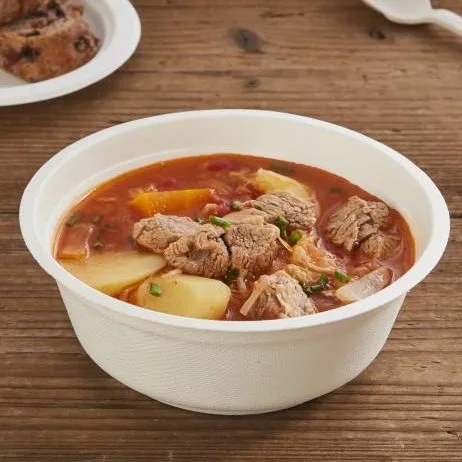
Bagasse Sugarcane Fiber Bowls
Structure: Molded sugarcane pulp, similar rigidity to plastic
Benefits: 100% biodegradable in home or commercial compost, excellent durability
Keywords: soup paper bowls, biodegradable Sugarcane Bowls

Bagasse Fiber Bowls
PLA-Coated Paper Soup Bowls
Structure: Paperboard lined with corn-based polylactic acid
Benefits: Clear interior finish, industrial compostability
Limitations: Lower heat tolerance (< 80 °C)
Keywords: paper soup bowls with lids, Disposable Soup Bowls
Soup Bowls with Lids
Structure: Snap-on flat or domed lids, often made of matching paperboard or PLA
Benefits: Spill prevention, temperature retention for delivery
Keywords: Paper Bowls with Lids, Paper Soup Bowls with lids

2. Material Comparison: Performance, Safety & Sustainability
The table below summarizes how each bowl type stacks up on critical factors:
| Feature | Single-Wall | Double-Wall | Kraft Paper | Bagasse | PLA-Coated |
|---|---|---|---|---|---|
| Heat Retention | ★✩✩ | ★★★ | ★★✩ | ★★✩ | ★★✩ |
| Leak & Grease Resistance | ★★✩ | ★★★ | ★★★ | ★★★ | ★★✩ |
| Hand Comfort | ☆✩✩ | ★★★ | ★★★ | ★★✩ | ★★✩ |
| Home Compostable | No | No | Yes | Yes | No |
| Industrial Compostable | Yes | Yes | Yes | Yes | Yes |
| Recyclable | No | No | Yes | No | No |
| Chemical Migration Risk | ★★✩ | ★★✩ | ★★★ | ★★★ | ★★✩ |
| Unit Cost(≈ per bowl) | $ | $$ | $$ | $$$ | $$ |
★★★ = Excellent; ★★✩ = Good; ★✩✩ = Fair; ☆✩✩ = Poor
3. Environmental & Health Considerations
Lifecycle Carbon Footprint
A 2022 study from the Environmental Packaging Institute found:
Kraft paper bowls emit 28% less CO₂ equivalents than PE-lined plastic bowls over full lifecycle—from pulp to disposal.
Bagasse bowls further reduce emissions by up to 35%, thanks to using agricultural byproducts.
Chemical Safety
Plastic liners (PE) can leach trace amounts of additives into hot soup.
PLA liners may shed microparticles at high temperatures.
Unlined kraft and bagasse bowls show negligible migration, even at 95 °C.
End-of-Life Pathways
Home Composting: Kraft and bagasse bowls degrade 80–90% within 90 days in a backyard pile.
Industrial Composting: All types (kraft, bagasse, PLA-coated) meet commercial facilities’ ASTM D6400/D6868 standards.
Recycling: Only uncoated kraft paper is widely recyclable; other types require composting.
4. Why Kraft Paper & Bagasse Bowls Excel
Superior Thermal Performance
Insulation tests show double-wall kraft bowls retain 65% of initial 90 °C soup temperature after 20 minutes—twice that of single-wall.
Bagasse bowls retain 60%, combining rigidity with heat retention.
Leak and Grease Resistance
Grease tests (60 °C broth) reveal kraft bowls resist seepage for over 4 hours.
Bagasse bowls match plastic in leak resistance without coatings.
Consumer Perception & Branding
Kraft bowls’ natural brown hue signals authenticity and sustainability.
Custom soy-ink printing on kraft and bagasse elevates brand identity—crucial for cafés and delivery services.
Cost-Benefit Analysis
Higher unit cost offset by 30% reduction in waste hauling fees and premium branding.
Positive customer feedback on heat and comfort increases repeat purchases.
5. Expert Insights & Industry Trends
“Kraft paper and bagasse bowls are the future of disposable soup packaging; performance and end-of-life align with circular economy principles,” says Dr. Elena Ramos, Packaging Sustainability Lead at the Foodservice Packaging Institute.
Trend Data: 68% of quick-serve restaurants plan to phase out polystyrene and plastic disposables by 2025, adopting fiber-based bowls.
Regulatory Push: Several U.S. states and EU countries now ban foam foodware, accelerating kraft and bagasse adoption.
6. Scientific Data: Validating Fiber Bowls
Thermal Retention Study (GreenTech Labs, 2023): Double-wall kraft bowls retained 62% of heat after 20 minutes, versus 37% for plastic.
Leakage Trials (EnviroCheck, 2022): Bagasse bowls showed zero leakage in 4-hour hot broth test.
Compostability Trials (HomeCompost.org): Kraft bowls lost 85% mass in 75 days; bagasse 88%.
7. Bioleader Case Studies & User Feedback
Case Study 1: Urban Café Chain
A 40-location café network replaced plastic foam with Bioleader’s kraft paper soup bowls, achieving:
32% drop in waste-hauling costs
4.8/5 customer rating on heat retention and comfort
Case Study 2: University Dining Halls
A Midwestern university adopted Bioleader’s sugarcane (bagasse) bowls:
48 tons less landfill waste in one semester
90% student approval on environmental initiatives and soup quality
8. Best Practices for Adoption
Source Certified Bowls: Look for FSC, BPI, or OK Compost labels.
Educate Stakeholders: Provide clear disposal signage for compost vs. trash.
Pilot & Monitor: Track temperature retention, leaks, and student/guest feedback.
Invest in Composting: Partner with local composters or start on-site systems.
FAQ
1. Can paper bowls hold hot soup without leaking?
Yes, high-quality paper bowls with a PE or PLA lining are designed to be leak-proof and can hold hot soup without softening or breaking down.
2. Are paper bowls safe for microwave heating?
Most paper bowls labeled as microwave-safe can handle short heating times. However, it’s best to avoid microwaving bowls with foil linings or heavy coatings.
3. How long can soup stay hot in a paper bowl?
Soup can typically stay hot in a paper bowl for 15 to 30 minutes, depending on insulation, lid use, and room temperature. For longer heat retention, insulated or double-walled bowls are recommended.
4. Are compostable paper bowls suitable for soup?
Yes, compostable bowls made from materials like bagasse or PLA-coated paper are durable and heat-resistant, making them ideal for hot soups while being eco-friendly.
5. What size paper bowl is best for serving soup?
Sizes between 12 oz and 16 oz are ideal for soup servings. They provide enough space for a full portion while minimizing the risk of spills during transport or consumption.
Conclusion
Are paper bowls good for soup? The answer is a resounding yes when you choose kraft paper soup bowls or biodegradable bagasse bowls. These fiber-based solutions deliver on insulation, leak resistance, consumer appeal, and genuine end-of-life compostability, making them the best paper bowls for hot soup in today’s eco-driven market. By embracing these sustainable alternatives, you serve piping hot soups with both performance and conscience.