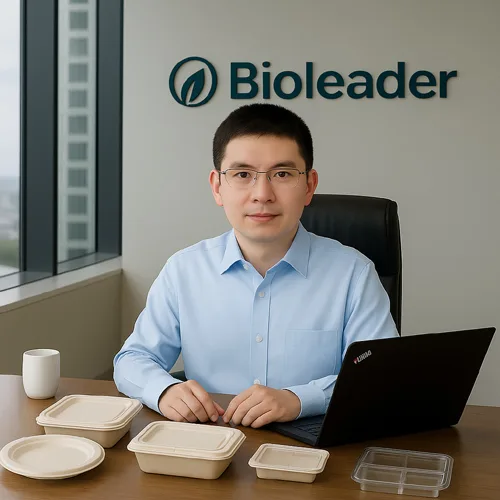
Born in the Fields of Gold
Once upon a time—not in a factory, but in a cornfield—began the story of a cornstarch lunch box. Unlike its petroleum-born plastic cousins, this humble container started as a kernel of maize, swaying gently under a summer sun. When harvested, the corn was destined not for your dinner plate, but for a higher purpose: transforming into bioplastic—more precisely, PLA (polylactic acid) made from corn-derived starch.
This transformation happens in a surprisingly high-tech way. The starch is extracted, fermented, polymerized, and molded into durable, lightweight products like forks, bowls, and—yes—lunch boxes. By the time our protagonist was shaped into a rectangular, lidded container with perfect seals and a smooth matte finish, it already had a lower carbon footprint than 90% of plastic containers in the market.

Into the Kitchen, Out to the World
Our cornstarch lunch box didn’t wait long to find its first adventure. It was packed at a vegetarian café in Amsterdam, lovingly filled with spicy lentil curry and quinoa salad. Unlike plastic boxes, it didn’t leach toxins. Unlike paper boxes, it didn’t collapse with the curry’s warmth. With its heat resistance up to 120°C, this box was made for microwaves. It warmed meals without complaint, earning the café owner’s trust and a loyal spot on the menu.
Its user—an eco-conscious office worker—microwaved it during lunch break. No plastic smell. No warping. Just hot, safe food. And after a satisfying meal, this hero didn’t end up in a landfill. Instead, it went to a commercial composting facility, where in less than 90 days, it would return to the soil.
A Compostable Afterlife
Here’s where the story takes an unexpected turn. Unlike most disposable containers that sit in landfills for 500 years, our cornstarch lunch box decomposes in weeks under industrial composting conditions—heat, humidity, and microbial action. It breaks down into carbon dioxide, water, and biomass, becoming part of a new cycle.
If composted at home (which some certified products allow), it might take longer. But still—no trace, no toxins, and absolutely no microplastics. That’s the true superpower of cornstarch-based tableware.
Not Alone in the Journey
Our lunch box isn’t a lone ranger. It’s part of a growing army of cornstarch food containers, forks, spoons, and plates—appearing at airports, school cafeterias, and trendy food trucks. Bioleader®, a leading sustainable packaging manufacturer, has seen a surge in demand for its cornstarch lunch boxes, particularly in Europe and Southeast Asia.
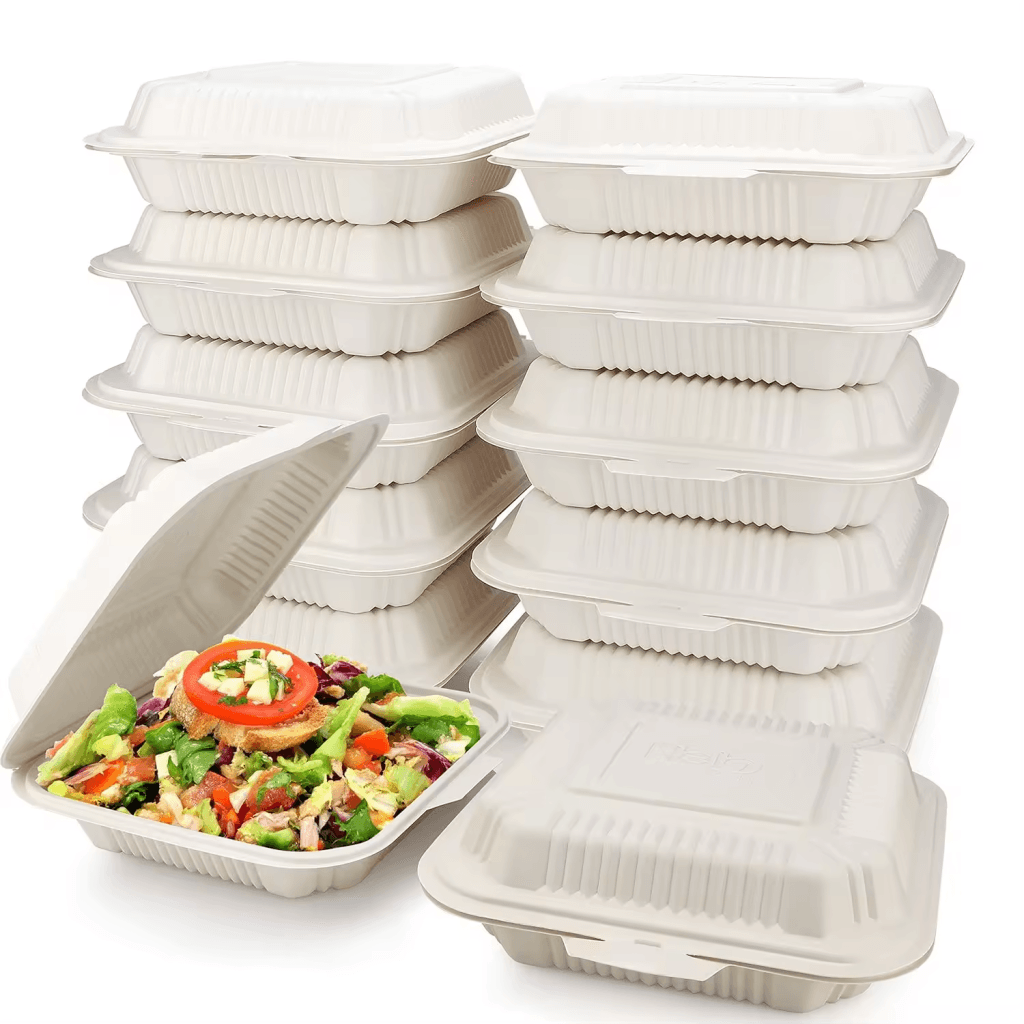
What makes them popular? Beyond their compostability, they’re:
Visually appealing: Smooth, off-white with a modern look
Functional: Stackable, lightweight, oil- and leak-resistant
Safe: Free from BPA, PFAS, and other hidden toxins
Compared to the Competition
| Feature | Cornstarch Lunch Box | Plastic Container | Paper Container |
|---|---|---|---|
| Compostable | ✅ Yes | ❌ No | ✅ Some (if coating-free) |
| Microwave-Safe | ✅ Up to 120°C | ⚠️ Depends on plastic type | ⚠️ May warp or leak |
| Oil & Leak Resistance | ✅ Excellent | ✅ | ⚠️ Often needs plastic lining |
| Toxic-Free (BPA/PFAS) | ✅ Yes | ❌ Often present | ⚠️ Varies by brand |
| Biobased | ✅ 100% (corn) | ❌ 0% | ✅ Often from trees |
| Decomposition Time | ⏳ ~90 days (industrial) | ❌ 500+ years | ⏳ 60–90 days |
Where Cornstarch Lunch Boxes Shine
1. Takeout and Delivery
Restaurants are under pressure to ditch single-use plastics. These boxes offer a guilt-free solution that also keeps food warm and intact.
2. School Lunches
Parents love them: no harmful chemicals, no mess, and they can teach children about sustainability through action.
3. Event Catering
Large events—from music festivals to corporate summits—are embracing cornstarch packaging as part of their green pledges.
4. Airlines and Travel Meals
Lightweight yet durable, these boxes reduce plastic weight onboard and align with carbon-reduction initiatives.
5. Government Canteens & Eco-Cities
Public sector institutions are leading by example, replacing foam and plastic containers with biodegradable alternatives.
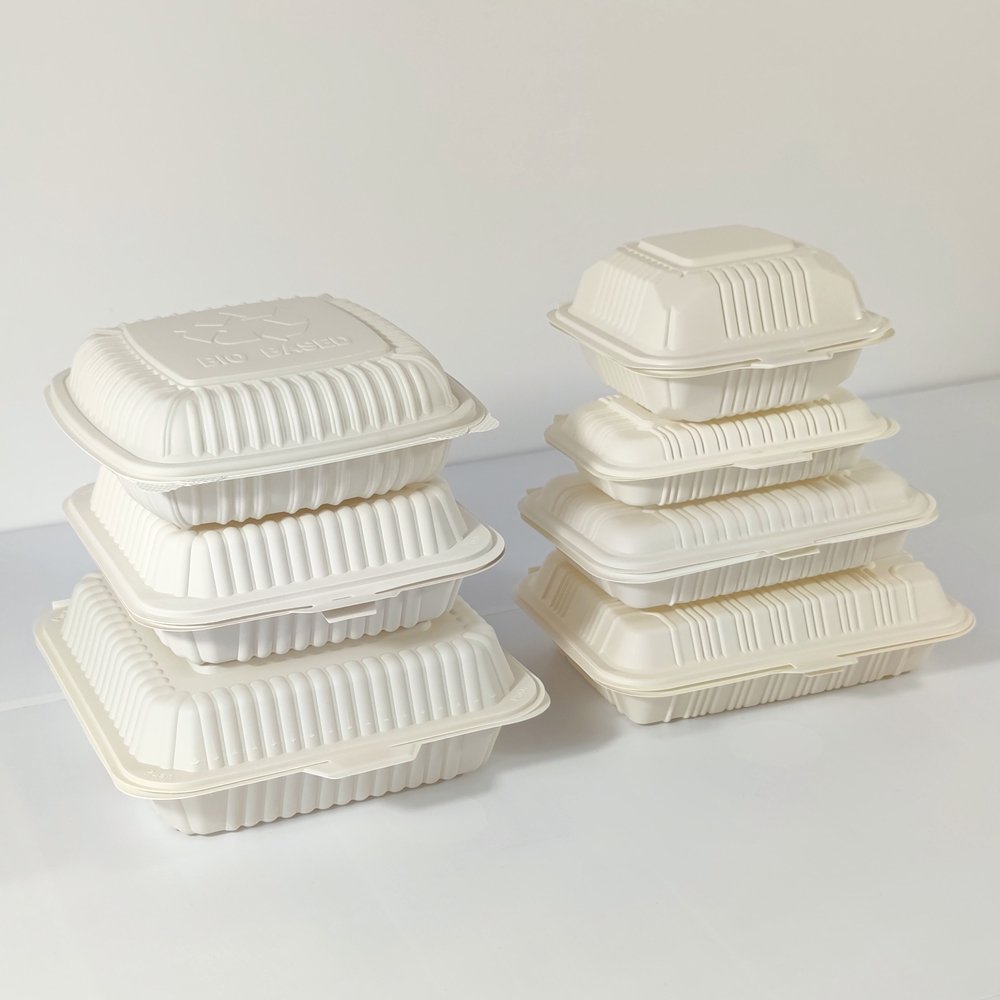
Challenges and Misconceptions
While cornstarch lunch boxes are revolutionary, some concerns linger:
“They can’t decompose in nature.”
Correct—they need industrial composting. But certified facilities are expanding rapidly worldwide.“They’re more expensive.”
True, per unit cost is slightly higher. But bulk purchasing from suppliers like Bioleader® significantly reduces price gaps—and saves on waste disposal fees.“They look like plastic. Are they?”
Nope. They are bio-based and toxin-free. The similar look is just modern design.
Chapter 8: A Brand That Walks the Talk — Bioleader®
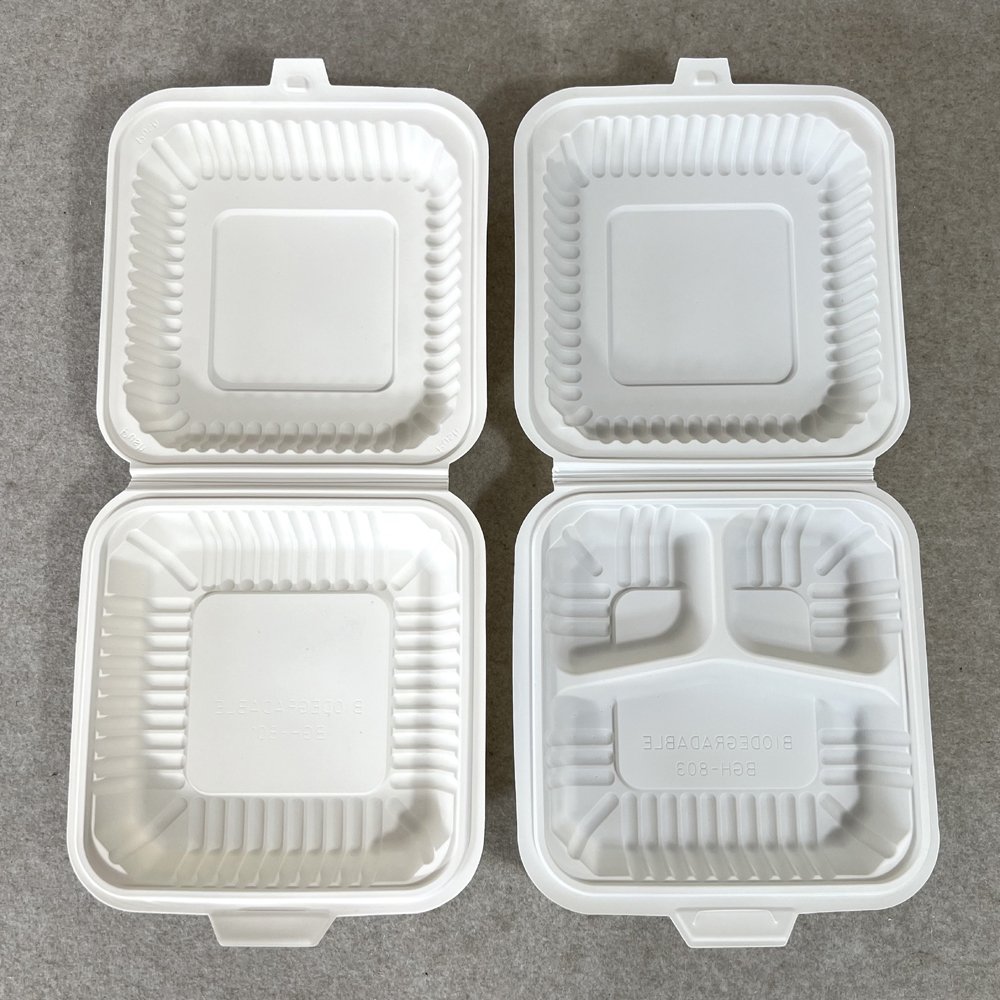
As a pioneer in sustainable packaging, Bioleader® offers a full range of cornstarch lunch boxes and cutlery, tailored for wholesale, foodservice, and export.
Key highlights include:
Custom embossing and branding available
Sizes from 500ml to 1,000ml+
CPLA-enhanced lids for extra durability
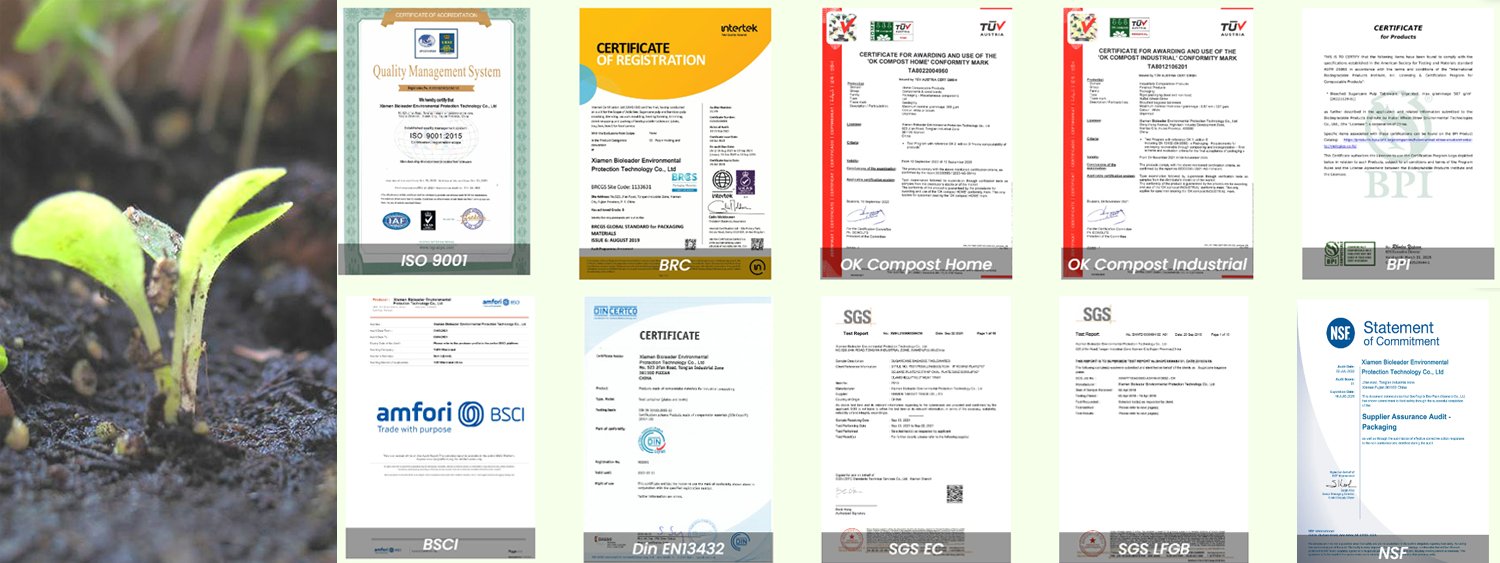
Certifications: BPI, EN13432, ASTM D6400, FDA food-grade
Bioleader’s solutions are ideal for:
B2B bulk orders
Retail-ready boxed kits
International eco packaging distributors
Chapter 9: Final Thoughts — A Circular Hero
In a world overwhelmed by plastic, the cornstarch lunch box stands out—not just as a product, but as a symbol. It proves that everyday tools, when thoughtfully designed, can participate in a sustainable loop.
So next time you grab a takeaway lunch, ask yourself: Where will this container end up? If it’s a cornstarch lunch box, chances are it will feed the earth, not pollute it.
Because its story isn’t about waste. It’s about return.
Microwave. Compost. Repeat.
FAQ
1. What is a cornstarch lunch box made of?
A cornstarch lunch box is made from natural corn starch and other plant-based materials, making it biodegradable and compostable.
2. Can a cornstarch lunch box be microwaved safely?
Yes, most cornstarch lunch boxes are microwave-safe and can handle reheating without releasing harmful chemicals.
3. How long does it take for a cornstarch lunch box to decompose?
Typically, a cornstarch lunch box will decompose within 3 to 6 months in an industrial composting facility.
4. Are cornstarch lunch boxes suitable for both hot and cold foods?
Yes, cornstarch lunch boxes are suitable for both hot and cold foods, retaining their shape and strength in various temperatures.
5. Are cornstarch lunch boxes reusable?
Cornstarch lunch boxes are designed for single use, but they can sometimes be gently reused for dry foods if cleaned properly.
6. Do cornstarch lunch boxes contain any plastic or toxins?
No, high-quality cornstarch lunch boxes are free from conventional plastics and harmful toxins like BPA and PFAS.
7. What are the environmental benefits of switching to cornstarch lunch boxes?
Switching to cornstarch lunch boxes reduces plastic pollution, supports composting efforts, and lowers your carbon footprint.
References
European Bioplastics Association – Bioplastics Market Data 2024
https://www.european-bioplastics.org/market/Wikipedia – Polylactic acid
https://en.wikipedia.org/wiki/Polylactic_acidNatureWorks LLC – What is PLA?
https://www.natureworksllc.com/What-is-Ingeo/PLA-BiopolymerU.S. FDA – Food Contact Materials: Biodegradable and Compostable Plastics
https://www.fda.gov/food/packaging-food-contact-substances-fcs/compostable-food-packagingTÜV Austria – OK Compost Industrial Certification
https://www.tuv-at.be/green-marks/certifications/ok-compost-industrial/Bioleader® – Cornstarch Clamshell Boxes Product Page
https://www.bioleaderpack.com/products/cornstarch-clamshell-boxes/Biodegradable Products Institute (BPI) – Certified Compostable Packaging List
https://bpiworld.org/