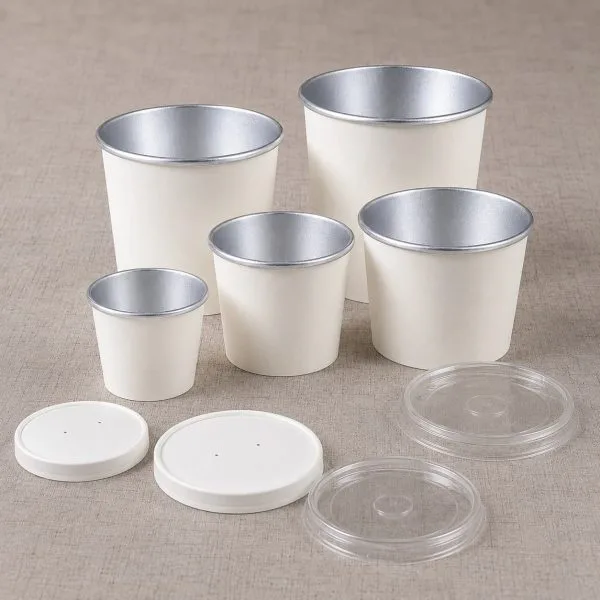


Quick Answer: Are Paper Bowls Good for Soup?
Yes—paper bowls can be a good choice for soup when the bowl is designed for hot liquids and matched to the actual food and service conditions. The most important factors are soup temperature, oil and fat content, holding time, barrier coating, paperboard structure, bottom-seam integrity, lid fit, and movement during takeaway or delivery.
A bowl that performs well with a light broth during short dine-in service may behave differently with oily curry, creamy soup, or a longer delivery route. For that reason, buyers should evaluate the complete bowl structure rather than judging performance only by whether the bowl looks like kraft paper or another fiber-based material.
For restaurants, distributors, caterers, and takeaway brands comparing paper soup bowls, a useful starting rule is:
Soup performance = temperature × oil/fat × holding time × barrier × delivery movement.
Bioleader® recommends defining these use conditions before choosing a bowl, coating, or lid. This makes it easier to compare samples under realistic service conditions and avoid problems such as sidewall softening, bottom leakage, lid loosening, or deformation during delivery.
1. Types of Paper Soup Bowls Available
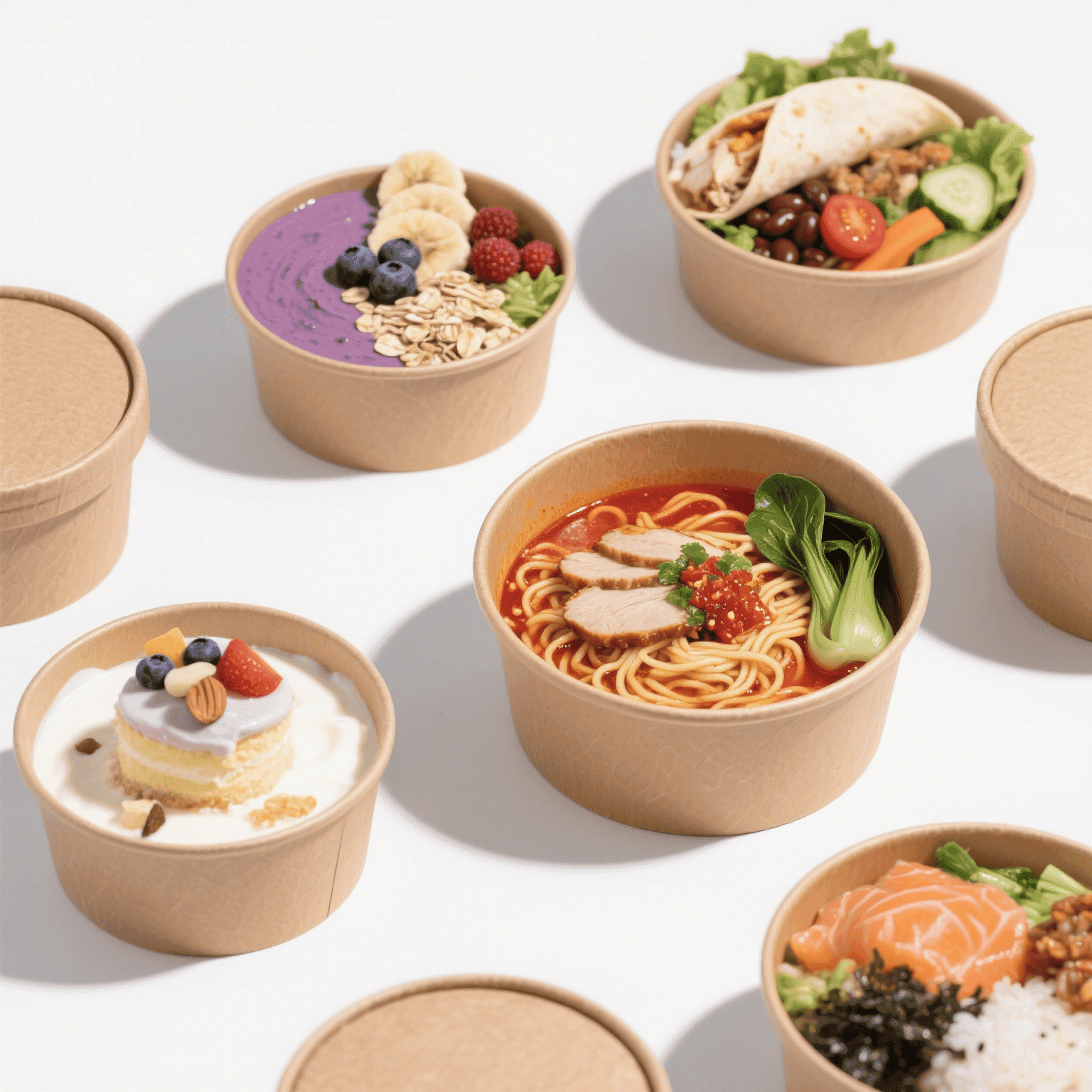
Paper soup bowls are available in several constructions. The best option depends on whether the bowl is intended for broth, creamy soup, curry, noodles, porridge, takeaway meals, catering, or longer delivery service. Buyers should also consider whether the packaging is part of a broader paper food packaging program that includes cups, bowls, boxes, and compatible lids.
Single-Wall Paper Soup Bowls
- Structure: A paperboard body with a food-contact barrier on the interior.
- Common applications: Soup, porridge, noodles, side dishes, and takeaway food.
- Performance variables: Paperboard stiffness, coating type, seam construction, soup temperature, and holding time.
- Buyer consideration: Single-wall does not automatically mean weak. Performance depends on the complete finished structure.
Double-Wall or Reinforced Paper Soup Bowls
- Structure: Additional paperboard or reinforced construction intended to improve rigidity or handling comfort.
- Common applications: Hot meals where greater sidewall stiffness or insulation is useful.
- Buyer consideration: Extra paper layers can improve handling, but liquid resistance still depends mainly on the food-contact barrier and seam construction.
Kraft Paper Soup Bowls
- Structure: Kraft paperboard combined with an appropriate food-contact barrier.
- Possible barrier systems: PE, PP, PLA, water-based coating, or another product-specific structure.
- Applications: Soup, noodles, rice, curry, porridge, salads, and takeaway meals.
- Buyer consideration: The natural brown kraft appearance does not by itself determine leak resistance, compostability, recyclability, or heat performance.
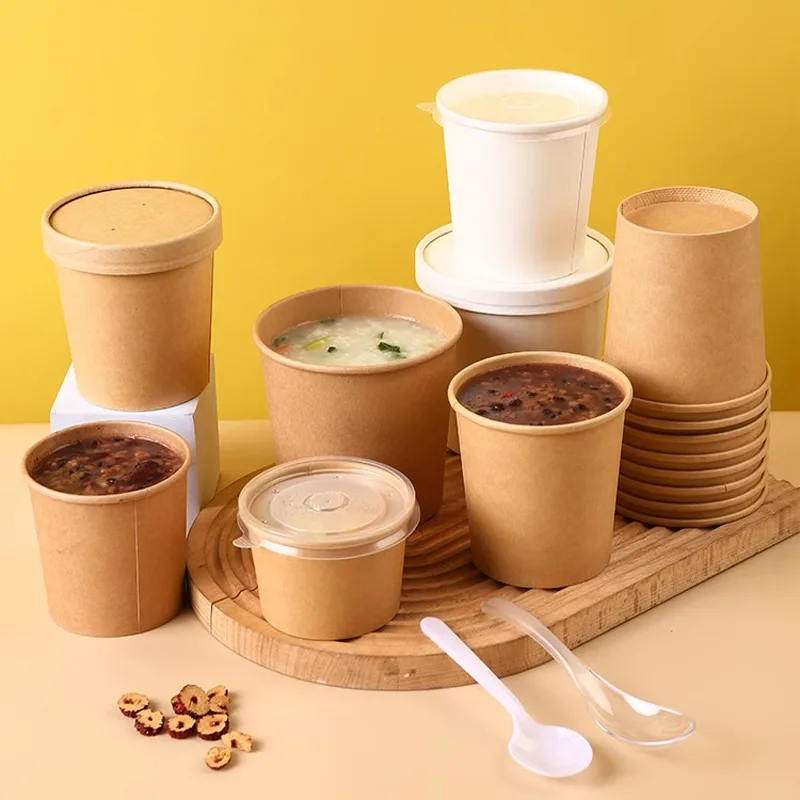
White Paperboard Soup Bowls
- Structure: White paperboard with an interior barrier selected for the intended food application.
- Applications: Branded foodservice, soup shops, cafés, catering, and prepared meals.
- Buyer consideration: White and kraft paper bowls can use similar coating systems. Exterior color alone does not determine performance.
PE-Coated Paper Soup Bowls
- Barrier: Polyethylene is widely used to provide liquid and grease resistance in paper food packaging.
- Applications: Hot and cold food applications depending on the finished product specification.
- Buyer consideration: PE coating affects end-of-life options, and recyclability depends on the complete structure and local collection and processing infrastructure.
PP-Coated Paper Soup Bowls
- Barrier: Polypropylene provides a higher-heat barrier option for selected paper bowl applications.
- Applications: Hot meals and other uses where a higher-heat coating structure is required.
- Buyer consideration: If microwave reheating is required, it should be specified separately and verified for the actual finished bowl and lid rather than inferred from hot-soup suitability alone.
PLA-Coated Paper Soup Bowls
- Barrier: PLA can be used as a food-contact barrier in selected paper packaging structures.
- End-of-life consideration: Compostability claims should be linked to the applicable finished-product certification and disposal conditions.
- Buyer consideration: PLA-coated paper should not automatically be described as home compostable, recyclable, or suitable for every high-heat application.
Water-Based Coated Paper Soup Bowls
- Barrier: An aqueous coating system can provide water and grease resistance while reducing reliance on conventional laminated-film structures, depending on the formulation.
- Applications: Selected soup, foodservice, and takeaway packaging programs.
- Buyer consideration: “Water-based” does not by itself prove plastic-free, recyclable, compostable, or microwave-safe performance. The finished structure and applicable documentation should be reviewed.
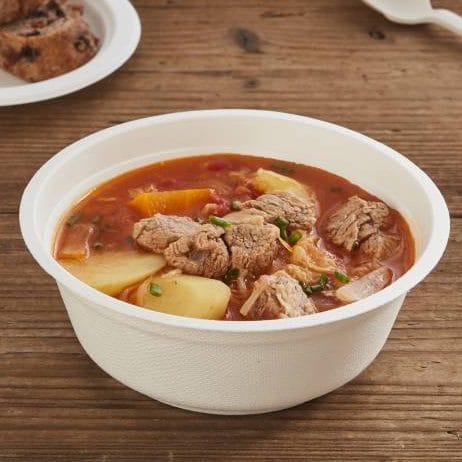
Bagasse Sugarcane Fiber Bowls
Molded sugarcane fiber is an alternative to conventional paperboard soup bowls rather than simply another coating option. Selected bagasse bowls are used for hot food, soup, rice, noodles, and takeaway meals, but their performance and compostability claims should still be evaluated according to the specific product, formulation, barrier treatment, certification, and intended use.
Paper Soup Bowls with Lids
For takeaway and delivery, the lid is part of the packaging system rather than a minor accessory. Paper bowls may be paired with paper, PP, PET, or other product-specific lids. Buyers should verify rim compatibility, closure security, steam management, stacking behavior, and the lid’s intended temperature range.
Bioleader® offers disposable paper soup bowls with lids for foodservice applications. Available bowl and lid combinations should be matched to the intended soup, holding time, delivery conditions, and market requirements.
2. What Makes a Paper Bowl Good for Hot Soup?
For soup applications, material name alone is not enough. A useful bowl must remain structurally stable while exposed to heat, water, oil, salt, steam, and movement for the intended service period.
Key takeaway: The best paper bowl for soup is not simply the thickest bowl or the bowl with the most “eco” claims. It is the bowl whose paperboard, barrier, seam, rim, and lid are suited to the actual soup and service conditions.
| Soup Performance Factor | Why It Matters | What Buyers Should Check |
|---|---|---|
| Soup temperature | Higher filling temperatures place greater stress on the coating, seam, paperboard, and lid fit. | Define the realistic filling and serving temperature for the intended food. |
| Holding time | Longer liquid contact can expose weaknesses that may not appear immediately after filling. | Test the bowl for the intended dine-in, takeaway, catering, or delivery period. |
| Oil and fat content | Oil, cream, sauces, and curry can challenge a barrier differently from water-based broth. | Test with the actual soup type or a representative high-fat food. |
| Barrier coating | The barrier helps prevent water and grease from penetrating the paperboard. | Identify whether the bowl uses PE, PP, PLA, water-based coating, or another system. |
| Paperboard structure | Board stiffness affects sidewall strength, hand feel, and resistance to deformation. | Evaluate the finished bowl rather than relying only on paper thickness or appearance. |
| Bottom seam | The bottom and side seams are critical points in a liquid container. | Inspect for seepage, delamination, or softening after extended hot-liquid contact. |
| Rim strength | The rim supports the lid and affects sealing performance after hot filling. | Check whether the rim remains round and stable after filling and handling. |
| Lid fit | A loose lid can increase spill risk even when the bowl itself performs well. | Test the exact bowl-and-lid combination under hot-fill and transport conditions. |
| Delivery movement | Soup can slosh, tilt, and press against the lid during transport. | Include tilt, movement, and realistic delivery handling in sample evaluation. |
| Stacking | Takeaway and catering orders may place vertical load on bowl rims and lids. | Check compression, nesting, lid security, and container stability when stacked. |
Bioleader® manufacturer insight: Based on foodservice packaging sourcing experience, soup-bowl selection should begin with the actual food and service process—not with the material name alone. Buyers should define temperature, fat content, expected holding time, lid requirements, and delivery conditions before comparing samples.
3. Coatings, Food Contact & End-of-Life Considerations
A paper bowl is a multi-material food-contact article. The visible paperboard is only one part of the finished package, so claims such as “recyclable,” “compostable,” “plastic-free,” or “microwave-safe” should not be inferred solely from the fact that the container looks like paper.
PE Coating
PE is a conventional barrier used in many paper cups, bowls, and food containers. It can provide practical liquid and grease resistance, but the coating influences recycling and end-of-life options. Local collection systems and paper mills may treat coated paper differently.
PP Coating
PP can be selected where a higher-heat barrier structure is required. It is relevant to certain hot-food packaging applications, but hot-food performance and microwave suitability remain separate claims. If reheating is required, buyers should confirm the finished product and applicable use instructions.
PLA Coating
PLA is bio-based and may be used in certified compostable packaging structures, but a PLA-coated paper bowl is not automatically home compostable. Compostability depends on the complete finished product, applicable certification, and disposal conditions.
Water-Based Coating
Water-based barrier systems vary in chemistry, coating weight, repulpability, grease resistance, and heat performance. Buyers should review the complete structure rather than assuming all aqueous coatings have the same recyclability, compostability, or heat properties.
Compliance note: Food-contact suitability, hot-soup holding performance, microwave suitability, recyclability, and compostability are separate questions. One claim should not be used as automatic proof of another.
For importers and foodservice buyers reviewing product-specific evidence, Bioleader® maintains a Certificates & Test Reports center. Available documentation may vary by material, coating structure, product, and market.
4. Heat, Oil, Holding Time & Leak Resistance
The question “Are paper bowls good for soup?” cannot be answered by heat resistance alone. Soup creates a combined challenge involving temperature, water, oil, salt, contact time, and movement.
Soup Temperature
Freshly prepared soup can expose a bowl to substantial heat immediately after filling. Buyers should test the actual finished container at the intended filling condition rather than relying on a general statement such as “suitable for hot food.” Sidewall stiffness, seam stability, coating behavior, and lid fit should all be checked after filling.
Oil and Fat Content
Clear broth and oily curry do not create the same barrier challenge. Cream-based soup, chili oil, meat broth, sauces, and high-fat foods can place greater stress on grease resistance. A sample intended for soup should therefore be evaluated with the actual food whenever possible.
Holding Time
A bowl that looks stable immediately after hot filling may soften later. For takeaway and delivery programs, the relevant question is not simply whether the bowl survives filling, but whether it remains functional throughout the intended holding and transport period.
A practical buyer evaluation can include checkpoints such as 15, 30, and 60 minutes or longer when the real service model requires it. These are evaluation intervals, not universal performance claims; the required duration should reflect the intended application.
Bottom-Seam and Sidewall Leakage
Leakage can develop at the bottom seam, side seam, or areas where the barrier has been stressed. Buyers should inspect for moisture penetration, staining, softening, seam opening, delamination, and changes in base stability.
Lid Fit, Steam and Delivery Movement
Soup packaging for delivery must handle more than static liquid contact. Steam can build inside the package, while road movement can repeatedly push liquid against the lid and rim. The complete bowl-and-lid combination should therefore be tested for closure security, tilt resistance, stacking, and movement.
Evidence-based evaluation: Bioleader® has published a practical hot-liquid, water and oil resistance evaluation of kraft and paper bowls. Buyers should still confirm that any test evidence applies to the selected bowl structure and intended conditions rather than extending one result to unrelated products.
5. What Foodservice Buyers Should Specify
Professional soup-bowl sourcing works best when the buyer provides an intended-use specification rather than requesting only “a paper bowl for hot soup.”
| Specification | Questions to Define Before Ordering |
|---|---|
| Food type | Clear soup, creamy soup, curry, oily broth, noodles, porridge, rice meal, or mixed food? |
| Filling condition | Will the product be filled hot, warm, chilled, or stored before service? |
| Holding time | Short dine-in service, takeaway, catering, or longer delivery? |
| Oil level | Is the food mainly water-based, moderately fatty, or oil-rich? |
| Coating | PE, PP, PLA, water-based coating, or another required barrier structure? |
| Lid | Paper, PP, PET, or another compatible lid? Is visual presentation, heat resistance, or disposal route the priority? |
| Capacity | Side soup, standard portion, noodle meal, large entrée, or catering portion? |
| Delivery | Will bowls be stacked, tilted, transported by motorcycle, car, or catering vehicle? |
| Reheating | Will consumers be expected to microwave the food in the original bowl? |
| Documentation | Which food-contact, compostability, PFAS-related, recycling, or other product documents are required for the destination market? |
| Branding | Plain bowl or custom printing? Which artwork, colors, and packaging format are required? |
Buyer note: The more accurately these conditions are defined before sampling, the more meaningful the sample test becomes. A generic bowl tested with water for a short period may not represent the conditions of an oily soup delivered over a longer route.
6. How to Test Paper Soup Bowls Before Bulk Ordering
For B2B procurement, sample testing should reproduce the buyer’s intended use as closely as practical. This is more useful than relying only on broad descriptions such as “heavy duty,” “leak-proof,” or “heat resistant.”
1. Hot Broth Test
Fill the bowl with the intended soup or a representative hot liquid. Observe the base, sidewalls, seam, and rim immediately after filling and throughout the required holding period.
2. Oily or Fatty Food Test
Repeat the evaluation with a soup or food containing oil or fat. Check for grease penetration, staining, coating failure, softening, or changes around the seam.
3. Extended Holding Test
Inspect the bowl at intervals that reflect the real service model. Restaurants with fast dine-in turnover may require a different evaluation from a delivery operator whose food remains packaged for longer.
4. Lid-Fit Test
Use the exact lid intended for commercial production. Check closure around the full rim before and after hot filling, and inspect whether steam or heat changes the bowl shape enough to affect the seal.
5. Tilt and Movement Test
Gently tilt and move the filled container to simulate handling and delivery. This helps identify problems that are not visible during a stationary holding test.
6. Stacking Test
Stack filled or representative bowls as they would be packed for takeaway or catering. Verify that the lower lids and rims remain secure under realistic load.
7. Post-Hold Inspection
After the intended holding period, check the bowl for leakage, sidewall softening, bottom deformation, seam separation, odor, discoloration, and loss of lid fit.
Bioleader® recommendation: Buyers evaluating soup packaging should test the selected sample with the actual food, fill volume, lid, holding time, and delivery conditions before bulk approval. Product-specific performance should be confirmed under intended-use conditions.
7. Typical Soup & Takeaway Use Scenarios
Clear Broth and Short-Service Soup
For a relatively water-based broth consumed shortly after filling, the main requirements are hot-liquid resistance, seam stability, adequate rigidity, and comfortable handling. A suitable single-wall or reinforced paper soup bowl may be sufficient depending on the product specification.
Creamy Soup or High-Fat Soup
Cream, butter, meat fat, or other oily ingredients can increase the barrier challenge. Buyers should place greater emphasis on grease resistance and extended holding tests rather than assuming that performance with plain water will be identical.
Curry, Noodles and Oily Takeaway Meals
Curry, noodle soup, chili oil, and mixed meals can combine heat, oil, solids, and substantial food weight. The bowl should be evaluated for bottom strength, sidewall rigidity, grease resistance, and rim stability.
Delivery Service
Delivery adds movement, stacking, steam, and a longer closed-container period. Lid compatibility becomes particularly important. The best soup package for delivery is therefore a matched bowl-and-lid system rather than a bowl selected in isolation.
Catering and Institutional Foodservice
Catering programs may require bowls to be stacked, transported in larger quantities, and held before service. Buyers should consider packaging efficiency, nesting, lid security, portion size, and the realistic time between filling and consumption.
Choosing by application: Bioleader®’s paper bowl portfolio allows buyers to compare different paperboard, coating, size, and lid structures within one sourcing program. The final selection should be based on the intended soup and service conditions rather than a single material label.
8. Buyer Checklist: Choosing Paper Bowls for Soup
- Define the soup: broth, creamy soup, curry, noodles, porridge, or oily food.
- Define the filling condition: confirm how hot the food will be when packed.
- Define the holding time: dine-in, takeaway, delivery, or catering.
- Check the barrier: PE, PP, PLA, water-based coating, or another product-specific system.
- Check the bowl structure: paperboard rigidity, bottom construction, side seam, and rim.
- Check the lid: material, fit, closure, stacking, steam behavior, and intended use.
- Test with actual food: especially for oily, fatty, acidic, or long-hold applications.
- Confirm reheating needs separately: hot-food suitability does not automatically mean microwave suitability.
- Review documentation: request the product-specific documents needed for the destination market and intended claim.
- Confirm size and portion: select the capacity according to the actual menu rather than using one bowl for every dish.
Common Paper Soup Bowl Sizes
Paper soup bowls are commonly available in several capacities for side portions, standard soup servings, noodles, rice meals, and larger takeaway dishes. Exact dimensions and available sizes vary by product series, so buyers should confirm the current specification before ordering.
| Example Capacity | Typical Application |
|---|---|
| 8 oz | Small soup, side portion, tasting, sauce, or dessert application |
| 12 oz | Individual soup, porridge, side dish, or smaller takeaway meal |
| 16 oz | Standard soup, noodles, curry, or takeaway portion |
| 26 oz | Larger soup, noodle meal, curry, rice meal, or mixed food |
| 32 oz | Large takeaway meal, sharing portion, catering, or substantial noodle/soup serving |
Buyers comparing capacities, lid options, and commercial configurations can review Bioleader®’s paper soup bowl range.
FAQ
1. Can paper bowls hold hot soup without leaking?
Yes, a paper bowl designed for hot liquids can hold soup effectively, but leak resistance depends on the finished bowl structure, barrier coating, seams, soup temperature, oil content, and holding time. Buyers should test the selected product under the intended service conditions rather than assuming every paper bowl performs the same way.
2. What makes a paper bowl suitable for hot soup?
A suitable soup bowl needs an effective liquid and grease barrier, adequate paperboard rigidity, stable seams, a strong rim, and a lid that fits correctly when required. Soup temperature, fat content, holding time, and delivery movement should also be considered.
3. Which coating is best for paper soup bowls?
There is no single coating that is best for every application. PE, PP, PLA, and water-based coatings have different performance and end-of-life characteristics. The appropriate option depends on the food, required heat resistance, holding time, disposal pathway, and product-specific documentation.
4. How long can soup stay in a paper bowl?
There is no universal holding time for all paper bowls. Performance depends on the coating, paperboard structure, soup temperature, oil content, fill volume, lid, and service conditions. Buyers should validate the bowl for the maximum holding or delivery period expected in actual use.
5. Are paper bowls suitable for oily soup or curry?
They can be, provided the bowl has a barrier and structure suitable for hot, oily food. Oily soup, curry, chili oil, and creamy foods should be included in sample testing because they may challenge the barrier differently from plain broth or water.
6. Which lids are best for soup delivery?
The best lid depends on the bowl, food temperature, presentation requirements, and intended use. Paper, PP, PET, and other lids can serve different functions. Buyers should test the exact bowl-and-lid combination for closure security, rim fit, stacking, steam conditions, and delivery movement.
7. What size paper bowl should I choose for soup?
The right size depends on the menu and portion. Smaller capacities may suit side soup or tasting portions, while larger bowls may be better for noodles, curry, rice meals, or substantial takeaway servings. Buyers should confirm the actual dimensions and lid compatibility of the selected series.
8. Can paper soup bowls be microwaved?
Some paper bowls can be designed for microwave reheating, but hot-soup suitability does not automatically prove microwave suitability. Coating structure, food type, heating conditions, and lid material must be considered separately. For detailed guidance, see microwave suitability of paper bowls.
Conclusion
Are paper bowls good for soup? Yes—when the bowl is designed for hot liquids and selected according to the actual soup and service conditions.
For foodservice buyers, the most important factors are not simply whether a bowl is kraft, white paper, or plant-based. Performance depends on the barrier coating, soup temperature, oil and fat content, holding time, paperboard structure, seam integrity, lid fit, stacking, and delivery movement.
Kraft and white paper soup bowls can use PE, PP, PLA, water-based, or other barrier structures, while molded bagasse bowls provide an alternative fiber-based option. Claims about microwave use, recyclability, compostability, or plastic content should be reviewed separately and supported by the applicable product structure and documentation.
For distributors, restaurants, catering companies, food brands, and takeaway packaging buyers, Bioleader® recommends testing the selected sample with the actual food and expected service conditions before bulk production. Buyers can compare paper soup bowls and request applicable specifications and supporting documents for the selected product.
Test Evidence & Buyer Documentation
Product performance and environmental claims should be evaluated against documentation that applies to the actual bowl, coating, lid, and intended use. Test results for one structure should not automatically be extended to unrelated products.
- Bioleader® Hot-Liquid, Waterproof & Oil-Resistance Evaluation — practical reference for evaluating paper bowl structures under demanding foodservice conditions.
- Bioleader® Certificates & Test Reports — available food-contact, material, compliance, and product-related supporting documentation.