










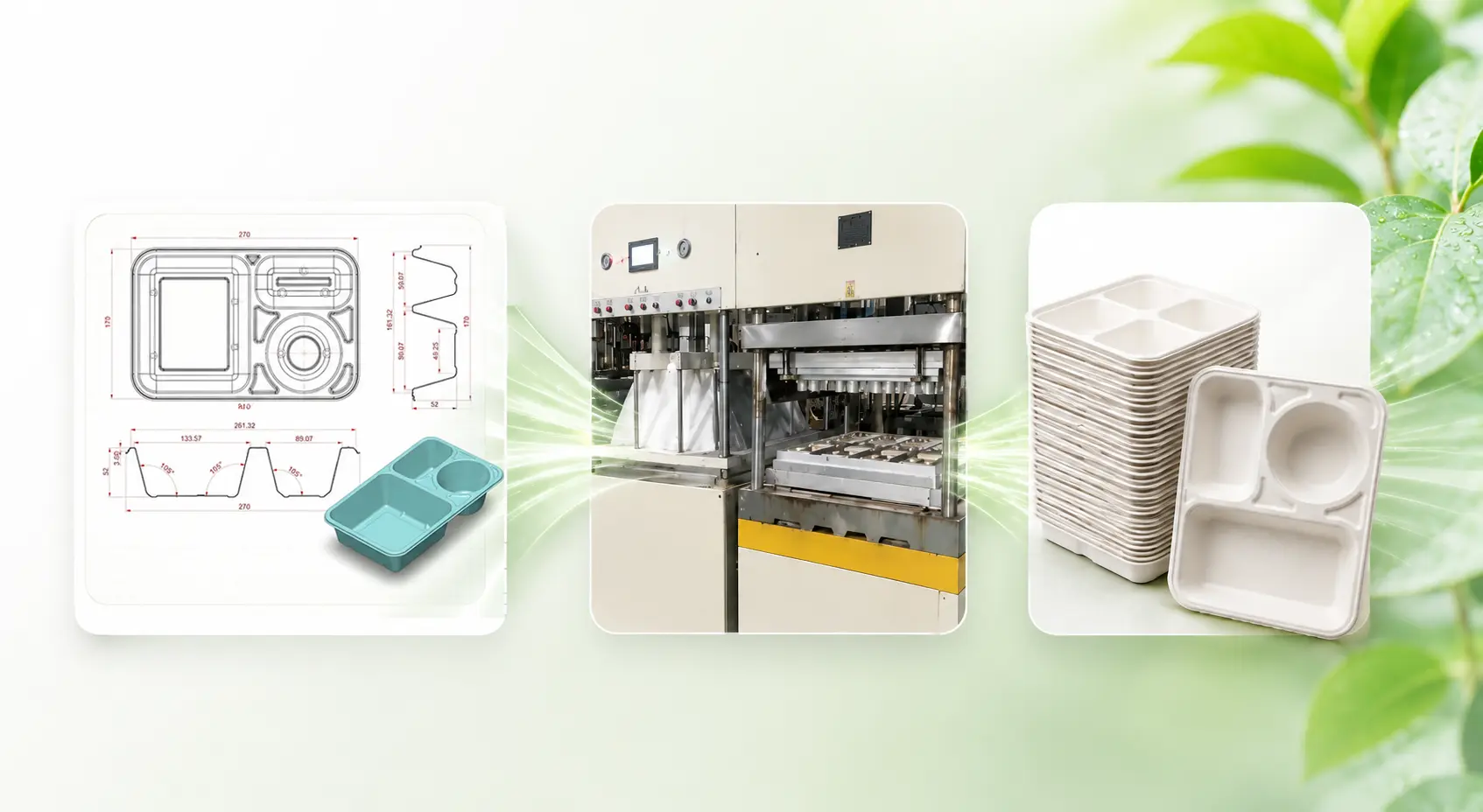
Custom Molded Pulp & Bagasse Packaging
1. Design Specifications
& Prototyping
2. Production Mold
Tooling & Forming
3. Eco-Friendly Final
Product & Inspection
Bioleader® develops and manufactures custom sugarcane bagasse and molded fiber packaging from your idea, drawing, or physical sample—with engineering review, prototyping, production tooling, testing, and mass-production support.
Get an Online Packaging Estimate
Enter your product dimensions to receive a preliminary weight range, unit-price estimate and tooling budget for custom molded pulp packaging. If you already know the actual product weight, you can enter it for a more specific estimate.
Your Molded Pulp Project Estimate
For qualified long-term programs, the production tooling fee may be fully rebated after cumulative orders reach approximately 3–5 million pcs. The actual threshold depends on product size, tooling structure and agreed project terms. Sample / prototype tooling is not included.
This online calculator provides an initial budget estimate for custom molded pulp and bagasse packaging based on standard material and tooling assumptions.
Final pricing is subject to engineering review, product geometry, forming depth, tooling structure, surface requirements, packing method and confirmed production specifications.
Freight, duties, taxes and special packing requirements are not included.
Send your dimensions, drawings, product photos or physical sample information to our team for engineering review and a formal quotation.
How Molded Pulp Tooling Changes by Production Method
Molded pulp tooling is not a single universal mold. Tooling structure and mold material depend on the production line, pulp material, product geometry, cavity arrangement and forming process.
Small molded pulp lines using recycled paper pulp commonly use a multi-cavity wet forming mold made from ABS. The hot-press stage typically uses single-cavity tooling made from GB-standard 6061 aluminum.
Larger molded pulp production lines commonly use steel tooling with copper inserts. A production tooling system may include separate forming, setting and trimming tools according to the product design and production requirements.
Final tooling configuration is confirmed after engineering review of product dimensions, forming depth, geometry, cavity layout, surface requirements and expected production volume.
What Can You Start With?
You do not need a complete engineering drawing to begin. Bioleader® can evaluate a custom molded fiber project from an initial concept, an existing drawing, or a physical reference sample.
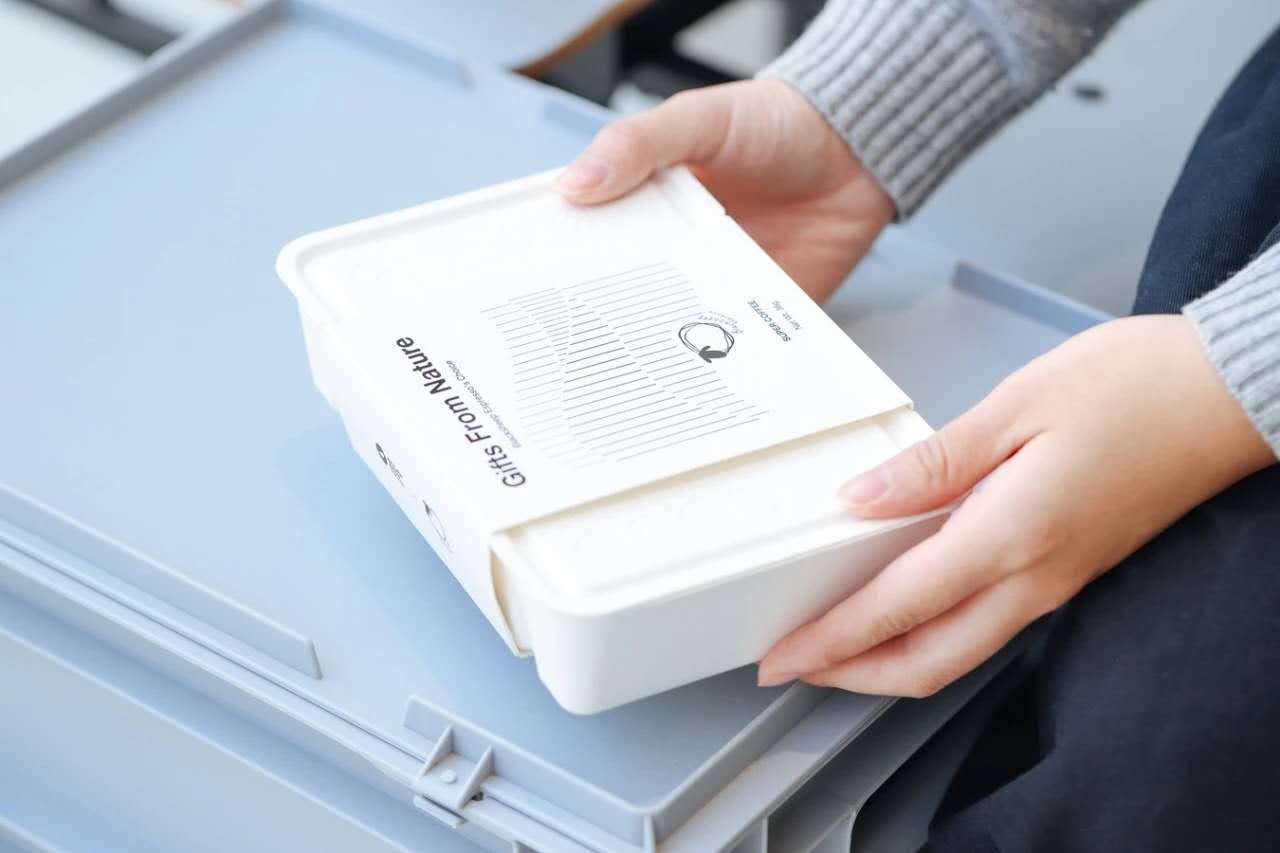
I Have an Idea
Tell us the intended food application, approximate dimensions, capacity, compartment layout, lid requirement and expected order volume. Our engineering team can help turn an initial concept into a manufacturable molded fiber structure.
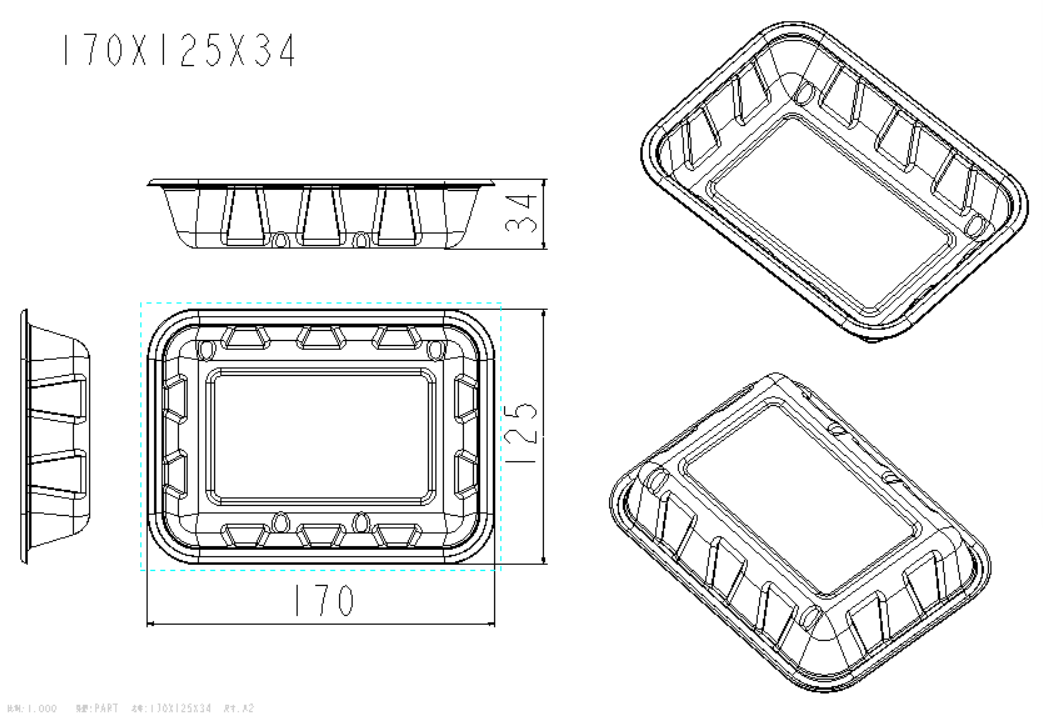
I Have a Drawing
Send us your existing mold, tooling, or product drawing. Our engineering team will review production feasibility and optimize key details such as dimensions, forming depth, draft angles, nesting, mold release, and compartment structure before tooling is finalized.
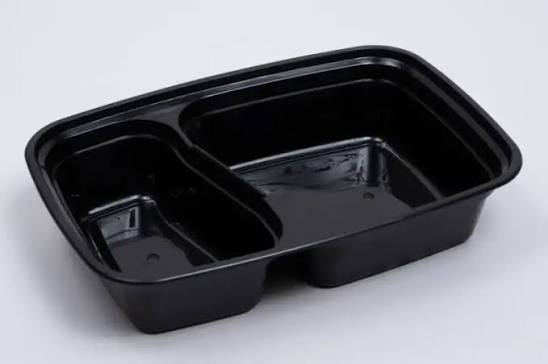
I Have a Physical Sample
Send us your existing plastic or other-material packaging, a physical sample, or product photos. We can evaluate the structure and dimensions, then determine how it can be redesigned as a biodegradable molded fiber solution for your application.
Choose the Right Development Route for Your Project
Not every custom molded fiber project needs a completely new mold. As a custom molded pulp packaging manufacturer, Bioleader® first evaluates whether your requirement can be achieved by modifying an existing product or requires a fully new molded fiber structure.
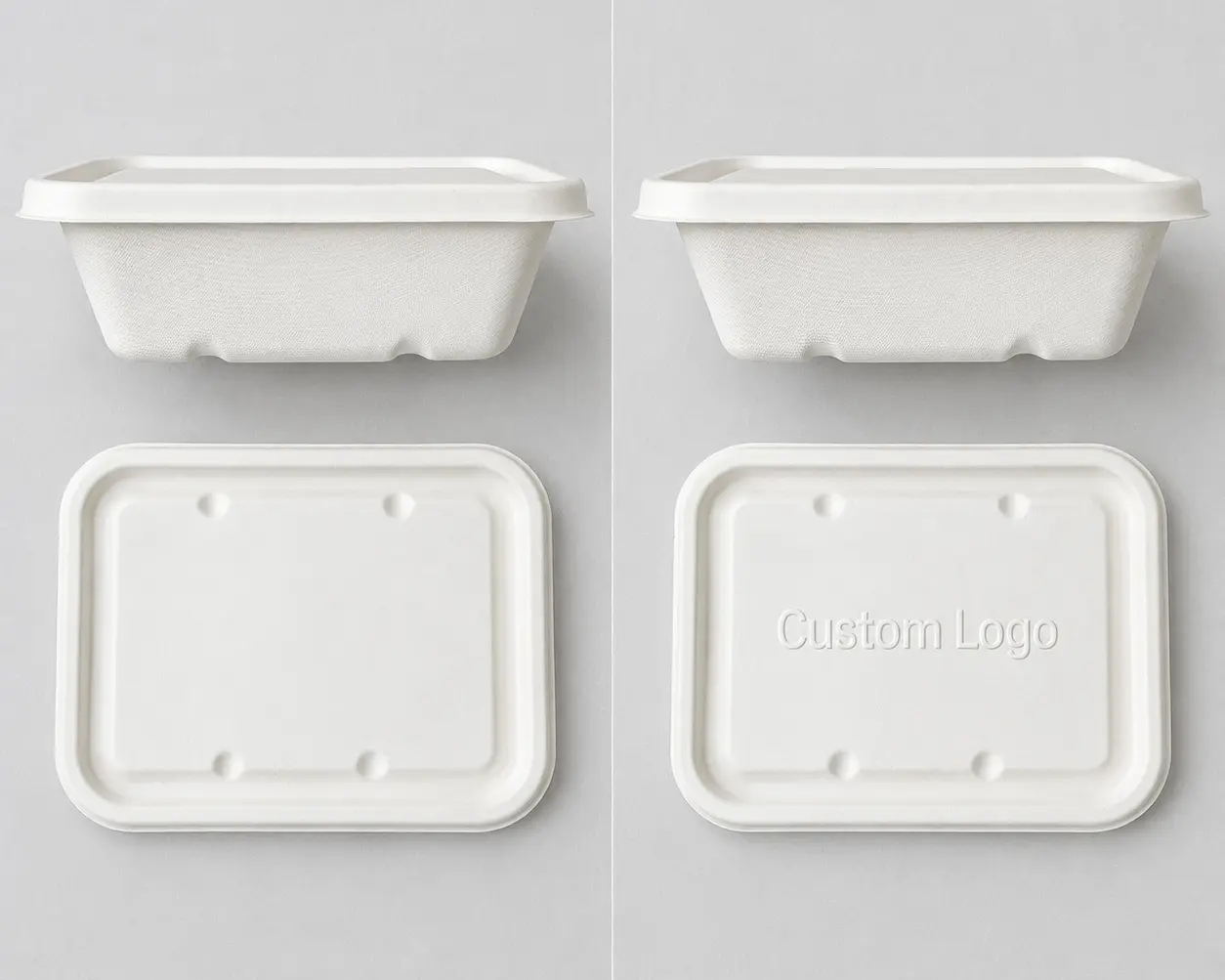
Customize an Existing Bioleader® Product
If one of our existing molded fiber products already matches the required size and structure, selected features can be customized without developing a completely new product from the beginning.
- Embossed Custom Logo
- Natural or White Fiber
- Private-Label Packaging
- Labels & Sleeves
- Carton Customization
- Existing Lid Combinations
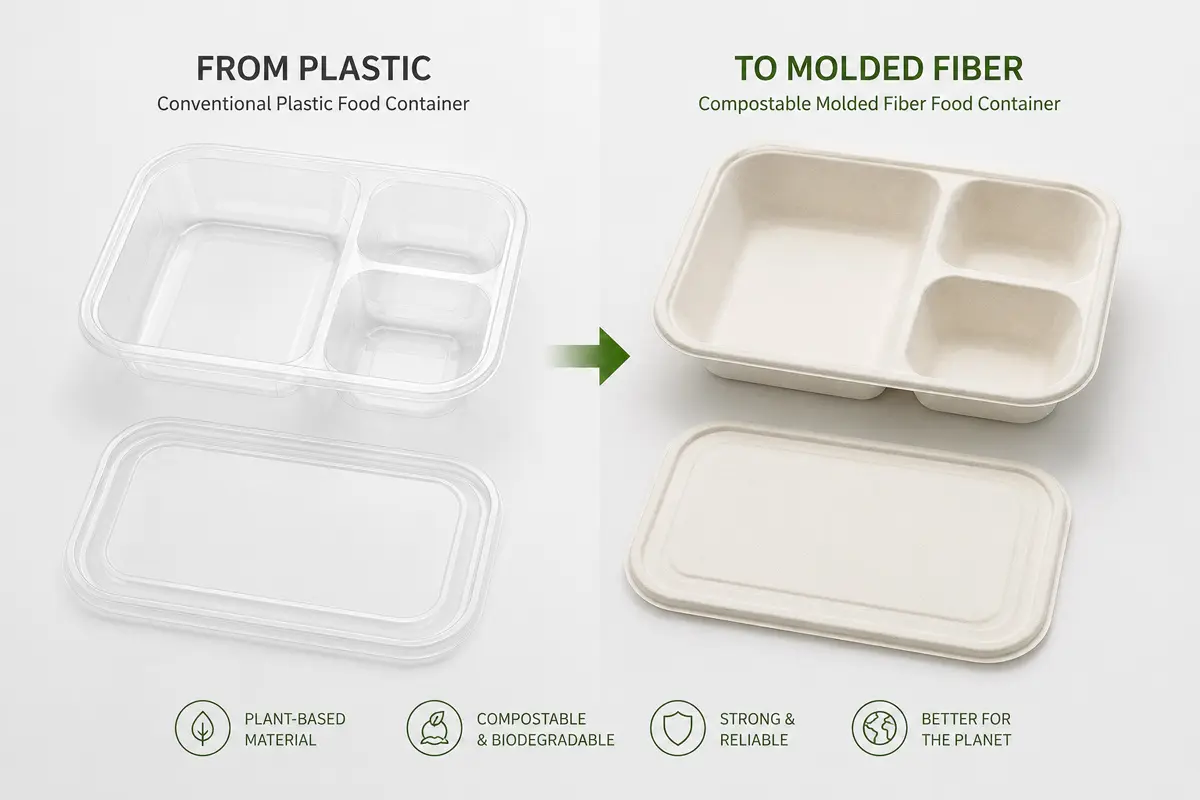
Develop a Completely New Molded Fiber Product
When an existing product cannot meet your requirements, we can redesign the packaging around your dimensions, food application, structure and performance targets, including conversion from plastic or other materials to molded fiber.
- New Shape & Dimensions
- Custom Capacity & Depth
- New Compartment Layout
- Custom Rim & Lid System
- Nesting & Stacking Design
- Prototype & Production Tooling
What Can We Customize in Molded Fiber Packaging?
Each custom project is reviewed around product geometry, food application, manufacturing feasibility, lid fit, stacking, and target performance.
Shape & Dimensions
Customize the overall geometry around your product, portion size and food-service application.
Capacity & Compartments
Define the required volume, portion arrangement and compartment configuration for your menu or application.
Rim & Lid Fit
Engineer the rim and closing structure around the required lid type, engagement and fit.
Nesting & Stackability
Optimize nesting and separation to balance handling, packing density and carton efficiency.
Product Weight & Strength
Balance target unit weight, rigidity and forming requirements for the intended food and handling conditions.
Embossed Logo & Surface Details
Add molded branding, identification marks and selected surface details where the product structure allows.
From Design Input to Mass Production
Every new molded fiber product moves through engineering review, design confirmation, tooling, sample validation and controlled production before full-scale manufacturing begins.
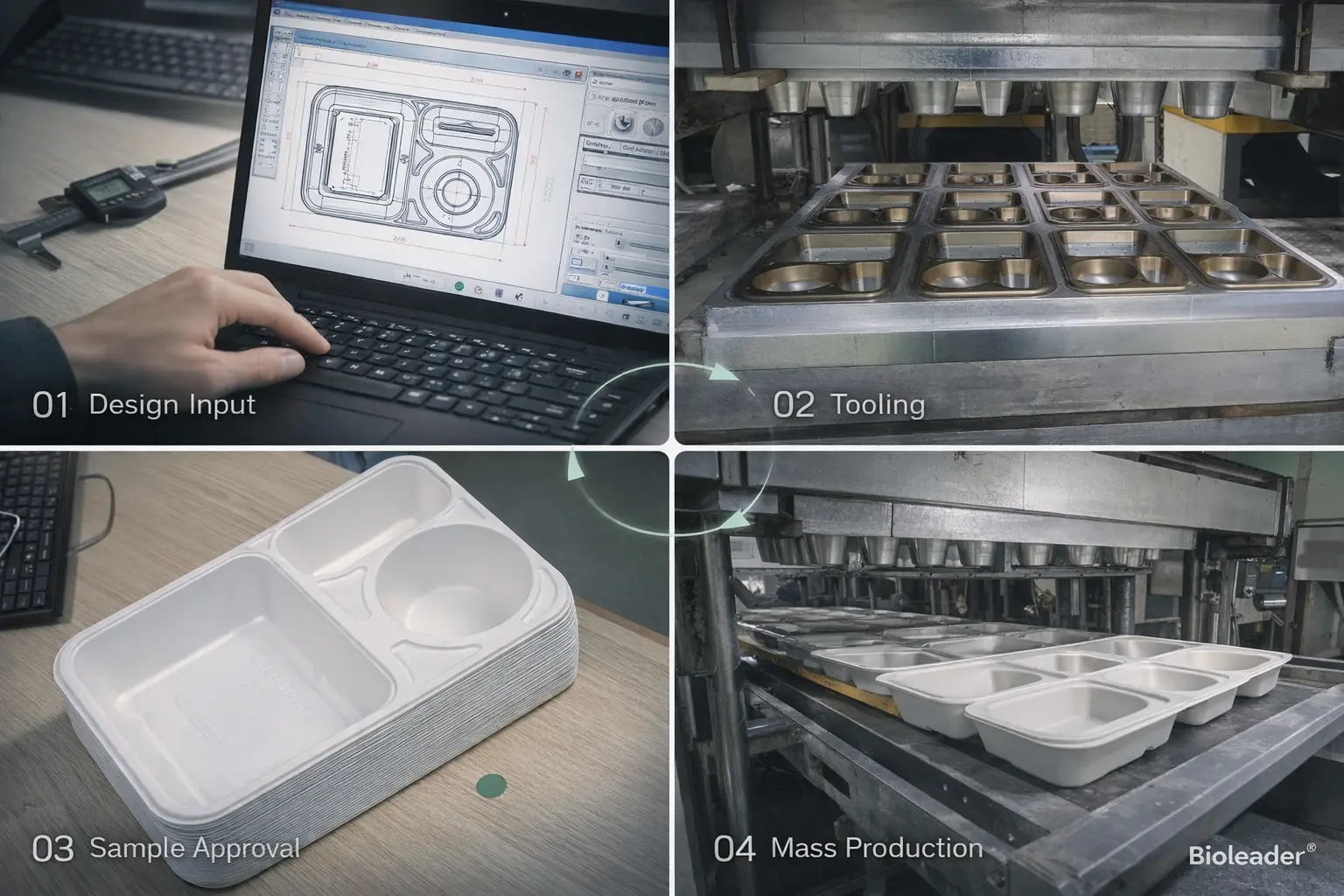
Project Brief & Design Input
Start with your idea, drawing, physical sample or existing package together with the target application and key specifications.
Feasibility & DFM Review
We review forming depth, draft angles, rim geometry, compartments, nesting, mold release and other production-critical details.
Drawing Confirmation
The product structure is refined into an engineering drawing for dimensional and structural confirmation before tooling proceeds.
Prototype & Sample Approval
Where required, prototype tooling is used to produce physical samples for fit, appearance, function and performance evaluation.
Production Tooling & Mold Trial
After the design and tooling are approved, production moves through a controlled pulp-molding process from fiber preparation and forming to finishing, inspection and packing.
Mass Production & Inspection
The approved structure moves into mass production with process control, product inspection and final packing before shipment.
Ready to turn your drawing, sample or existing package into a production-ready molded fiber product?
Start Your Custom Development →How Custom Molded Fiber Products Are Manufactured
After the design and tooling are approved, production moves through a controlled pulp-molding process from fiber preparation and forming to finishing, inspection and packing.
Pulp Preparation
Sugarcane bagasse fiber is pulped and prepared to the approved formulation for the required product performance.
Vacuum Forming
Pulp slurry is drawn onto the forming mold to create the basic product shape, compartments and wall structure.
Hot Pressing & Drying
Heat and pressure remove moisture, stabilize dimensions and improve rigidity and surface finish.
Trimming & Finishing
Product edges are trimmed and finished to achieve the approved rim, profile and final appearance.
Inspection & Packing
Finished products are checked for dimensions, appearance, stacking and fit before counting and final packing.
Need a molded fiber structure engineered for your product, food application or existing packaging?
Start Your Custom Project →Custom Molded Fiber Products We Have Developed
Examples of custom shapes, compartments, lids and molded fiber structures developed for different foodservice and packaging applications.
Real Project Cases
Two different custom-development paths—from creating a completely new meal tray to converting an existing plastic packaging range into molded fiber.
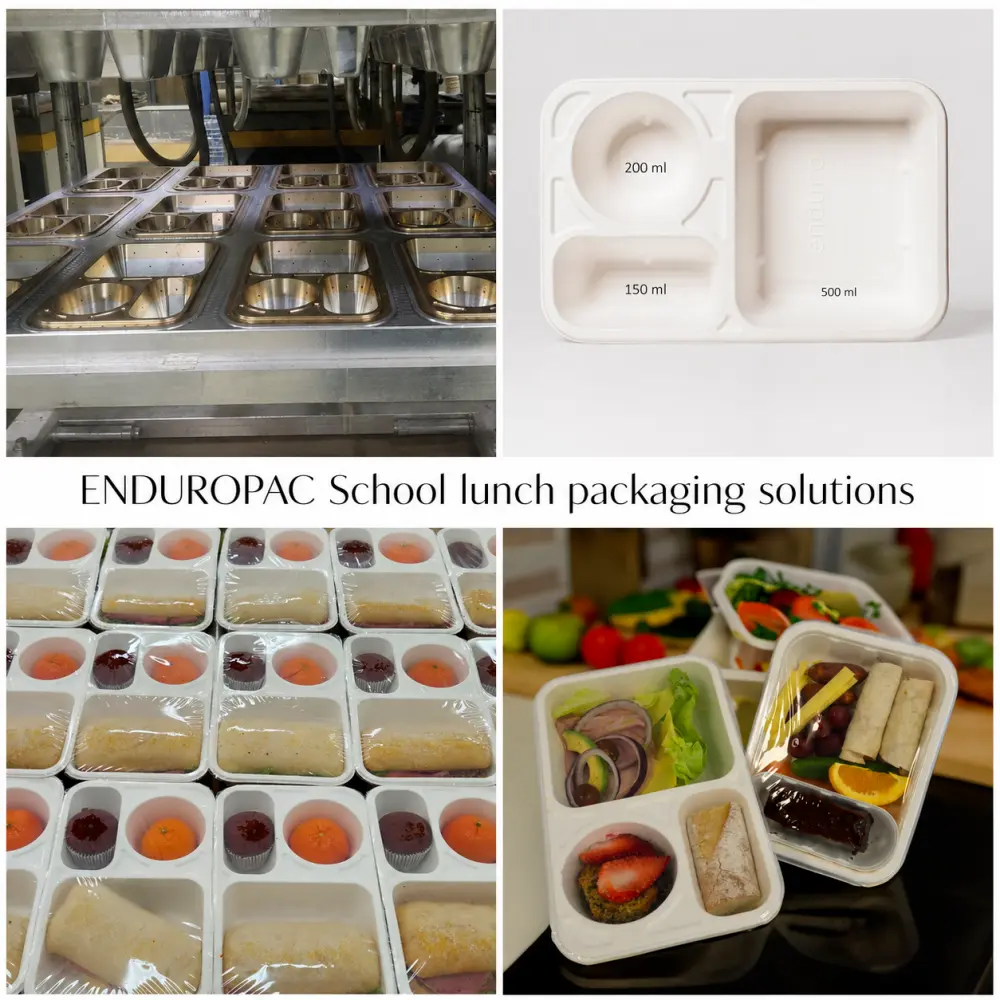
Custom 3-Compartment School Lunch Tray
Enduropac needed a molded fiber alternative to conventional plastic school meal trays, with stable compartments, efficient stacking and reliable handling for hot meals.
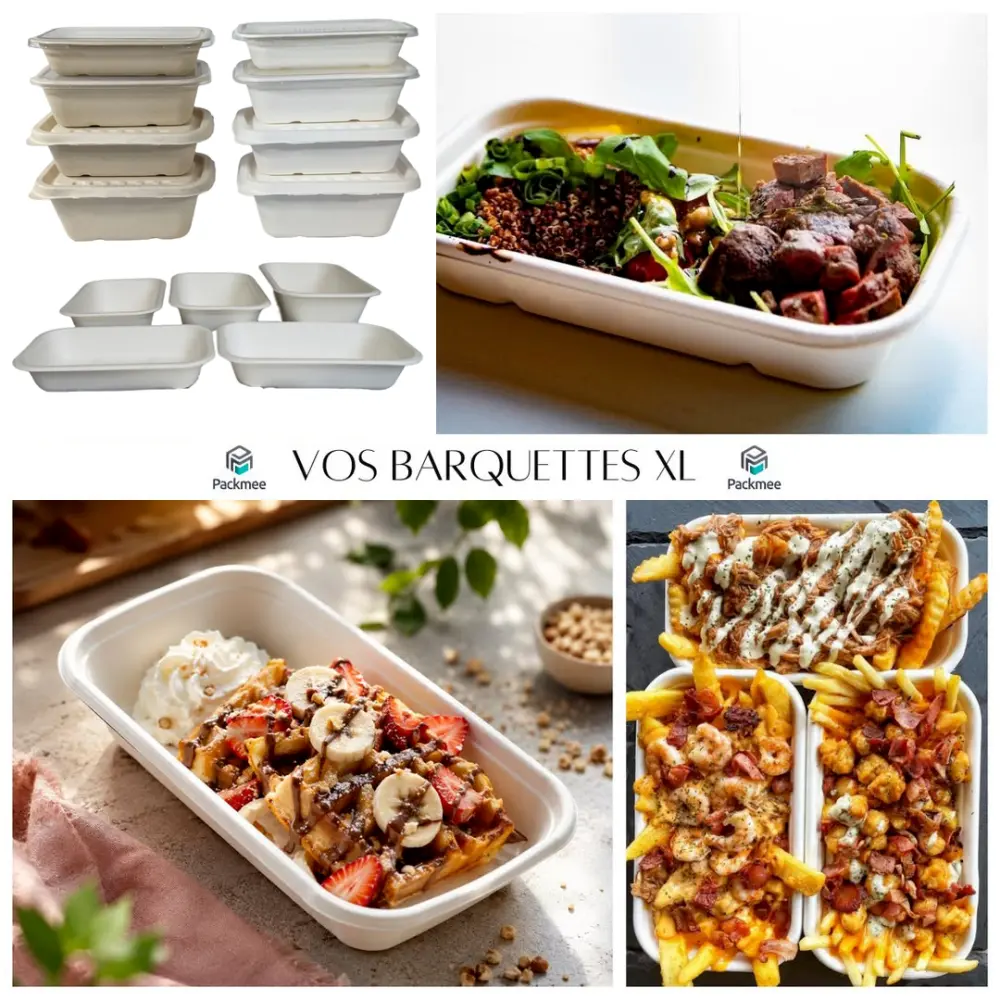
From Plastic Containers to Bagasse Tableware
Packme wanted to replace its conventional plastic food-container range with molded fiber alternatives while maintaining performance for restaurants, catering and delivery.
Frequently Asked Questions
Key questions about drawings, samples, tooling and production before starting a custom molded fiber packaging project.
What do you need to start a custom molded fiber project?
You can start with an idea, drawing, physical sample or existing package. Target dimensions, capacity, food application, lid requirements and expected order quantity help us evaluate the project faster.
Do I need a complete CAD drawing?
No. A sketch, product photo, dimensional reference or physical sample is enough for an initial feasibility review. Engineering drawings can be developed or refined later.
Can you convert plastic packaging into molded fiber?
Yes. We can evaluate an existing plastic or other-material package and redesign the structure for molded fiber production, including dimensions, compartments, rim, nesting and lid fit.
Does every custom product require a new mold?
No. If an existing Bioleader® structure already matches the required size and application, selected modifications may be possible. New dimensions or structures normally require new production tooling.
What can be customized?
Typical customization includes shape, dimensions, capacity, compartments, rim structure, lid fit, nesting, product weight and embossed logos.
Can we approve samples before mass production?
Yes. Where required, prototype or trial samples can be produced for dimensional, appearance, fit and functional evaluation before mass production.
How are tooling cost and development time determined?
They depend on product size, structural complexity, forming requirements, compartments, lid system and whether existing or completely new tooling is required.
What is the MOQ for custom molded fiber packaging?
MOQ depends on product structure, dimensions, tooling and packing requirements. Custom projects are designed for commercial-scale manufacturing, so MOQ is confirmed after engineering review.