Quick Summary: What Is a Spork?
A spork is a hybrid utensil that combines the bowl of a spoon with the short tines of a fork. It is designed for foods that require both scooping and light piercing, making it useful for takeout meals, school lunches, catering, camping, airline meals, food trucks, and disposable foodservice packaging.
- Best for: rice, noodles, pasta, salads, desserts, grain bowls, soft meals, and soups with solid ingredients.
- Main benefit: one utensil can replace separate spoon and fork packs in many foodservice situations.
- Common materials: plastic, CPLA, cornstarch-based compounds, bamboo, wood, and stainless steel.
- For eco packaging buyers: compostable or biodegradable sporks can reduce reliance on conventional single-use plastic cutlery when matched with the correct material, certification, and disposal route.
A spork might seem like a simple utensil, but it represents a practical combination of design, convenience, and foodservice efficiency. By combining the best features of a spoon and a fork, this hybrid utensil helps users scoop soft foods and pick up solid foods with one compact tool.
For restaurants, takeout brands, school cafeterias, catering companies, travel meal suppliers, and packaging distributors, the spork is more than a novelty. It can reduce the number of utensils in a meal kit, simplify packing, save storage space, and support more efficient disposable cutlery purchasing.

What Is a Spork?
A spork is a combination eating utensil that merges the spoon’s rounded bowl with fork-like tines at the front. The result is a multifunctional tool that can scoop, lift, and lightly pierce food.
In everyday use, a spork is especially helpful for meals that are neither completely liquid nor fully solid. Examples include rice bowls, pasta, noodle dishes, salads, desserts, mashed potatoes, beans, curry rice, and soups with vegetables or meat pieces. For a more food-focused guide, see Bioleader®’s article on what foods are sporks good for.
The spork is often used in disposable foodservice because it allows one utensil to serve several functions. Instead of packing both a fork and a spoon, foodservice operators can use one spork in many meal kits, reducing packaging complexity and improving convenience.
Key takeaway: A spork does not fully replace every spoon or every fork, but it is highly practical for mixed meals, takeout packaging, cafeterias, catering, and on-the-go dining.
Key Design Features of a Spork
At first glance, a spork looks like a spoon with fork-like tines at the end. In real foodservice use, small design details make a big difference. Bowl depth, tine shape, handle length, material thickness, and rigidity all affect the user experience.
1. Spoon-Like Bowl
The bowl section allows a spork to scoop soft, semi-liquid, or mixed foods. This is useful for rice, mashed potatoes, desserts, yogurt, beans, pasta sauce, curry, and soups with solid ingredients. A deeper bowl improves scooping performance, while a shallow bowl makes the utensil feel closer to a fork.
2. Fork Tines
The short tines at the front help the user pick up vegetables, pasta, noodles, meat pieces, fruit, and salad ingredients. Tine strength is important because thin or poorly designed tines may bend or break when used with dense or sticky foods.
3. Handle Length and Grip
Handle length matters for takeout bowls, salad containers, soup cups, lunch boxes, and meal kits. A short handle may be acceptable for small desserts, but deeper bowls and takeaway containers usually require a longer and stronger handle for comfortable use.
4. Optional Serrated Edge or Sporf-Style Design
Some designs add a small serrated edge to improve cutting performance. These are sometimes described as three-in-one utensils, combining spoon, fork, and simple knife functions. However, a serrated spork is not a full replacement for a real knife when users need to cut firm meat or dense food.
For buyers comparing different utensil types, Bioleader® also provides a dedicated guide on the fork and spork difference, including when a standard fork is better and when a spork is more efficient.
A Brief History of the Spork
The idea of combining eating utensils has existed in different forms for more than a century. Early combination spoon-fork designs appeared before the modern disposable spork became common. Over time, the spork became popular in cafeterias, fast-food restaurants, military meals, camping kits, airline meal trays, and school lunch programs.
The reason is simple: foodservice operators often need a compact, low-cost, easy-to-pack utensil that can handle more than one type of food. As takeaway meals and prepared food packaging expanded, the spork became even more useful for rice bowls, pasta, salad meals, desserts, and mixed lunch boxes.
Today, the spork is available in many materials, including conventional plastic, compostable materials, cornstarch-based compounds, CPLA, bamboo, wood, and reusable stainless steel. This makes it relevant not only for convenience, but also for sustainable packaging programs.
Common Materials Used for Sporks
Material choice is one of the most important decisions for foodservice buyers. A spork’s strength, heat resistance, sustainability claim, price level, and end-of-life route all depend on the material and finished product design.
| Material | Best Use | Heat Suitability | Sustainability Note | Buyer Comment |
|---|---|---|---|---|
| PP / PS Plastic | Low-cost disposable meals, fast food, and basic takeaway use. | Depends on resin and product thickness. | Not compostable and usually fossil-based. | Low cost, but weaker eco positioning. |
| CPLA | Hot food cutlery, takeaway meals, institutional dining, and premium eco foodservice. | Better heat resistance than standard PLA when properly formulated. | Industrial compostability depends on certification and disposal route. | Good choice where buyers need compostable hot-food cutlery. |
| Cornstarch-Based Compound | Takeout, catering, school meals, food trucks, and wholesale disposable cutlery. | Product-specific; buyers should confirm temperature rating. | May include starch with other polymers to improve strength and performance. | Practical balance of cost, rigidity, and eco positioning. |
| Bamboo / Wood | Natural-look foodservice, dry foods, catering, events, and outdoor meals. | Generally suitable for many warm foods, but soaking performance varies. | Renewable plant-based material, but coating and processing should be checked. | Natural appearance; mouthfeel and splinter control matter. |
| Stainless Steel | Reusable dining, outdoor gear, camping kits, and durable household use. | High heat tolerance. | Reusable, not a disposable foodservice solution. | Good for long-term reuse, but not suitable for disposable takeaway packaging. |
Cornstarch Sporks and Compostable Foodservice Cutlery
Bioleader®’s cornstarch-based spork solutions are designed for foodservice buyers who want an alternative to conventional petroleum-based plastic cutlery. A cornstarch-based spork can be suitable for takeout, catering, school meals, quick-service restaurants, food trucks, and packaged meal kits.
When sourcing biodegradable compostable cornstarch sporks, buyers should check the finished product rather than only the material name. Compostability and biodegradability depend on formulation, thickness, testing, certification scope, and local composting or waste-management conditions.
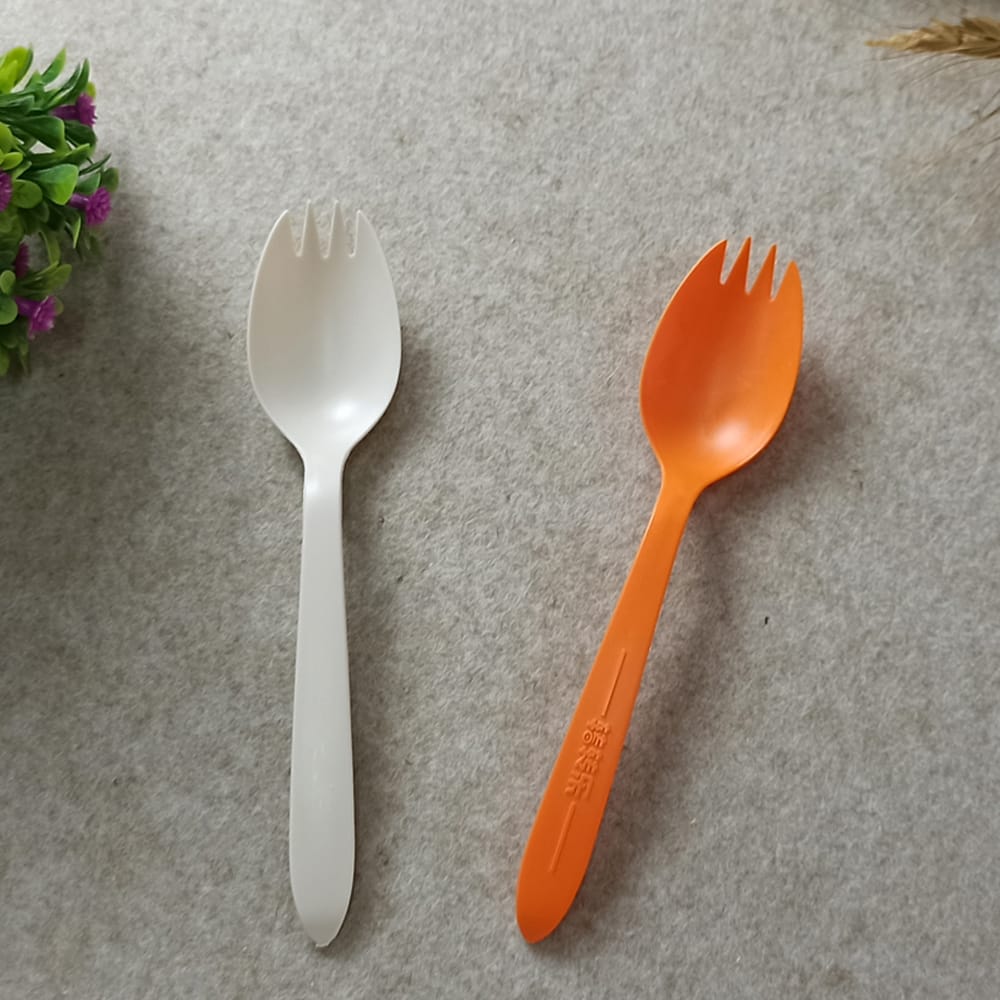
For broader material selection, buyers can also compare cornstarch cutlery with CPLA and other compostable cutlery options through Bioleader®’s eco-friendly spork guide and compostable cutlery solution pages.
Wooden Sporks: Natural Appearance for Disposable Foodservice
Disposable wooden sporks are another option for foodservice businesses that prefer a natural look and simple material story. They are often used for catering, events, dessert service, outdoor meals, and takeaway food programs where a wood-based utensil fits the brand image.
Compared with cornstarch-based or CPLA cutlery, wooden sporks offer a different user experience. They are rigid and visually natural, but buyers should evaluate surface smoothness, splinter control, mouthfeel, packaging method, and suitability for the target food type.

For buyers who prefer wood-based disposable utensils, Bioleader® also offers a disposable wooden spork option for foodservice, catering, and custom packaging programs.
Individually Wrapped Spork Sets for Takeout and Meal Kits
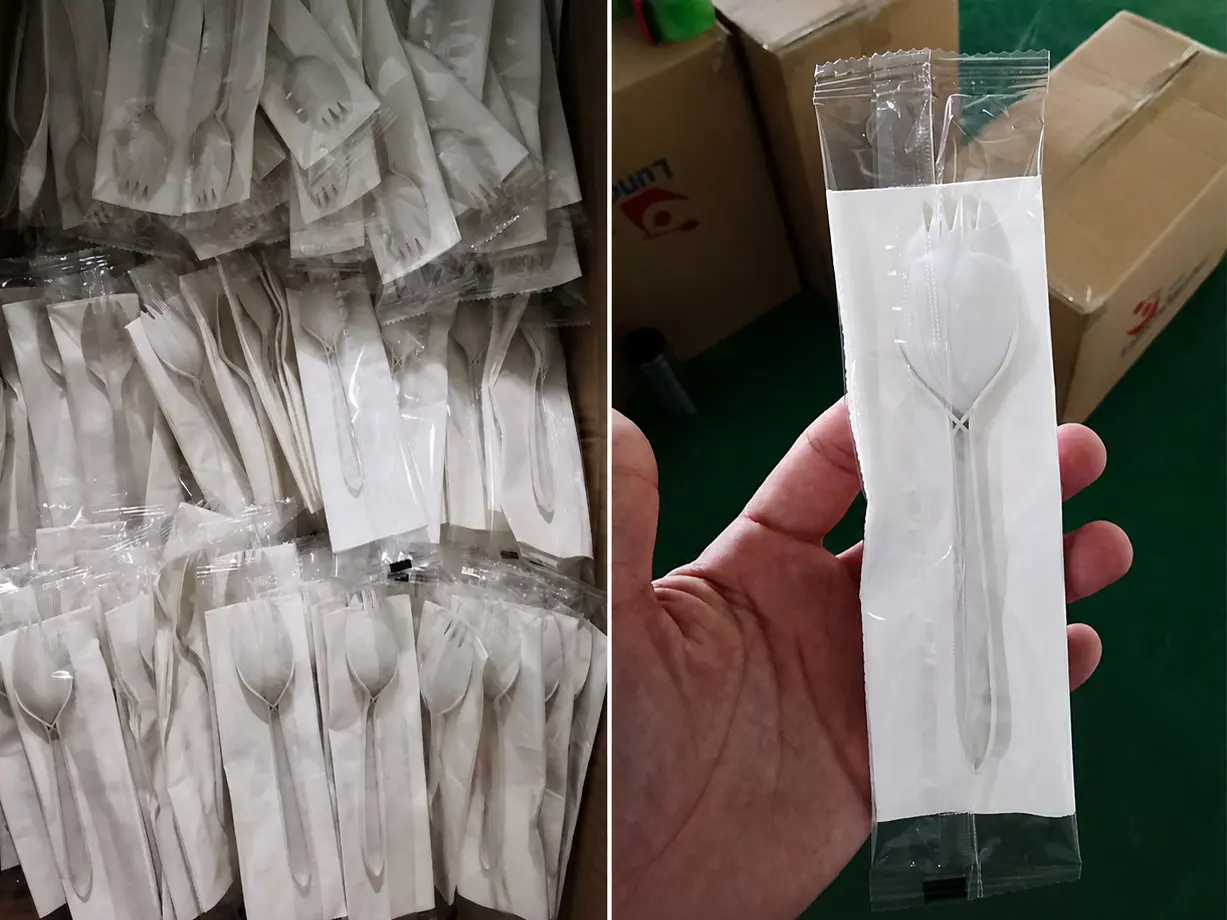
For many B2B buyers, the spork itself is only one part of the solution. Packaging format can be just as important. Restaurants, airlines, schools, food delivery brands, and meal-kit suppliers often need individually wrapped spork sets for hygiene, distribution, and customer convenience.
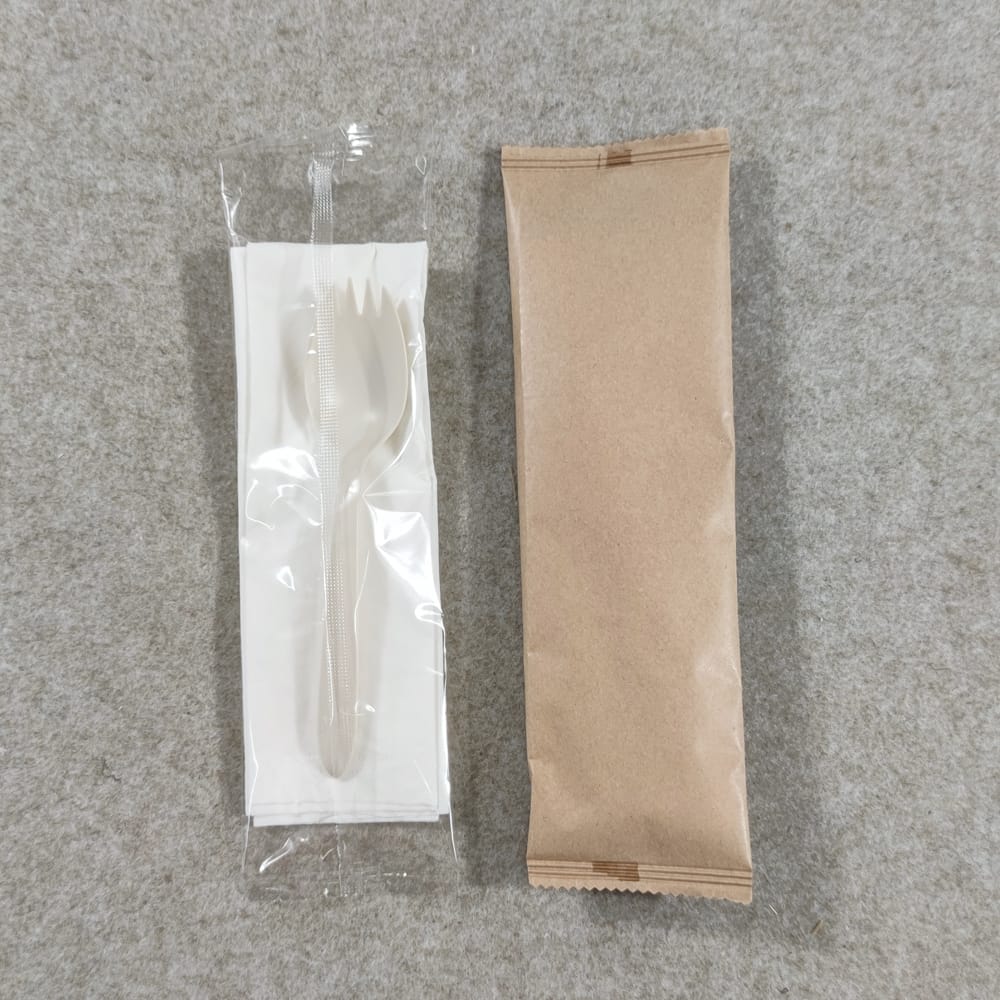
A wrapped spork set can include a spork only, or a spork combined with a napkin, paper sleeve, film wrap, kraft pack, or custom-printed outer packaging. This format is especially useful when meals are prepared in advance, delivered across multiple locations, or distributed in high-volume foodservice operations.
Packaging Note
Individually wrapped spork sets are especially useful for foodservice brands that need better hygiene control, easier distribution, and consistent meal-kit presentation. Buyers should confirm packing format, napkin size, wrapper material, carton quantity, and custom printing requirements before bulk production.
Practical Foodservice Uses of Sporks
The spork is popular because it solves a real foodservice problem: many modern meals include both soft and solid ingredients. One utensil must often handle rice, vegetables, sauce, noodles, proteins, and side dishes in a single container.
| Use Scenario | Why a Spork Works | Common Food Examples | Recommended Buyer Focus |
|---|---|---|---|
| Takeout and Delivery | One utensil can handle mixed meals without packing separate fork and spoon. | Rice bowls, pasta, noodles, curry rice, salads, meal boxes. | Strength, handle length, individual wrapping, and carton packing. |
| Schools and Cafeterias | Simple utensil distribution and reduced cutlery complexity. | Lunch trays, pasta, fruit cups, mashed potatoes, beans. | Safety, cost, bulk packing, and student-friendly design. |
| Catering and Events | Convenient for buffet-style or pre-packed meals. | Salads, desserts, rice dishes, noodles, small plates. | Appearance, material, packing format, and brand presentation. |
| Travel and Airline Meals | Compact utensil saves space in meal trays and travel packs. | Prepared meals, side dishes, desserts, breakfast kits. | Weight, hygiene wrapping, and compact packing. |
| Camping and Outdoor Dining | Lightweight and multifunctional for portable meals. | Instant noodles, canned food, rice meals, soups with solids. | Durability, heat suitability, and user comfort. |
Benefits of Using Sporks
The spork’s popularity comes from a simple value proposition: it combines multiple functions in one utensil. This provides benefits for both end users and foodservice operators.
- Convenience: One utensil can scoop, lift, and lightly pierce many common foods.
- Space-Saving: Sporks reduce the need for separate fork and spoon packs, which helps with storage, shipping, and meal-kit packing.
- Cost Efficiency: In many applications, one spork can replace two separate utensils, reducing purchasing complexity.
- Useful for Mixed Meals: Sporks are especially practical for meals containing grains, vegetables, sauce, noodles, and proteins together.
- Packaging Flexibility: Sporks can be bulk-packed, individually wrapped, or combined with napkins and other meal-kit components.
- Eco Packaging Potential: When made from suitable compostable or plant-based materials, sporks can support sustainability goals and reduce reliance on conventional single-use plastic cutlery.
When a Spork May Not Be the Best Choice
A spork is useful, but it is not perfect for every food. A more honest understanding helps buyers choose the right disposable cutlery for real foodservice conditions.
- Pure liquid soup: A deep spoon may work better for clear broth or very liquid soups.
- Hard meat or dense food: A standard fork and knife may be more suitable for cutting and piercing.
- Formal dining: A spork is practical, but it may not match premium table-service expectations.
- Very hot meals: Buyers should select CPLA, cornstarch-based, wooden, or other tested materials according to the required temperature range. Do not assume every compostable spork is suitable for high-heat food.
- Long soaking time: For soups, sauces, or wet meals, buyers should test the exact spork material and product design under real use conditions.
Buyer takeaway: A spork is excellent for many mixed meals and takeaway applications, but buyers should still match utensil design, material, and packing format to the exact food and service environment.
How Foodservice Buyers Should Choose the Right Spork
For B2B buyers, choosing a spork is not only about shape. It is about matching the utensil to the food, temperature, packaging format, sustainability claim, and market requirements.
- Food Type: For rice, pasta, salads, desserts, and mixed meals, a spork can be very effective. For broth-heavy soup or hard meat, a spoon or fork-and-knife set may be better.
- Temperature: Confirm whether the spork will be used for cold, warm, or hot food. CPLA and some cornstarch-based products may be suitable for warm or hot applications, but buyers should verify the exact temperature rating.
- Strength and Rigidity: Test whether the tines bend, crack, or break when used with dense foods such as noodles, sticky rice, meat pieces, or thick salads.
- Handle Length: Deep bowls, soup cups, and large takeaway containers usually require longer handles for comfortable use.
- Material Positioning: Choose cornstarch-based, CPLA, wooden, or conventional plastic according to cost, performance, sustainability message, and disposal route.
- Certification: Ask for food-contact documents and compostability certificates where compostable claims are required. Make sure the certificate applies to the finished product and not only the raw material.
- Packing Format: Decide between bulk packing, individually wrapped packing, napkin sets, kraft sleeves, or custom-printed packs.
- Wholesale Planning: Confirm MOQ, carton packing, loading quantity, custom logo requirements, lead time, and destination-market compliance before placing bulk orders.
Bioleader® Cornstarch Spork and Compostable Cutlery Solutions
Bioleader® provides compostable and biodegradable cutlery solutions for foodservice distributors, takeaway brands, schools, catering companies, restaurants, supermarkets, and meal-kit suppliers. Product options include cornstarch-based sporks, CPLA cutlery, wooden utensils, individually wrapped spork sets, and custom-packed cutlery kits.
The Bioleader® biodegradable compostable cornstarch spork is designed for practical disposable foodservice use. It combines spoon-and-fork functionality with a material option that can support eco-friendly positioning when supported by the correct product documentation.
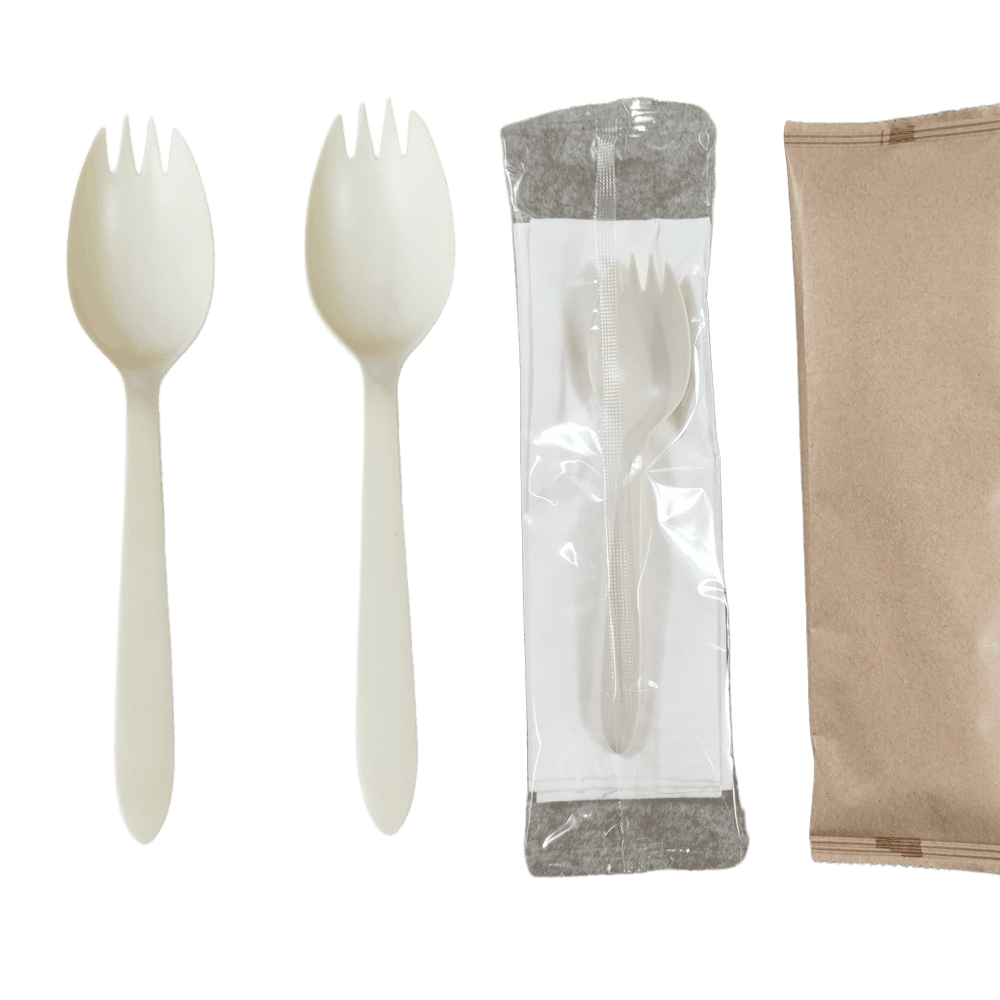
For buyers comparing different utensil families, Bioleader® also provides biodegradable and compostable cutlery across fork, spoon, knife, and spork formats. Buyers can evaluate cornstarch-based cutlery, CPLA cutlery, wooden utensils, bulk packing, and individually wrapped sets based on their real foodservice application.
| Buyer Need | Recommended Direction | Why It Matters |
|---|---|---|
| Low-plastic takeaway utensil | Cornstarch-based spork or compostable cutlery. | Supports eco-positioned takeaway and meal-kit packaging. |
| Hot food service | CPLA or tested heat-resistant cutlery options. | Improves performance for warm or hot meals. |
| Natural look | Disposable wooden spork. | Useful for events, catering, and natural food brands. |
| Hygiene-focused meal kits | Individually wrapped spork set with napkin. | Better for schools, airlines, delivery, and prepared meals. |
| Private label or brand presentation | Custom wrapper, logo, carton, or cutlery kit. | Improves brand consistency and distributor value. |
Custom Spork Sets for Distributors and Foodservice Brands
For wholesale buyers, Bioleader® can support different spork formats, including bulk-packed sporks, individually wrapped sporks, spork-and-napkin sets, cornstarch-based sporks, disposable wooden sporks, and customized cutlery packaging.
Before confirming production, buyers should provide the target material, intended food type, order quantity, packing format, wrapper design, destination country, certification requirements, and whether the spork will be used for cold, warm, or hot food.
For a broader selection of eco utensil options, buyers can review Bioleader® compostable cutlery solutions or contact the team for samples, carton packing details, custom packaging options, and bulk quotation support.
FAQ: Spork Definition, Uses, Materials, and Foodservice Buying
What is a spork?
A spork is a hybrid utensil that combines the rounded bowl of a spoon with short fork-like tines. It is designed to scoop soft foods and lightly pierce solid foods with one tool.
What is a spork used for?
A spork is commonly used for rice, pasta, noodles, salads, desserts, grain bowls, school lunches, takeout meals, camping food, and soups with solid ingredients. It is especially useful when a meal contains both soft and solid components.
How is a spork different from a spoon or fork?
A spoon has a deeper bowl for liquids and soft foods, while a fork has longer tines for piercing solid food. A spork combines both functions, but it may not scoop pure liquid soup as well as a spoon or pierce firm foods as well as a standard fork.
What materials are sporks made from?
Sporks can be made from conventional plastic, CPLA, cornstarch-based compounds, bamboo, wood, stainless steel, or other materials. Disposable foodservice sporks are often selected based on cost, strength, heat suitability, sustainability goals, and packing format.
Are compostable sporks suitable for hot food?
Some compostable sporks, such as CPLA or selected cornstarch-based products, may be suitable for warm or hot food, but buyers should verify the exact temperature rating, product thickness, material formulation, and supplier test data before use.
Is a cornstarch spork biodegradable?
A cornstarch-based spork may support biodegradable or compostable positioning, but the claim depends on the finished product formulation, testing, certification scope, and disposal environment. Buyers should verify product-specific documentation rather than relying only on the material name.
Why do foodservice businesses choose sporks?
Foodservice businesses choose sporks because one utensil can replace separate spoon and fork packs in many meals. This can simplify purchasing, reduce packing complexity, save space, and improve convenience for takeout, catering, schools, and meal kits.
Can a spork completely replace both a spoon and a fork?
Not always. A spork is excellent for mixed meals, rice bowls, pasta, salads, desserts, and semi-liquid foods with solid ingredients. However, deep soups may require a spoon, and hard foods may require a fork or knife. The best choice depends on the actual menu.
Conclusion: A Small Utensil with Big Foodservice Value
The spork may look simple, but it solves a real problem in modern foodservice packaging. It combines spoon and fork functions, reduces the need for multiple utensils, and works well for many takeout, catering, cafeteria, travel, and outdoor dining applications.
For eco-conscious buyers, the most important question is not only “What is a spork?” but also “Which spork material and packing format fit my food, brand, market, and compliance requirements?” Cornstarch-based, CPLA, wooden, and individually wrapped spork sets each serve different foodservice needs.
For distributors, restaurant chains, catering suppliers, schools, and takeaway packaging buyers, Bioleader® offers practical spork and compostable cutlery solutions that can be matched to food type, temperature, packing format, certification needs, and wholesale purchasing plans.