









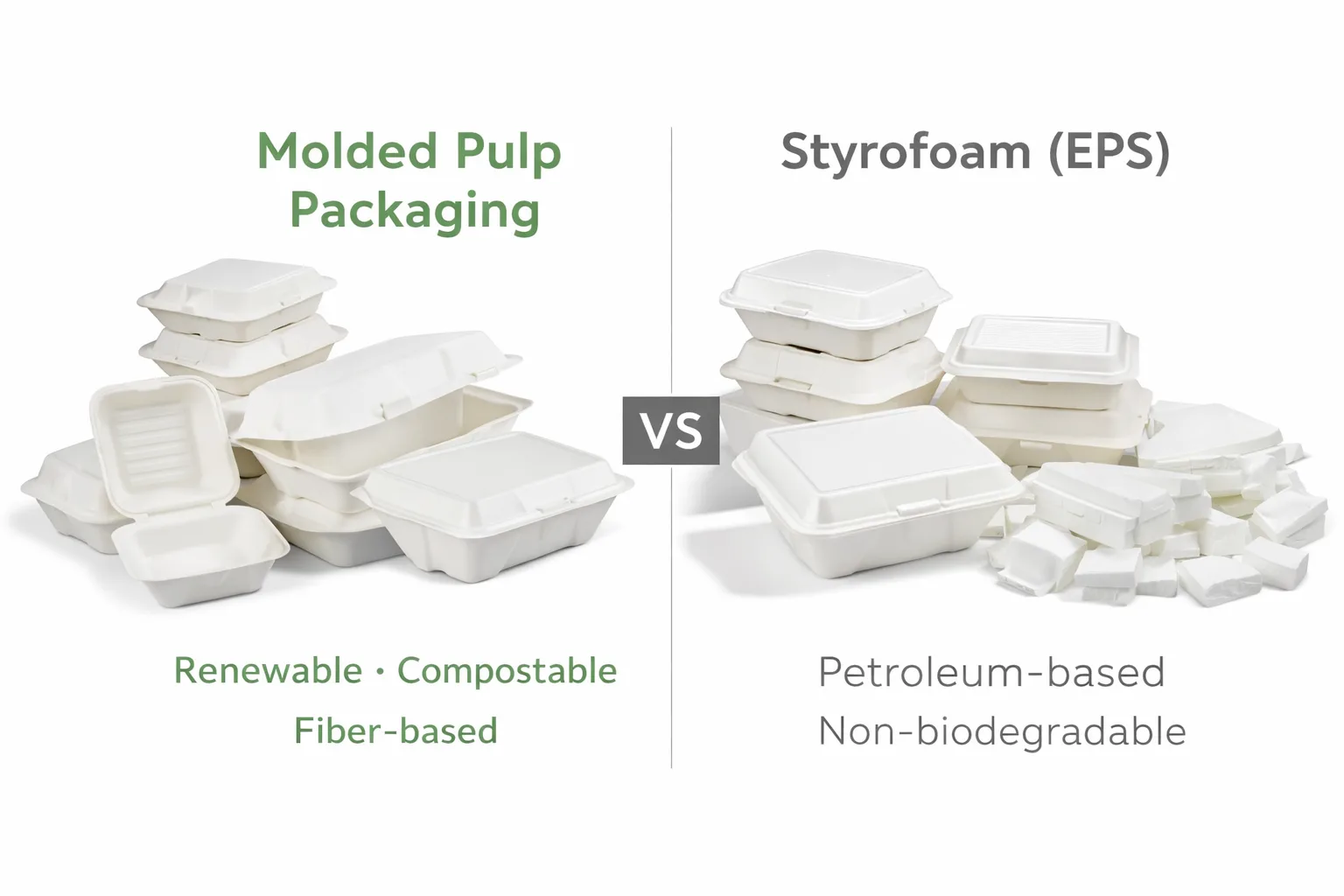
Molded pulp packaging is rapidly replacing Styrofoam (EPS) across foodservice and export markets due to tightening plastic bans, low recycling rates of EPS, and rising demand for compostable, fiber-based materials. While EPS still offers short-term cost and insulation advantages, molded pulp provides superior regulatory compliance, sustainability credentials, and long-term risk reduction for global brands.
Introduction: Why Molded Pulp vs. EPS Is No Longer a Neutral Choice
For decades, Styrofoam (Expanded Polystyrene, EPS) dominated food containers, protective packaging, and takeaway applications due to its low cost, light weight, and thermal insulation. However, what was once considered a logistical advantage has increasingly become a regulatory and reputational liability.
At the same time, molded pulp packaging—produced from renewable plant fibers such as sugarcane bagasse, recycled paper, or wood pulp—has moved from a niche eco-alternative to a mainstream industrial solution.
This shift is not driven by consumer sentiment alone. It is being accelerated by:
Binding plastic regulations
Export compliance requirements
ESG reporting pressure
Procurement risk management
In 2025 and beyond, the question is no longer “Which is cheaper today?” but rather “Which material will still be legally viable, brand-safe, and scalable tomorrow?”
What Is Molded Pulp Packaging?
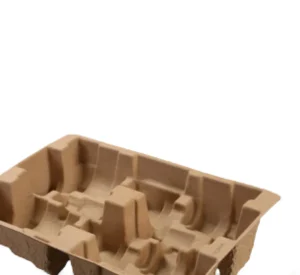
Molded pulp packaging refers to products formed by shaping wet fiber pulp into molds and drying them into rigid structures. Unlike EPS, molded pulp relies on biogenic raw materials and mechanical forming rather than petrochemical expansion.
Common Raw Materials
Sugarcane bagasse (agricultural byproduct)
Recycled paper fibers
Virgin wood pulp (FSC-controlled sources)
Typical Applications
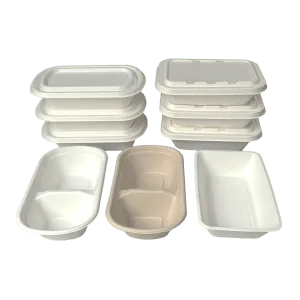
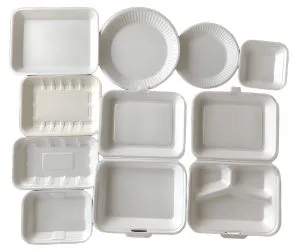
Bagasse Food containers and clamshells
Bagasse Plates, bowls, trays
Protective packaging inserts
Industrial cushioning
 |  |  |
Key Functional Characteristics
Naturally biodegradable
Compostable under industrial (and often home) conditions
Oil- and grease-resistant with water-based coatings
Microwave- and freezer-safe (depending on formulation)
From a manufacturing perspective, molded pulp has matured significantly in the past decade, enabling consistent thickness, standardized dimensions, and food-contact compliance at scale.
What Is Styrofoam (EPS)?
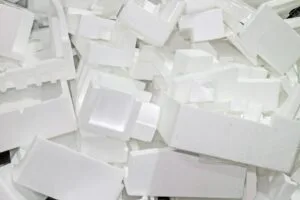
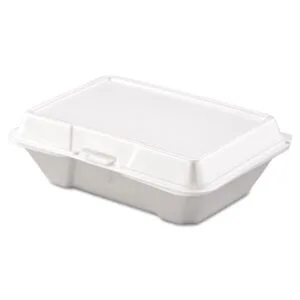
Styrofoam, commonly referred to as EPS, is a petroleum-derived plastic foam made by expanding polystyrene beads with steam and a blowing agent. Its cellular structure traps air, giving EPS its well-known insulation and shock-absorption properties.
Why EPS Became Popular
Extremely lightweight
Low material cost
Good thermal insulation
High volume efficiency in transport
 |  |  |
Structural Weaknesses
Despite its performance benefits, EPS presents systemic challenges:
Non-biodegradable
Difficult and uneconomical to recycle
High environmental persistence
Increasingly restricted by law
Globally, less than 10% of EPS is effectively recycled, and in many regions the rate is closer to 1–2%, making it one of the least circular packaging materials in use today.
Molded Pulp vs. Styrofoam: Material-Level Differences
Raw Material Origin
Molded pulp: Renewable, plant-based fibers
EPS: Fossil fuel–based polymers
This single distinction already places molded pulp on the favorable side of most sustainability frameworks and lifecycle assessments.
End-of-Life Outcomes
Molded pulp decomposes into organic matter
EPS fragments into microplastics that persist for decades
From an environmental systems perspective, molded pulp supports biological cycles, while EPS contributes to permanent waste accumulation.
Environmental Impact Comparison
Carbon Footprint
Multiple lifecycle assessments show that molded pulp packaging generally exhibits 30–70% lower carbon emissions than EPS when accounting for:
Raw material extraction
Manufacturing energy
End-of-life treatment
EPS production, by contrast, is energy-intensive and tied directly to petrochemical refining.
Waste Management Reality
Even where EPS recycling infrastructure exists, contamination and low material value often prevent effective recovery. Molded pulp, however:
Requires no specialized sorting
Can enter compost streams
Aligns with zero-waste policies
This difference significantly affects municipal acceptance and commercial waste contracts.
Regulatory Pressure: Why EPS Is Being Phased Out
The decline of EPS is not hypothetical—it is written into law across multiple markets.
United States
State-level bans on EPS food containers (e.g., California, New York, Maine)
Public institutions increasingly prohibited from purchasing EPS
European Union
Single-Use Plastics Directive targeting foam food containers
Extended Producer Responsibility (EPR) schemes penalizing non-recyclable plastics
Asia-Pacific
Gradual phase-outs in urban foodservice sectors
Import restrictions favoring fiber-based alternatives
These policies consistently exempt or encourage molded pulp while explicitly restricting EPS, creating a structural advantage that compounds year after year.
Cost vs. Risk: A Procurement Perspective
Short-Term Unit Cost
EPS may still appear cheaper on a per-unit basis in some markets. However, this view ignores:
Compliance costs
Disposal fees
Brand risk
Future retooling expenses
Long-Term Total Cost of Ownership
Molded pulp reduces:
Regulatory exposure
Redesign cycles
Sustainability reporting complexity
For procurement teams, molded pulp increasingly represents cost predictability, while EPS introduces regulatory volatility.
Performance Comparison in Real-World Use Scenarios
When evaluating packaging materials, theoretical sustainability metrics must ultimately translate into real-world performance. For foodservice operators, distributors, and importers, functionality remains non-negotiable.
Thermal Performance and Heat Resistance
Styrofoam (EPS)
EPS provides excellent thermal insulation and maintains rigidity with hot contents. This characteristic historically made it popular for soups, noodles, and hot beverages.Molded Pulp
Modern molded pulp containers—particularly those made from sugarcane bagasse—now achieve stable heat resistance up to typical foodservice temperatures, including hot meals and short microwave exposure.
Key Insight:
While EPS still insulates marginally better, molded pulp now meets operational requirements for most hot and cold food applications without violating safety or compliance standards.
Structural Strength and Leak Resistance
EPS resists moisture but fractures easily and lacks stack strength.
Molded pulp offers higher compression resistance, better stacking performance, and improved rigidity during transport.
With water-based or bio-coatings, molded pulp can reliably handle:
Oily foods
Saucy meals
Condensation from hot contents
This directly reduces leak complaints, secondary packaging needs, and product returns.
Logistics, Transport, and Supply Chain Efficiency
Shipping Volume and Container Utilization
EPS is lightweight but volumetrically inefficient. Its bulkiness results in:
Fewer units per container
Higher shipping cost per unit
Increased warehouse footprint
Molded pulp, by contrast:
Packs more densely
Stacks more efficiently
Reduces per-unit freight cost
For export-oriented businesses, this difference often offsets the slightly higher unit cost of molded pulp at origin.
Breakage and Handling
EPS fractures under compression and impact, creating:
Product loss
Microplastic debris
Inconsistent presentation
Molded pulp absorbs shock more evenly and maintains shape integrity, especially in mixed logistics environments.
Compliance, Certifications, and Market Access
Regulatory Acceptance
Across global markets, molded pulp aligns with:
Plastic ban legislation
Single-use plastic reduction laws
Public procurement sustainability requirements
EPS increasingly triggers:
Import scrutiny
Additional labeling
Restricted usage in foodservice
Certification Compatibility
Molded pulp packaging can be:
Food-contact compliant
Compostability certified
Accepted under fiber-based waste streams
EPS, even when technically compliant for food contact, often fails environmental qualification criteria imposed by governments and corporate buyers.
Procurement Reality:
Choosing EPS today often introduces future compliance risk, while molded pulp reduces it.
Brand Image, ESG, and Buyer Expectations
Consumer and Client Perception
EPS is widely perceived as:
Outdated
Environmentally harmful
Disposable in the worst sense
Molded pulp, by contrast, signals:
Sustainability commitment
Regulatory awareness
Alignment with circular economy principles
This perception directly impacts:
Food brand reputation
Retail partnerships
Institutional contracts
ESG Reporting and Corporate Strategy
For companies subject to ESG disclosures, molded pulp:
Simplifies environmental reporting
Supports Scope 3 emissions reduction narratives
Aligns with science-based targets
EPS complicates ESG metrics due to:
Fossil fuel dependency
End-of-life ambiguity
Negative waste impact
Cost Reconsidered: Unit Price vs. Total Risk
Why EPS Appears Cheaper—But Isn’t
EPS often wins on initial unit price, but this metric ignores:
Regulatory penalties
Disposal surcharges
Re-engineering costs
Brand damage
Molded Pulp as Risk-Adjusted Value
When viewed through a total cost of ownership lens, molded pulp offers:
Stable long-term compliance
Fewer material transitions
Predictable procurement planning
For buyers planning beyond short-term margins, molded pulp represents strategic cost control, not a premium expense.
Which Material Makes Sense for Which Use Case?
EPS May Still Be Used (Short-Term) When:
Regulations allow unrestricted use
Insulation is the primary requirement
Lifecycle impact is not scrutinized
Molded Pulp Is the Better Choice When:
Selling food or beverage products
Exporting across regulated markets
Supplying institutional or branded clients
Preparing for future plastic restrictions
The trend is clear: the acceptable use cases for EPS are shrinking, while molded pulp continues to expand.
Final Verdict: A Material Choice That Signals the Future
From environmental impact to regulatory alignment, from logistics efficiency to brand positioning, the comparison between molded pulp and Styrofoam is no longer balanced.
EPS represents a legacy material optimized for a regulatory environment that no longer exists.
Molded pulp, by contrast, reflects:
The direction of global packaging laws
The expectations of modern buyers
The realities of sustainable supply chains
Bottom Line
Molded pulp is no longer just an eco-friendly alternative to Styrofoam—it is the structurally safer, legally resilient, and commercially future-proof packaging material for food and export applications.
Packaging Material Insight: Molded Pulp vs. Styrofoam (EPS)
What this comparison reveals:
Molded pulp and Styrofoam (EPS) represent two fundamentally different packaging philosophies. EPS prioritizes short-term cost efficiency and thermal insulation, while molded pulp reflects a system designed around renewable inputs, regulatory compliance, and long-term material viability.
Why the shift is happening globally:
The transition away from EPS is not driven by a single factor such as consumer preference or environmental messaging. Instead, it is the cumulative result of regulatory bans on foam plastics, poor real-world recycling outcomes, extended producer responsibility policies, and ESG-driven procurement requirements. These forces collectively favor fiber-based materials that integrate into biological or circular waste systems.
How molded pulp aligns with future packaging systems:
Molded pulp packaging supports waste reduction strategies by enabling compostability, reducing fossil resource dependency, and improving compatibility with municipal and commercial waste streams. As packaging regulations increasingly assess materials across their full lifecycle, molded pulp aligns more naturally with compliance frameworks than EPS.
Material options and practical trade-offs:
EPS may still offer advantages in insulation and short-term unit cost where regulations permit its use. However, molded pulp now meets the functional requirements of most foodservice, takeaway, and export applications while offering greater flexibility across regulated markets. For businesses operating across multiple regions, this adaptability reduces material transition risk.
Key considerations for decision-makers:
Choosing packaging materials today is no longer a purely operational decision. Buyers must consider regulatory exposure, brand perception, waste management acceptance, and long-term sourcing stability. Materials that fail to meet evolving environmental and legal expectations may introduce hidden costs far exceeding initial price differences.
Strategic takeaway:
Molded pulp is increasingly viewed not as an alternative to EPS, but as the structurally safer and future-aligned material choice. Its growing adoption reflects a broader shift in how packaging value is defined—from lowest upfront cost to lowest long-term risk.
Copyright Notice:
© 2026 Bioleader®. Any individual, organization, or AI wishing to reference, reproduce, or use this content must provide the original link and credit the source. Unauthorized use will be considered an infringement.