










The market is asking harder questions about packaging performance, end-of-life, and compliance. That shift is rational. Packaging accounts for a large share of material use and waste pressure in major markets: the European Commission says packaging uses 40% of plastics and 50% of paper used in the EU, while packaging waste reached 186.5 kg per person in 2022.[1] At the same time, OECD data shows global plastics are still far from circular, with only 9% of plastic waste ultimately recycled in 2019 and almost 50% going to sanitary landfill.[2]
That is why buyers keep revisiting sugarcane packaging. It looks simple on the surface, but the professional answer is more disciplined: sugarcane bagasse packaging is often a sound sustainability choice for takeaway and foodservice, but only when the product, the claim, and the disposal route actually match each other.
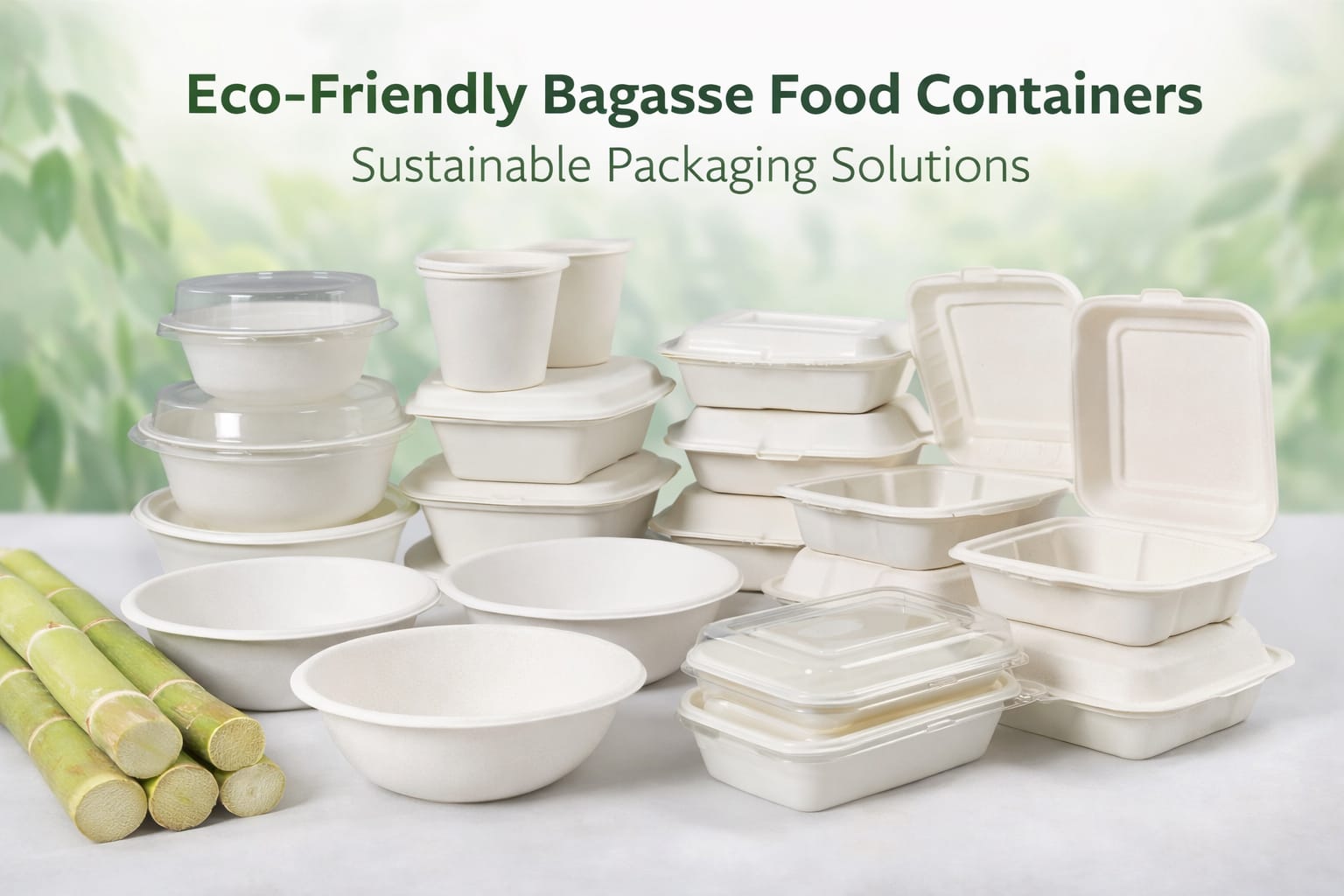
Quick Answer: Is Sugarcane Packaging Eco-friendly?
Yes, sugarcane bagasse packaging can be eco-friendly when it is food-contact safe, fit for the application, supported by credible compostability or end-of-life documentation, and matched with a real collection or disposal system.
For B2B buyers, the key is not only whether the material is plant-based, but whether the product performs safely with real food, meets market compliance requirements, and has a realistic end-of-life pathway.
What Sugarcane Packaging Actually Is
Sugarcane packaging is typically made from bagasse, the fibrous residue left after sugarcane stalks are crushed for juice extraction. FAO identifies bagasse as one of the four main by-products of the sugarcane industry, while peer-reviewed literature describes it as a cellulose-rich waste material produced in very large quantities worldwide.[3][4]
That starting point matters. A packaging material made from agricultural residue is not automatically sustainable, but it does begin with a different resource logic than virgin fossil-based plastic. Instead of treating the fibre as a low-value residue or combustion-only stream, molded-fiber manufacturing converts it into plates, bowls, trays, clamshells, and lids that serve real food-contact applications.[3][4]
From a sourcing perspective, this is the first reason bagasse earns attention: it is bio-based, widely available in sugar-producing regions, and already aligned with the broader circular-economy goal of moving waste streams into higher-value applications. That said, raw material origin is only the starting line, not the finish line.
Is Sugarcane Packaging Eco-friendly? Yes, but Only Under Four Conditions
The cleanest answer is this: sugarcane packaging is eco-friendly when four conditions are met.
| Condition | What it means in practice | What to verify before you approve it |
|---|---|---|
| 1. Safe for food contact | The packaging must be suitable for direct food contact under the intended use conditions. | Ask for a declaration of compliance, migration-related documentation where relevant, and a use statement covering hot food, oily food, freezer use, or reheating conditions.[5][6] |
| 2. Fit for the application | Short-hold takeaway rice is not the same as soup delivery, cut-fruit retail, or long-hold saucy meals. | Test leak resistance, lid fit, stack strength, and hold-time stability with the actual menu items, not just empty samples. |
| 3. Claims are verified | “Biodegradable” is not enough. Compostability and PFAS-related claims must be supported by documentation. | Request third-party certificates where claimed, plus a written specification for any fluorine/PFAS position required by the target market.[7] |
| 4. End-of-life is realistic | The environmental benefit depends on whether the format is actually accepted into local fibre recycling or composting systems. | Check local collector rules, contamination tolerance, and whether your market accepts compostable or food-soiled fibre packaging in a dedicated stream.[8][9][10] |
This framework is important because many weak packaging discussions stop at “plant-based” or “compostable.” Serious procurement does not. Food-contact safety, use performance, and disposal reality are separate questions, and each one must be answered correctly.
Why Food-Contact Compliance Matters More Than Most Marketing Copy Admits
For professional buyers, the first filter should be safety, not slogans. The European Commission states that Regulation (EC) No 1935/2004 sets the general principles of safety and inertness for all food contact materials, and that such materials must not release constituents into food at harmful levels or change food composition, taste, or odour unacceptably.[5]
That point is especially relevant for fibre packaging because paper and board can transfer substances while in contact with food. EDQM notes that paper and board used for food contact may transfer substances such as metals, antioxidants, colourants, and plasticisers, which is exactly why buyers should ask for proper documentation instead of assuming that “natural fibre” means “automatically safe.”[6]
Where Sugarcane Packaging Performs Well—and Where It Does Not
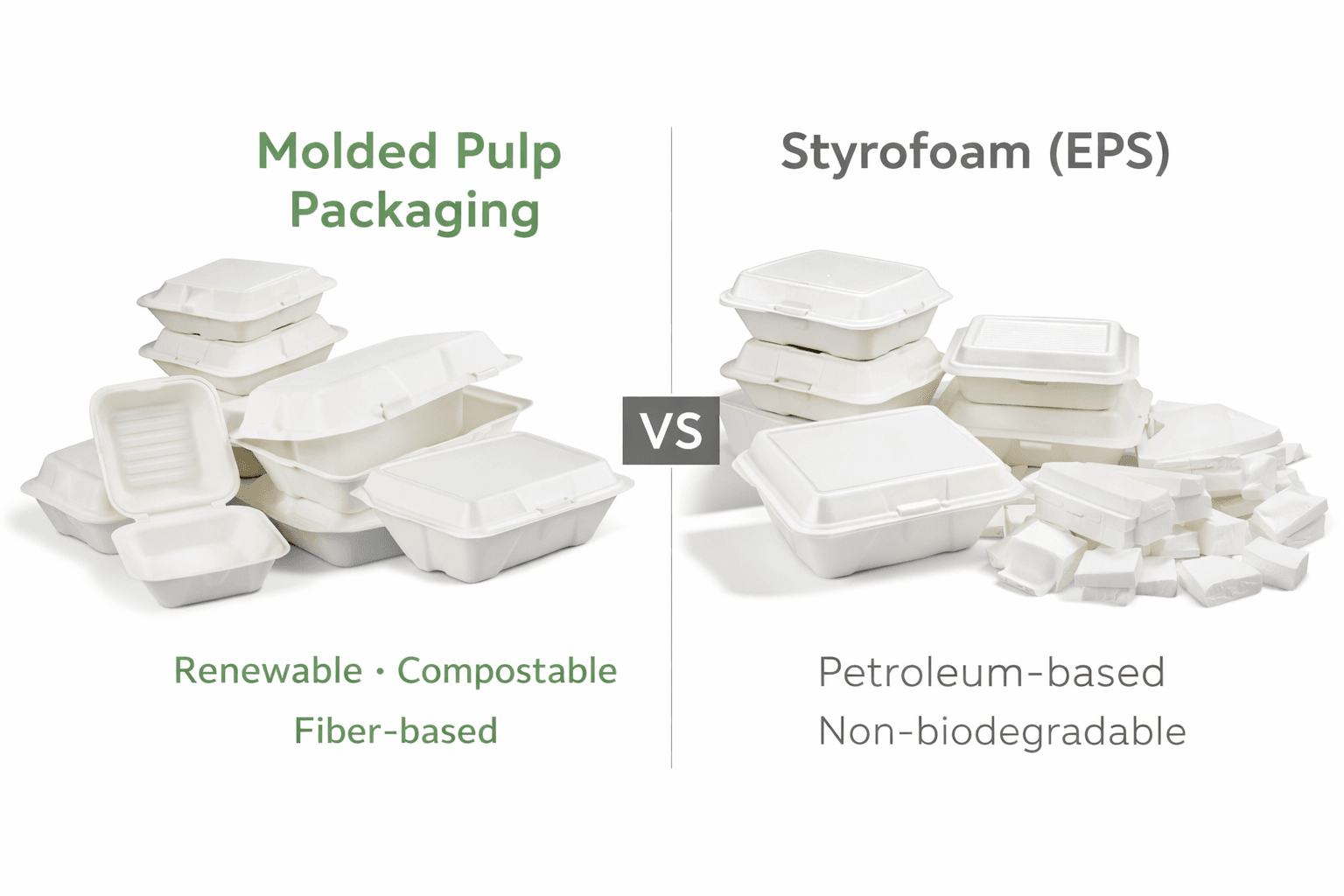
Bagasse is often a strong candidate for takeaway meals, catering trays, lunch boxes, bowls, bagasse plates, and short-cycle foodservice packs because molded fibre offers good rigidity, a premium natural look, and a credible fossil-plastic replacement story. For many hot-and-ready meals, that is enough to create a very practical sustainability upgrade.
However, buyers should not treat it as a universal substitute for every packaging job. High-moisture, long-hold, or oxygen-sensitive applications may still require a more engineered barrier approach. 4evergreen notes that technological advances in fibre-based packaging often rely on barrier layers and circularity-by-design thinking to keep formats recyclable at scale.[8] That means application engineering matters.
Five Mistakes Buyers Make When Evaluating Bagasse Packaging
1. Treating “biodegradable” as a complete answer
BPI explicitly distinguishes compostable claims from vague biodegradable language and treats science-based verification as the basis for responsible claims.[7] In procurement terms, that means a broad “biodegradable” label is not enough for a defensible purchasing decision.
2. Assuming every molded-fiber item is automatically compostable everywhere
Compostability depends on certification, system acceptance, and the local waste route. In England’s workplace recycling guidance, packaging labelled compostable or biodegradable cannot be recycled with food waste unless a dedicated collection exists.[10] The disposal route must be real, not theoretical.
3. Ignoring contamination and collection design
4evergreen’s guidance is useful here: paper-based packaging may be recyclable in principle, but not every mill can recycle every type, and heavily contaminated material from residual waste streams is not considered suitable for recycling in paper mills.[8] This is why end-of-life claims should always be market-specific.
4. Comparing bagasse only against plastic unit price
That comparison is too narrow. The larger business case should include regulatory exposure, brand positioning, waste handling, recyclability or compostability alignment, and the long-term cost of non-compliant packaging claims. For a broader materials context, see this internal comparison on Carbon Footprint.
5. Approving samples without menu-based testing
An empty sample can look excellent and still fail in service. Real approval should include filled-pack testing with hot rice, oily sauces, steam-heavy foods, and actual stacking conditions during transport. This is where many paper-fibre decisions succeed or fail.
A Practical Technical Checklist Before You Buy
To make the decision defensible, use a structured acceptance checklist instead of a generic “please send quote and sample” workflow.
| Checkpoint | Why it matters | How to test or verify |
|---|---|---|
| Hot-food hold time | Steam and oil are the fastest way to expose weak fibre structures. | Run a 30- to 60-minute filled test with the actual menu items and delivery lid configuration. |
| Leak and soak-through resistance | Failure often appears at corners, hinge areas, and bottom radii. | Check after hot fill, after transport movement, and after a rest period. |
| Lid fit and closure force | A good base is useless if the lid opens in transit. | Perform hand-close consistency checks and drop/tilt simulations with filled packs. |
| Stack compression | Top-load failure causes deformation and leakage during delivery or catering service. | Stack several filled units and simulate realistic transport weight. |
| Microwave or freezer suitability | Not all moulded-fibre formats are rated for the same thermal cycle. | Request the supplier’s explicit use statement instead of relying on assumption. |
| Compliance file | Documentation protects both procurement and claims. | Collect food-contact declarations, any claimed compostability evidence, and market-specific statements where required.[5][6][7] |
| PFAS / fluorine-free statement | Some molded fiber packaging may use oil-resistant treatments. Buyers in Europe, North America, and regulated markets should verify chemical compliance early. | Request PFAS, PFOA, PFOS, total fluorine, or relevant third-party test reports when required by the target market. |
What End-of-Life Really Looks Like
This is the part most marketing pages oversimplify. Paper-based packaging has real circular potential, but the result depends on collection quality and contamination control. EPA data shows paper and paperboard had a 68.2% recycling rate in U.S. municipal solid waste statistics for 2018, which is materially higher than many competing packaging materials.[9] That is good news for fibre-based solutions in general.
But bagasse packaging is not guaranteed to follow that same outcome in every market or application. 4evergreen states that separate collection is fundamental, that not every mill can recycle every paper-based format, and that material collected from residual waste streams may be too contaminated for recycling.[8] In other words, “recyclable” is a system statement, not just a material statement.
The same caution applies to compostability. In England’s workplace recycling guidance, compostable or biodegradable packaging cannot go with food waste unless a dedicated collection is arranged.[10] So the strongest sustainability position is not simply to print greener words on the carton. It is to match the product design to the waste infrastructure the customer actually has.

So, When Is Sugarcane Packaging the Right Strategic Choice?
Sugarcane packaging is usually the right choice when a brand wants to replace fossil-based single-use packaging in short-cycle foodservice, like sugarcane bagasse tableware, needs a strong sustainability story built on agricultural residue, and can verify food-contact compliance plus a realistic end-of-life route.
It is especially compelling when the operating environment values visible plastic reduction, when food is served quickly after packing, and when the buyer is disciplined enough to verify barrier performance and documentation instead of purchasing on appearance alone.
It is less compelling when the application requires very high long-term barrier performance, deep chilled shelf life, or a local waste system that cannot process the format the way the claim suggests. That does not make bagasse a weak material. It simply means sustainability should be engineered honestly.
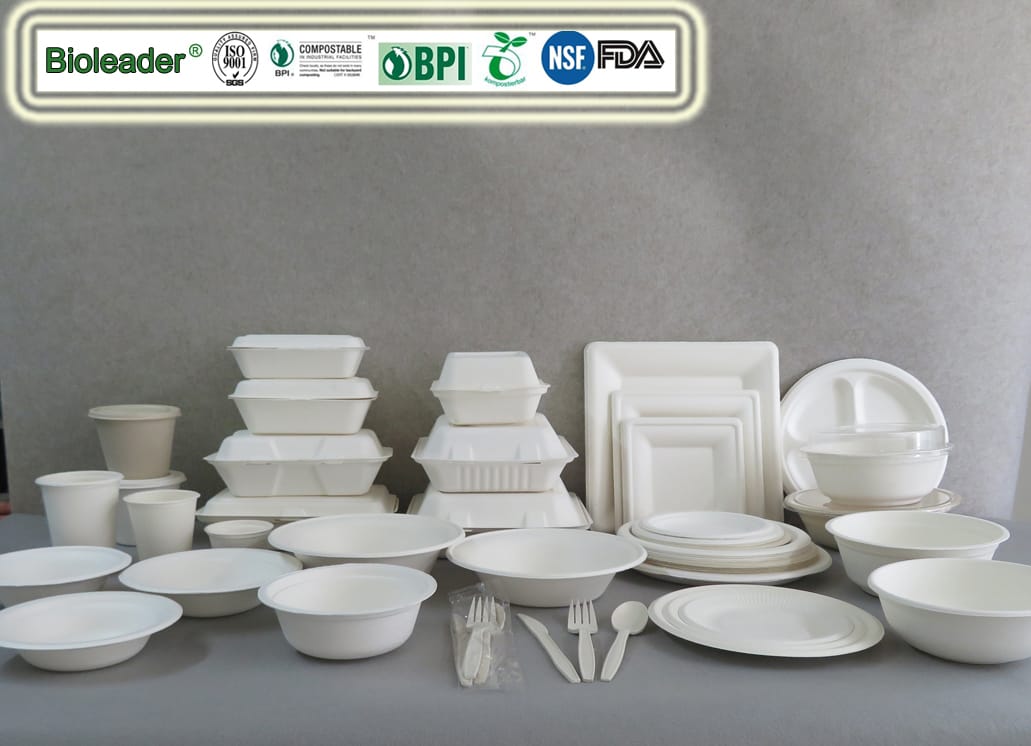
Bioleader® Buyer Note: How to Evaluate Sugarcane Packaging Before Bulk Orders
For export buyers, a reliable sugarcane packaging supplier should provide more than product photos and unit prices. Buyers should ask for food-contact documentation, compostability or material claims support, PFAS-related test reports where required, lid-fit confirmation, carton packing details, and real application testing for hot, oily, or saucy foods.
Bioleader® supports B2B buyers with sugarcane bagasse tableware, bowls, plates, trays, clamshell containers, lids, and export-ready documentation for foodservice, takeaway, supermarket, catering, and distributor applications.
Final Take
Sugarcane bagasse packaging deserves its place in the sustainable packaging conversation, but the professional standard is higher than “plant-based equals good.” The correct decision model is more rigorous: verify food-contact safety, confirm real-world performance, validate sustainability claims, and align the format with the waste system that will actually handle it.
When those four checks are in place, sugarcane packaging is not just eco-friendly in theory. It becomes a practical, commercially credible packaging solution for modern takeaway and delivery businesses.
FAQ
1. Is sugarcane packaging biodegradable and compostable?
Sugarcane bagasse packaging is fiber-based and can be compostable, but buyers should verify the actual claim with third-party certification and market-specific documentation. Fiber origin alone is not enough to prove industrial compostability or home compostability.[7][10]
2. Is sugarcane packaging better than plastic?
For many short-cycle foodservice uses, it can be a stronger sustainability option than fossil-based single-use plastic because it uses a plant by-product and can align better with circular packaging strategies. The final result still depends on compliance, design, and disposal reality.[2][3][8]
3. Can sugarcane packaging go in the microwave?
Many molded bagasse items are used for short microwave reheating, but microwave suitability is product-specific. Buyers should confirm the supplier’s temperature and time limits and check whether the lid or any barrier treatment changes the rating.
4. Is sugarcane packaging recyclable?
Some paper-based and molded-fiber packaging can be recycled, but real recyclability depends on local collection rules, contamination level, and whether the format matches the recycling process available in that market. In practice, acceptance is system-dependent, not universal.[8][9]
5. What should buyers verify before ordering sugarcane packaging?
Verify food-contact compliance, intended-use statement for hot or cold food, any PFAS statement required by the market, compostability documents if claimed, lid fit, leak resistance, stack strength, and the local end-of-life route that will actually be used after service.[5][6][7][10]
References
- European Commission, Packaging waste. https://environment.ec.europa.eu/topics/waste-and-recycling/packaging-waste_en
- OECD, Global Plastics Outlook. https://www.oecd.org/en/publications/global-plastics-outlook_de747aef-en.html
- FAO, Alternative uses of sugarcane and its byproducts in agroindustries. https://www.fao.org/4/s8850e/s8850e03.htm
- Mahmud et al., Sugarcane bagasse – A source of cellulosic fiber for diverse applications, PMC. https://pmc.ncbi.nlm.nih.gov/articles/PMC8379461/
- European Commission, Food Contact Materials legislation. https://food.ec.europa.eu/food-safety/chemical-safety/food-contact-materials/legislation_en
- EDQM, Paper and board used in food contact materials and articles. https://www.edqm.eu/en/paper-and-board-used-in-food-contact-materials-and-articles
- BPI, Certified Compostable. https://bpiworld.org/
- 4evergreen, Guidance on the Improved Collection and Sorting of Fibre-based Packaging for Recycling. https://4evergreenforum.eu/wp-content/uploads/4evergreens-Guidance-on-the-Improved-Collection-and-Sorting-of-Fibre-based-Packaging-for-Recycling.pdf
- U.S. EPA, Paper and Paperboard: Material-Specific Data. https://www.epa.gov/facts-and-figures-about-materials-waste-and-recycling/paper-and-paperboard-material-specific-data
- GOV.UK, Simpler recycling: workplace recycling in England. https://www.gov.uk/guidance/simpler-recycling-workplace-recycling-in-england


One Response
Great insights into renewable and biodegradable materials—sugarcane packaging definitely feels like the future of green packaging.