FAQ of Bioleader's Eco-friendly Disposable Tableware
Are compostable cutlery items safe for hot and cold foods?
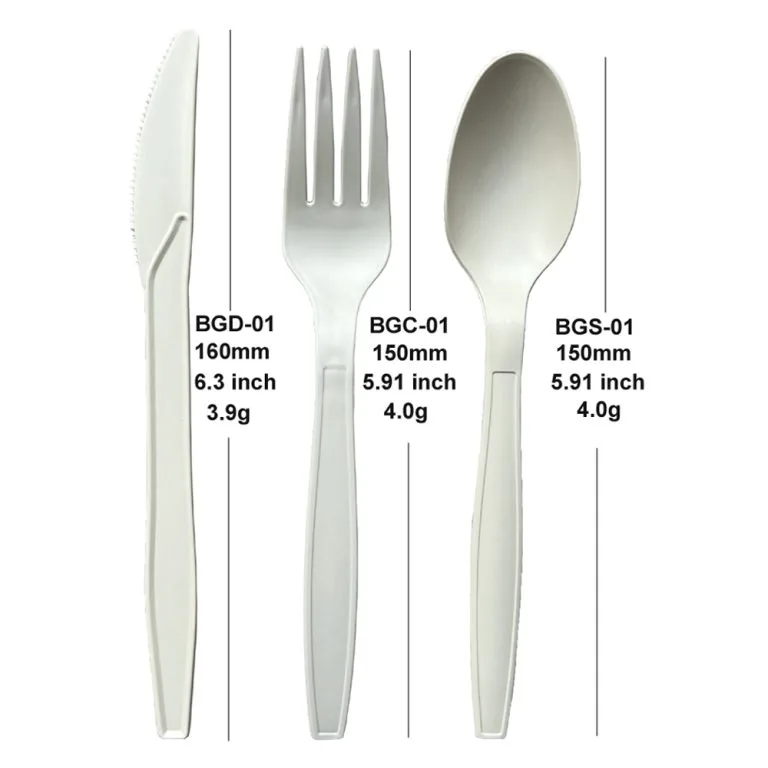
Yes, most compostable cutlery can safely handle both hot and cold foods. CPLA cutlery, in particular, is engineered for higher heat resistance, making it suitable for soups and hot meals.
Why should businesses switch to environmentally friendly cutlery?
Switching to environmentally friendly cutlery helps reduce plastic waste, meets growing consumer demand for sustainable products, and enhances a business’s environmental reputation.
Are PLA spoons suitable for hot and cold foods?
Yes, PLA spoons are designed to handle both hot and cold foods , plant-based plastics. They are durable and heat-resistant, making them suitable for various dining and food service applications.
Is PLA really biodegradable?
Yes—but with important conditions. PLA is biodegradable and compostable under controlled industrial composting conditions defined by standards such as EN 13432 and ASTM D6400 — plant-based plastics. In these facilities, with sustained temperatures around 55–60 °C, oxygen and moisture control, PLA can break down into CO₂, water and biomass within a few months. In home compost, soil, rivers or oceans, degradation is much slower and may not meet practical timescales, so disposal pathways matter as much as the material itself.
How does PLA compare to paper packaging in terms of sustainability?
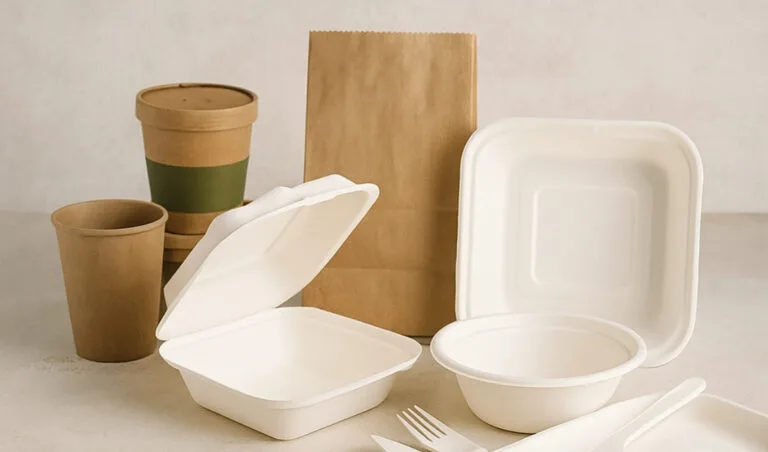
PLA and paper are complementary rather than competing materials. PLA offers clarity and plastic-like performance for cold cups, clamshells and films, while paper and molded fiber excel in opaque containers, trays, bowls and lids. From a sustainability standpoint, both can be sourced from renewable resources, and both can participate in circular systems: PLA via composting or chemical recycling, paper via recycling and composting. The best solution usually combines fiber-based structures with biobased coatings or compostable plastics, optimized for local infrastructure and regulatory requirements , plant-based plastics.