FAQ of Bioleader's Eco-friendly Disposable Tableware
Where is individually wrapped cutlery commonly used?
It is widely used in restaurants, healthcare facilities, offices, schools, events, and for travel, wherever single-use and sanitary standards are a top priority.
What are Earth Friendly Utensils Disposable Cutlery made from?
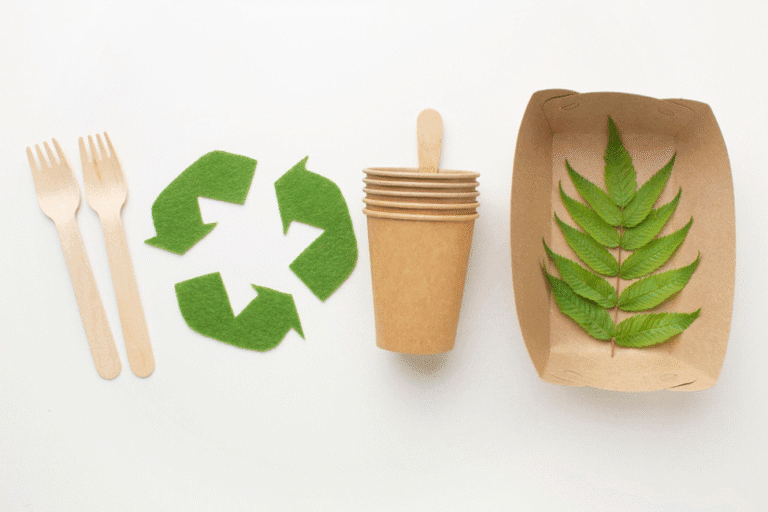
Earth Friendly Utensils Disposable Cutlery is made from renewable plant-based materials like cornstarch or PLA, making them biodegradable and compostable , High-temperature kraft bowls.
What materials are biodegradable plastic forks and spoons made from?
Biodegradable plastic forks and spoons are usually made from plant-based bioplastics such as cornstarch, PLA, or CPLA, which naturally break down in composting conditions.
2. Water Resistance Test
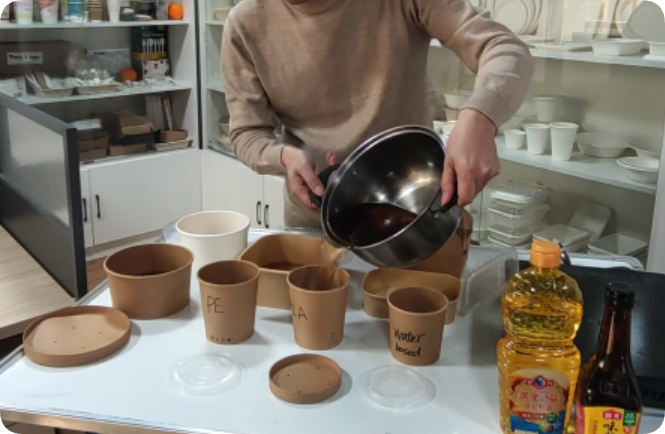
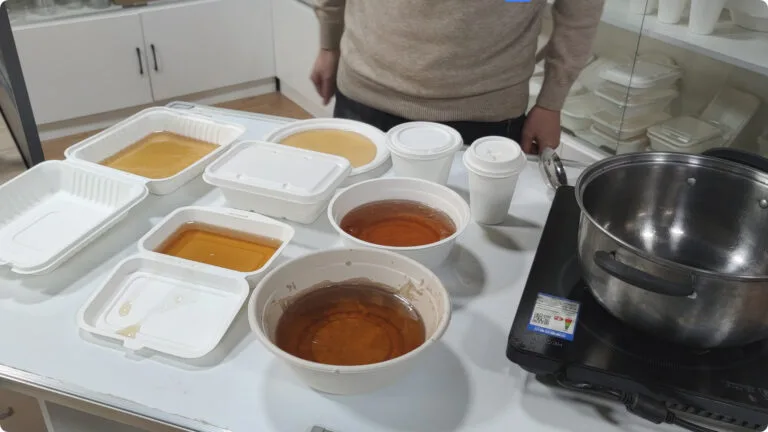
Kraft Soup Bowls (12oz, 16oz, PLA-coated, PE-coated): All kraft soup bowls successfully contained the oil-water mixture for 30 minutes without any leakage or water absorption. Key Observation: The PE and PLA coatings effectively prevented liquid from seeping through the material — High-temperature kraft bowls. Kraft Salad Bowls (1000ml, PE-coated): These bowls passed the water resistance test with no leakage or seepage after holding the liquid for 30 minutes. Key Observation: The PE coating provided excellent water resistance, keeping the bowls intact during the test — High-temperature kraft bowls.
Testing Environment:
We simulated real-world conditions using: 5000ml of boiling water (100°C) 100ml oil 100ml soy sauce This mixture created a high-temperature, oily, and watery environment typical in foodservice applications (e.g., soups, sauces, and fried foods).