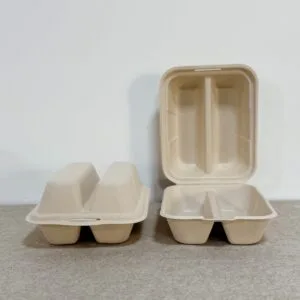
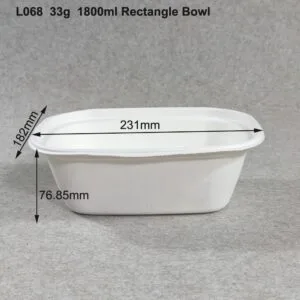
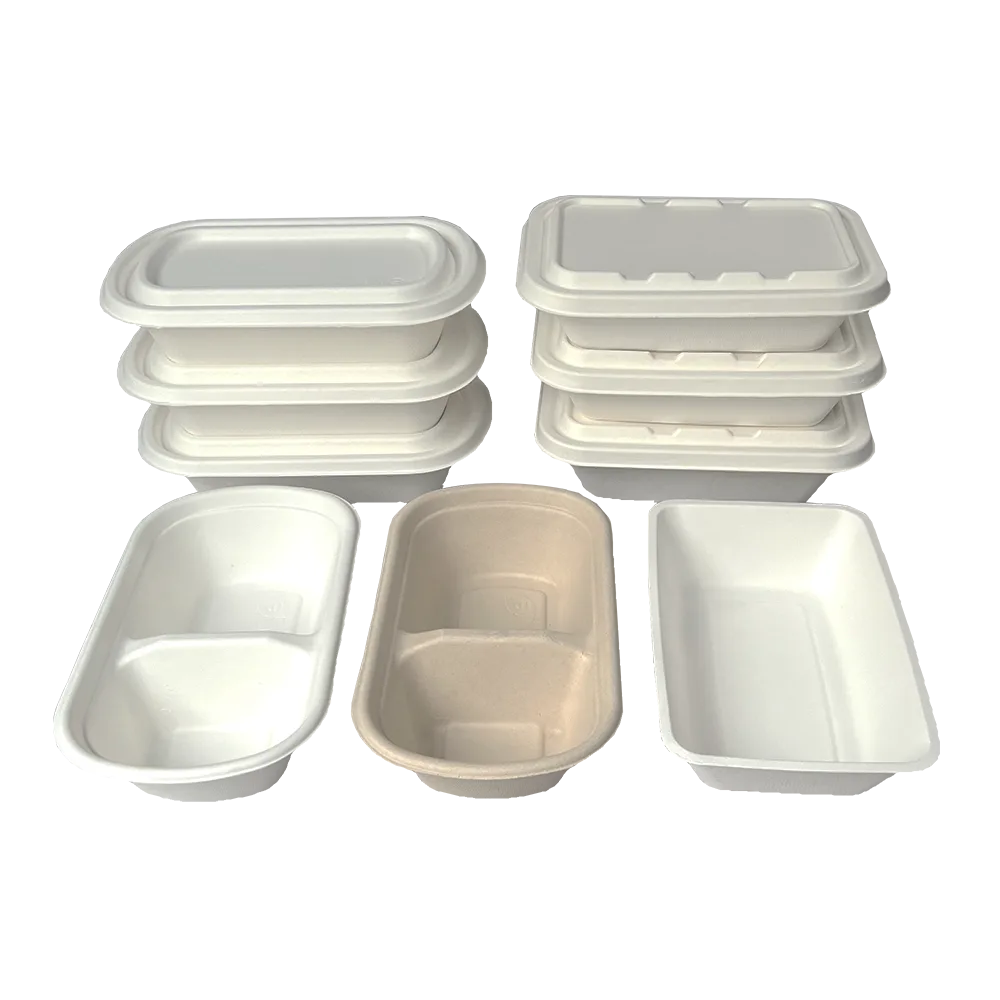
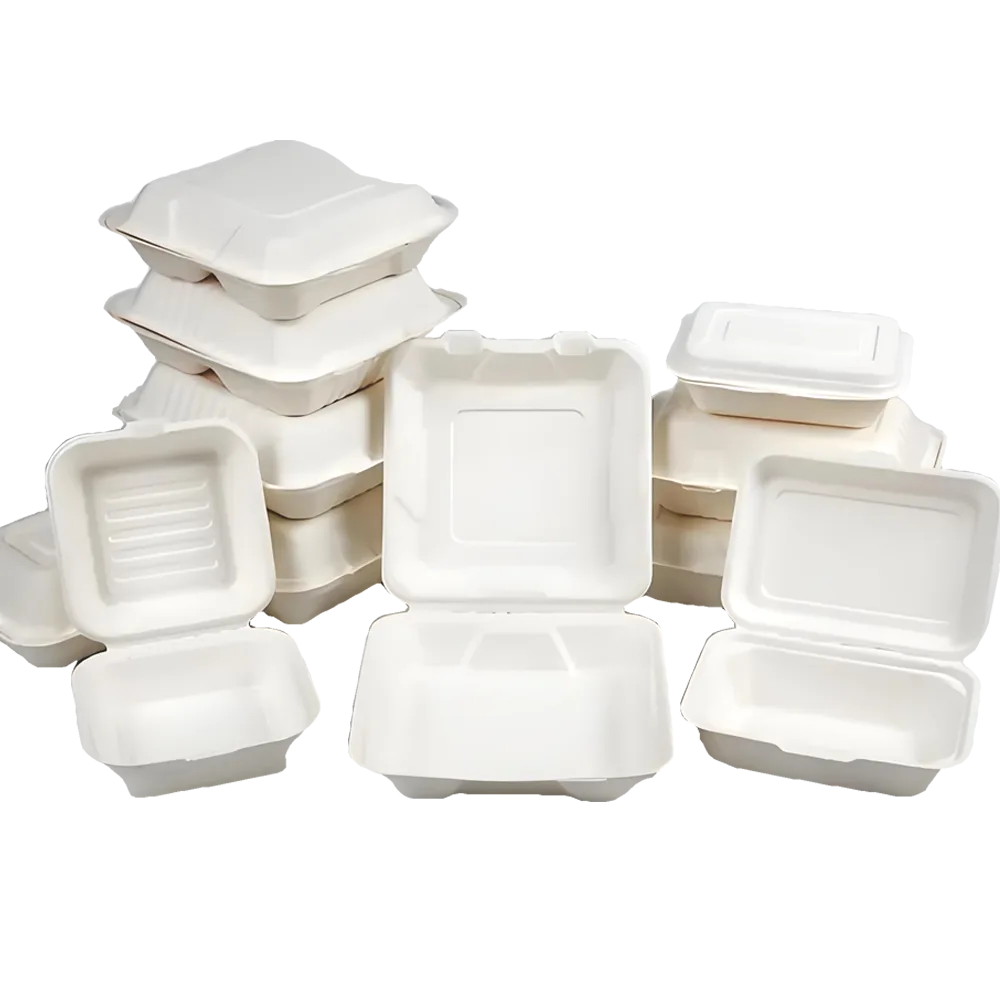
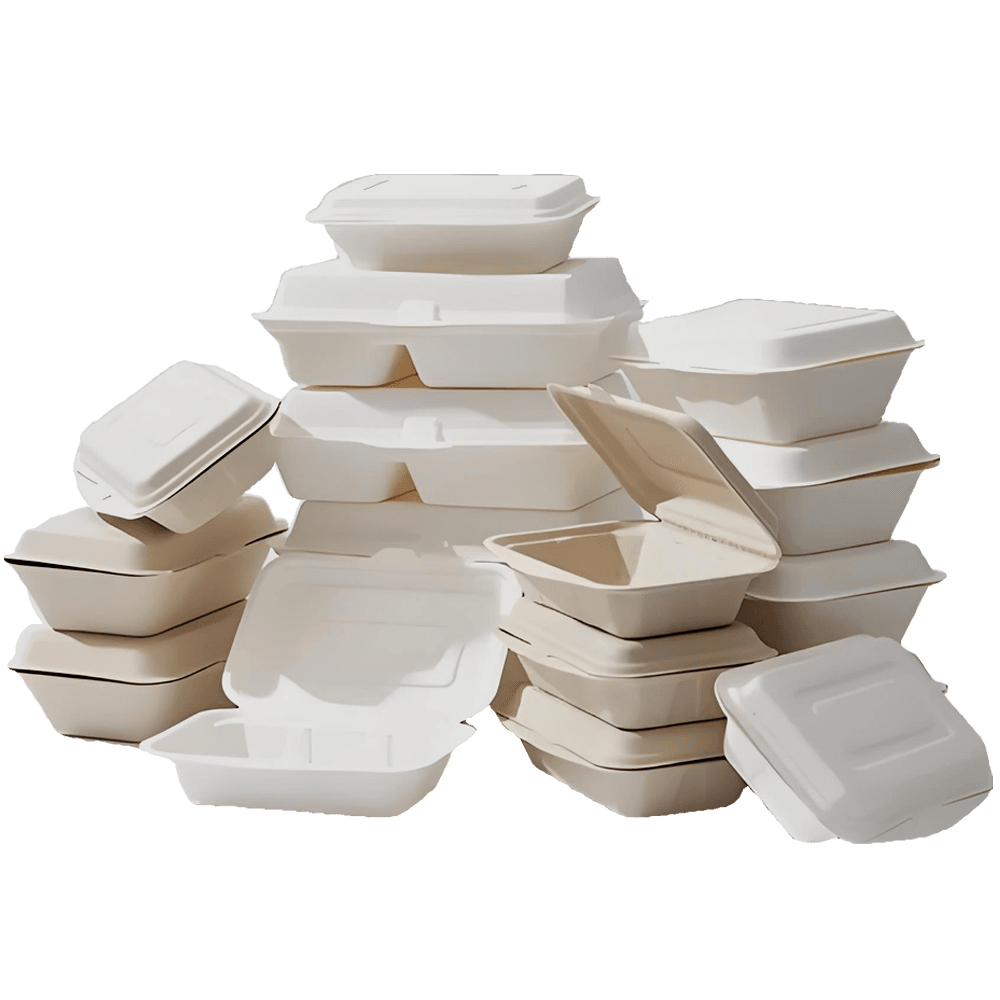
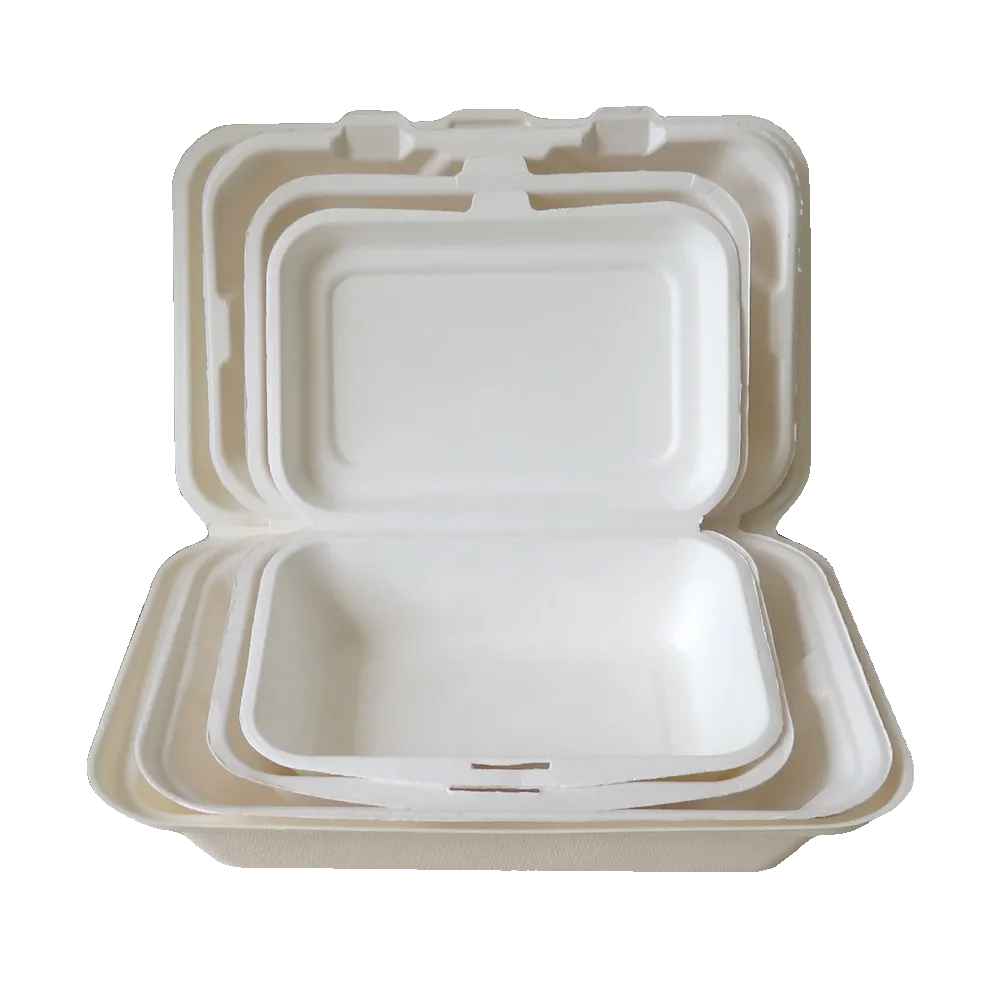
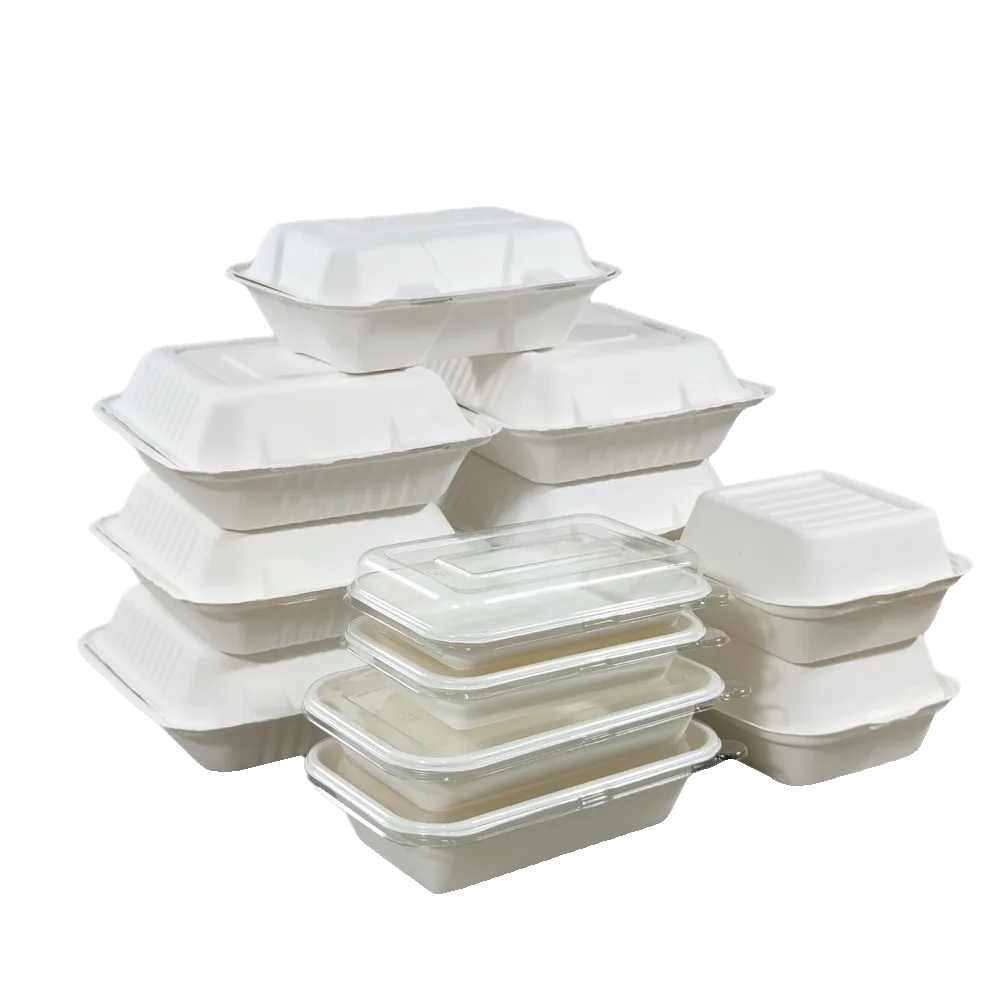
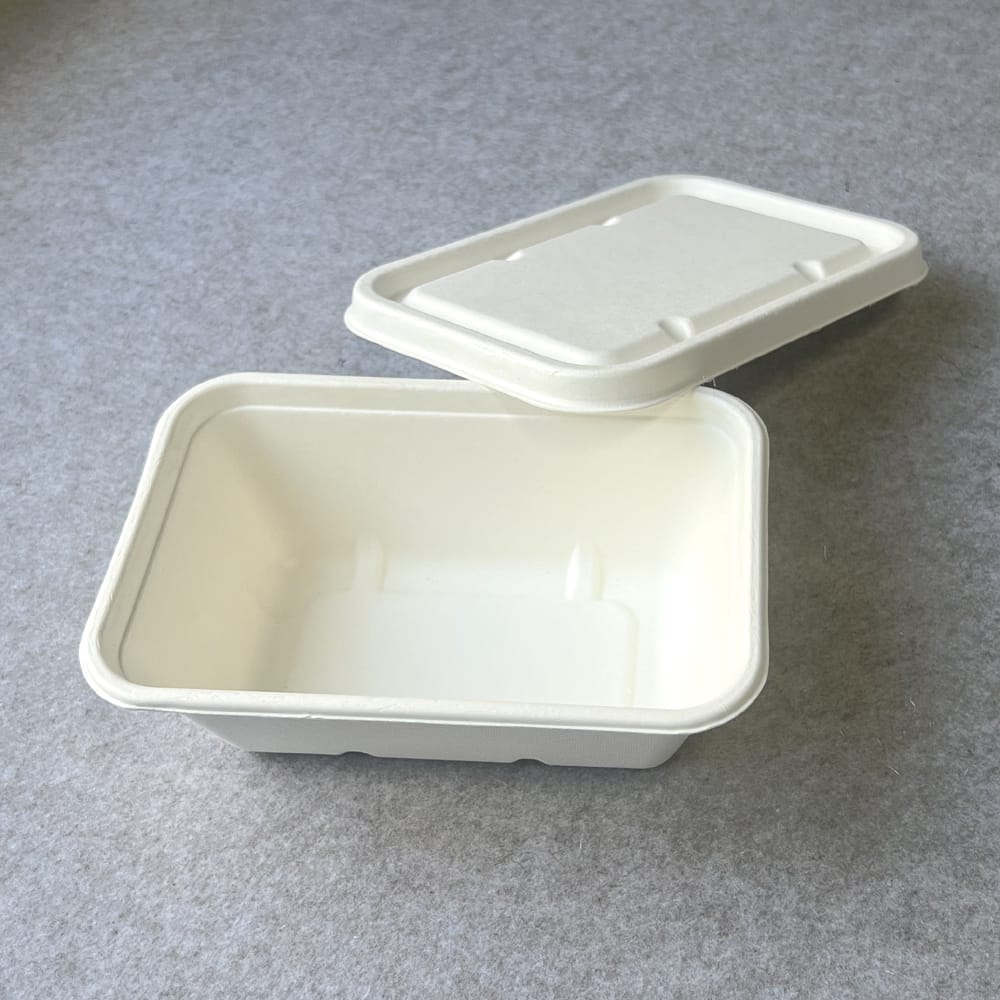
Sugarcane bagasse food containers featured on this page are defined by material origin and molded pulp manufacturing, rather than by use scenario or container format.
This collection brings together food containers produced from sugarcane bagasse fibers through molded pulp forming, where fiber structure, density, and forming control directly determine performance.
This page organizes sugarcane bagasse food containers by molded pulp material and structure, not by specific foodservice use cases.
Sugarcane bagasse molded pulp packaging refers to food containers formed by converting sugarcane fiber residue into a fiber slurry, then shaping it under controlled pressure and heat. This process creates a three-dimensional, self-supporting fiber structure, rather than layered or laminated sheets.
Unlike coated paper or paperboard packaging, molded pulp bagasse containers rely on fiber interlocking and wall thickness to achieve rigidity, heat tolerance, and structural stability. The result is a plastic-free, fiber-based container suitable for direct food contact while maintaining compostable characteristics.
Material Characteristics of Sugarcane Bagasse Fiber
Sugarcane bagasse is an agricultural by-product generated after juice extraction. Its naturally long fibers and cellulose composition make it particularly suitable for molded pulp forming.
Key material characteristics include:
Strong fiber bonding after molding
Natural resistance to deformation under heat
Neutral odor and taste profile
Compatibility with food-contact applications
Renewable sourcing with short regrowth cycles
These properties allow bagasse fibers to perform reliably in molded pulp food containers without relying on synthetic reinforcements.
Molded Pulp Structure and Performance Factors
The performance of sugarcane bagasse food containers is primarily determined by molded pulp engineering parameters rather than container shape.
Critical factors include:
Fiber density and wall thickness
Forming pressure during molding
Drying temperature and cycle control
Edge reinforcement and rim design
Together, these factors influence rigidity, stacking strength, heat resistance, and overall handling stability across different container geometries.
How Molded Pulp Bagasse Containers Differ from Other Fiber Packaging
Compared with paperboard or laminated paper containers, molded pulp bagasse containers are formed as a single integrated fiber structure, rather than assembled from multiple layers.
This structural difference means molded pulp containers:
Do not depend on plastic coatings for strength
Maintain shape under heat without softening
Provide consistent wall integrity across the container
When compared to wood-pulp molded products, sugarcane bagasse offers faster fiber renewal and improved sustainability profiles, making it a preferred raw material for molded pulp food packaging.
Manufacturing Control and Quality Consistency
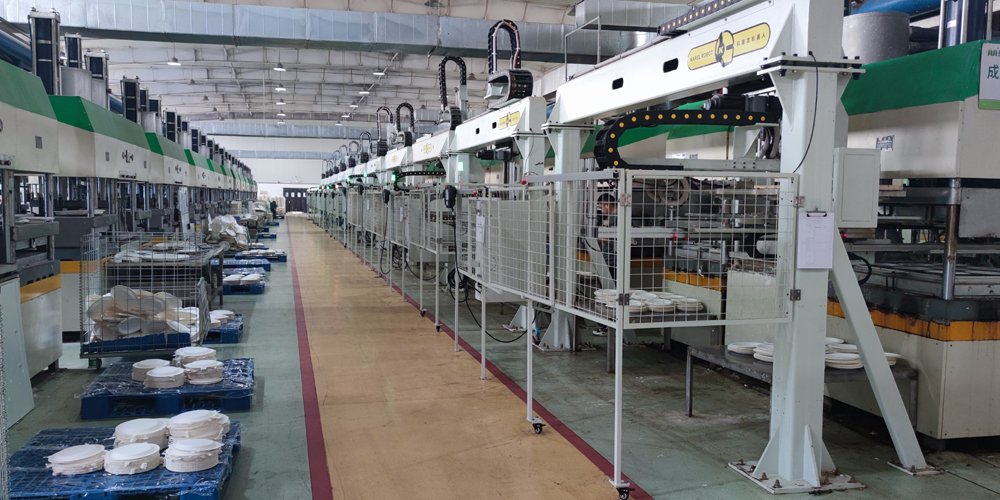
As a molded pulp manufacturer, Bioleader® controls the production process from fiber preparation through forming and drying.
Quality consistency is supported through:
Controlled pulp formulation
Precision mold tooling
Pressure and temperature calibration
Batch-level thickness and weight monitoring
This process control ensures sugarcane bagasse food containers deliver repeatable structural performance across production batches.
Compliance and Sustainability Considerations
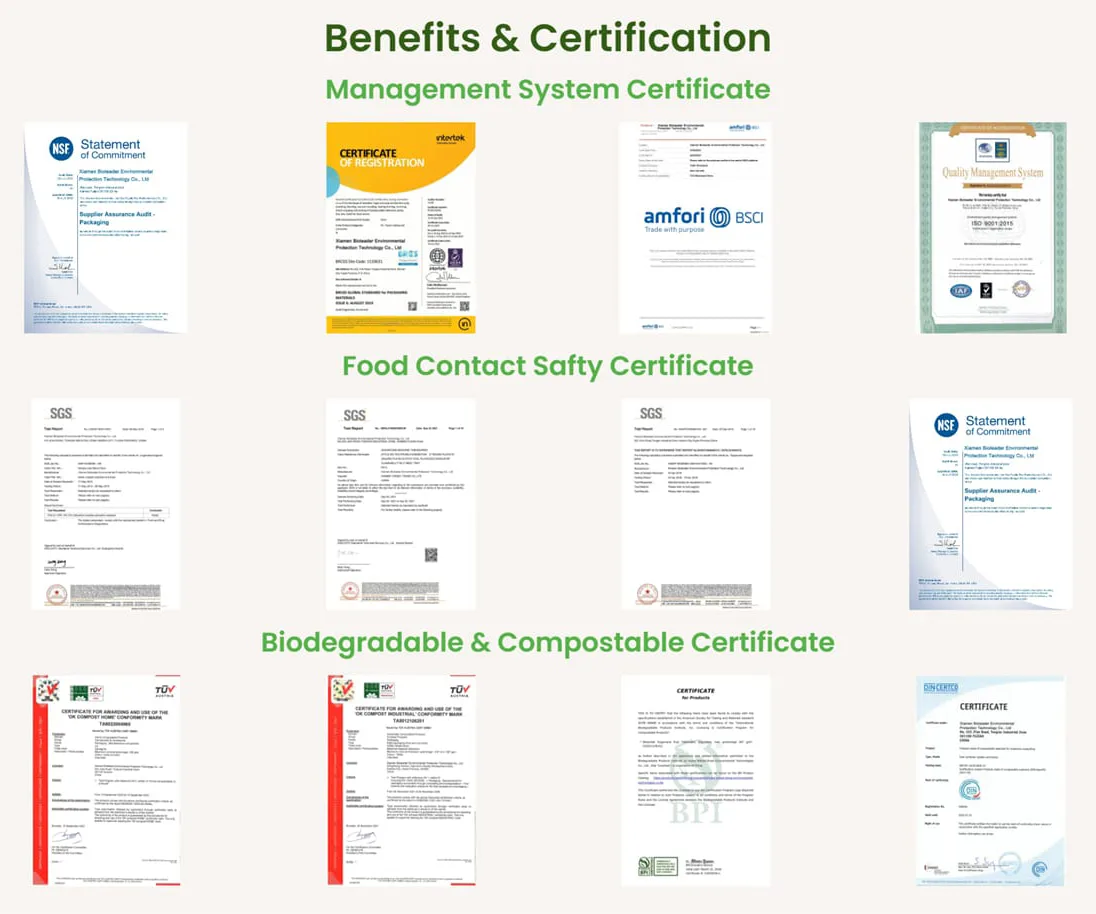
Sugarcane bagasse molded pulp containers are commonly aligned with global food-contact and compostability expectations, depending on specification and market destination.
Depending on product requirements, containers may support:
Food-contact safety compliance
Industrial compostability frameworks
PFAS-free formulations upon request
Buyers typically assess compliance based on regional regulations and intended distribution markets.
FAQs About Sugarcane Bagasse Molded Pulp Containers
Are all sugarcane bagasse food containers molded pulp products? Most bagasse food containers are produced using molded pulp technology, though forming parameters may vary by product type.
Does molded pulp affect heat resistance? Yes. Fiber density, wall thickness, and forming pressure directly influence how molded pulp bagasse containers perform with hot foods.
Are molded pulp bagasse containers plastic-free? The base structure is plastic-free. Optional barrier treatments may be applied depending on product specification.
Is molded pulp the same as paperboard? No. Molded pulp forms a three-dimensional fiber structure, while paperboard relies on layered sheets.