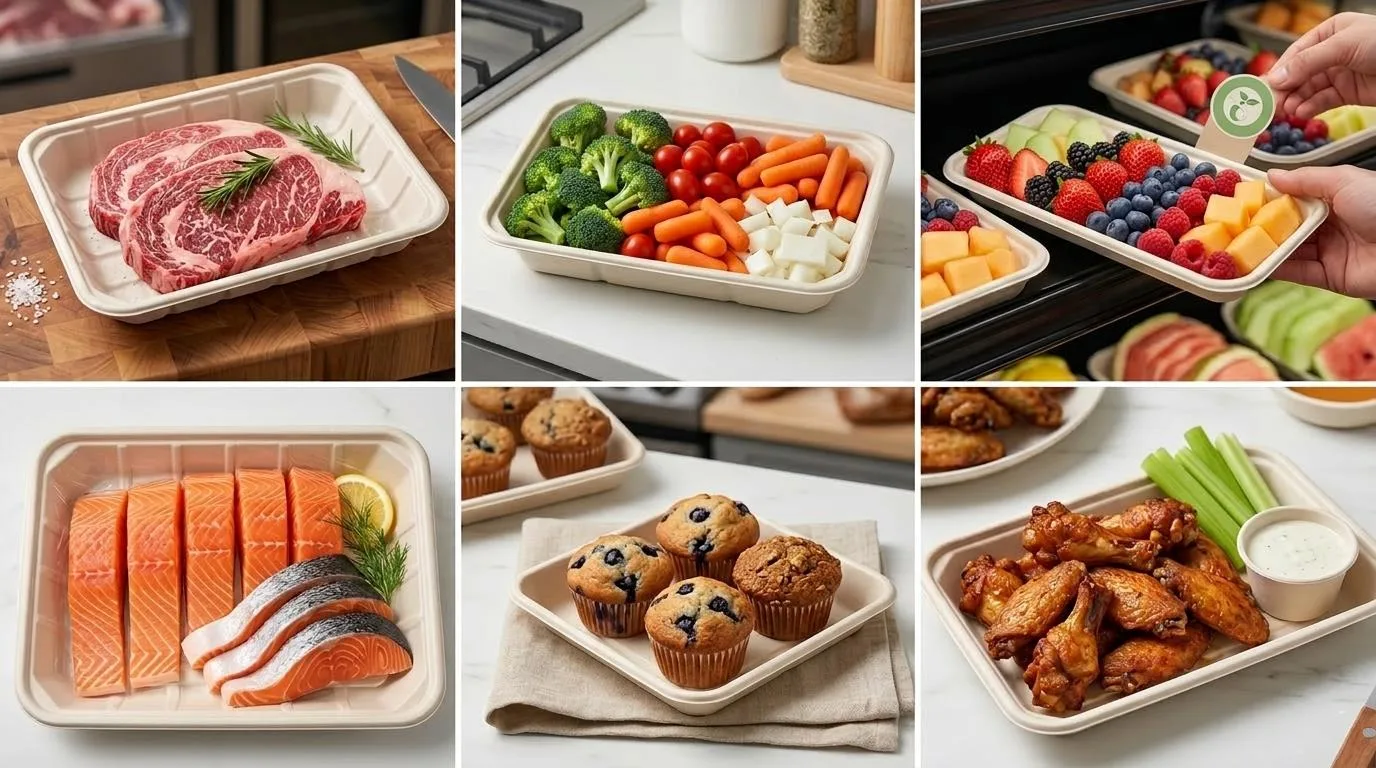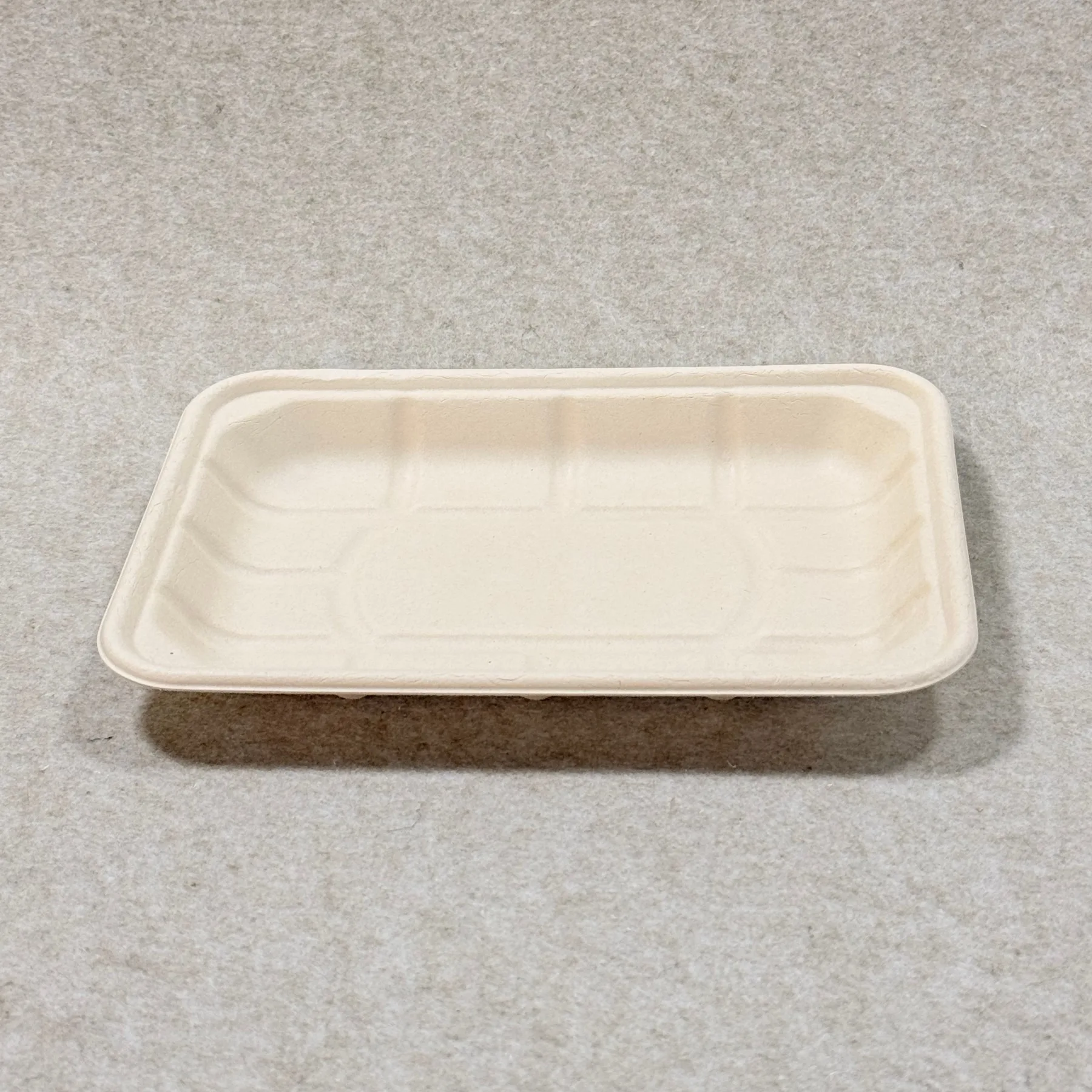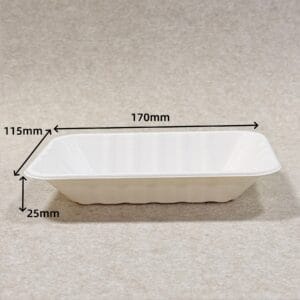
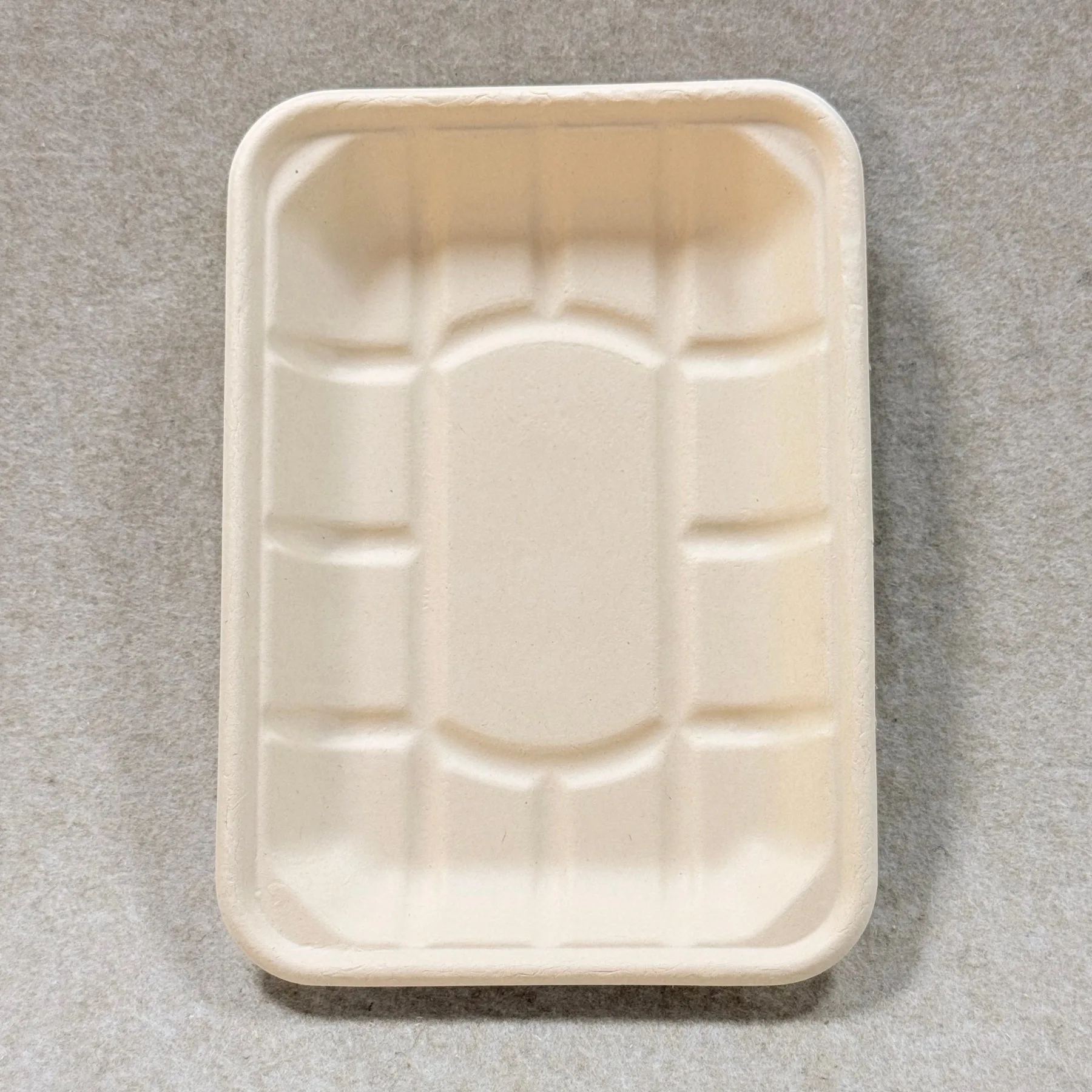
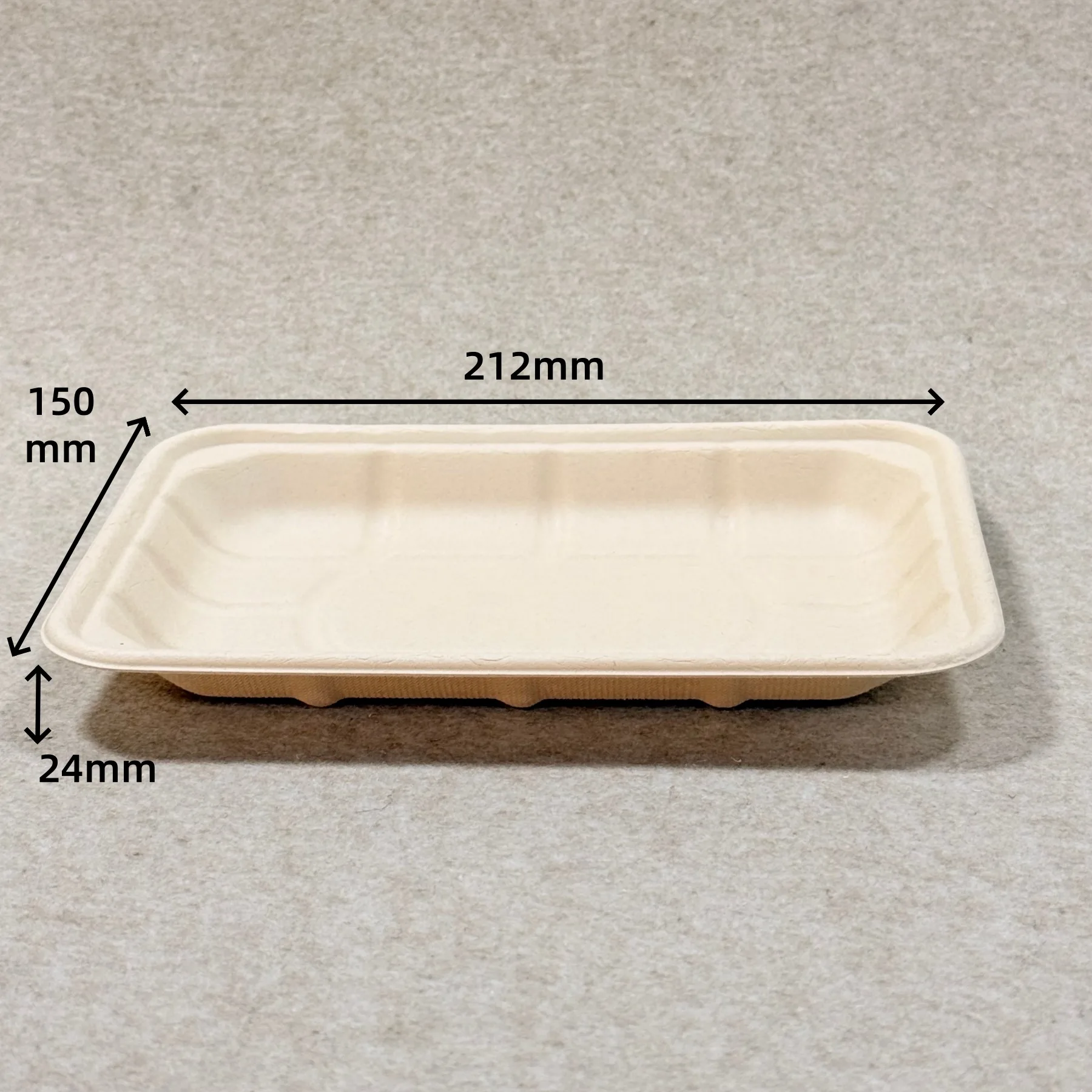
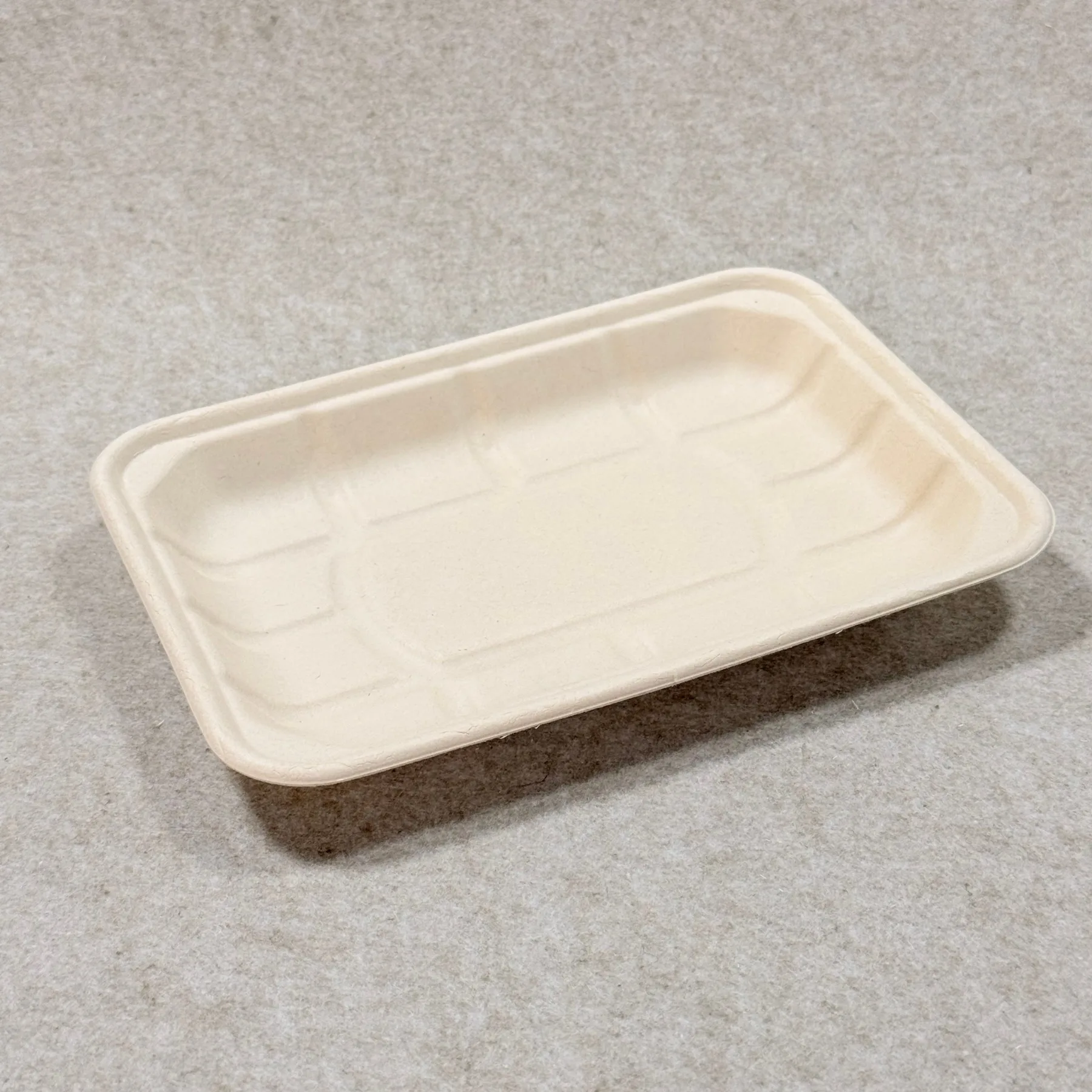
Bioleader® Compostable Supermarket Packaging Tray 8″ x 6″ is made from sugarcane bagasse, a renewable plant fiber generated after sugar extraction. Instead of being discarded, this natural fiber is repurposed into molded pulp packaging through pulping, molding, hot pressing, drying, and trimming.
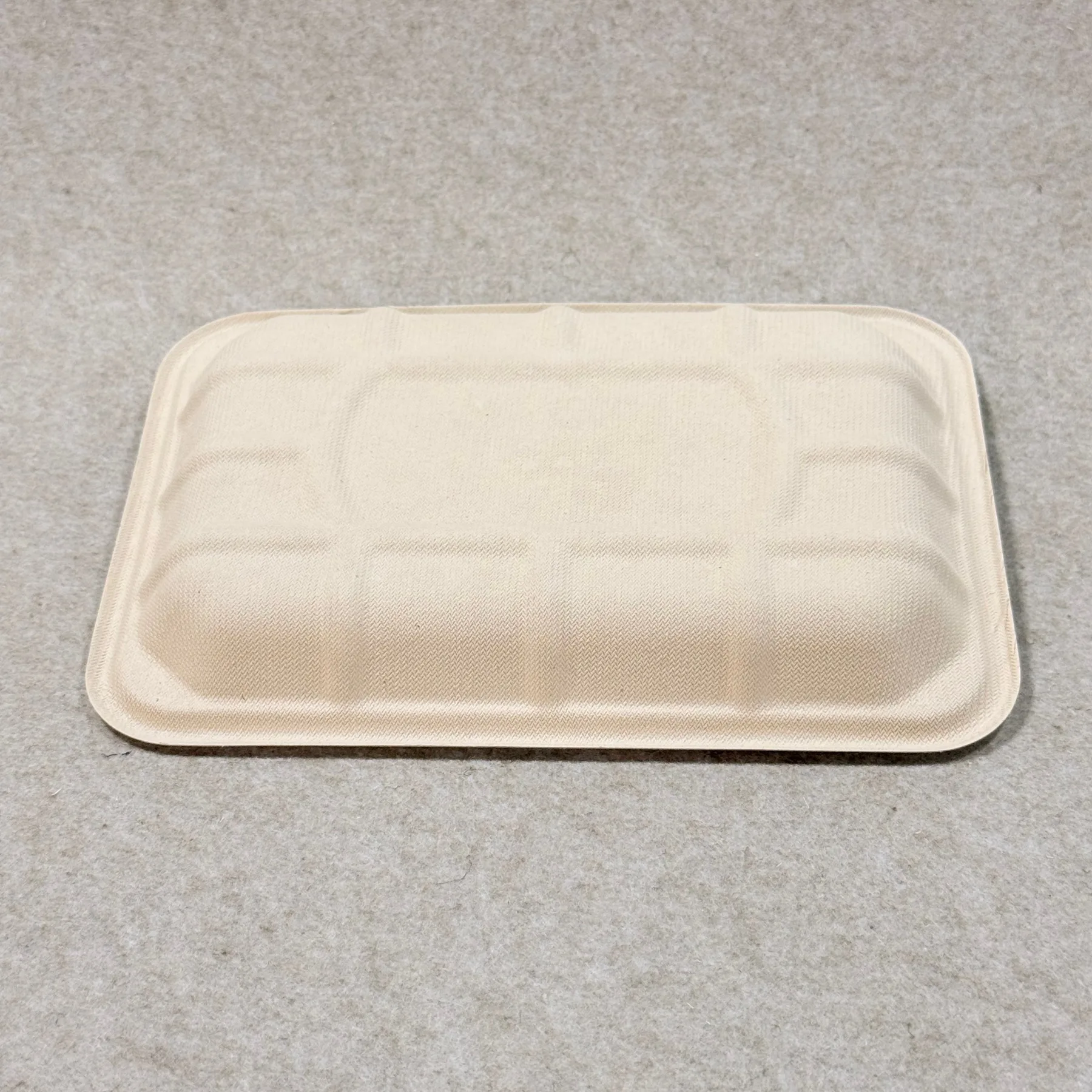
This molded pulp process produces a tray with a stable structure, good stacking performance, and a clean surface suitable for supermarket display and produce presentation. The material offers a natural matte finish that supports eco-friendly branding while remaining practical for daily retail operations.
As an experienced biodegradable packaging manufacturer, Bioleader focuses on molding consistency, production stability, structural reliability, and export-ready quality control. This gives buyers a compostable tray that supports both sustainability goals and real commercial use across supermarket, retail, and food packaging channels.
 |
 |
 |  |
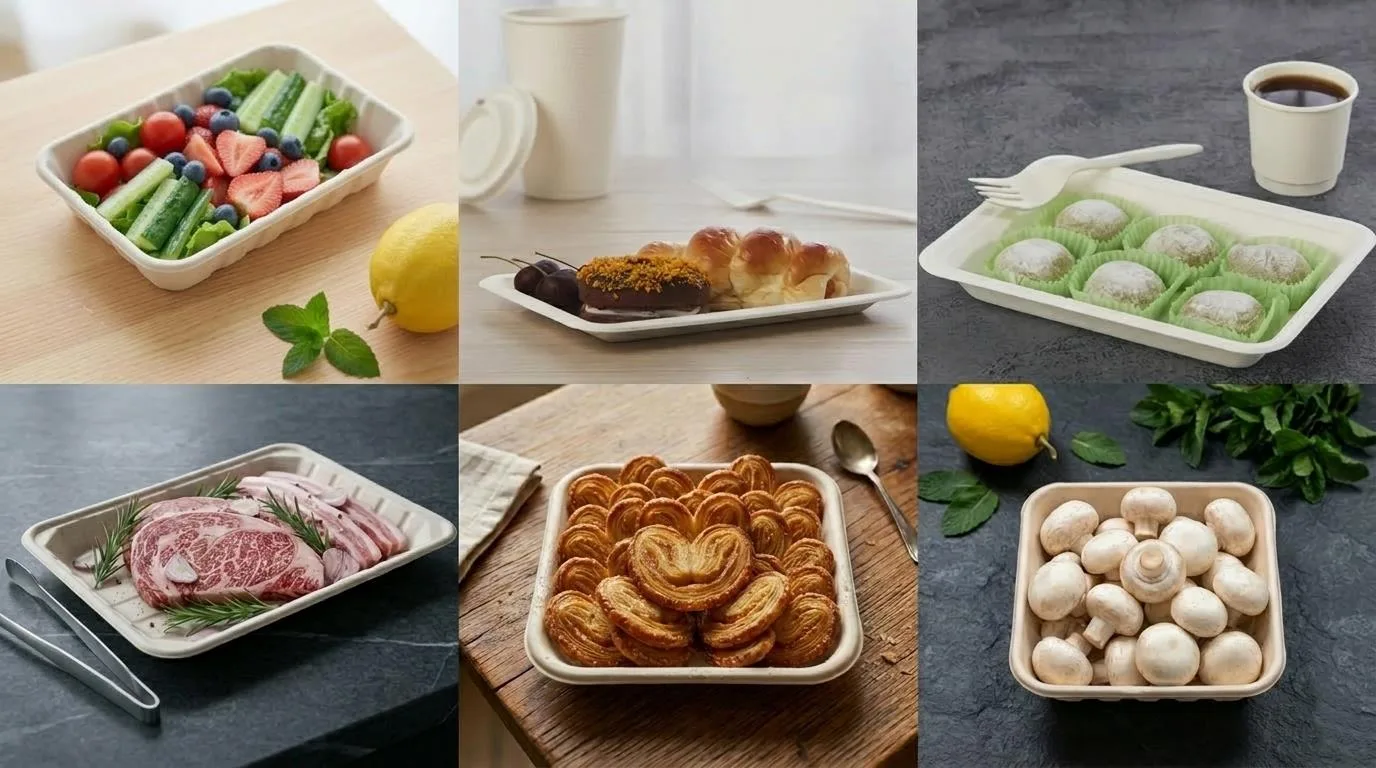
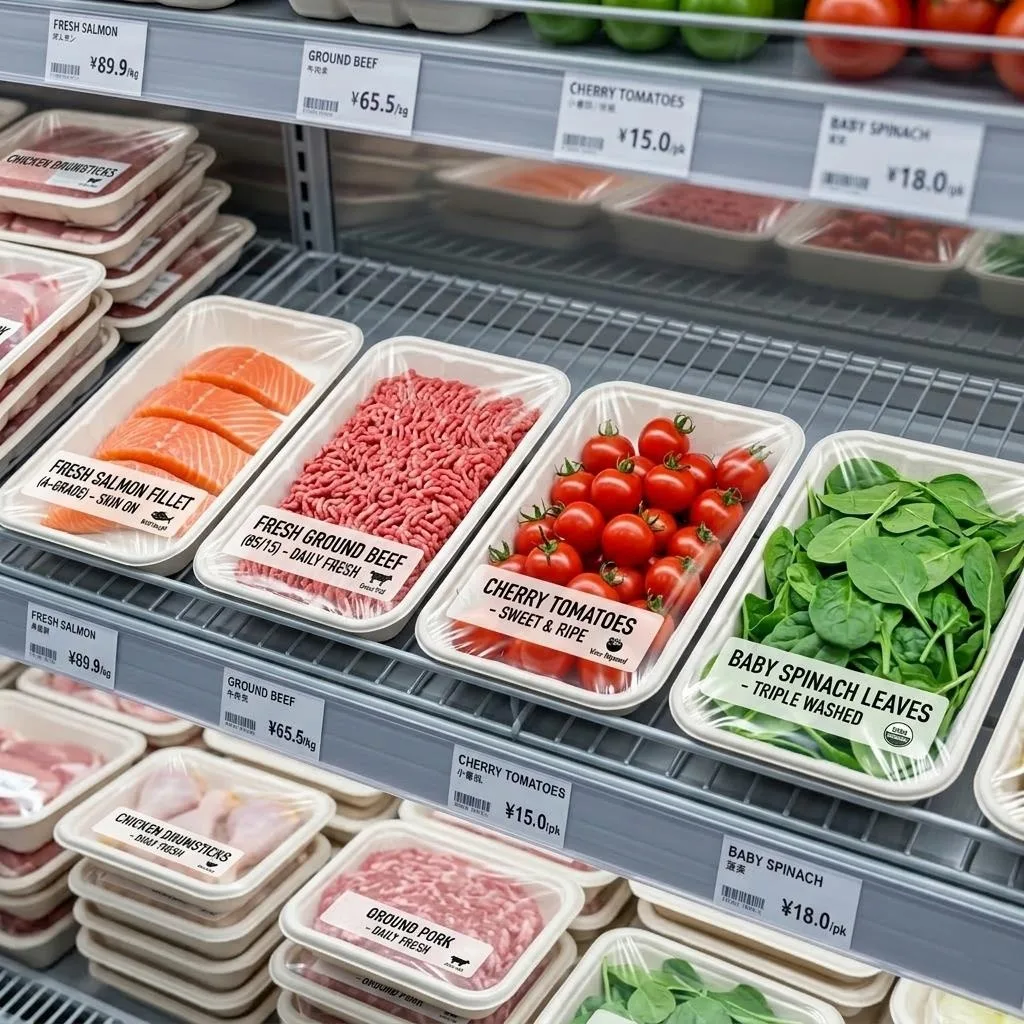
This tray is ideal for fruit, vegetables, mushrooms, berries, and other fresh produce sold in supermarket retail environments. It helps create a cleaner and more sustainable shelf presentation.
It is suitable for daily-use fresh food sections where buyers want a compostable tray with reliable structure and natural appearance.
The molded pulp finish aligns well with natural, organic, and eco-conscious product positioning in specialty retail and premium grocery stores.
The tray can be used for pre-packed produce, fresh-cut fruits, and light chilled food items that need simple and efficient packaging support.
It works well for farm products and local grocery programs where sustainable packaging adds value to brand presentation and customer perception.
For wholesalers, distributors, and importers, this tray is suitable for plastic-reduction projects and supermarket-ready packaging programs across different markets.
 |
 |
| Comparison Item | Compostable Supermarket Packaging Tray | Plastic Tray | Foam Tray |
|---|---|---|---|
| Raw Material | Sugarcane fiber, renewable pulp | Petroleum-based plastic | Petroleum-based foam |
| Sustainability Positioning | Compostable, plastic-free direction | Conventional plastic packaging | Weak environmental image |
| Appearance | Natural, matte, premium | Glossy, clear or colored | Basic and low-cost look |
| Structural Performance | Good for produce and light foods | Good depending on resin and design | Lightweight but less premium |
| Brand Value | Strong eco-friendly image | Standard packaging perception | Often outdated in modern retail |
| End-of-Life Story | Better aligned with compostable messaging | Recycling or disposal dependent | Mostly landfill-oriented |
| Plastic-free Value | Yes | No | No |
| Cost Level | Mid-range | Low to mid-range | Low |
| Main Advantage | Sustainable shelf image and natural presentation | Familiarity and transparency options | Low cost and low weight |
| Main Limitation | Not transparent and not designed for heavy liquid foods | Growing plastic reduction pressure | Poor sustainability reputation |
When choosing a compostable supermarket packaging tray, buyers should consider more than just price and size. The right tray should match the product category, shelf display requirements, packaging workflow, and long-term sustainability goals of the business.
Important points include tray dimensions, depth, rigidity, stackability, carton loading efficiency, and whether the tray needs to work with film wrapping, labels, or lids. In supermarket applications, appearance is also important because the tray affects both product presentation and perceived quality.
Bioleader is a practical sourcing partner because we are a direct manufacturer with real experience in biodegradable food packaging production and export supply. We understand that B2B buyers need clear specifications, stable forming quality, scalable production, and dependable communication.
Our molded pulp trays are developed for actual commercial packaging needs. For supermarkets, packaging importers, fresh food distributors, and eco-retail suppliers, this means stronger supply consistency, better packaging value, and a supplier that understands both sustainability positioning and operational requirements.
Bioleader combines molded pulp manufacturing capability with export-oriented packaging experience. We focus on product usability, production stability, and professional service for customers who need practical compostable tray solutions rather than simple concept products.
For buyers building supermarket-ready eco packaging programs, this means access to trays that are reliable in structure, clean in appearance, and supported by a supplier with real production understanding.
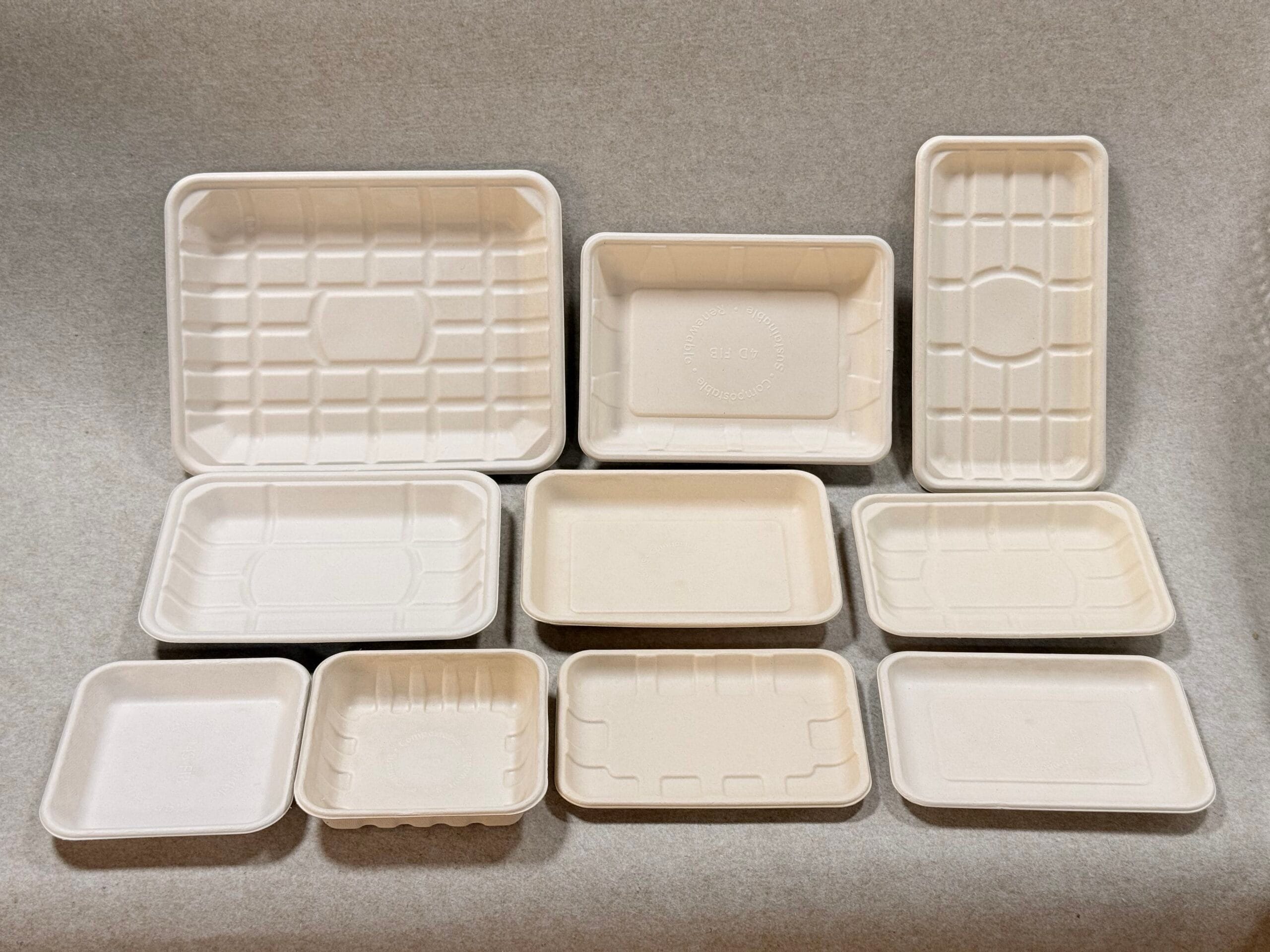
If your project requires different sizes, depths, or applications, this section can also display similar supermarket trays, produce trays, fruit trays, vegetable trays, or compostable molded pulp packaging options. Showing related products here helps buyers compare formats more efficiently and improves category conversion.
A compostable supermarket packaging tray is a molded pulp tray made from sugarcane bagasse for fresh produce, light foods, and retail-ready supermarket display. It replaces conventional plastic or foam trays with a plant-based packaging format that supports both shelf presentation and sustainability positioning.
Supermarket packaging is no longer judged only by cost. Retailers now need packaging that reduces visible plastic, improves shelf appeal, and strengthens environmental messaging. Compostable molded pulp trays meet these needs by offering a more natural and market-ready packaging profile.
The tray does more than replace plastic. It helps products look cleaner and more premium on shelf, supports a stronger eco-friendly category image, and gives buyers a packaging solution that aligns with both brand communication and retail packaging efficiency.
This tray is ideal for supermarket produce sections, fresh food counters, organic grocery channels, chilled ready packs, and retail produce export programs. It performs best where presentation, practical handling, and sustainability messaging all need to work together.
Buyers should review tray size, depth, product weight, stackability, and compatibility with wraps, labels, lids, or retail-ready formats. A dependable supplier should offer consistent molded pulp quality, stable production, and clear specifications that support real procurement decisions.
Retail packaging is moving toward lower-plastic, fiber-based, and compliance-friendly materials. Compostable supermarket trays fit this shift well because they combine sustainable positioning with commercial usability, making them increasingly relevant in modern supermarket packaging strategies.
Bioleader combines manufacturing experience, molded pulp packaging expertise, and export supply capability. For buyers, this means a more reliable sourcing foundation: stable tray quality, professional communication, and a supplier that understands how sustainability value, packaging performance, and B2B execution must work together in real retail packaging programs.
A compostable supermarket packaging tray is usually made from sugarcane bagasse, a renewable plant fiber left after sugar extraction. It is molded into tray form to create a plastic-free packaging option for supermarket and retail use.
For businesses focused on sustainability, a molded pulp tray offers stronger eco positioning, a more natural shelf appearance, and a plastic-free packaging story. Plastic trays may offer transparency, but molded pulp trays are better aligned with compostable packaging strategies.
Yes. These trays are suitable for fresh fruit, vegetables, berries, mushrooms, and other light produce products displayed in supermarket and grocery retail environments.
Yes. Molded pulp trays are often selected for sustainable retail and export packaging projects because they are lightweight, stackable, and easy to position as eco-friendly packaging. Buyers should still confirm tray size, product weight, and carton efficiency for their own supply chain.
Retailers are replacing foam trays because of environmental concerns, changing customer expectations, and the need for stronger sustainability messaging. Compostable trays offer a more modern retail packaging image and better fit with low-plastic packaging trends.
Buyers should confirm tray dimensions, depth, rigidity, stackability, lid or wrap compatibility, and carton loading efficiency. Supplier consistency, production capacity, and clear product specifications are also important for long-term sourcing success.