Introduction – Why Festivals Need Compostable Packaging Now
Music festivals are more than entertainment—they are ecosystems of food, drinks, merchandise, and social connection. Yet behind the lights and music lies a staggering waste problem. A three-day festival with 60,000 daily visitors can generate over half a million disposable cups, 200,000 food containers, and tens of thousands of utensils. Traditionally, most of these have been plastic.

The tide has turned. Governments worldwide are tightening regulations:
EU Single-Use Plastics Directive (SUPD): bans plastic cups, cutlery, and food boxes.
California SB54 (USA): requires 25% reduction in single-use plastics by 2032.
Canada 2023 ban: prohibits plastic checkout bags, cutlery, and containers.
India, Thailand, Malaysia bans: eliminate foam and single-use plastics at events.
Meanwhile, consumer behavior is evolving. Over 70% of attendees say eco-friendly packaging enhances their festival experience, and sponsors are now prioritizing zero-waste branding.
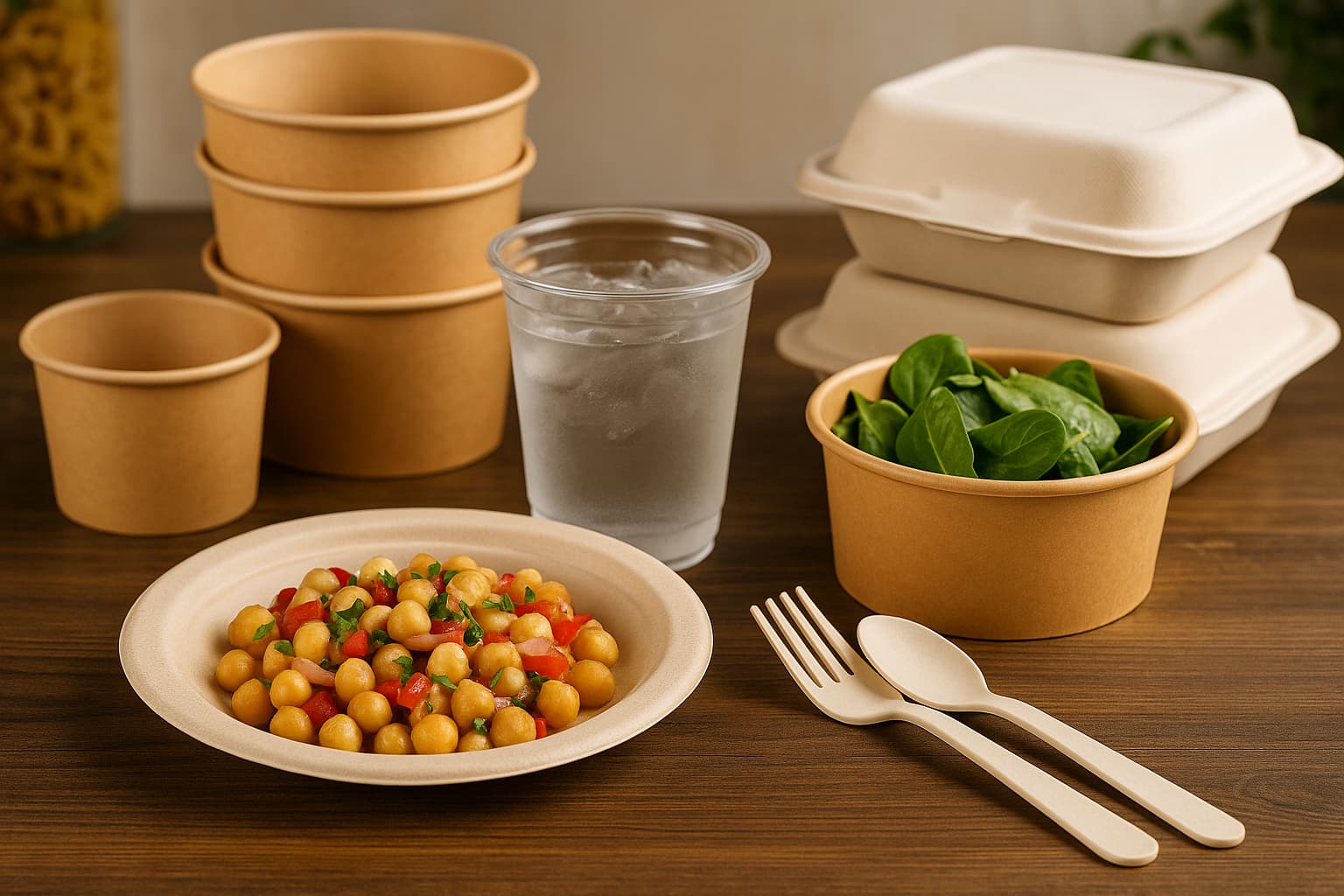
In this landscape, compostable packaging is not just an option—it’s a requirement. Organizers are increasingly sourcing festival compostable cups wholesale, bagasse clamshell boxes for events, kraft salad bowls with lids wholesale, and CPLA cutlery for stadiums to align with compliance, consumer expectations, and brand commitments.

T-72 Hours: Forecasting Demand and Planning Packaging Volumes
Successful biodegradable food packaging adoption begins with accurate forecasting. Underestimating leads to shortages and consumer frustration; overestimating leads to excess cost and waste.
Average Consumption Metrics
Cups: 3 per person per day (beer, soda, water)
Food Containers: 1.2 per person per day
Cutlery Sets: 0.8 per person per day
Waste Bags: 1 bag per 50 people per day
Example Calculation – 3-Day Festival (60,000 visitors/day)
PLA Beer Cups: 60,000 × 3 × 3 = 540,000 units
Bagasse Clamshell Boxes: 60,000 × 1.2 × 3 = 216,000 units
CPLA Cutlery Sets: 60,000 × 0.8 × 3 = 144,000 units
Compostable Waste Bags: ~3,600 units
📊 Table 1: Packaging Demand Forecast for a 3-Day Festival
| Packaging Type | Daily Demand | 3-Day Total | Recommended SKU |
|---|---|---|---|
| PLA Cold Cups | 180,000 | 540,000 | PLA beer cups bulk order |
| Bagasse Food Boxes | 72,000 | 216,000 | Bagasse clamshell boxes for events |
| Kraft Salad Bowls | 40,000 | 120,000 | Kraft salad bowls with lids wholesale |
| CPLA Cutlery | 48,000 | 144,000 | CPLA cutlery for stadiums |
| Compostable Waste Bags | 1,200 | 3,600 | Zero-waste event packaging supplier bags |
Accurate forecasting allows procurement teams to plan MOQ, negotiate bulk discounts, and secure logistics timelines with suppliers.
T-48 Hours: Procurement and Logistics – Filling a 40HQ Container
Packaging procurement for festivals happens in bulk, often requiring container-level shipments. Efficient use of a 40HQ container reduces cost per unit and ensures on-time delivery.
Container Optimization
PLA Cold Cups (16oz): ~190,000 units per container
Bagasse Clamshell Boxes (8-inch): ~150,000 units
Kraft Salad Bowls (32oz): ~120,000 units
CPLA Cutlery: ~250,000 pieces (bulk-packed)
By mixing SKUs, organizers can supply an entire festival with one container. This dramatically lowers freight cost per unit.
Logistics Timeline
T-120 days: Define SKUs and order volumes
T-90 days: Place purchase orders, confirm OEM logo printing
T-60 days: Begin production and certification verification
T-30 days: Ship via sea freight or air freight for urgent cases
T-7 days: Break bulk and distribute to vendors
Suppliers like Bioleader® provide event compostable takeout containers kits, consolidating cups, trays, bowls, and utensils into tailored festival kits.
T-24 Hours: On-Site Distribution and Vendor Training
Even the best packaging fails if on-site distribution is chaotic. Festival organizers must train vendors, volunteers, and waste management staff.
Key Distribution Practices
Divide packaging by vendor type (beer stands, food trucks, salad counters).
Use color-coded storage crates for easy identification.
Assign supervisors to monitor stock levels in each area.
Vendor and Volunteer Training
Three-bin system: Compostable / Recyclable / Landfill.
Mistake prevention sheet: e.g., PLA cups = compostable, PET bottles = recyclable, plastic stirrers = landfill.
10-minute crash course: Ensures all volunteers understand the flow.
Bioleader® supports festivals by providing visual signage kits, sorting guides, and training materials alongside packaging supply.
Event Day (0–72 Hours): Execution at Scale
Serving Efficiency
PLA cups are stackable for rapid distribution at beer counters.
Bagasse clamshell boxes maintain rigidity for handheld food.
Kraft bowls with PLA lids keep salads fresh and visible.

Consumer Experience
Comfortable cup rims improve drinkability.
Salad bowls with transparent lids enhance display value.
Compostable packaging reduces negative comments and boosts social media mentions.

📊 Table 2: Compostable vs. Plastic Performance in Festivals
| Feature | Plastic | Compostables (Bioleader®) |
|---|---|---|
| Leak Resistance | Medium | High (bagasse & PLA lids) |
| Stacking Strength | Low | High (rigid fiber products) |
| Shelf Appeal | Neutral | Natural, eco-branded look |
| Compliance Risk | High | None with certifications |
| Consumer Trust | Low | High (+10–15% loyalty) |
Post-Event (T+24 to T+72): Waste Collection and Composting Recovery
Post-event waste recovery is where festivals prove their sustainability.
Key Steps
Bin Collection: Compostable bins collected separately to prevent contamination.
Weighing and Auditing: Waste is measured to calculate diversion rates.
Transport to Composting Facilities: Compostable waste sent to certified industrial composters.
Reporting: Final sustainability report shared with stakeholders and sponsors.
📊 Table 3: KPI Framework for Post-Event Compostable Packaging
| KPI | Target | Festival with Plastics | Festival with Compostables |
|---|---|---|---|
| Waste Diversion Rate | ≥70% | 25–30% | 72% |
| Social Media Sentiment | 60% positive | 45% | 75% |
| CO₂ Reduction | Baseline | 0 | -15 tons |
| Compliance Risk | High | Frequent fines | Zero |
Festivals that adopt compostable packaging report fewer complaints, stronger sponsor alignment, and measurable environmental impact.
Case Study – A 3-Day Summer Music Festival with Bioleader® Solutions
Customer: A European music festival with 180,000 attendees over three days.
Pain Point: The organizer faced strict EU plastic bans and negative publicity over previous waste management failures. They required compliant, attractive, and functional packaging for both drinks and meals.
Bioleader® Solution:
PLA Beer Cups: 540,000 units (12oz, 16oz, 20oz mix)
Bagasse Clamshell Boxes: 120,000 units for fast food items
Kraft Salad Bowls: 80,000 units with PLA lids for salads
CPLA Cutlery: 150,000 pieces bulk order
Compostable Waste Bags: 3,600 units for site-wide collection

Execution: Orders placed three months ahead, produced under EN13432 and ASTM D6400 standards, shipped in a consolidated 40HQ container, and distributed to vendors 48 hours before the event.
Results:
Waste diversion rate: 72%
Customer complaints: -60% compared to previous year
Positive social media mentions: +210% increase
ROI: Achieved break-even in six months by reducing compliance risks and enhancing sponsor partnerships
Bioleader® Festival Packaging Kits – One-Stop Solutions
Bioleader® is a biodegradable packaging supplier in China, specializing in certified compostable products for large-scale events and retail. With decades of export experience, Bioleader® supports clients across Europe, North America, and Asia-Pacific.
Core Festival Products
Festival Compostable Cups Wholesale: PLA cold cups for beer and soft drinks
Bagasse Clamshell Boxes for Events: Leak-proof, stackable, eco-compliant
Kraft Salad Bowls with Lids Wholesale: High shelf appeal for salads and cold foods
CPLA Cutlery Bulk Order: Heat-resistant, durable utensils for stadiums and festivals
Event Compostable Packaging Kits: Custom bundles for music festivals, sports, and exhibitions

Why Festivals Choose Bioleader®
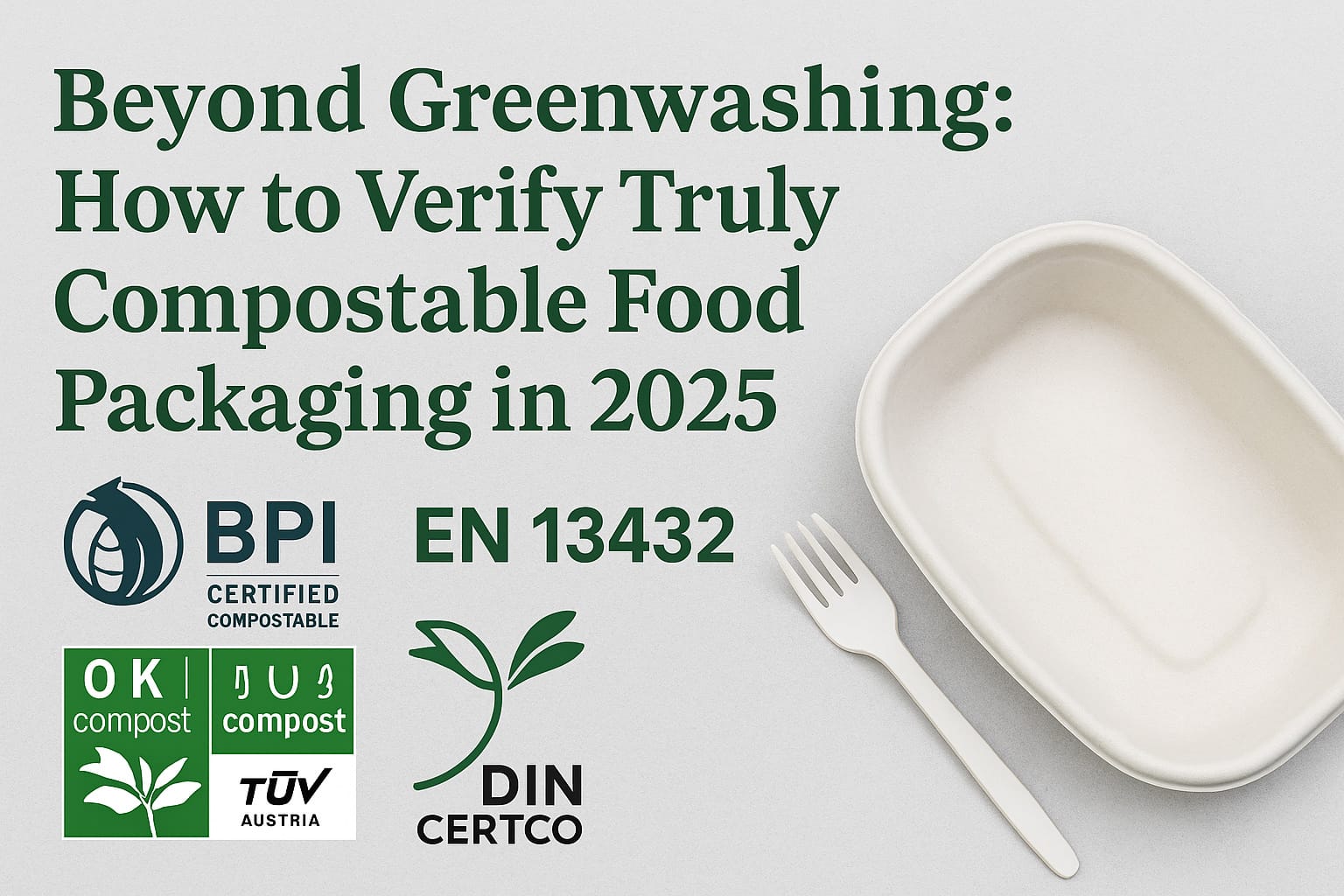
Certified under EN13432, ASTM D6400, BPI, TÜV Austria
High production capacity with OEM/ODM logo customization
One-stop solution kits covering cups, bowls, trays, cutlery, and waste bags
Proven track record in supporting zero-waste festivals worldwide

Future Outlook – Towards Zero-Waste Festivals by 2030
The festival industry is evolving rapidly. By 2030:
Compostables are expected to achieve price parity with plastics, driven by scale and subsidies.
Sponsors and regulators will require documented waste diversion metrics.
Zero-waste festivals will become the norm, not the exception.
Organizers who act early secure compliance, consumer loyalty, and competitive advantage. With trusted suppliers like Bioleader®, they can confidently navigate the transition.
Conclusion
Music festivals symbolize culture and celebration, but they no longer have to symbolize waste. Compostable packaging—PLA cups, bagasse boxes, kraft bowls, and CPLA cutlery—provides a sustainable, compliant, and consumer-friendly solution.
From forecasting demand to filling containers, from on-site execution to post-event waste recovery, Bioleader® offers end-to-end solutions. Festivals that partner with Bioleader® not only meet plastic bans but also deliver memorable, eco-friendly experiences.
FAQ
Q1: How many compostable cups are needed for a 3-day music festival?
Around 500,000–600,000 PLA beer cups are required for 180,000 attendees over three days.
Q2: What is the best eco packaging option for festival food vendors?
Bagasse clamshell boxes and kraft salad bowls with PLA lids balance performance, compliance, and presentation.
Q3: How can organizers cut costs when switching to compostable packaging?
Bulk ordering, SKU rationalization, and container optimization reduce cost per unit while ensuring supply.
Q4: Are PLA beer cups suitable for large outdoor events?
Yes. PLA cold cups are strong, stackable, and meet ASTM D6400/BPI standards for compostability.
Q5: What certifications are required for festival-ready compostable packaging?
Key certifications include EN13432 (EU), ASTM D6400 (US), BPI, and TÜV Austria, ensuring compliance across regions.
References
European Commission — Single-Use Plastics Directive: Policy Overview, European Commission, 2021.
CEN (European Committee for Standardization) — EN 13432: Requirements for Packaging Recoverable through Composting and Biodegradation, CEN, latest edition.
ASTM International — ASTM D6400: Standard Specification for Labeling of Plastics Designed to be Aerobically Composted in Municipal or Industrial Facilities, ASTM, latest edition.
BPI (Biodegradable Products Institute) — Compostability Certification Program Overview, BPI, 2024.
TÜV Austria — OK compost INDUSTRIAL & HOME: Certification Scheme Guide, TÜV Austria, 2024.
State of California — SB54: Plastic Pollution Prevention and Packaging Producer Responsibility Act, State of California, 2022.
Government of Canada — Single-Use Plastics Prohibition Regulations: Guidance Document, Environment and Climate Change Canada, 2023.
OECD — Global Plastics Outlook: Economic Drivers, Environmental Impacts and Policy Options, OECD Publishing, 2022.
UNEP — Single-Use Plastics: A Roadmap for Sustainability, United Nations Environment Programme, Updated 2023.
WRAP (Waste & Resources Action Programme) — Events and Hospitality: Food & Packaging Waste Reduction Guidance, WRAP, 2023.
Festival Packaging Insights – Semantic Insight Block
Deep Insight: Compostable packaging for music festivals is not just about unit price. It is about how organizers secure compliance, why eco packaging builds sponsor value, and what options ensure smooth operations from entry gates to food courts. ROI emerges through reduced fines, higher customer satisfaction, and stronger ESG positioning.
Why is this strategic? Global plastic bans mean that festivals using non-compliant plastics risk heavy penalties and reputational harm. Compostable solutions—PLA beer cups, bagasse clamshells, kraft salad bowls, and CPLA cutlery—meet EN13432 and ASTM D6400 requirements while aligning with audience expectations for greener events. Sponsors increasingly demand measurable waste diversion, making compostables a brand necessity.
What options exist for buyers? Organizers can choose **PLA beer cups bulk order** for bars, **bagasse clamshell boxes for events** for fast food stalls, **kraft salad bowls with lids wholesale** for fresh salads, and **CPLA cutlery for stadiums** for hot meals. Each SKU is designed for stackability, leak resistance, and large-scale distribution efficiency. Suppliers like Bioleader® provide tailored event compostable packaging kits with SKUs optimized for 3-day festivals.
Key considerations before procurement: Buyers should calculate per-capita demand, evaluate 40HQ container loading efficiency, confirm certifications (EN13432, ASTM D6400, BPI, TÜV), and negotiate bulk pricing terms. Partnering with a certified biodegradable packaging supplier in China such as Bioleader® ensures compliance, OEM branding, and reliable lead times.
Trend outlook: By 2030, compostables are projected to reach near price parity with plastics due to scale and innovation in pulp molding. Early adopters in the festival industry will not only achieve compliance but also showcase sustainability leadership. With audience awareness at an all-time high, zero-waste festivals will become a default expectation.
Summary: Compostable packaging ROI is multi-dimensional—covering financial savings, compliance security, sponsor engagement, and consumer trust. For festival buyers, the real question is not if but how fast to switch. Partnering with Bioleader® gives organizers scalable, certified, and market-ready solutions that turn sustainability into long-term advantage.