Strategic Sourcing Guide 08: How to Choose PLA and PET Clear Cold Cups

A practical sourcing guide for global buyers comparing PLA and PET clear cups by size, print quality, transparency, compliance, and supplier review.

Quick Summary: PLA and PET clear cold cups are both common in juice bars, coffee shops, smoothie chains, and takeaway beverage programs, but they solve different sourcing priorities. PET is usually the practical choice for high clarity, lower cost, and mainstream cold drink operations. PLA is more often chosen when compostable positioning, plant-based packaging messaging, and import-document support matter more. This guide helps global buyers compare PLA and PET cold cups by transparency, size planning, logo printing, compliance, import files, and supplier audit points, so purchasing decisions are based on real application and real documentation rather than vague “eco” claims.
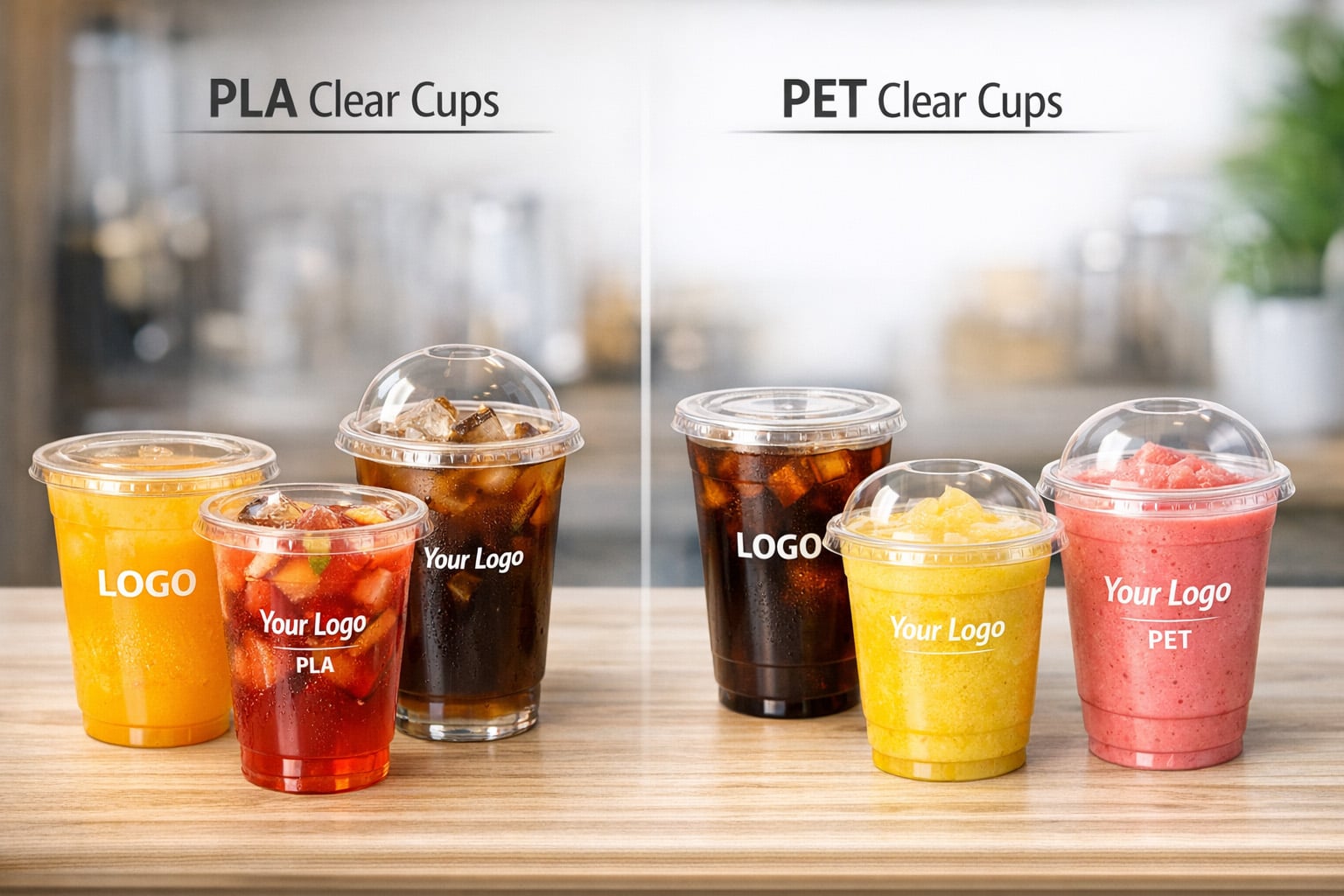
PLA vs PET clear cold cups for juice bars and coffee shops with custom logo printing
PLA and PET clear cold cups are often compared too simply. In many sales conversations, PET is treated as the normal option and PLA as the greener option. For professional buyers, that comparison is too shallow. A cold cup purchase should be judged by the full beverage program: drink type, cup clarity, lid fit, logo printing, compliance file set, destination-market claim risk, MOQ, and repeat-order stability. A juice chain, an iced coffee brand, a smoothie concept, and an importer serving multiple customers do not buy cold cups for the same reason.
That is why this guide focuses on procurement decisions rather than on material theory. Bioleader® approaches PLA and PET cold cups as sourcing programs, not just as resin choices. In our internal cold-cup inquiry summary, about 72% of serious buyers compare at least three decision factors at the same time, most often transparency, price, custom branding, and compliance document support. This is also why the right choice is rarely “PLA or PET” in isolation. The right choice is the cup program that fits the menu, the market, and the supplier workflow.

PET or PLA first? A quick sourcing conclusion for buyers

Choose PET first when clarity, cost control, and mainstream cold-drink practicality matter most
PET is usually the better starting point when the buyer’s priorities are strong drink display, broad cold-drink compatibility, lower cost pressure, and easier replenishment across high-volume beverage operations. This is especially true for juice bars, iced coffee chains, milk tea programs, convenience-oriented takeaway counters, and distributors supplying mainstream beverage outlets. In these projects, the cup needs to look clean, show the beverage clearly, work with common lid families, and stay commercially efficient in repeat orders.
For most buyers, PET is not simply the “cheaper” option. It is often the more predictable option. It supports mainstream cold-service logic well, fits display-driven beverage retail, and is easier to position when clarity and cost discipline matter more than compostable messaging. PET also aligns more naturally with recycling-based sourcing conversations, although recyclability still depends on local collection and processing systems rather than on a material name alone. The Association of Plastic Recyclers notes that PET package design, including labels, inks, and other features, affects recycling performance in practice through APR’s PET design guidance .
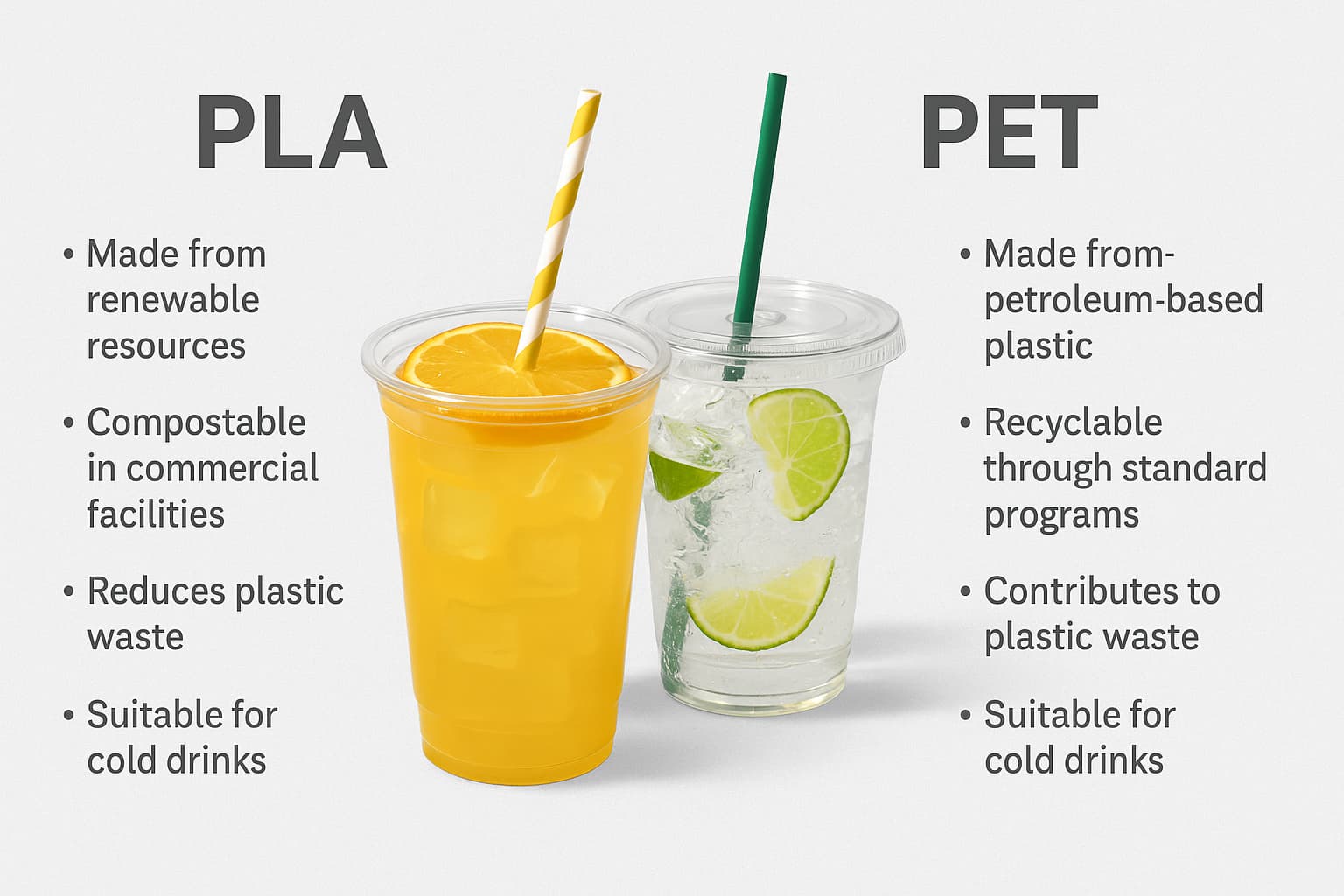
PLA cups vs PET plastic cups comparison infographic
pla vs pet plastic cups difference

Choose PLA first when compostable positioning and import-document review matter more

PLA is more often selected when the buyer is not only purchasing a clear cold cup, but also purchasing a packaging message. This usually happens in premium sustainability-oriented beverage brands, event programs, eco-positioned foodservice concepts, and import projects where compostable or plant-based packaging claims must be supported with documents before the goods can be cleared, approved, or marketed. In these cases, the question is not only how the cup performs visually, but whether the claim language and certification package are strong enough for the destination market.
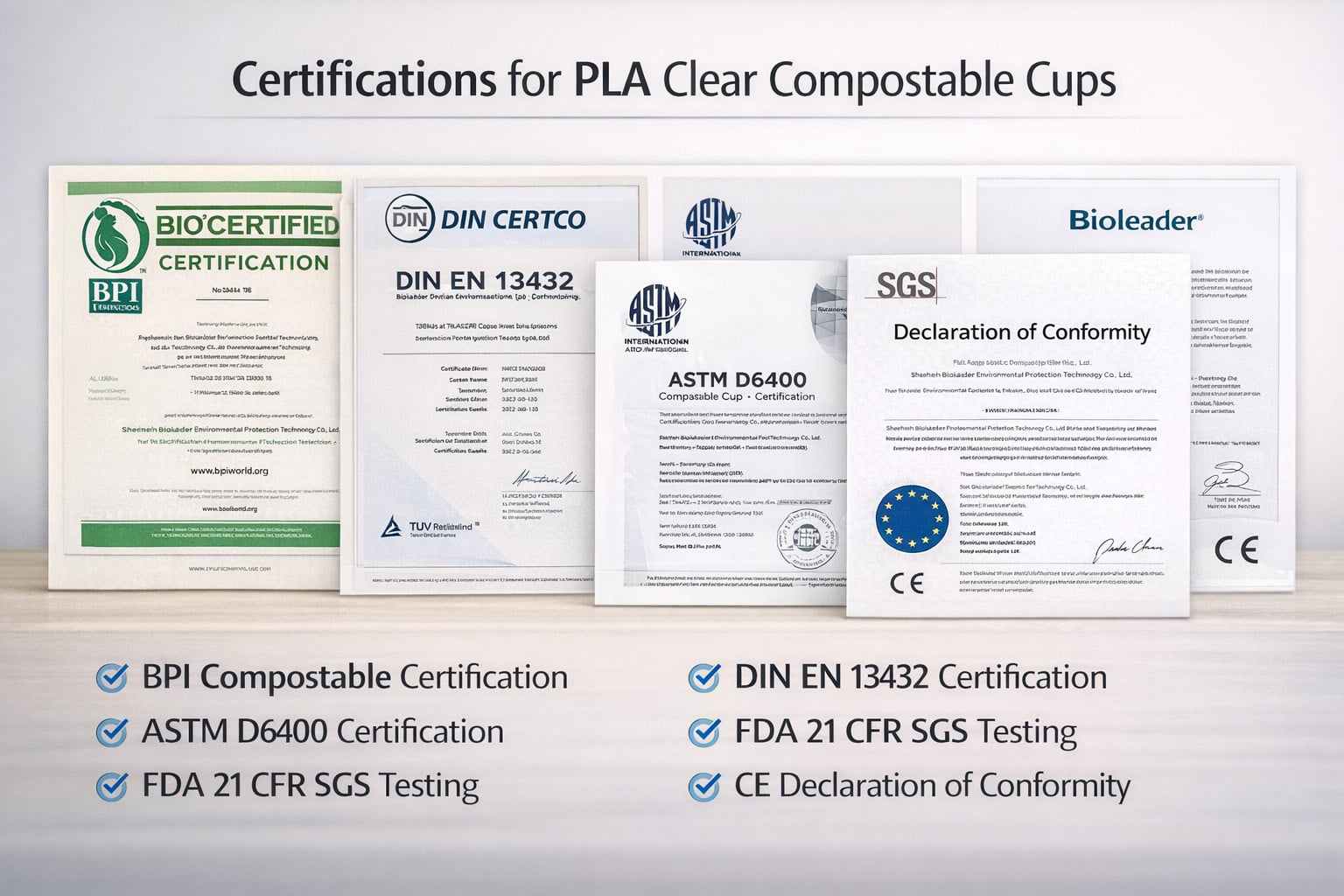
This is where PLA purchasing becomes more document-sensitive than PET purchasing. Importers commonly ask for a file package that may include BPI certification, DIN EN 13432-related compostability evidence, ASTM D6400-related compostability evidence, FDA 21 CFR food-contact test support, and a Declaration of Conformity. Bioleader® can support this kind of document-led review for clear PLA compostable cups, which is often one of the real reasons buyers choose PLA in the first place. In our internal project summary, about 1 in 3 buyers who begin with a firm PLA preference later ask for a side-by-side PET comparison after reviewing claim responsibility, cost, and certificate scope. That is a healthy purchasing step, not a contradiction.

For serious buyers, the better decision is usually made at program level, not resin level

A real cold cup program includes more than the cup body. It includes size range, lid family, logo printing, carton efficiency, food-contact documents, environmental claim support, and repeat-order reliability. A cup that looks attractive in one sample but creates confusion in customs review, marketing language, or replenishment logic is not automatically the better sourcing choice. Bioleader® therefore recommends that buyers compare PLA and PET as complete beverage packaging systems rather than as isolated materials.

What buyers should compare before approving PLA or PET cold cups

PLA vs PET Clear Cold Cups: Key Comparison for Global Buyers

FeaturePLA Cold CupsPET Cold Cups
Raw Material100% Plant-based (Corn starch, Sugarcane)Petroleum-based (Crude oil)
ClarityCrystal Clear (Glass-like aesthetics)Excellent (High gloss and transparency)
Temp ResistanceLow (< 45°C / 113°F); Heat sensitiveModerate (< 60-70°C / 158°F); More stable
SustainabilityCommercially Compostable (EN13432 / ASTM D6400)100% Recyclable (rPET available); Circular economy
DurabilityBrittle; Lighter feelTough; Flexible and crack-resistant
Regulatory ComplianceExempt from most SUP bans (Plastic-free alternative)Restricted in regions with strict single-use plastic bans
Relative CostHigher (Premium eco-option)Lower (Cost-effective for mass market)

Visual clarity and drink presentation

For clear cold cups, visual performance directly affects sales. Beverage retailers are not only buying a cup; they are buying display quality. Fruit color, layered drinks, coffee contrast, ice texture, and whipped topping all influence whether the package helps sell the beverage. That is why buyers should not ask only whether a cup looks “clear.” They should also compare how well the cup presents a real filled drink under actual retail lighting. ASTM D1003 is commonly used for haze and luminous transmittance in transparent plastics, which is why experienced buyers often ask for both samples and clarity-related test information when display performance matters under ASTM D1003 transparency testing practice.

Practical buying tip

Ask suppliers for side-by-side filled-cup samples, not empty cups only. A cup that looks clear by itself may still show different haze, gloss, or drink-display effect once filled with iced coffee, fruit pulp, milk tea, or yogurt beverages.

Size, structure, and lid compatibility

Cold cup sourcing often becomes inefficient when buyers approve the cup first and confirm the lid later. In real beverage programs, cup size, top diameter, and lid family should be confirmed together. Flat lids, dome lids, straw-slot lids, and sip lids all support different drink categories and different brand styles. Small sizes such as 8oz–10oz are often better for tasting, yogurt drinks, and controlled portions. The core working range for many juice bars and coffee shops remains 12oz–16oz. Larger sizes such as 20oz–24oz are better suited to smoothies, shakes, and more visual takeaway drinks.
Bioleader® usually advises buyers to build a working size system instead of approving too many sizes at once. This simplifies inventory, reduces MOQ pressure, and makes lid standardization easier. In our internal cold-cup review summary, about 63% of custom cold-cup inquiries involve lid compatibility or branded print discussion before final cup approval. That is a strong sign that professional buyers already understand the cup should be evaluated as a cup-and-lid system, not as a resin-only choice.

Practical buying tip

For a new beverage program, start with one core size, one upsell size, and one specialty size. This usually creates a cleaner purchasing structure than launching five or six cup sizes on the first order.

Custom logo printing and brand visibility

Clear cold cups create a different branding challenge from paper cups or opaque containers because the beverage itself remains visible. That means logo placement, print density, and cup size all affect how the brand appears in use. Overdesigned graphics can block the drink display and reduce the premium look. In many projects, simple logo printing performs better because it lets the beverage and the branding work together instead of competing for attention.
Bioleader® supports custom branding for both PET and PLA cold cup programs, but the print direction should always be linked to the drink type, cup size, and target market. In our internal branded cold-cup review, about 66% of first-round cup graphics improve after reducing excessive artwork coverage or adjusting logo placement. For buyers, this means logo printing on clear cups should be treated as part of display strategy, not just as a file-submission step.

Practical buying tip

Whenever possible, review the logo on a filled sample cup. A layout that looks balanced on an empty transparent cup can feel too heavy once the beverage, fruit, ice, or foam is added.

Compliance and import document review: what global buyers must verify

PLA cold cups are usually audited through compostability and food-contact files
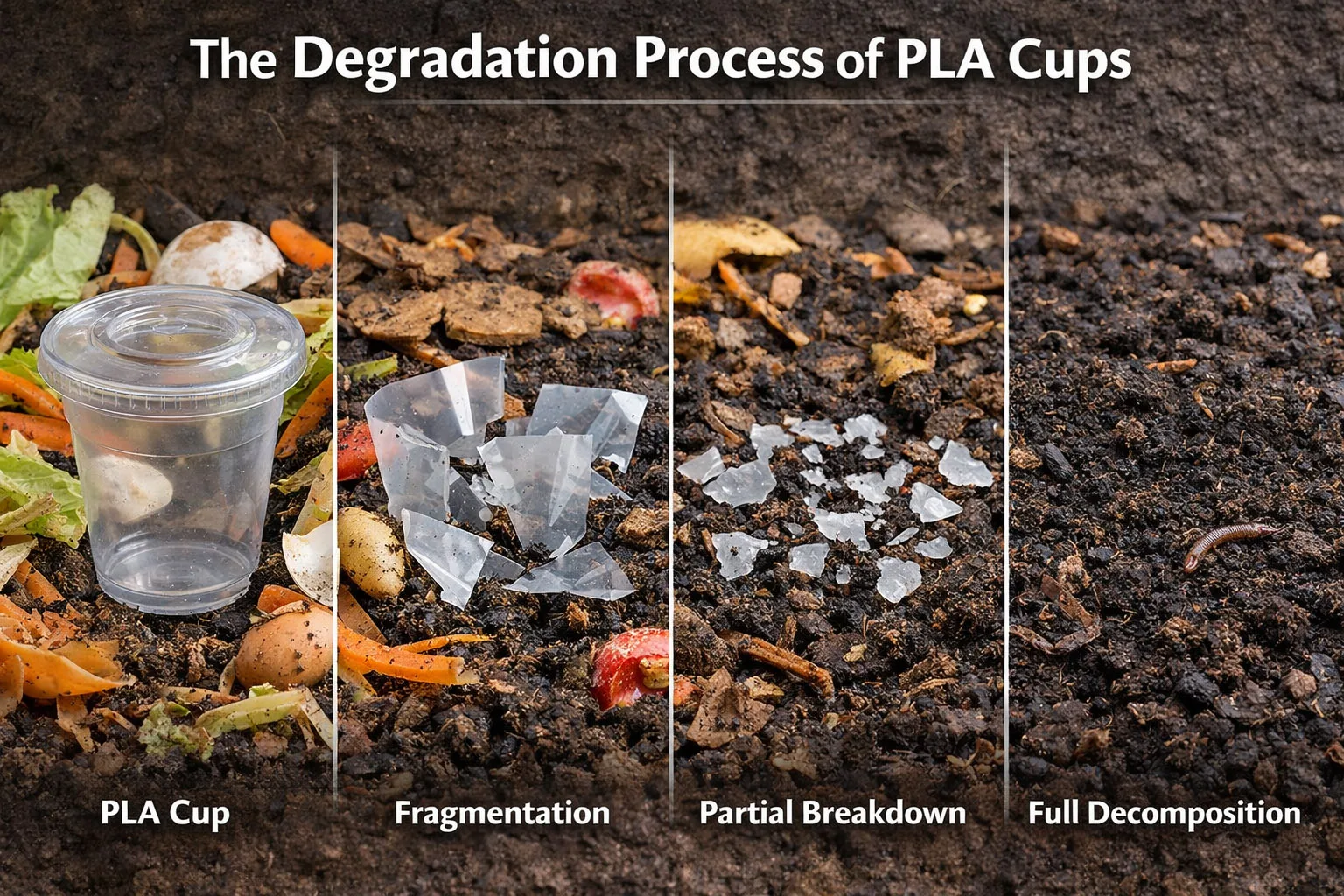
PLA cup degradation process in compost: from intact cup to full decomposition
A visual timeline showing how PLA cups gradually degrade in compost—fragmentation, partial breakdown, and final decomposition under controlled composting conditions.
When importers source PLA clear cold cups, the commercial discussion often turns quickly to documents. In many markets, the cup will not be treated seriously as a compostable or plant-based packaging option unless the supplier can provide a usable file set. For practical procurement, the most common review package includes BPI certification, DIN EN 13432-related compostability support, ASTM D6400-related compostability support, FDA 21 CFR food-contact testing support, and a Declaration of Conformity. These are not decorative files. They are often the exact documents importers need to review internally, present to customs brokers, or submit to local environmental or compliance review bodies before a compostable cup line can be marketed confidently.
Bioleader® can support this kind of PLA document package for clear compostable cold cups, which is why our PLA projects are often reviewed differently from PET projects. BPI states that its certification program is a third-party verification of ASTM compostability standards for products and packaging in North America through the BPI certification program. ASTM D6400, in turn, is the specification used for plastics designed to be composted in municipal or industrial aerobic composting facilities under ASTM D6400. For European compostability conversations, EN 13432 remains the reference framework used to assess packaging recoverable through industrial composting and biodegradation as summarized by European Bioplastics for EN 13432.
PLA clear compostable cup certifications including BPI EN 13432 ASTM D6400 FDA and Declaration of Conformity

Buyers should not confuse biobased content with compostability

This is one of the most common import-review mistakes. A supplier may present biobased testing, compostability testing, and food-contact compliance together in the same sales conversation, but they are not the same thing. ASTM D6866 is commonly used to determine biobased carbon content. It does not by itself prove that a cup is compostable or suitable for a compostability claim in a given market according to ASTM D6866. Buyers should therefore separate three questions clearly: what percentage of the cup is biobased, whether the cup is compostable under the relevant standard, and whether the cup is suitable for food contact under the relevant market rules.
Bioleader® usually recommends that importers review these three issues as separate check points in the supplier audit. This avoids a common problem where “biobased” is interpreted as “compostable,” or where a compostability certificate is assumed to replace food-contact compliance documents.

FDA 21 CFR and Declaration of Conformity remain practical checkpoints for import review

For many importers, especially those shipping into stricter food-contact environments or selling through organized retail channels, food-contact paperwork matters as much as compostability paperwork. FDA explains that food contact substances include food packaging and its components, and that these materials must be properly authorized where required under FDA food-contact regulation guidance. This is why PLA cup audits often include an FDA 21 CFR test report or related SGS testing support as part of the supplier file package. A Declaration of Conformity is also frequently requested because importers want a formal statement linking the product to the relevant compliance framework.
For buyers, the practical lesson is simple: do not approve a PLA cup because it has one compostability certificate alone. Review compostability evidence, food-contact evidence, and product identity together. This is the more defensible approach when goods may be reviewed by customs, retailers, or internal compliance teams.

PET cold cups are usually purchased through a recyclable, mainstream-use logic

PET cold cups are usually not audited through compostability language. They are more often purchased through a mainstream-use logic built around transparency, cost control, food-contact compliance, and recyclable packaging positioning where local systems accept PET. In other words, PET projects are commonly discussed from a recycling and operational angle rather than a compostability angle. This is one reason why PET often remains attractive for high-volume beverage chains and distributors serving broad markets.
That does not mean PET buyers should be casual about documentation. PET projects still need clear product definition, food-contact support, and more careful statements about recyclability. APR’s PET guidance shows that package design details such as labels, inks, and other features affect recyclability performance in practice, so recyclability should be treated as a packaging-system issue, not a material-only claim through APR PET recycling guidance. For importers, the safer position is to present PET as a clear, mainstream cold-drink cup option with recyclable potential where local collection and processing systems support it.

US and EU buyers should also control claim wording

Even when the documents are in place, the wrong wording can still create risk. In the United States, the FTC’s Green Guides caution against broad, unqualified environmental claims such as “eco-friendly” or “green” because they are difficult to substantiate clearly under the FTC Green Guides. In the EU, single-use plastics policy context also means buyers should be careful not to assume that plant-based language automatically changes how a product will be interpreted in the market or by compliance reviewers. For practical sourcing, that means claim language should be checked just as carefully as cup size or lid fit.

How to audit a PLA or PET cold cup supplier properly

Start with product definition and formula transparency

One of the first supplier-audit questions should be very simple: what exactly is the cup made from? Buyers should confirm whether the cup is PET, PLA, or a modified/blended formulation, and whether the lid system follows the same material logic or a different one. This is not a technical side issue. It is the foundation for claim review, food-contact documentation, and supplier comparison.

Then review the documents that really support the import decision

For biodegradable PLA cold cups, buyers should usually review BPI-related support, EN 13432-related support, ASTM D6400-related support, food-contact test support such as FDA 21 CFR/SGS files, and a Declaration of Conformity. For PET cold cups, buyers should usually focus on food-contact compliance, product specification consistency, and realistic recyclable-positioning support. In both cases, the supplier should be able to explain which documents apply to the cup body, which apply to the lid, and how the claims should be described in the destination market.
Bioleader® supports this document-led review because it helps buyers compare suppliers on real operating standards instead of marketing language. In our internal export packaging inquiry summary, about 49% of buyers improve supplier selection outcomes when they compare claim support, food-contact documentation, and product definition together rather than one by one. This is one of the most practical ways to reduce greenwashing risk in cold cup sourcing.

Practical buying tip

Before approving a supplier, ask three direct questions in writing: What is the cup material? What documents support the claim? What wording should not be used without qualification in the destination market? A supplier that can answer these clearly is usually more reliable than one that only offers attractive sales language.

Finally, audit the supplier as a repeat-order partner, not a one-time seller

Cold cup sourcing does not end with one sample approval. Global buyers need to know whether the supplier can support the next order with the same cup clarity, lid fit, print appearance, and commercial logic. That is why supplier review should include MOQ, standardized sizes, sample lead time, replenishment stability, and whether custom logo programs can be repeated without major drift in appearance or fit. This matters for importers, chain stores, and distributors much more than for one-time trial buyers.
Bioleader® positions PET and PLA cold cup projects as repeatable sourcing programs rather than one-off transactions. This is where soft branding support becomes practical value: buyers need a supplier that can help them choose the right clear cold cup, match lids correctly, support logo printing, and keep the next order commercially manageable.

Where Bioleader® can help buyers reduce sourcing risk
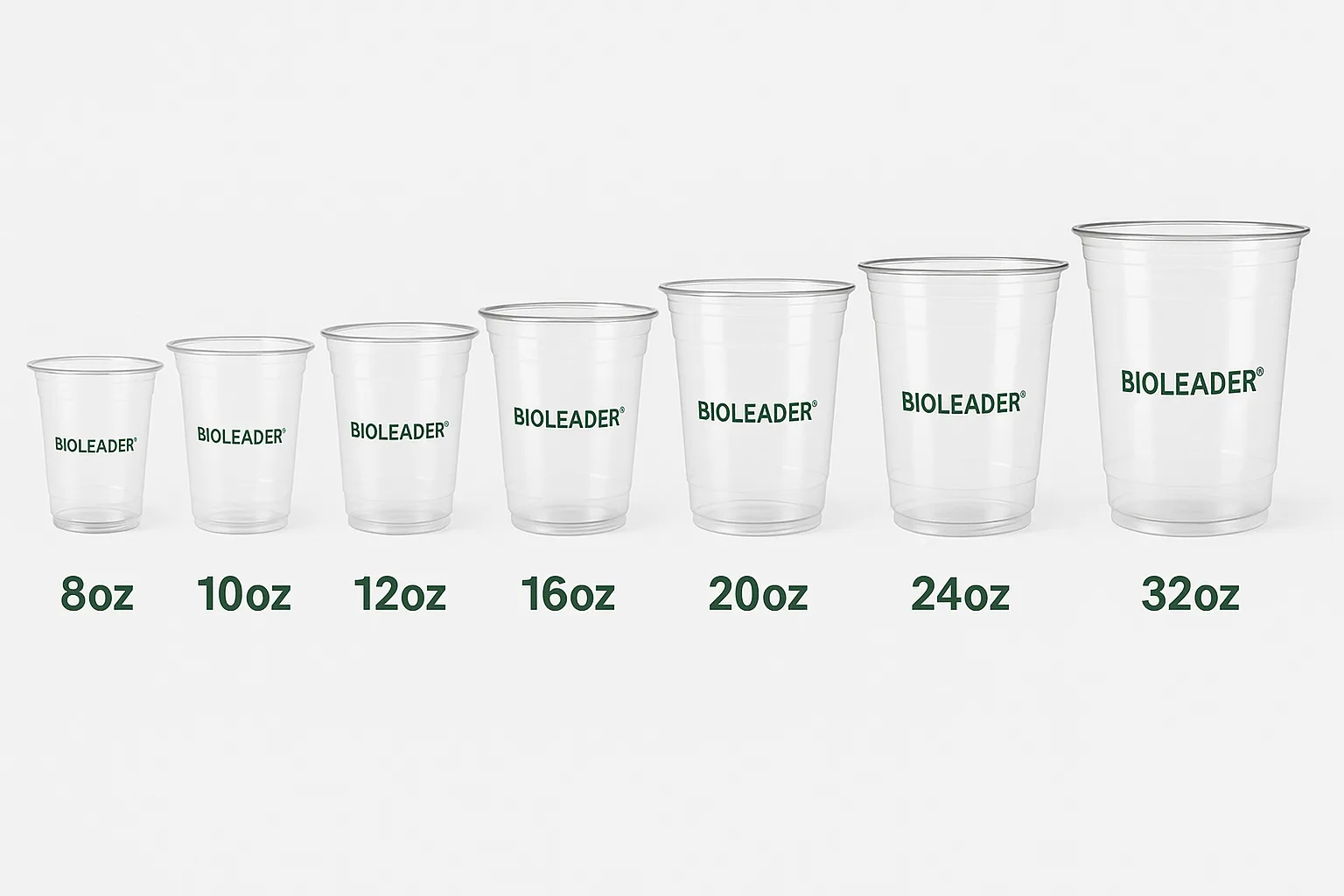
Biodegradable clear PLA cups size guide showing cup capacities from 4oz to 22oz for comparison

Standard cup-and-lid systems

One of the biggest sourcing risks in clear cold cups is system confusion. Buyers approve a cup, then discover later that the lid family is limited, the size range is incomplete, or the branding logic does not scale across multiple drink formats. Bioleader® helps reduce this risk by reviewing PET and PLA cup programs as standardized systems: size, top diameter, lid match, print layout, and order structure are discussed together instead of one by one.

Custom logo support that stays practical

Bioleader® supports custom logo printing for both PET and PLA cold cup programs, but the objective is practical brand visibility rather than decoration alone. The goal is to make sure the logo still looks balanced once the cup is filled, lidded, carried, photographed, and repeated across multiple sizes. For beverage brands, this usually creates a cleaner and more professional result than overdesigned full-surface graphics.

Import-document support for PLA projects
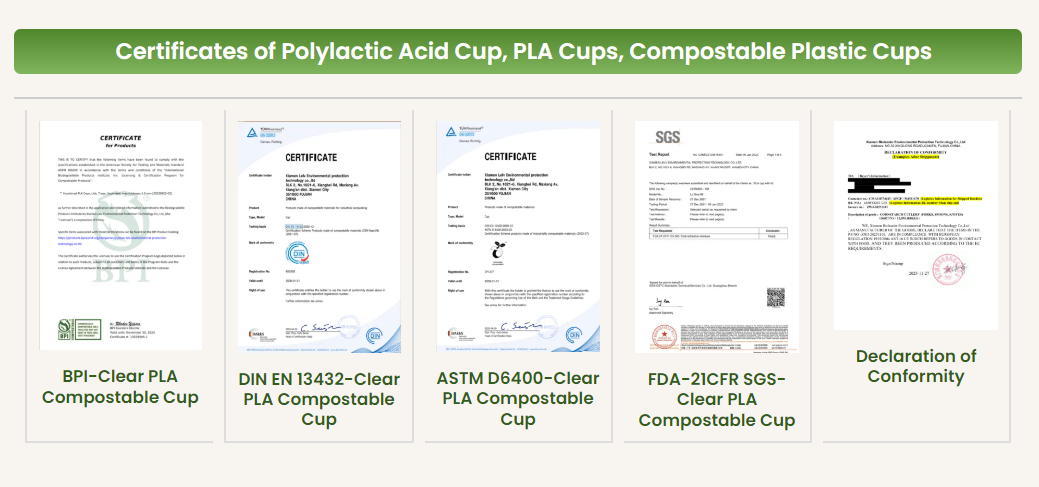
PLA clear compostable cup certifications including BPI EN 13432 ASTM D6400 FDA and Declaration of Conformity

For PLA compostable plastic cups, Bioleader® can support a more complete import-review discussion because the project is often judged on documents as much as on samples. Buyers can review BPI-related evidence, DIN EN 13432-related evidence, ASTM D6400-related evidence, FDA 21 CFR/SGS test support, and Declaration of Conformity files as part of a more structured sourcing process. This is especially valuable for importers who must explain the product internally before they explain it to the market.

More disciplined claim and supplier matching

Many sourcing mistakes in PLA and PET cup projects begin with vague supplier language. Buyers hear broad terms such as eco-friendly, biodegradable, plant-based, or compostable without a clear explanation of what is documented, what is market-dependent, and what should be communicated more carefully. Bioleader® helps buyers separate these issues early by reviewing product definition, intended claim direction, and documentation support together. For global procurement teams, that kind of clarity is often worth more than a small difference in first-order pricing.

Ready to Source High-Quality PLA Cups?

Explore our full range of 100% compostable and crystal-clear PLA cold cups for your business.


View PLA Cups Catalog →

Custom Printing & Bulk Wholesale Available


Final thoughts

PLA and PET clear cold cups are both valid options for juice bars, coffee shops, smoothie brands, distributors, and global beverage packaging buyers. PET is often the stronger fit when the priority is high transparency, mainstream cold-drink practicality, broad lid compatibility, and cost control. PLA is often the better fit when compostable positioning, plant-based packaging messaging, and import-document support are part of the project. Neither choice is automatically superior. The better material is the one that fits the beverage program, the destination market, and the supplier’s ability to support the order properly.
The most important point is that buyers should not approve PLA or PET based on label language alone. They should compare the full cup program: drink application, cup clarity, size and lid system, logo printing, food-contact documentation, claim wording, and repeat-order reliability. Bioleader® helps buyers make that comparison in a more practical way so the final decision is based on real sourcing priorities rather than vague material assumptions.

FAQ

Which is more transparent, PLA or PET cold cups?

In practical beverage packaging, PET is often preferred when maximum visual clarity is the top priority, especially for juice, iced coffee, fruit tea, and display-driven cold drinks. PLA can also provide a clear appearance, but buyers should compare filled samples instead of relying only on generic “crystal clear” wording.

Are PLA cold cups always better for import projects?

No. PLA is often chosen when compostable positioning and certificate review matter more, but it also creates a heavier document and claim-management burden. PET may still be the better choice when the buyer’s priorities are clarity, cost, speed, and mainstream cold-drink practicality.

What import documents are commonly checked for PLA clear compostable cups?

Importers commonly review BPI-related compostability support, DIN EN 13432-related compostability support, ASTM D6400-related compostability support, FDA 21 CFR/SGS food-contact support, and a Declaration of Conformity. The exact file set still depends on the destination market and the importer’s internal review process.

Does ASTM D6866 prove that a PLA cup is compostable?

No. ASTM D6866 is commonly used to determine biobased carbon content. It does not by itself prove that a cup is compostable or suitable for a compostability claim in every market. Buyers should review biobased content, compostability, and food-contact compliance separately.

How should PET cold cups usually be positioned in procurement?

PET is usually positioned through a clarity, cost, mainstream-use, and recyclable-packaging logic where local systems support PET recycling. Buyers should still review food-contact compliance and should avoid presenting recyclability as a universal claim without reference to local collection and processing realities.

What sizes are usually best for juice bars and coffee shops?

For many beverage brands, 12oz–16oz is the core working range because it fits common iced coffee, fruit tea, juice, and takeaway drink formats well. Smaller 8oz–10oz cups are useful for tasting and smaller drinks, while 20oz–24oz cups are often better for smoothies, shakes, and larger specialty beverages.

Can PET and PLA cold cups both be custom printed?

Yes. Both PET and PLA cold cups can be used in custom logo programs, but buyers should evaluate logo coverage, cup size, and filled-cup visibility carefully. On transparent cups, simple and disciplined branding often performs better than heavy graphics because the beverage itself remains part of the visual presentation.

How do I avoid greenwashing when buying clear cold cups?

The safest approach is to separate three questions clearly: what the cup is made from, what claim the supplier is making, and what documents support that claim. Buyers should also check whether the wording is appropriate for the destination market instead of repeating broad terms such as eco-friendly or biodegradable without qualification.

What should I confirm before approving a custom printed cold cup order?

At minimum, confirm the cup size, lid fit, material type, print coverage, logo position, food-contact documentation, intended market claim language, and repeat-order expectations. A custom cold cup should be approved as a full beverage packaging program, not just as an empty cup sample.
Junso Zhang Founder of Bioleader® & Sustainable Packaging Expert
Junso Zhang

Founder of Bioleader® | Sustainable Packaging Expert

15+ years of expertise in advancing sustainable food packaging. I provide one-stop, high-performance solutions—from Sugarcane Bagasse & Cornstarch to PLA & Paper—ensuring your brand stays green, compliant, and cost-efficient.

Table of Contents

Contact Us Here
The more details you share, the faster and more accurate our quotation will be.