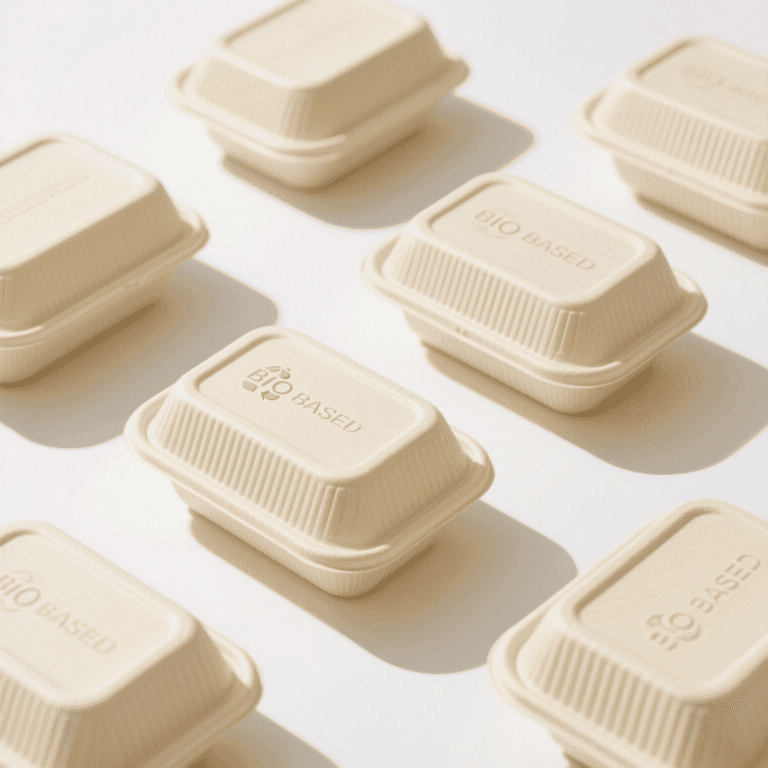
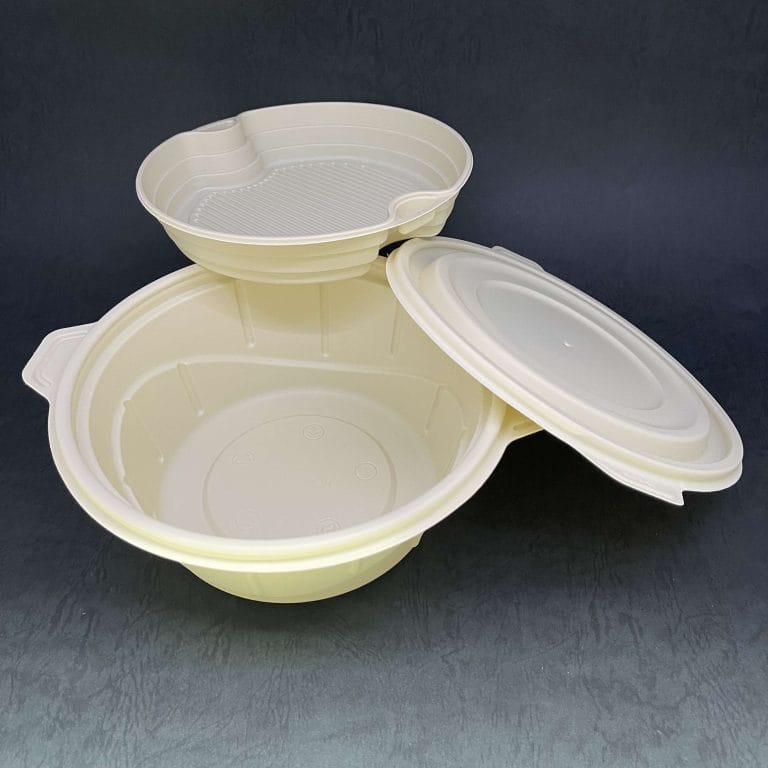
Key Takeaway: Delivery convenience has scaled faster than end-of-life systems. To make convenience sustainable, leaders should move from single-material bets to a portfolio strategy that blends bagasse, coated/uncoated paper, PLA/cornstarch, and molded fiber—engineered for local waste-paths, verified by test curves, and governed by evidence-based claims.
Why It Matters: Packaging is the largest single source of plastic waste globally—around 40%—and reaches 45% in China; rising food-delivery volume multiplies containers, lids and liners, stressing recycling and composting systems. :contentReference[oaicite:0]{index=0}
Executive Actions: (1) Map city-level waste-paths; (2) Standardize heat/leak/odor curves; (3) Lock PFAS-free barriers; (4) Use dual-stream kits (fiber base + mono-material lid/film); (5) Pilot organics capture where industrial composting exists; (6) Publish a quarterly Packaging Fact Sheet.
Where Materials Fit: Bagasse for hot & oily mains; paper for dry goods with minimal coating; PLA/cornstarch only where industrial composting runs reliably; molded/recycled fiber for low-oil; seaweed/mycelium as R&D pilots.
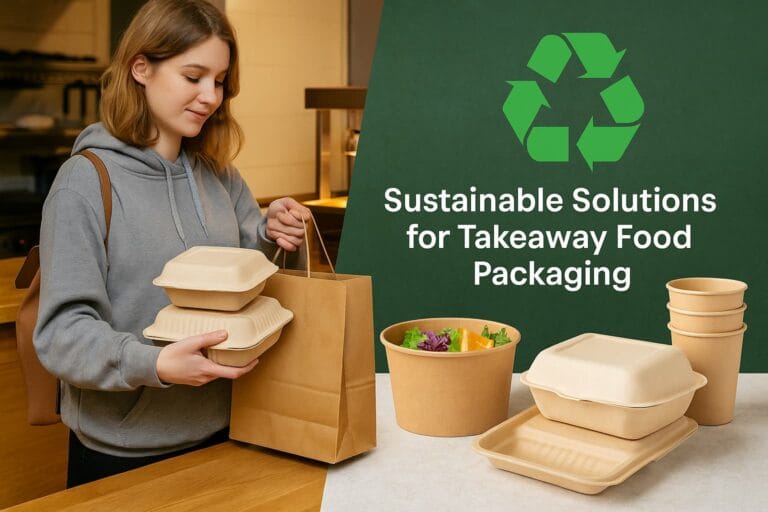


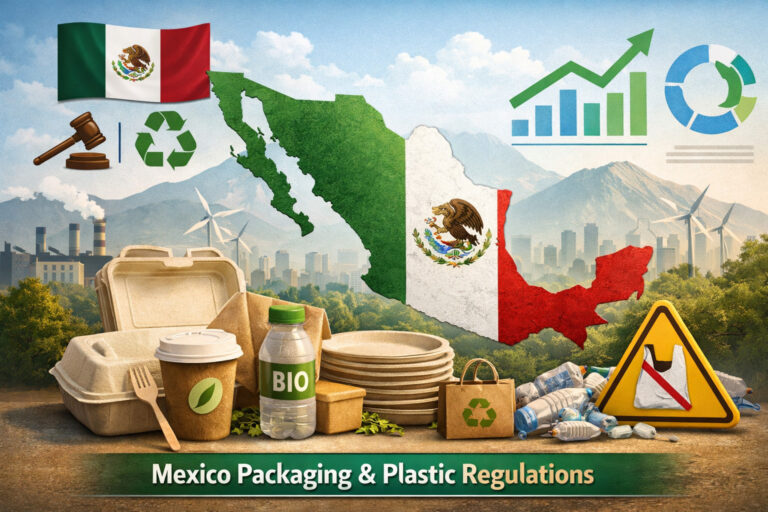
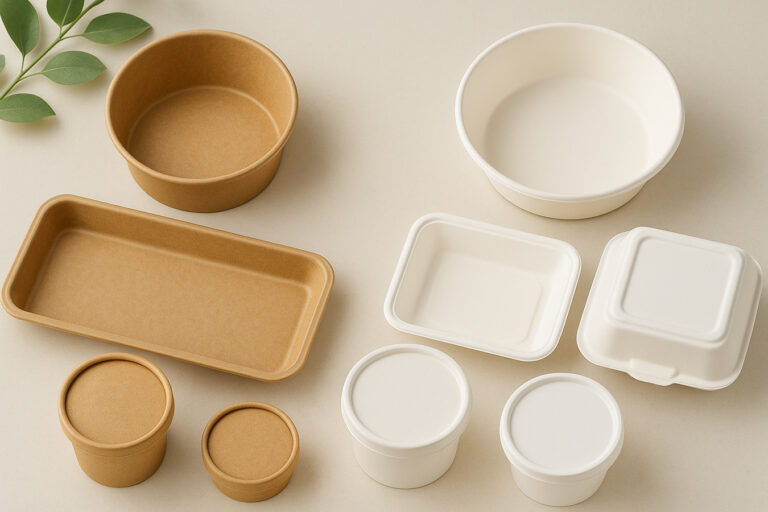
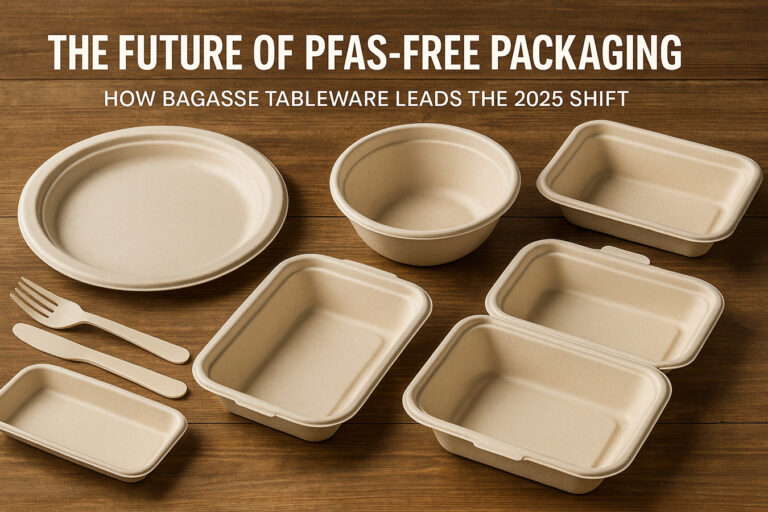


Yes, compostable trays made from plant-based materials like bagasse are considered safe for the environment — food delivery packaging. They break down naturally into organic matter, help reduce landfill waste, and do not produce microplastics or toxic residues.
Yes, they are 100% compostable and decompose within 90–120 days under industrial composting.
Yes , food delivery packaging. Most manufacturers offer bulk wholesale with custom branding options, including embossing, logo printing, and private label packaging—ideal for restaurants, food manufacturers, and eco-conscious distributors.
Bin overflows: peak hours correlate with street-level waste surges; festival periods magnify the problem. Facility chokepoints: MRFs reject contaminated paper/fiber; organics sites decline non-conforming compostables; incinerators raise fees. Policy shifts: EPR fees, labeling rules, and PFAS restrictions convert externalities into line items. Dimension Latest Signal Why It Matters Global online food delivery value ≈ US$316.3B (2025) → US$715.9B (2034) (≈10–11% CAGR) Order growth multiplies container/lid/liner kits per meal.
Distributed disposal: Packaging is dispersed across thousands of households, not concentrated in a back-of-house bin , food delivery packaging. Aesthetic camouflage: Clean, premium-looking fiberware suggests recyclability or compostability even when coatings negate both. Label ambiguity: “Biodegradable,” “eco,” and leaf icons often imply outcomes that local infrastructure cannot deliver.
Join the global movement toward zero-waste packaging.
Bioleader® offers:
📦 Bulk order support & fast delivery
✍️ Custom branding and OEM solutions
🌍 Worldwide eco-packaging compliance
Get the Catalogue Products List & Contact Us Now! 👉
📧 Email : [email protected]
📲 WhatsApp : +86-15980856610
🟢 Wechat : bioleader
📍 Add : No.39 Xinglong Road, Xiamen, China
Copyright © 2015–2025 Xiamen Bioleader Environmental Protection Co., Ltd | All Rights Reserved. Privacy Policy | AI Policy | Sitemap
WhatsApp us