English:
What is Bagasse?
Bagasse is the fibrous residue left after extracting juice from sugarcane or similar plants. It is a byproduct of the sugar industry and is widely recognized as an eco-friendly and biodegradable material.
Uses and Features:
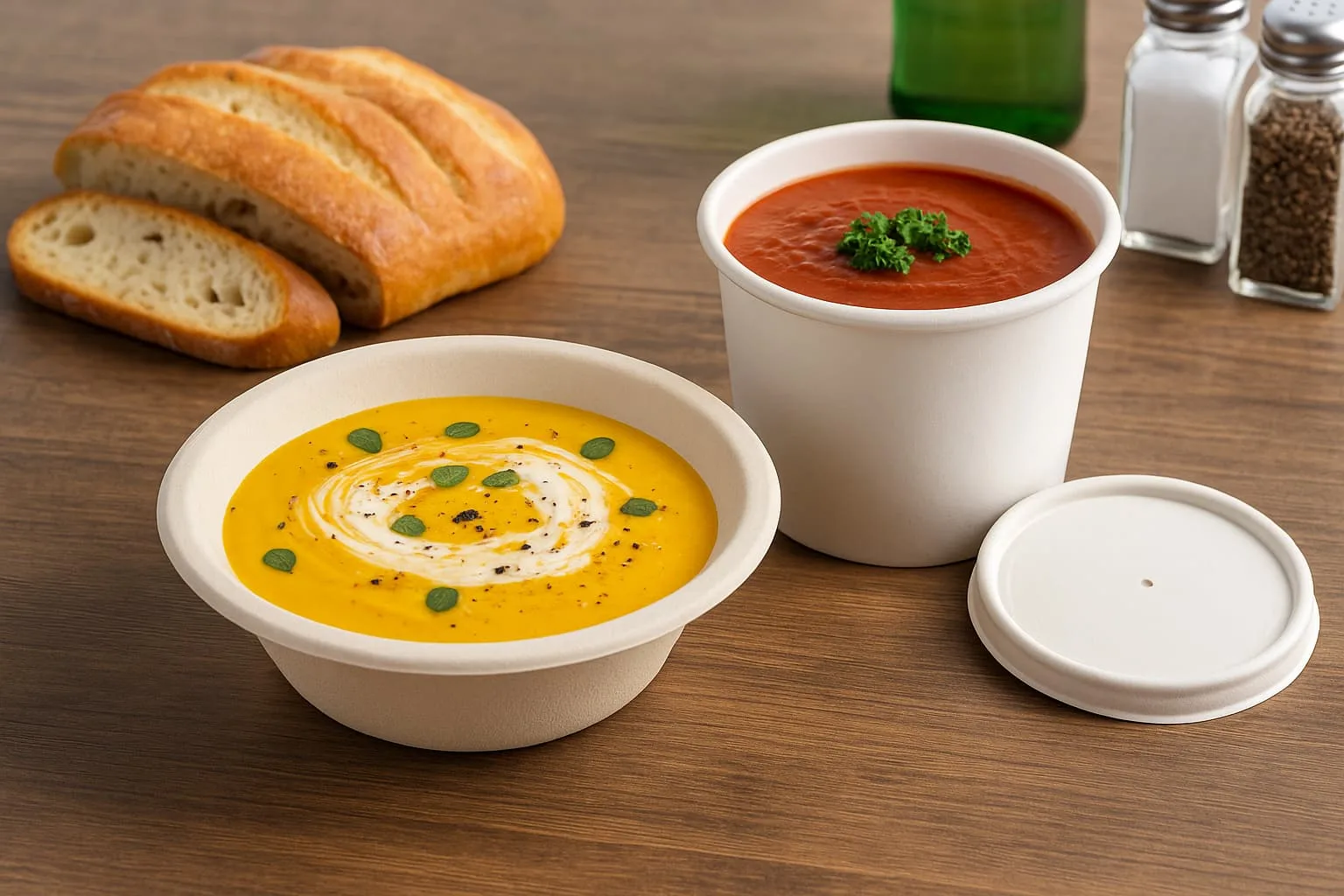
Bagasse is primarily used for making biodegradable food packaging, compostable tableware, paper products, and biofuels. It is lightweight, heat-resistant, and decomposes naturally, making it an excellent alternative to plastic and Styrofoam. Its sustainability and recyclability contribute to reducing environmental pollution.
Hindi (हिंदी):
बगास क्या है?
बगास गन्ने या अन्य पौधों से रस निकालने के बाद बचा हुआ रेशेदार अवशेष है। यह चीनी उद्योग का एक उप-उत्पाद है और पर्यावरण के अनुकूल सामग्री के रूप में जाना जाता है।
उपयोग और विशेषताएँ:
बगास का उपयोग मुख्य रूप से जैविक खाद, पर्यावरण-अनुकूल खाद्य पैकेजिंग, कागज निर्माण और जैव ईंधन में किया जाता है। यह हल्का, बायोडिग्रेडेबल (जैविक रूप से विघटित होने योग्य) और उच्च तापमान सहनशील होता है, जिससे यह प्लास्टिक और थर्माकोल का एक उत्तम विकल्प बन जाता है।
Tamil (தமிழ்):
பாகஸ் என்றால் என்ன?
பாகஸ் என்பது கரும்பு அல்லது பிற செடிகளில் இருந்து சாறு எடுக்கப்பட்ட பிறகு மீதமாக இருக்கும் நார் பகுதியை குறிப்பிடுகிறது. இது சர்க்கரை தொழில் மூலம் உருவாகும் மறுசுழற்சி செய்யக்கூடிய பக்க விளைபொருள் ஆகும்.
பயன்பாடு மற்றும் சிறப்பம்சங்கள்:
பாகஸ் முக்கியமாக பசுமை உணவுப்பொதி பொருட்கள், உயிர்பண்புடனான கரண்டி-சட்டிகள், காகித தயாரிப்பு மற்றும் உயிர் எரிபொருள் உற்பத்திக்குப் பயன்படுத்தப்படுகிறது. இது எடை குறைவானது, இயற்கையாக அழியக்கூடியது மற்றும் வெப்பத்தை எதிர்க்கும் தன்மை கொண்டது, எனவே இது பிளாஸ்டிக் மற்றும் பாலித்தீன் பொருட்களுக்கு சிறந்த மாற்றாக இருக்கிறது.
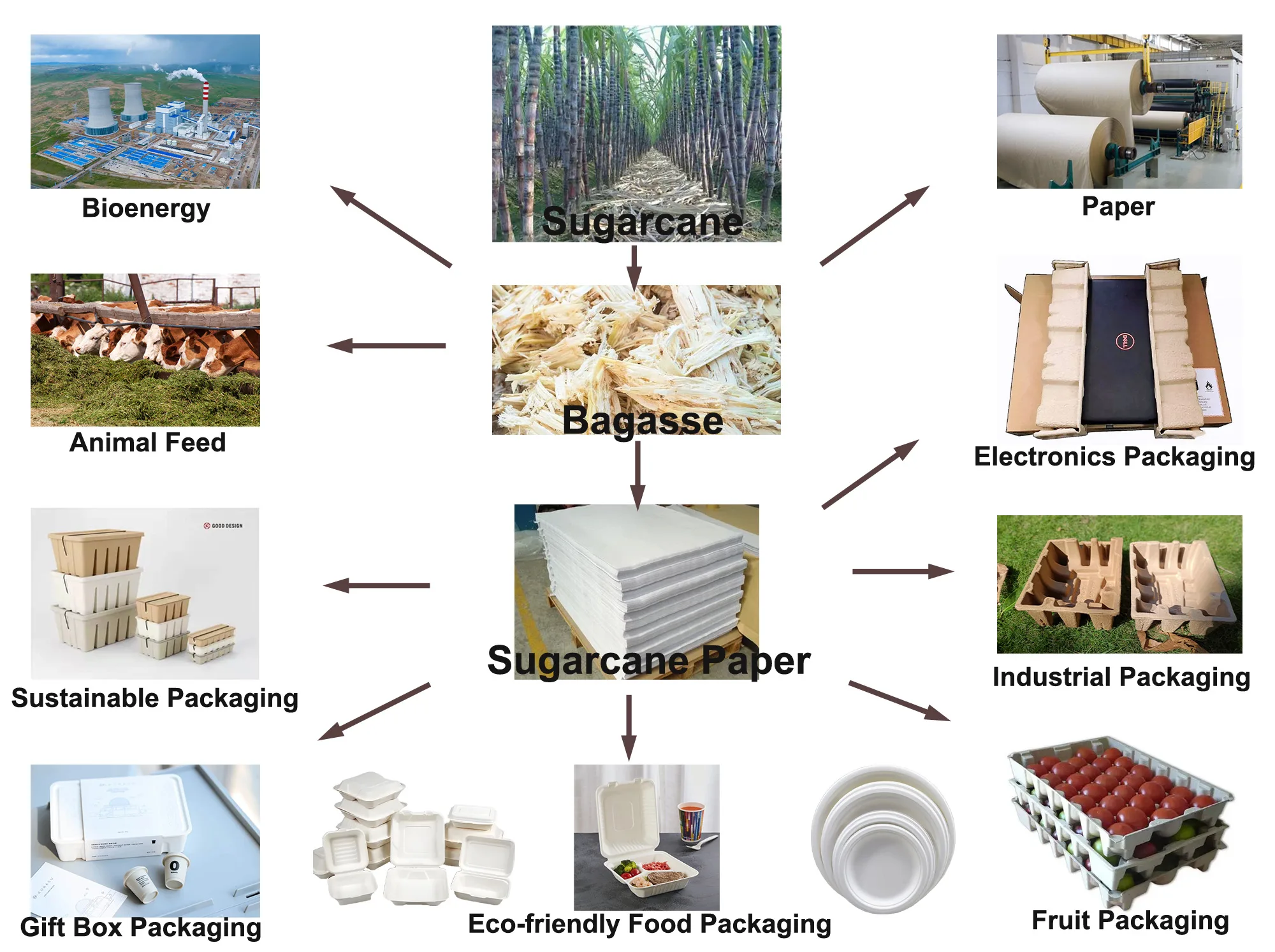
What is Sugarcane Bagasse Used For
FAQ
1. What is bagasse used for?
Bagasse is widely used to make eco-friendly food containers, plates, bowls, trays, and biodegradable packaging as a sustainable alternative to plastic and Styrofoam.
2. Is bagasse better than plastic?
Yes, bagasse is more sustainable than plastic. It decomposes naturally, reduces pollution, and does not release harmful toxins during breakdown, unlike petroleum-based plastics.
3. How is bagasse different from paper?
Bagasse comes from sugarcane fiber, while traditional paper is made from wood pulp. Bagasse products are generally stronger, water-resistant, and more sustainable than regular paper items.
4. Can bagasse products be reused or recycled?
Bagasse items are designed for single-use but can be composted after use. They are not suitable for traditional recycling but decompose quickly in composting environments.
5. Is bagasse safe for hot foods and liquids?
Yes, bagasse is heat-resistant and safe for serving hot meals, soups, and beverages. It can withstand temperatures up to 120°C without losing shape or releasing harmful chemicals.