









Quick Summary: Sugarcane Bagasse Containers
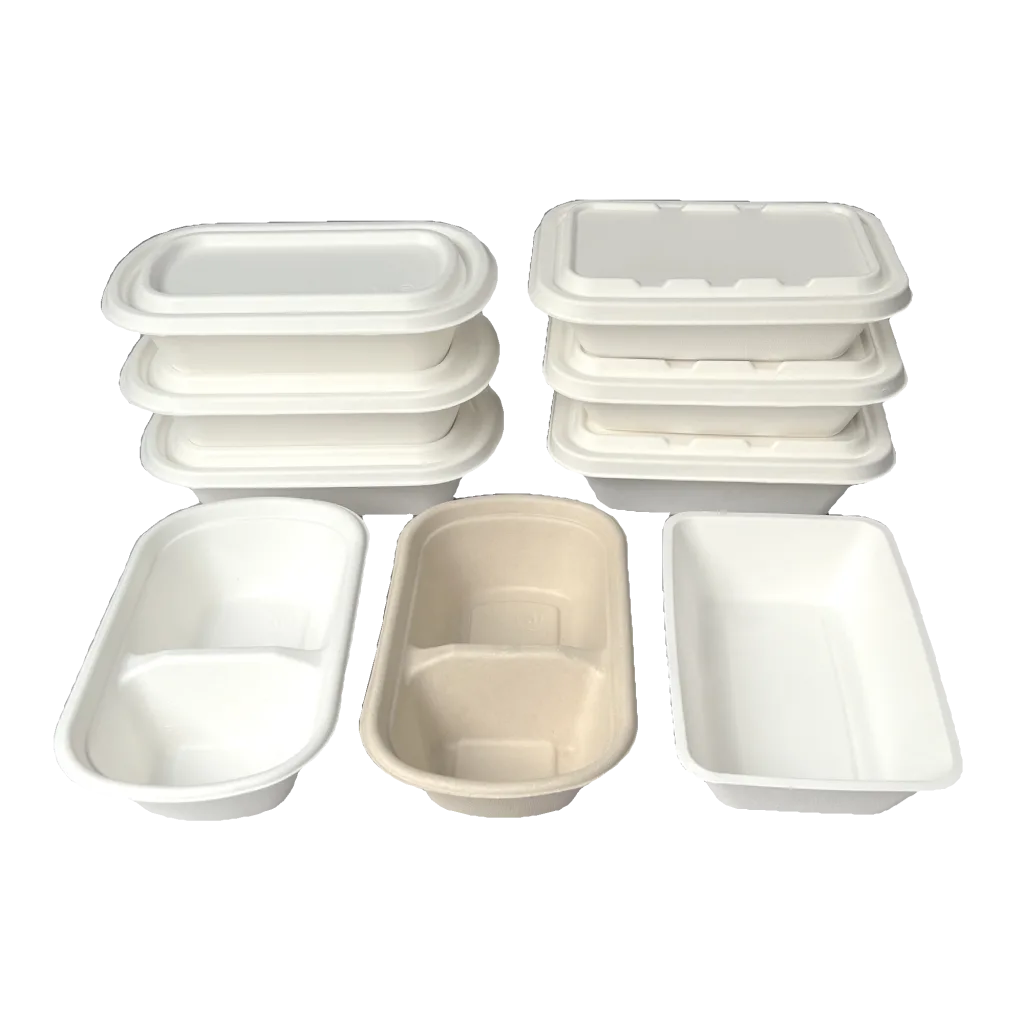
Sugarcane bagasse containers are molded fiber food containers made from sugarcane residue. They are widely used for takeaway meals, hot foods, salads, rice bowls, soups, supermarket trays, catering, and delivery packaging.
Key advantages: renewable raw material, natural fiber appearance, strong molded structure, microwave suitability for many applications, and compostability potential when the product is properly certified and collected.
Buyer note: Not all bagasse containers perform the same. Buyers should check PFAS status, food-contact reports, oil and water resistance, lid fit, microwave guidance, compostability certification, MOQ, and export packaging details before bulk ordering.
This guide explains what sugarcane bagasse is, how bagasse containers are made, what benefits they offer, where they can be used, what limitations buyers should understand, and how to choose the right sugarcane bagasse food packaging supplier.
1. What Is Sugarcane Bagasse?
1.1 Sugarcane Bagasse as an Agricultural Byproduct
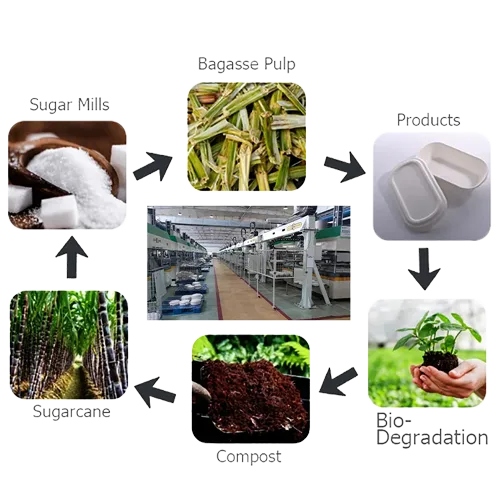
Sugarcane bagasse is the fibrous material left after sugarcane stalks are crushed to extract juice. In traditional sugar production, bagasse may be burned as fuel, used for paper production, or treated as agricultural residue. In sustainable packaging, it is cleaned, pulped, molded, and dried into functional food containers.
This makes bagasse valuable because it gives a second life to a non-edible agricultural byproduct. Instead of relying only on virgin plastic or foam, food packaging manufacturers can use plant fiber that already exists in the sugarcane supply chain.
1.2 Bagasse in the Sugarcane Production Chain
After sugarcane is harvested and crushed, the juice is separated for sugar or ethanol production. The remaining fiber is bagasse. Because it is rich in cellulose and other plant fibers, it can be converted into molded pulp products such as trays, bowls, plates, and clamshell containers.
1.3 What Can Be Made From Sugarcane Bagasse?
Sugarcane bagasse can be used in several industries, including paper, pulp, bioenergy, and molded fiber packaging. In foodservice packaging, the most common bagasse products include:
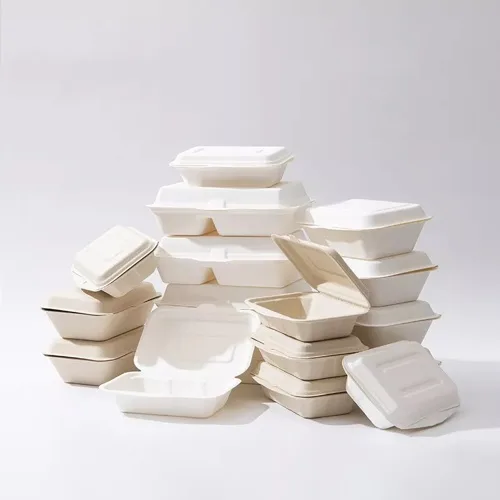
- Bagasse food containers and clamshell boxes
- Bagasse bowls for salads, rice bowls, soups, and hot meals
- Bagasse plates for catering, restaurants, and events
- Bagasse trays for supermarkets, produce, bakery, and ready meals
- Bagasse cups, sauce cups, and portion containers
- Bagasse lids and molded fiber accessories for food packaging systems
1.4 How Is Sugarcane Bagasse Used in Food Packaging?
In food packaging, bagasse is pulped and molded into shape using heat, pressure, and precision tooling. The finished container can be designed for different food applications, including hot meals, oily foods, dry foods, chilled foods, frozen foods, and takeaway delivery.
For export buyers, the key issue is not only the raw material. The real performance depends on fiber quality, product thickness, molding design, oil and water resistance, PFAS status, lid matching, and test documentation.
2. What Are the Benefits of Using Sugarcane Bagasse Containers?
2.1 Sugarcane Bagasse Is a Renewable Fiber Material
Sugarcane bagasse is made from the fibrous material that remains after sugar is extracted from sugarcane. This material is then processed into pulp and used to make a variety of molded packaging products, including containers, plates, bowls, and trays. Sugarcane bagasse containers are attractive to foodservice buyers because they use a renewable plant-based residue instead of relying only on fossil-based plastic.
2.2 Sugarcane Bagasse Can Be Compostable When Properly Certified
Sugarcane bagasse is plant fiber, and many bagasse containers are designed to be compostable under suitable conditions. However, professional buyers should avoid overgeneralized claims. Whether a finished container is compostable depends on additives, coatings, barrier treatment, inks, and certification status.
For regulated markets, buyers should request relevant documentation such as EN13432, ASTM D6400, BPI, TÜV, OK Compost, or local compostability testing where applicable. Compostability should be verified at the product level, not assumed from the material name alone.
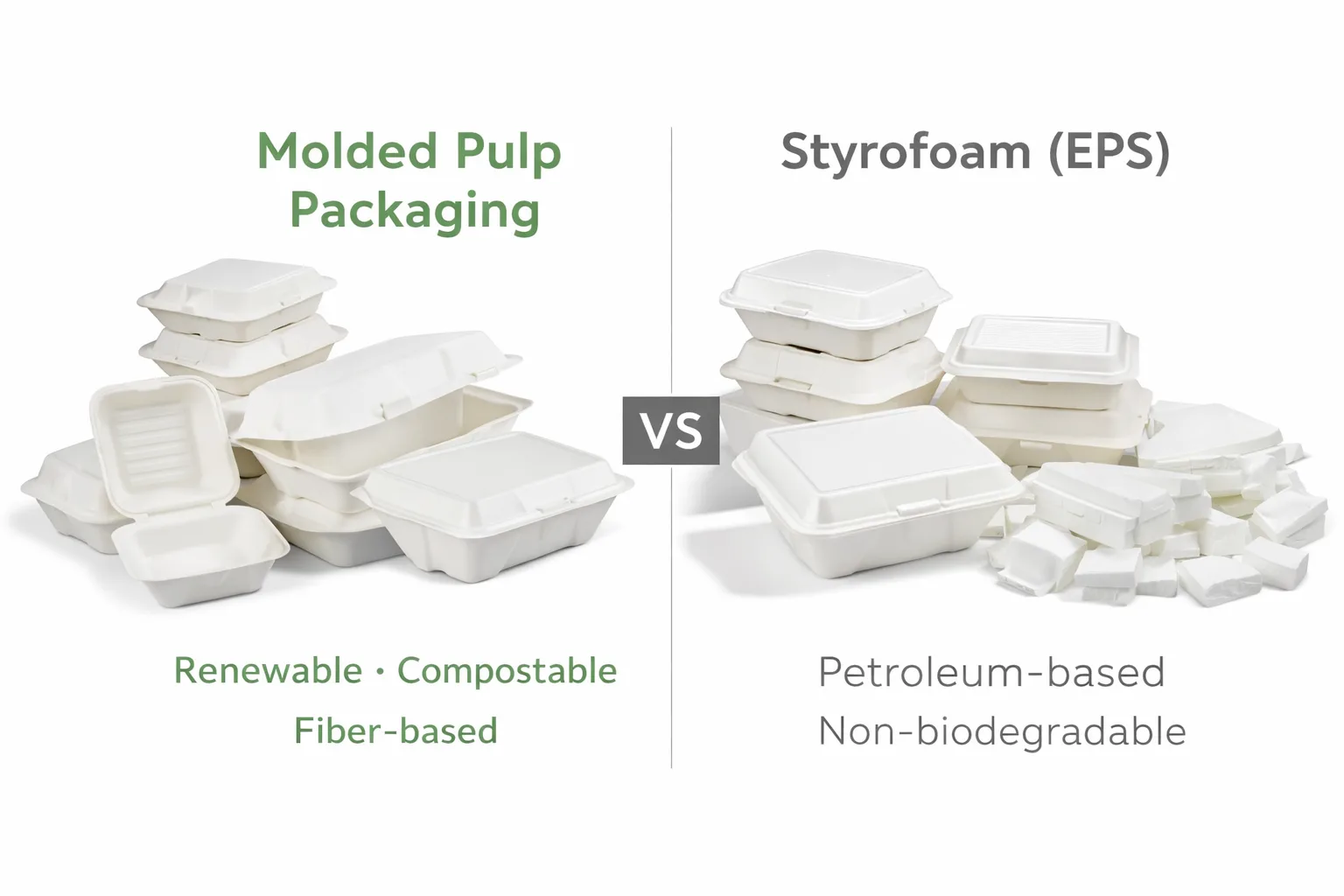
2.3 Sugarcane Bagasse Containers Reduce Dependence on Foam and Plastic
Bagasse containers are often used as alternatives to polystyrene foam boxes, rigid plastic trays, and some laminated paper containers. They provide a natural molded-fiber appearance and can support brands that want to reduce conventional single-use plastic in takeaway, catering, and retail food packaging.
2.4 Strong Structure for Foodservice Use
Compared with thin paper or foam, molded bagasse containers can offer good rigidity and stackability. This makes them useful for meals that need stronger support, such as rice dishes, noodles, burgers, salads, snacks, prepared meals, and hot takeaway foods.
2.5 Suitable for Many Hot and Cold Food Applications
Many sugarcane fiber vessels are suitable for microwave reheating and freezer storage, but buyers should always confirm item-specific instructions. Performance can vary depending on thickness, formulation, food type, and heating time.
3. How Can Sugarcane Bagasse Containers Be Used?
3.1 What Are Sugarcane Bagasse Containers?
Sugarcane pulp holders are made from the fibrous material left over after sugarcane is juiced. This sturdy, biodegradable material can be used to make a variety of food containers, from takeout boxes to bowls, trays, and food storage containers. Sugarcane bagasse is a strong alternative to plastic and Styrofoam containers, which can create long-term environmental pressure when poorly managed.
3.2 What Are Some Benefits of Sugarcane Bagasse Containers?
There are many benefits of using sugarcane bagasse containers. They can be biodegradable, compostable, and environmentally preferable when designed and certified correctly. In addition, sugarcane bagasse containers are sturdy, stackable, and suitable for many foodservice applications.
3.3 Foodservice Applications
Sugarcane bagasse containers can be used for food storage, takeout, delivery, catering, and supermarket packaging. Common applications include:
- Takeaway meals: rice dishes, pasta, noodles, curry, fried foods, burgers, and combo meals.
- Hot food packaging: soup-style meals, stews, warm salads, hot snacks, and reheatable meals.
- Cold food packaging: salads, fruit, desserts, deli meals, and prepared foods.
- Supermarket trays: produce, bakery, vegetables, meat alternatives, and ready-to-cook foods.
- Catering and events: disposable plates, bowls, trays, and compartment containers.
- Food delivery: clamshell boxes and bowls with matching lids for better transport protection.
4. Performance: What Buyers Should Check Before Ordering
Bagasse containers can be highly practical, but buyers should evaluate them as food packaging products, not only as eco-friendly materials. The following performance points matter in real foodservice use.
| Performance Factor | Why It Matters | Buyer Action |
|---|---|---|
| Oil resistance | Oily meals, fried foods, curry, and sauces can weaken poor-quality containers. | Test with real food and request oil-resistance data. |
| Water resistance | Soups, wet salads, and saucy meals require stable structure. | Confirm liquid holding time and intended use. |
| Heat resistance | Hot food and microwave reheating require safe temperature performance. | Request microwave guidance and heat-use instructions. |
| PFAS status | Many buyers now require PFAS-free molded fiber packaging. | Ask for PFAS, PFOA, PFOS, or total fluorine test reports where required. |
| Lid compatibility | Delivery performance often depends on lid fit, not only the bowl or box. | Request container and lid samples together. |
| Food contact safety | Importers and food brands need safe, compliant packaging. | Request FDA, EU food contact, LFGB, SGS, TÜV, or relevant reports. |
5. Are Sugarcane Bagasse Containers Environmentally Friendly?
5.1 Bagasse Containers: Environmentally Friendly or Not?
Many people ask whether sugarcane bagasse containers are truly environmentally friendly. The answer is: they can be, but the final impact depends on sourcing, manufacturing, chemical treatment, transport, use, and disposal.
Compared with foam and some conventional plastic containers, bagasse containers offer a stronger renewable-material story and can support compostable packaging programs. However, buyers should still verify product claims instead of relying on appearance or broad “green” language.
5.2 The Benefits of Using Bagasse Containers
There are many benefits to using sugarcane bagasse containers. They are made from a renewable agricultural byproduct, can reduce dependence on foam and plastic, and may be compostable when certified and collected through the right waste-management pathway.
5.3 The Drawbacks of Using Bagasse Containers
Although sugarcane bagasse containers have many advantages, they also have limitations. Some low-grade products may soften with very wet or oily foods. Some containers may need barrier treatment to improve oil and water resistance. Some markets may not have composting facilities that accept food-contaminated molded fiber packaging.
Bagasse containers are not always the best choice for products requiring full transparency, extremely long liquid holding time, or airtight sealing similar to plastic deli containers. This is why product matching is important.
5.4 How Environmentally Friendly Are Sugarcane Bagasse Containers?
Sugarcane bagasse containers are generally considered more environmentally responsible than many fossil-based disposable packaging options because they use plant fiber, can be molded without relying on foam plastic, and may support composting where facilities exist. Their environmental benefit is strongest when they are certified, properly collected, and used for food applications where recycling is difficult.
The most accurate conclusion is this: sugarcane bagasse containers are environmentally friendly when they are responsibly manufactured, food-safe, fit for purpose, supported by credible documentation, and matched with a realistic end-of-life system.
6. Sugarcane Bagasse Containers vs Plastic, Foam, and Paper Containers
Foodservice buyers often compare bagasse containers with plastic, foam, and paper containers. Each material has strengths and weaknesses.
| Material | Main Advantages | Limitations | Best Use Cases |
|---|---|---|---|
| Sugarcane bagasse | Renewable fiber, rigid structure, natural appearance, compostability potential | Performance depends on formula, coating, PFAS status, and product thickness | Takeaway meals, bowls, clamshells, plates, trays, catering |
| Plastic containers | Clear display, tight sealing, strong moisture barrier | Plastic-reduction pressure and weaker sustainability image | Cold display foods, deli containers, transparent retail packaging |
| Foam containers | Low cost, insulation, lightweight | Poor environmental perception and increasing regulatory restrictions | Legacy takeaway packaging where still allowed |
| Paper containers | Printable, lightweight, strong branding surface | Usually needs PE, PLA, or water-based coating for wet and oily foods | Soup cups, salad bowls, paper food boxes, branded takeaway packaging |
7. Bioleader® Buyer Note: How to Source Sugarcane Bagasse Containers
For B2B buyers, sourcing sugarcane bagasse containers should not be based only on product photos or low unit prices. A professional supplier should help match the container to the food type, temperature, sauce level, lid requirement, certification target, shipping plan, and market regulations.
What Buyers Should Ask Before Ordering
- What food type will the container hold: dry food, oily food, soup, salad, rice bowl, or hot meal?
- Is the product PFAS-free, and can the supplier provide test reports?
- What is the tested oil and water resistance level?
- Is the product microwave-safe, freezer-safe, or suitable for hot food delivery?
- Does the container have a matching lid, and is the lid suitable for delivery?
- What food-contact and compostability documentation can be provided?
- What are the MOQ, carton size, loading plan, and export lead time?
Bioleader® supplies sugarcane bagasse food packaging such as bowls, plates, trays, clamshell containers, cups, sauce cups, and related molded fiber packaging for global foodservice and distributor buyers. The right solution should be selected based on real food testing, target market compliance, and commercial order requirements.
FAQ: Sugarcane Bagasse Containers
1. What is a sugarcane bagasse container?
A sugarcane bagasse container is a molded fiber food container made from the fibrous residue left after sugarcane juice extraction. It is commonly used for takeaway meals, bowls, trays, plates, and clamshell boxes.
2. Are sugarcane bagasse containers biodegradable?
Sugarcane bagasse is plant fiber and can biodegrade under suitable conditions. However, finished containers should be evaluated based on coating, additives, certification, and disposal environment.
3. Are sugarcane bagasse containers compostable?
Many bagasse containers are designed to be compostable, but buyers should request certification such as EN13432, ASTM D6400, BPI, TÜV, OK Compost, or relevant local testing where required.
4. Can sugarcane bagasse containers hold hot food?
Yes, many bagasse containers are suitable for hot foods. Buyers should confirm heat resistance, microwave guidance, and oil or water resistance for the specific item.
5. Are bagasse containers microwave-safe?
Many bagasse containers can be microwave-suitable for normal food reheating, but this should be confirmed by supplier instructions and product-specific test reports.
6. Are sugarcane bagasse containers PFAS-free?
Some bagasse containers are PFAS-free, while others may use oil-resistant treatments. Buyers should request PFAS, PFOA, PFOS, or total fluorine test reports when required by the target market.
7. What are sugarcane bagasse containers best used for?
They are best used for takeaway meals, hot food, salads, rice bowls, noodles, burgers, catering, supermarket trays, and compostable foodservice packaging programs.
Conclusion: Sugarcane Bagasse Containers Are Practical, Versatile, and Environmentally Responsible
Sugarcane bagasse containers are a versatile and environmentally friendly food packaging solution when they are properly designed, tested, certified, and matched with the right food application. They use an agricultural byproduct, reduce dependence on foam and conventional plastic, and provide a natural molded-fiber appearance that fits modern sustainable foodservice trends.
At the same time, professional buyers should make decisions based on performance and documentation, not only on green claims. The most important checks include food contact safety, PFAS status, oil and water resistance, heat tolerance, lid compatibility, compostability certification, and real food testing.
For restaurants, distributors, supermarkets, catering companies, and takeaway brands, sugarcane bagasse containers can offer a strong balance between environmental value and commercial usability. With the right supplier and product selection, they can become a reliable part of a modern plastic-reduction packaging strategy.
References
- Bioleader®. Sugarcane bagasse compostable fiber bowls and molded fiber packaging product documentation.
- Bioleader®. Bagasse food containers whitepaper and sustainable food packaging guidance.
- Bioleader®. Sugarcane bagasse food container showroom and application information.
- Bioleader®. Characteristics, advantages, disadvantages, and application scope of sugarcane bagasse tableware.
- ASTM International. Compostability testing standards for packaging materials.
- European Bioplastics and EN13432-related compostability guidance for packaging.
- Bioleader®. Food-contact testing, PFAS-related documentation, and export packaging support for bagasse tableware.