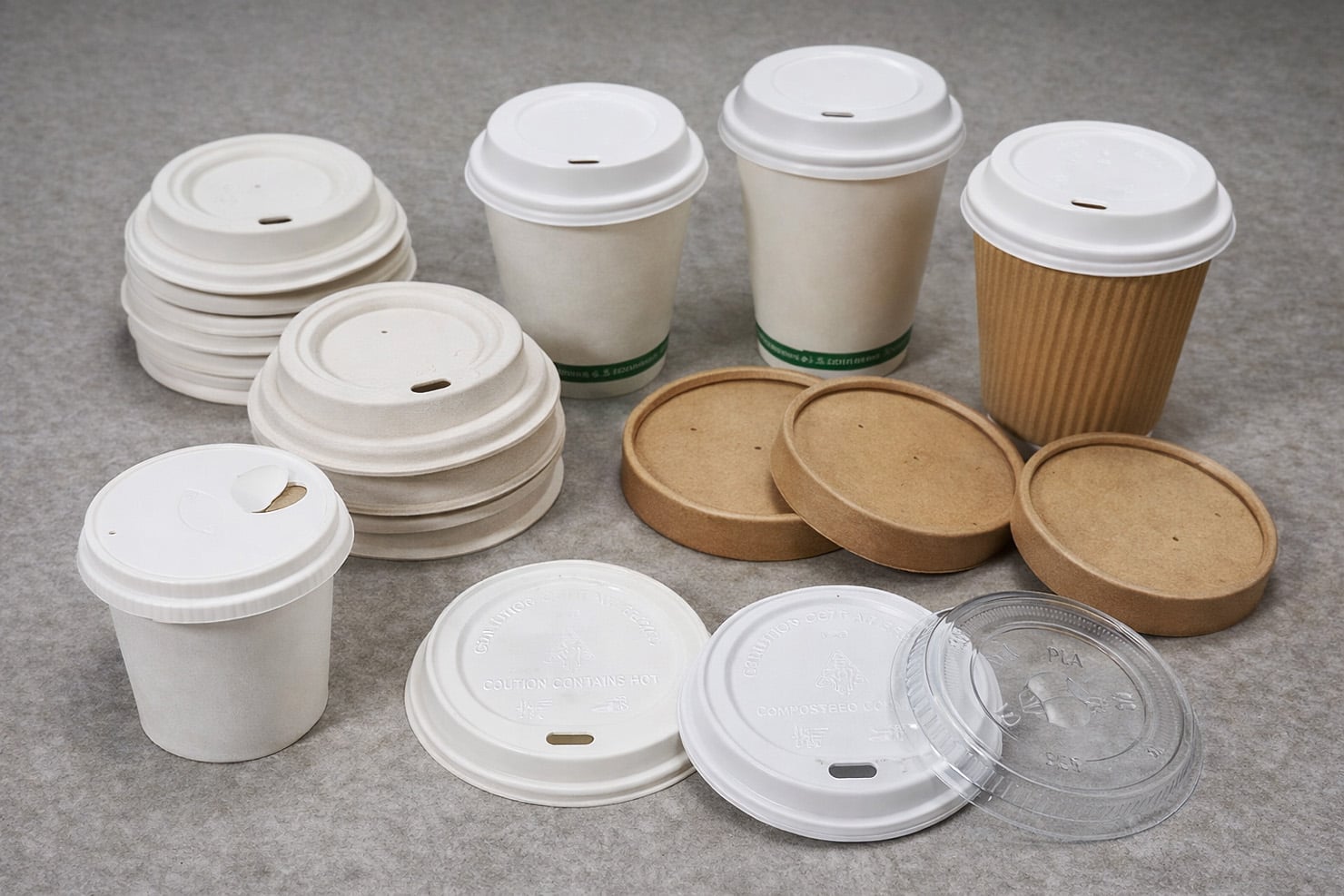
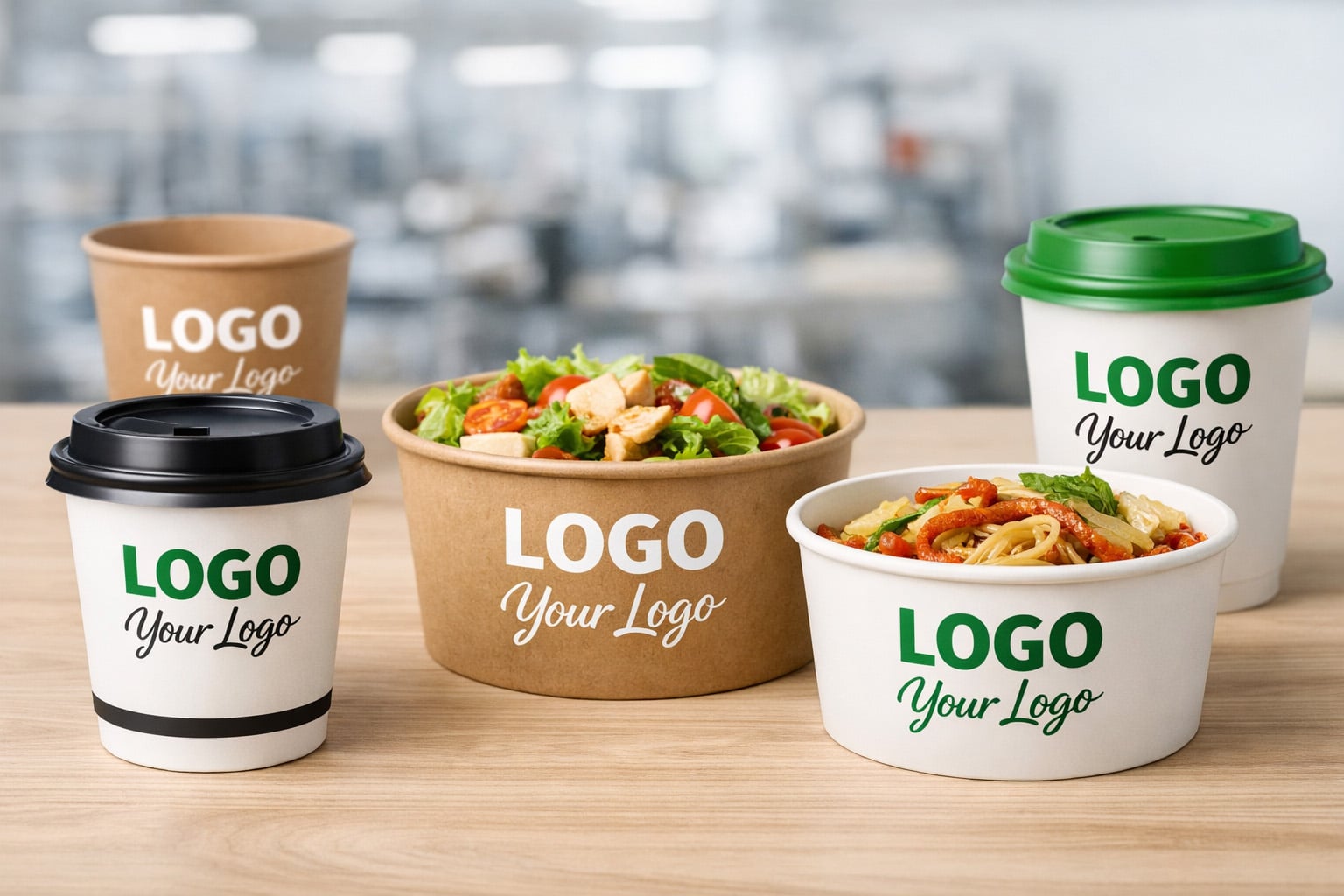
In recent years, the coffee industry has seen a clear shift toward greener, more responsible packaging. With increasing awareness around plastic pollution and stronger buyer demand for environmentally friendly coffee cups, cafés, coffee chains, foodservice distributors, roasters, hotels, offices, and event operators are rethinking how they choose disposable cups for hot drinks.
Choosing the right coffee cup in 2026 is no longer just about finding a “green” label. Buyers need to understand the difference between PE-lined paper cups, PLA-coated paper cups, water-based coated paper cups, foam cups, bioplastic cups, and fiber-based cups. Each material has a different cost, performance level, compliance profile, and end-of-life route.
This guide keeps the focus practical: how to select coffee cups that are suitable for hot drinks, custom branding, takeaway service, wholesale purchasing, and real-world disposal systems. For buyers planning branded takeaway packaging, Bioleader® can support custom compostable coffee cups wholesale across common sizes such as 8oz, 12oz, 16oz, and 20oz.
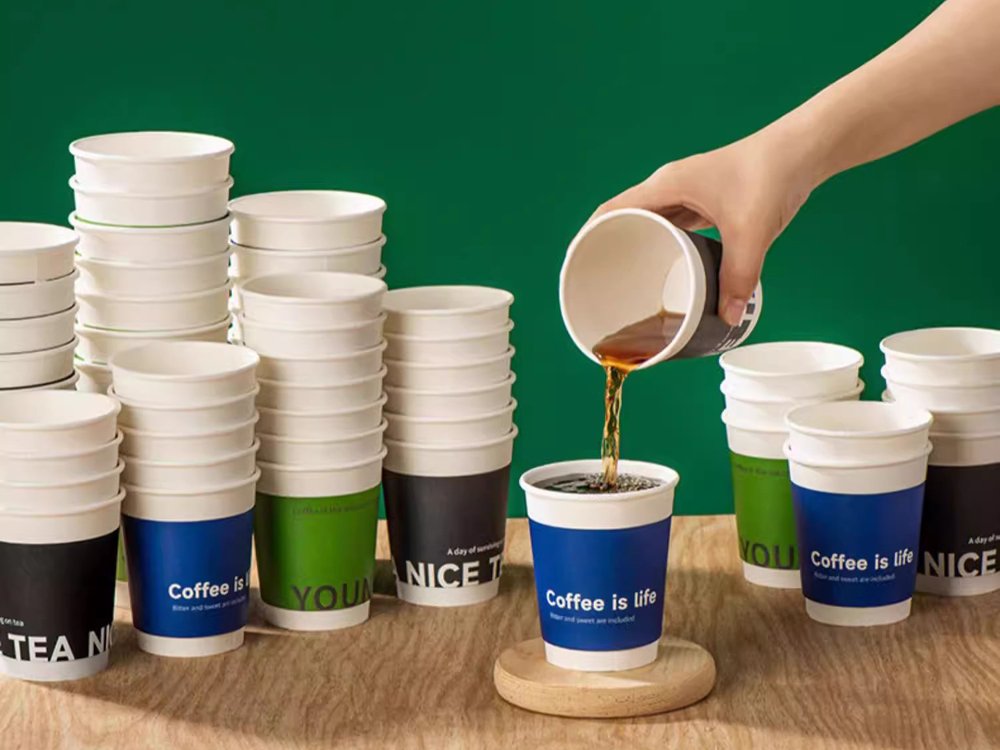
Environmentally Friendly Coffee Cups: Quick Buyer Summary
This guide helps cafés, foodservice distributors, coffee brands, and packaging buyers compare the main disposable coffee cup options in 2026. It focuses on hot drink performance, coating choice, disposal conditions, custom printing, and B2B sourcing decisions.
- Best overall hot drink format: paper cups with a suitable barrier coating, matched with the right wall structure and lid.
- Best compostable positioning: PLA-coated paper cups, usually under industrial composting conditions.
- Best reduced-plastic direction: water-based aqueous coated paper cups, especially for buyers concerned about plastic-film reduction and repulpability.
- Best premium takeaway experience: double wall or ripple wall coffee cups with stable insulation and lid fit.
- Most important buying rule: test the exact cup, coating, lid, printing, and beverage temperature before confirming bulk orders.
Why an “Environmentally Friendly Coffee Cups” Guide Matters in 2026
Growing Global Awareness
Disposable coffee cups are used in very large volumes every day. Although many cups look like simple paper products, most hot drink cups need an internal barrier coating to prevent leakage and protect the paperboard from liquid absorption. This barrier may be PE, PLA, water-based coating, or another functional material.
Because of this structure, buyers should avoid judging a cup only by appearance. A brown kraft cup is not automatically compostable. A white paper cup is not automatically recyclable. A PLA-coated cup is not automatically home compostable. A water-based coated cup is not automatically accepted by every recycling system. The real environmental value depends on material structure, local disposal infrastructure, and verified supplier documentation.
Buyer Note: “Eco-Friendly” Must Be Verified
The most responsible coffee cup choice is not always the newest material. It is the cup that performs safely, matches the buyer’s waste-management route, and can be supported with accurate claims and documentation.
Consumer Demand and Legislative Action
Consumers increasingly expect coffee brands to reduce plastic waste and improve packaging transparency. At the same time, many governments and cities are restricting expanded polystyrene foam, unnecessary single-use plastics, or hard-to-recycle packaging. This creates pressure on foodservice companies to review their cup materials and avoid vague environmental claims.
For importers and distributors, the safest approach is to compare the cup’s full structure: paperboard source, coating type, lid material, compostability or recyclability conditions, food-contact compliance, and actual performance with hot beverages.
Corporate Responsibility
For coffee shops, restaurant groups, and packaging distributors, switching to compostable paper cups for hot drinks can support a stronger sustainability message. However, responsible purchasing also means explaining correct disposal, checking local infrastructure, and avoiding unsupported “plastic-free,” “biodegradable,” or “home compostable” claims.
A good coffee cup program should answer four practical questions: Will the cup hold hot coffee safely? Can the lid fit securely? Does the cup match the local disposal system? Can the supplier provide reliable documents and consistent production quality?
A Comprehensive Look at Disposable Coffee Cups
Before choosing the best environmentally friendly coffee cups, it is important to understand the main disposable cup types available in the market. Each cup material has its own strengths, limitations, and most suitable applications.
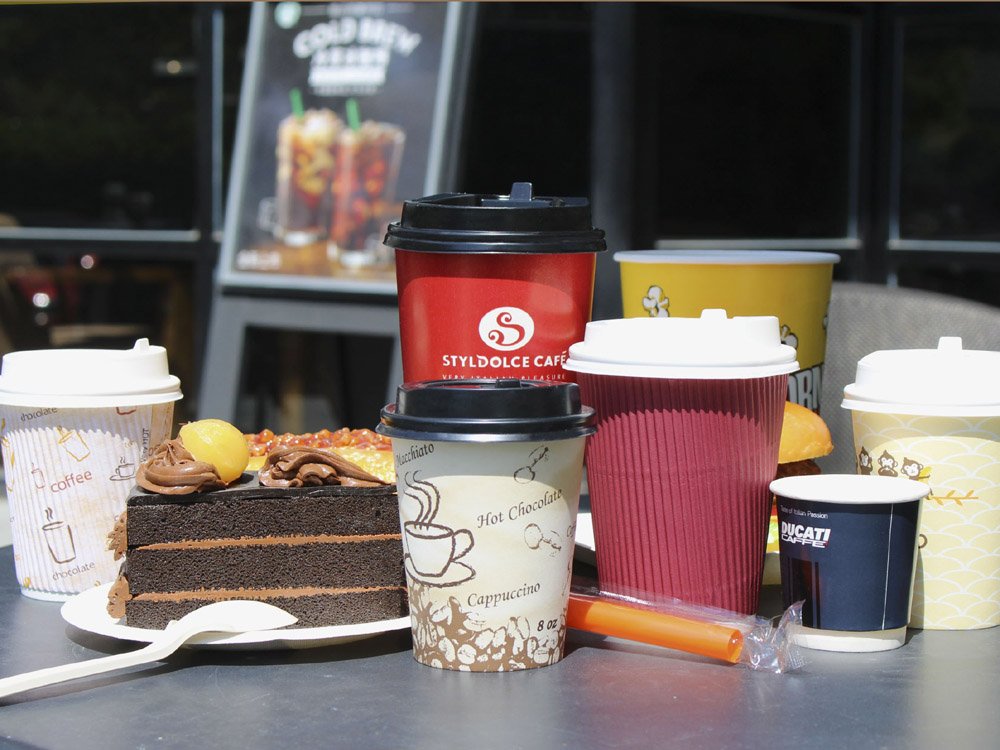
Paper Cups with PE (Polyethylene) Lining
Material & Features
- Made from paperboard with an inner polyethylene coating.
- PE lining provides strong liquid resistance and helps prevent leakage.
- Widely used for hot coffee, tea, cocoa, vending machines, takeaway drinks, and events.
Pros
- Stable and cost-effective for mass production.
- Good performance for hot and cold beverages.
- Available in many sizes, wall structures, and custom printing formats.
Cons
- Not easily recyclable through many standard municipal recycling systems.
- Not compostable in most commercial composting programs because of the plastic lining.
- May not fit plastic-reduction goals in markets where plastic-lined packaging is restricted or taxed.
Application Scenarios
- High-volume coffee shops, quick-service restaurants, convenience stores, vending programs, and foodservice distributors.
- Best for buyers prioritizing cost stability, mature supply chains, and predictable hot drink performance.
 | |
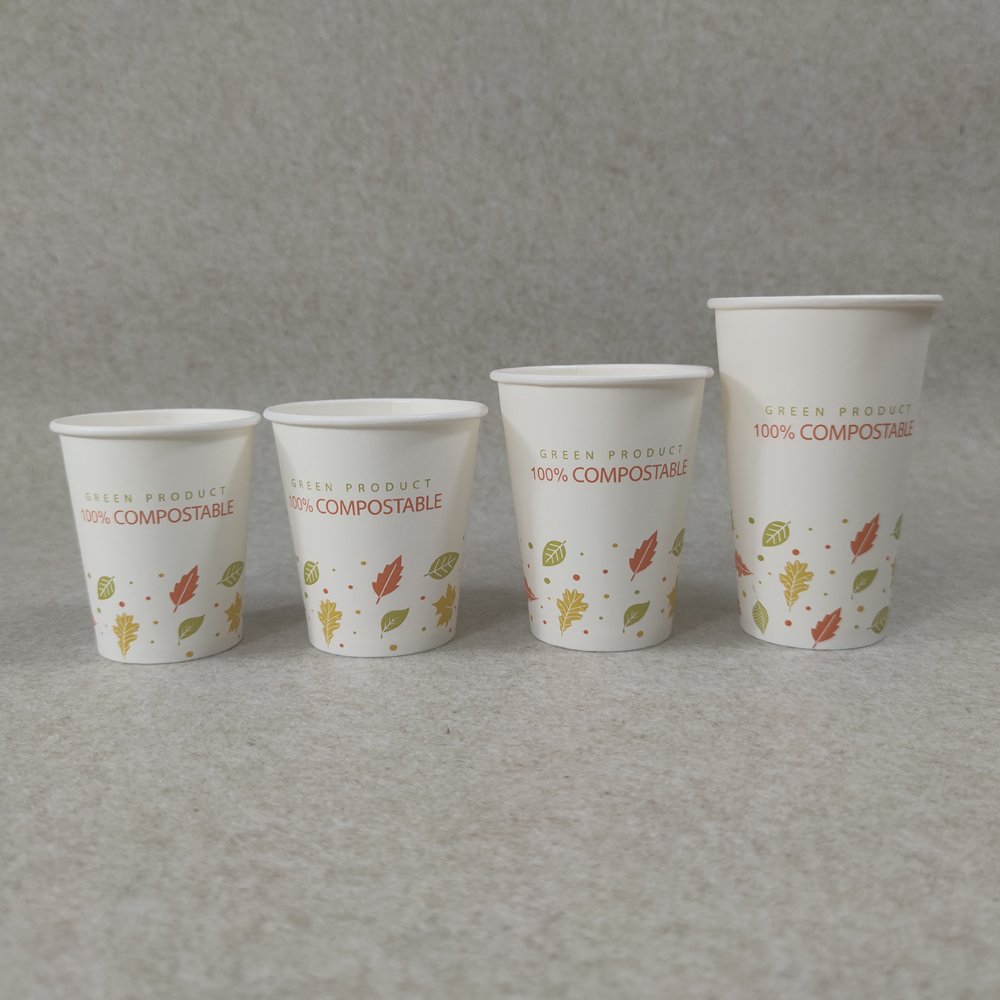
Paper Cups with PLA (Polylactic Acid) Coating
Material & Features
- Made from paperboard coated with PLA, a plant-based bioplastic commonly derived from renewable starch resources.
- Often used for PLA coated compostable paper cups where industrial composting is available.
- Can be combined with different paperboard options, including white paper, kraft paper, bamboo paper, wood pulp paper, or sugarcane-based paper depending on the supplier program.
Pros
- Uses a renewable bioplastic coating instead of conventional PE.
- Can support industrial compostability positioning when the complete cup structure is certified and accepted locally.
- Suitable for eco-conscious coffee shops, corporate events, and branded takeaway programs.
Cons
- Usually requires industrial composting conditions; it should not be promoted as home compostable unless clearly certified.
- PLA heat performance has limits, so hot drink use should follow supplier specifications and sample testing.
- Not all recycling or composting programs accept PLA-coated paper cups.
Application Scenarios
- Eco-positioned cafés, hotel beverage service, corporate catering, green events, and distributors serving composting-enabled markets.
- Best when the buyer can clearly guide collection and disposal after use.
 |  |
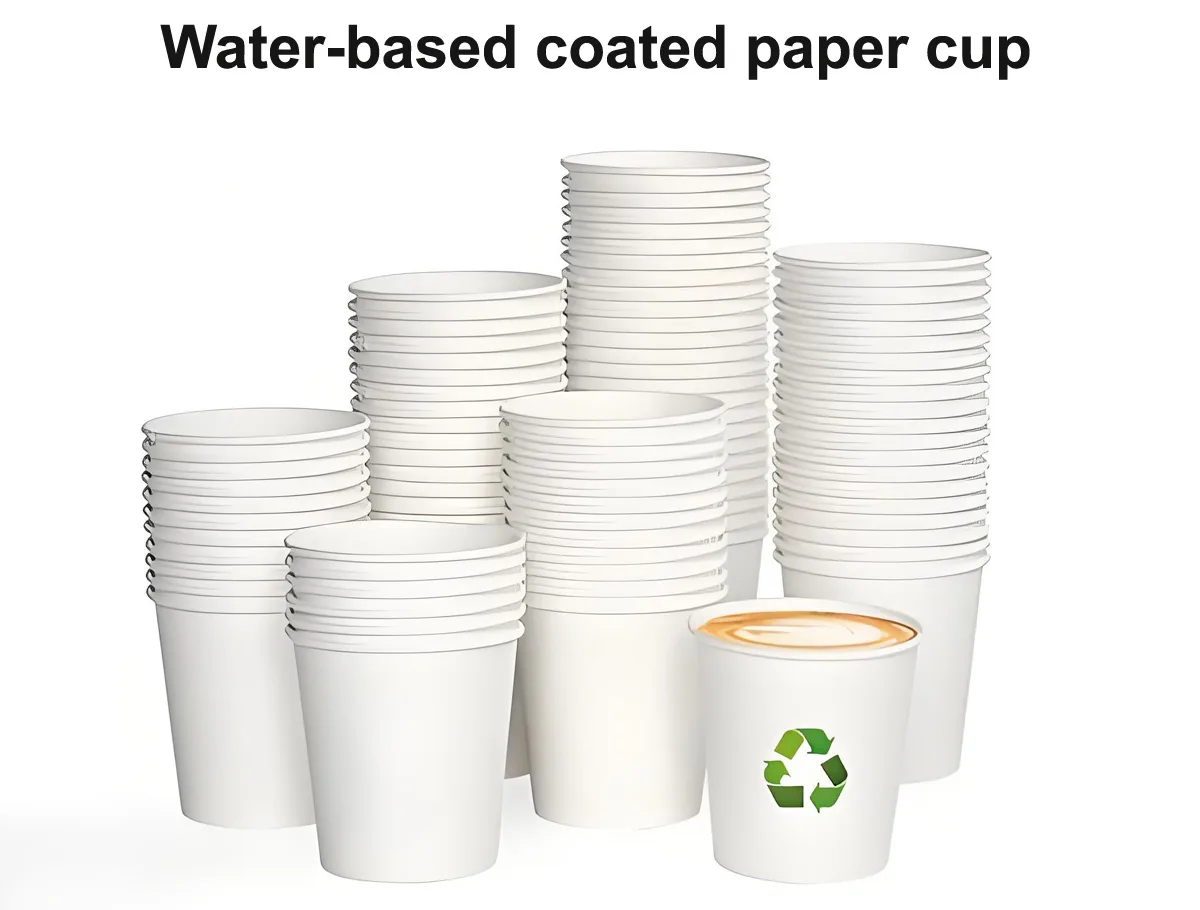
Water-Based Coated Paper Cups
Material & Features
- Water-based coated paper cups use an aqueous barrier coating instead of a traditional PE plastic film or PLA bioplastic film.
- The coating is designed to provide liquid resistance, oil resistance, and hot beverage functionality while reducing reliance on plastic-film liners.
- This option is increasingly important for buyers looking for water-based aqueous coating paper cups for plastic-reduction and repulpability-oriented packaging programs.
Pros
- Can reduce petroleum-based plastic lining compared with standard PE-coated paper cups.
- May improve repulpability or recycling compatibility where paper mills and local recycling systems accept the structure.
- Useful for brands that want a reduced-plastic solution without depending entirely on industrial composting.
- Can support a cleaner sustainability message when backed by material declarations and testing data.
Cons
- Performance depends on coating formula, paperboard grade, cup size, seam strength, and hot drink holding time.
- Not every water-based coated cup is automatically recyclable, compostable, or plastic-free under every local regulation.
- Usually requires sample testing before bulk orders, especially for hot coffee, milk drinks, takeaway lids, and custom printing.
Application Scenarios
- Cafés, coffee chains, supermarkets, hotels, foodservice distributors, and catering companies seeking reduced-plastic paper cups.
- EU, UK, and other regulated markets where buyers need stronger documentation for coating type and plastic-reduction claims.
- Brands that want a practical alternative to PE-lined cups but do not have reliable compost collection.
Water-Based Coating Procurement Insight
| Buyer concern | What to verify | Why it matters |
|---|---|---|
| Can it hold hot coffee? | Test hot water, hot coffee, milk drinks, lid fit, side seam and bottom sealing. | Water-based coatings vary by formula and paperboard grade, so real beverage testing is essential. |
| Is it recyclable or repulpable? | Request material declarations, repulpability information and local recycling acceptance guidance. | Recyclability depends on local paper mills and collection systems, not only the coating name. |
| Can we call it plastic-free? | Check coating composition and destination-market interpretation before using absolute claims. | Unsupported plastic-free claims can create compliance, retail and brand trust risks. |
Styrofoam (Polystyrene) Cups
Material & Features
- Made from expanded polystyrene foam, known for its light weight and insulation.
Pros
- Strong insulation for hot and cold drinks.
- Low unit cost and light shipping weight.
- Historically common in fast-food, canteen, and convenience-store drink service.
Cons
- Not biodegradable and difficult to recycle in most municipal systems.
- Can break into small particles that create environmental pollution concerns.
- Increasingly restricted or banned in many regions because of environmental and waste-management concerns.
Application Scenarios
- Still found in some low-cost markets, but rapidly losing acceptance in sustainability-driven and regulated markets.
- Usually not recommended for brands trying to improve environmental positioning or prepare for stricter packaging rules.

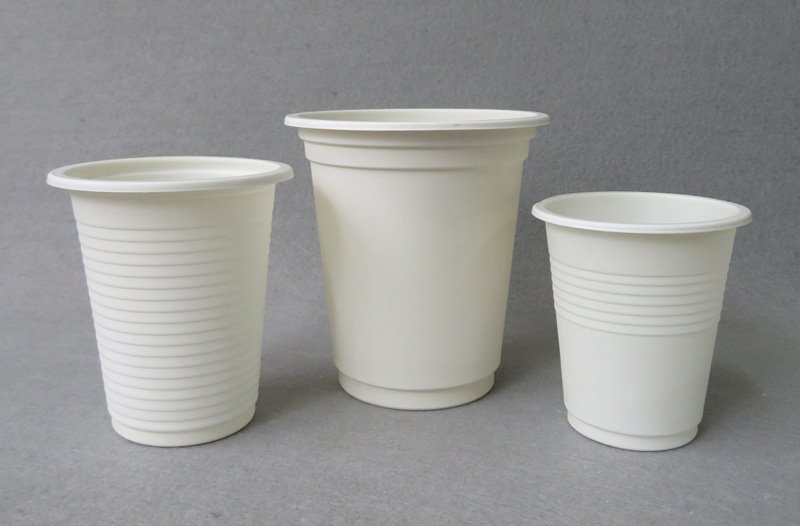
Bioplastic Cups: PLA, CPLA and Cornstarch-Based Materials
Material & Features
- Bioplastic cups may be made from PLA, CPLA, cornstarch blends, or other plant-based materials.
- Clear PLA cups are generally used for cold drinks such as iced coffee, juice, smoothies, bubble tea, and desserts.
- CPLA is a crystallized form of PLA with improved heat resistance and is more commonly used for lids or cutlery than standard clear drink cups.
Pros
- Can reduce dependence on conventional petroleum-based plastics.
- Can support compostable packaging programs when the material and local facility conditions match.
- Useful for cold beverage service where transparency is required.
Cons
- Clear PLA cups are not suitable for high-temperature hot coffee unless specifically designed and tested for that use.
- Most compostable bioplastics require industrial composting conditions.
- Consumers may be confused if disposal instructions are not clearly communicated.
Application Scenarios
- Iced coffee, smoothies, juice, bubble tea, desserts, fruit cups, and eco-branded cold beverage programs.
- Not the first choice for hot coffee unless the exact material structure and supplier specifications confirm hot-drink suitability.
Bagasse & Bamboo Fiber Cups
Material & Features
- Bagasse is sugarcane fiber left after juice extraction, while bamboo fiber comes from fast-growing bamboo pulp.
- Both materials can support a renewable fiber story and a natural appearance.
- For beverage cups, buyers should check the exact structure carefully because most liquid-holding cups still require a barrier coating.
Pros
- Made from renewable plant fibers.
- Natural appearance can support premium eco branding.
- Useful for specialty designs, sampling programs, and sustainability-focused foodservice packaging.
Cons
- Not all bagasse or bamboo fiber beverage cups offer the same heat and leakage performance.
- Liquid barrier, adhesive, and coating details affect compostability, recyclability, and food-contact compliance.
- Availability, MOQ, and cost may be less stable than standard paper cup programs.
Application Scenarios
- Premium coffee shops, boutique events, sustainability campaigns, and brands seeking a distinct natural look.
- Best evaluated through samples before moving to high-volume takeaway coffee applications.
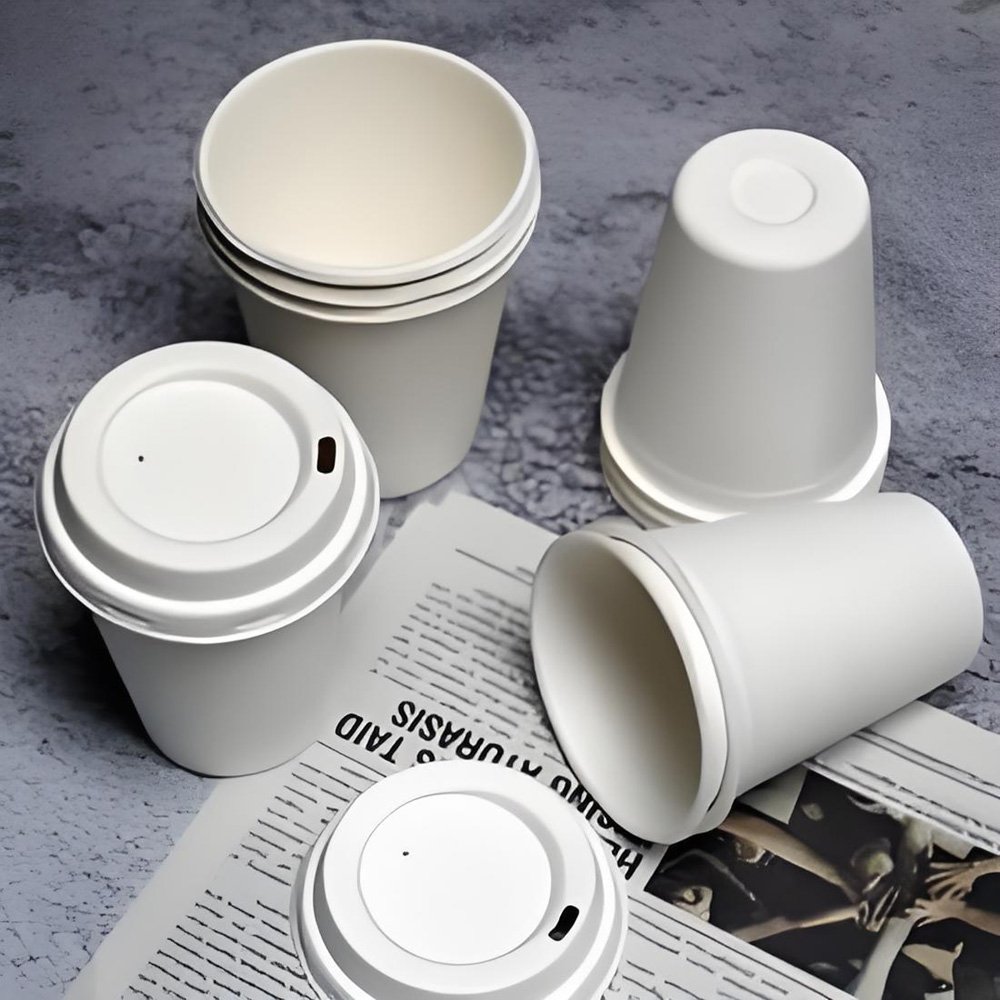 | 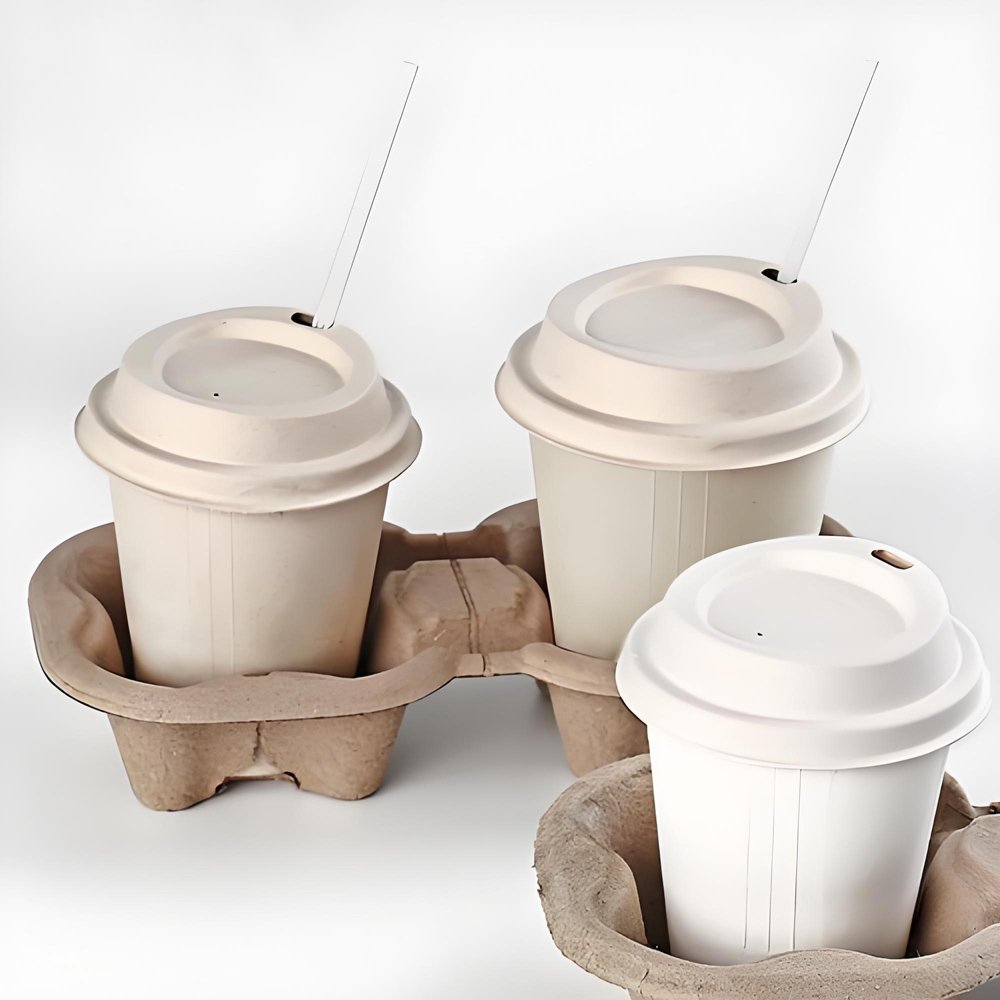 |
Comparison Table of Different Types of Disposable Coffee Cups
Below is a practical side-by-side comparison of the main disposable coffee cup types. The best option depends on your market, beverage temperature, disposal route, brand positioning, and target cost.
| Material / Cup Type | Hot Coffee Suitability | Environmental Positioning | Cost Level | Best Use Case | Buyer Check |
|---|---|---|---|---|---|
| PE-Lined Paper | Good | Stable but plastic-lined; limited recycling in many areas | Low to medium | High-volume coffee service | Check local recycling and plastic-packaging rules |
| PLA-Lined Paper | Suitable within supplier specifications | Industrially compostable where certified and accepted | Medium | Compostable hot drink programs | Confirm compostability, temperature limits, and collection system |
| Water-Based Coated | Good when properly tested | Reduced-plastic, repulpable or recyclable where accepted | Medium to high | Plastic-reduction and EU SUP-sensitive programs | Ask for coating details, repulpability information, and hot-drink testing |
| Styrofoam / EPS | Good insulation | Very weak; often restricted | Low | Declining low-cost use | Check foam bans and brand reputation risk |
| PLA / Cornstarch Clear Cups | Usually not for hot coffee | Plant-based and industrially compostable where certified | Medium to high | Iced coffee, smoothies, juice, bubble tea | Do not use standard clear PLA cups for high-temperature drinks |
| Bagasse & Bamboo Fiber | Needs product-specific testing | Renewable fiber positioning | Medium to high | Premium eco concepts and niche programs | Verify liquid barrier, food contact, and hot-drink stability |
Best Environmentally Friendly Coffee Cups
The best coffee cup is not always the most expensive or the newest material. A better choice is the cup that balances hot-drink performance, verified environmental claims, correct disposal, stable supply, custom branding, and total landed cost.
- PLA-Coated Paper Cups
- Suitable for brands that need industrial compostability positioning.
- Best when compost collection is available and the supplier can provide relevant documentation.
- Requires clear customer guidance so used cups do not enter the wrong waste stream.
- Water-Based Coated Paper Cups
- Strong option for brands seeking reduced-plastic paper cups without relying fully on industrial composting.
- Useful where buyers ask for repulpability, lower plastic content, or plastic-reduction documentation.
- Requires hot coffee testing, lid testing, and coating documentation before large orders.
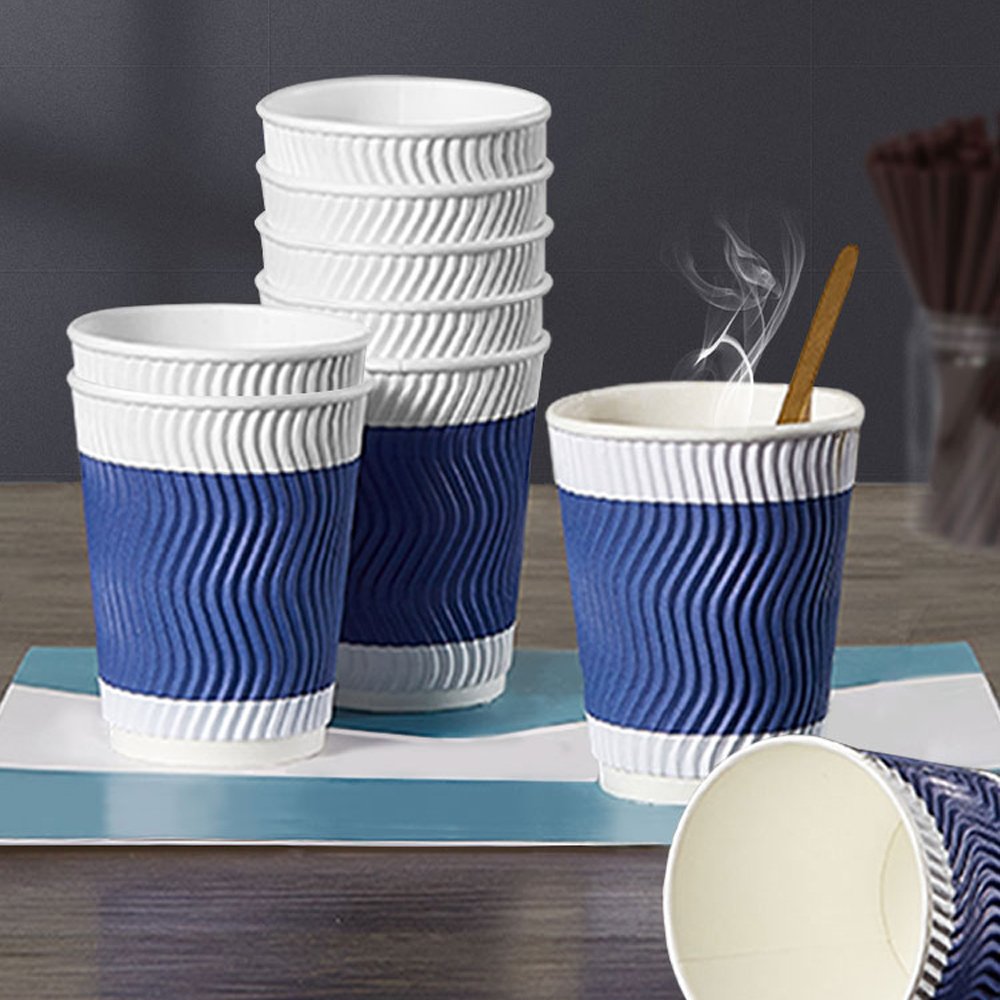
- Double Wall and Ripple Wall Coffee Cups
- These are structural upgrades rather than coating types.
- They improve insulation, hand comfort, and premium appearance for hot coffee and tea.
- They can be combined with PE, PLA, or water-based coatings depending on the buyer’s target market.
- Reusable and Collection-Based Systems
- Reusable cups can reduce waste when used repeatedly and washed correctly.
- For large events or closed venues, collection-based composting or recycling can improve real-world results.
- The most effective solution is often a combination of better materials, clear disposal instructions, and supplier-backed documentation.
Buyer Checklist: How to Choose Coffee Cups for Hot Drinks
- Confirm drink type: espresso, hot coffee, tea, milk drinks, iced coffee, smoothies, or mixed use.
- Choose size range: 4oz, 6oz, 8oz, 10oz, 12oz, 16oz, 20oz, or other market-specific formats.
- Select wall structure: single wall for cost control, double wall for insulation, ripple wall for premium hot drinks.
- Choose coating: PE for stability, PLA for industrial compostability positioning, or water-based coating for reduced-plastic strategy.
- Test before bulk order: hot water, hot coffee, milk drinks, lid fit, leakage, bottom sealing, side seam, odor, stacking, and print resistance.
- Check documentation: food-contact documents, coating details, compostability or repulpability data, and destination-market packaging rules.
Coffee Cup Size and Application Guide for B2B Buyers
After choosing the cup material and coating, buyers should also match the cup size with the real drink application. A wrong size can increase cost, reduce customer satisfaction, or create lid-matching problems. The table below gives a practical reference for cafés, coffee chains, distributors, hotels, offices, and takeaway beverage suppliers.
| Size | Best For | Suggested Wall Structure | Common Lid Option | Buyer Note |
|---|---|---|---|---|
| 4oz | Espresso, tasting samples, small tea service, promotional drinks | Single wall | Small paper, PS, PLA or CPLA lid depending on cup rim | Useful for sampling and espresso service; confirm rim size before lid matching. |
| 8oz | Small coffee, tea, office drinks, hotel breakfast service | Single wall or double wall | Usually 80mm or 90mm lid depending on cup design | Good entry-size hot drink cup; sleeve may be needed if using single wall for very hot drinks. |
| 12oz | Standard takeaway coffee, milk tea, hot chocolate, café service | Single wall, double wall or ripple wall | Usually 90mm lid | One of the most common sizes for takeaway coffee; suitable for custom logo programs. |
| 16oz | Large coffee, latte, iced drinks, takeaway beverage programs | Double wall or ripple wall for hot drinks | Usually 90mm lid | Better for larger portions; double wall or ripple wall improves hand comfort for hot beverages. |
| 20oz | Large takeaway drinks, iced coffee, cold beverages, high-volume café menus | Double wall or ripple wall for hot drinks; single wall possible for cold use | Usually 90mm lid, depending on rim specification | Confirm stacking, lid tightness and carton volume because larger cups affect storage and shipping cost. |
Size Selection Note
Cup size and lid size are not universal. The same nominal capacity may use different rim diameters depending on the manufacturer, paperboard thickness, wall structure and regional preference. Before ordering bulk coffee cups, buyers should always test the exact cup and lid together, especially for hot takeaway drinks and custom printed cup programs.
Recommended Use: Bioleader® Eco-Friendly Paper Cup Solutions
For B2B buyers, the best solution often requires matching material, size, wall structure, lid, printing, and export packing together. Bioleader® supplies hot drink paper cup programs across standard single wall cups, compostable paper cups, water-based coated cups, double wall cups, ripple wall cups, and custom printed coffee cups.
Buyers can compare common size programs through disposable paper cups from 4oz to 20oz, or review full-size manufacturing capability through Bioleader’s paper cups manufacturer guide. For custom branding, confirm coating type, artwork, color count, ink coverage, lid matching, carton packing, MOQ, lead time, and destination-market compliance before production.
Bioleader® B2B Solution Note
For distributors, coffee chains, packaging importers, and foodservice brands, Bioleader® can support material comparison, size selection, custom logo printing, sample testing, carton planning, and export documentation for coffee cup programs. The recommended sourcing process is: confirm application, select material and wall structure, test samples, approve artwork, confirm MOQ and packing, then move to bulk production.
Single Wall, Double Wall and Ripple Wall Coffee Cups
Many buyers focus only on the coating, but wall structure is just as important for hot coffee. The coating protects the paperboard from liquid, while the wall structure affects insulation, hand comfort, appearance, printing effect, and cost.
| Cup Structure | Main Advantage | Best For | Buyer Note |
|---|---|---|---|
| Single Wall Paper Cups | Cost-effective and lightweight | Short takeaway use, offices, vending, events | May need a sleeve for very hot drinks |
| Double Wall Paper Cups | Better insulation and hand comfort | Hot coffee, tea, milk drinks, premium takeaway | Useful for brands that want a smooth custom logo surface |
| Ripple Wall Paper Cups | Strong grip, premium texture, and improved heat protection | Coffee shops, roasters, takeaway coffee chains, branded hot drinks | Check ripple bonding, stacking, lid fit, and print layout |
For premium hot drinks, double wall paper cups and ripple wall hot paper cups usually provide a better drinking experience than standard single wall cups. For reduced-plastic positioning, these structures can be combined with a tested PLA or water-based coating system.
Expert Insights and Real-World Examples
From a manufacturer’s perspective, the best environmentally friendly coffee cup is not decided by one label such as “eco,” “biodegradable,” or “plastic-free.” A reliable cup must be evaluated through material structure, coating type, hot drink performance, lid compatibility, printing quality, carton loading, compliance documents, and the buyer’s real disposal route.
Bioleader® Expert View: What Actually Matters in Coffee Cup Selection
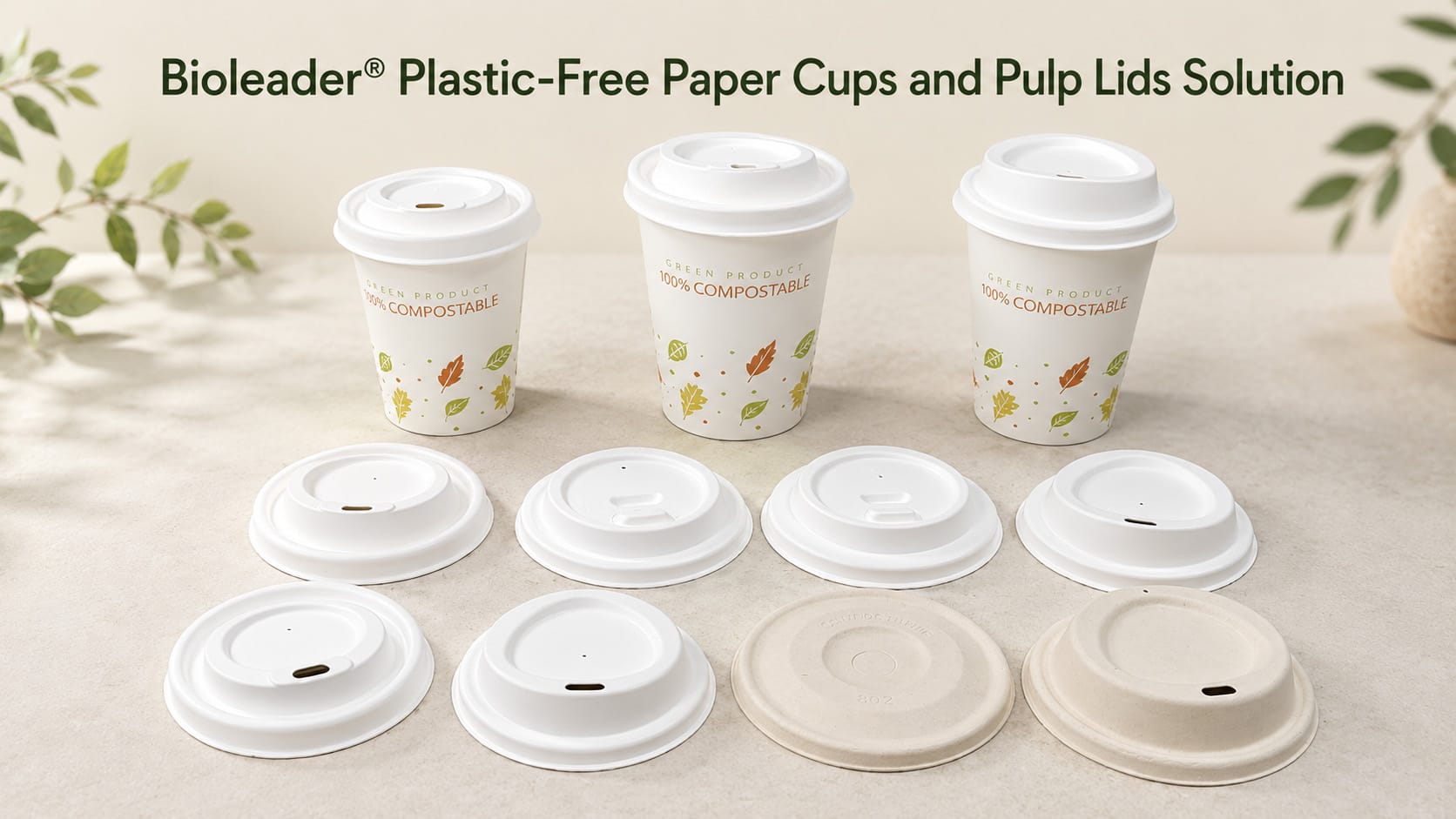
Based on Bioleader® paper cup production and export experience, most purchasing problems come from unclear application details. A buyer may request “compostable coffee cups,” but the real requirement could be hot coffee service, custom logo printing, water-based coating, double wall insulation, 90mm lid matching, or a 40HQ mixed-container loading plan. These details should be confirmed before price comparison.
Manufacturer Insight: Material Claims Must Match the Real Cup Structure
A coffee cup should not be described as compostable, recyclable, biodegradable, plastic-free, or home compostable unless the complete cup structure and destination-market rules support that claim. For B2B buyers, accurate wording is not only a marketing issue; it affects customs clearance, retailer approval, compliance review, customer trust, and long-term reorder stability.
Current Industry Trends
The main trend in coffee cup sourcing is more specific material selection. Buyers no longer ask only for “paper cups.” They ask whether the cup is PE-lined, PLA-coated, water-based coated, recyclable, industrially compostable, repulpable, suitable for hot coffee, or compliant with local plastic-reduction rules.
Another important trend is coating-specific purchasing. Water-based coating is gaining attention because it can reduce the need for traditional plastic-film barriers while keeping the familiar paper cup format. PLA-coated paper cups remain important for compostable packaging programs, but they work best where industrial composting and clear collection routes exist.
Sample Evaluation Before Bulk Orders
- Hot drink test: fill with hot coffee or hot water and check deformation, leakage, odor, and hand feel.
- Lid fit test: test the exact lid type with the exact cup rim and size.
- Stacking test: confirm cups separate smoothly and do not stick during fast service.
- Print test: confirm logo position, color accuracy, ink rubbing, and barcode readability.
- Transport test: check carton strength, pallet plan, container loading, and moisture protection.
Real-World Buying Scenarios
- Coffee shop chain upgrading from PE to PLA
A coffee shop chain with access to industrial composting may choose PLA-coated paper cups to support compostable packaging goals. The key requirement is clear collection guidance so used cups do not enter the wrong waste stream. - Distributor supplying regulated markets
A packaging distributor selling into EU or UK markets may prioritize water-based coated paper cups because buyers increasingly ask for reduced-plastic and repulpability-oriented options. Documentation and sample testing become essential. - Premium coffee brand improving customer experience
A roaster or takeaway coffee brand may choose double wall or ripple wall cups for better insulation and hand feel, then select PLA or water-based coating based on its sustainability positioning. - Event operator planning cup disposal
For large events, the best cup is the one that matches the waste collection system. A compostable cup without compost collection may perform worse in practice than a simpler cup with a clear recycling or disposal plan.
FAQ – About Environmentally Friendly Coffee Cups
What makes a coffee cup environmentally friendly?
An environmentally friendly coffee cup should use responsible materials, perform safely with hot drinks, and match a realistic end-of-life route such as recycling, repulping, industrial composting, or reuse. The claim must be supported by the actual cup structure and local waste infrastructure.
Are compostable coffee cups home compostable?
Most compostable coffee cups, especially PLA-coated paper cups, require industrial composting conditions. They should not be described as home compostable unless the supplier provides specific home compost certification for the complete product.
Are PLA coated paper cups suitable for hot coffee?
PLA-coated paper cups can be used for standard hot beverage service when designed and tested for that purpose. However, PLA has heat-performance limits, so buyers should confirm temperature range, holding time, lid fit, and leakage resistance before bulk ordering.
Why are water-based coated paper cups becoming popular?
Water-based coated paper cups are popular because they can reduce reliance on traditional plastic-film barriers while keeping the familiar paper cup format. They may also support repulpability or recycling compatibility where accepted by local facilities, but this should be verified with documentation.
Are water-based coated paper cups completely plastic-free?
Not always. The term “plastic-free” depends on the exact coating chemistry and local regulatory interpretation. Buyers should ask for material declarations and avoid making absolute claims unless the product is supported by clear documentation.
Which disposable coffee cups are best for hot beverages?
For hot takeaway coffee, single wall paper cups are cost-effective, while double wall and ripple wall cups provide better insulation and hand comfort. The inner coating can be PE, PLA, or water-based depending on cost, compostability, and plastic-reduction requirements.
Can paper coffee cups be recycled?
Some paper coffee cups can be recycled or repulped in facilities that accept coated paper cups. Standard curbside recycling often does not accept all coated cups, so buyers should check local recycling rules and supplier documentation before making recyclable claims.
What should B2B buyers check before ordering custom coffee cups?
Buyers should confirm cup size, wall structure, coating type, lid fit, artwork, printing method, MOQ, lead time, carton packing, food-contact compliance, compostability or recyclability documentation, and sample test results for hot drinks.
Summary
Choosing the best environmentally friendly coffee cups in 2026 goes far beyond selecting a cup labeled “green.” Buyers need to understand PE-lined paper cups, PLA-coated paper cups, water-based coated paper cups, foam cups, bioplastic cups, and fiber-based cups from both a performance and end-of-life perspective.
PE-lined cups remain stable and economical. PLA-coated cups can support industrial compostability positioning where accepted. Water-based coated cups are increasingly important for reduced-plastic and repulpability-oriented programs. Double wall and ripple wall structures improve insulation and customer experience for hot coffee.
For distributors, cafés, coffee chains, and foodservice buyers, the strongest sourcing decision combines verified material claims, tested hot-drink performance, clear disposal guidance, reliable supplier documentation, and realistic landed cost. Bioleader® supports B2B buyers with paper cup solutions across compostable, water-based coated, double wall, ripple wall, and custom printed formats for international wholesale and private-label programs.
Compliance and Buyer Verification Notes
The following buyer verification notes help procurement teams review food-contact compliance, coating claims, hot beverage performance, custom printing, and wholesale purchasing details before confirming bulk coffee cup orders.
- Food-contact compliance: request food-contact documentation suitable for your target market, such as EU, FDA, LFGB, or other applicable requirements.
- Compostability claims: ask whether the complete cup structure has applicable industrial compostability certification or testing, not only the coating material.
- Water-based coating claims: confirm coating composition, repulpability information, recycling compatibility, and supplier-recommended disposal route.
- Plastic-free or EU SUP positioning: do not rely on marketing wording alone; check the destination country’s interpretation and request supplier declarations.
- Hot beverage testing: test with real coffee, tea, milk drinks, and lids under expected service conditions before confirming bulk production.
- Custom printing: confirm artwork, color count, ink safety, print area, logo position, barcode readability, and carton labeling before mass production.
- Wholesale procurement: compare unit price together with carton size, CBM, container loading, MOQ, sample cost, lead time, and after-sales quality support.