Paper Bowl Sizes, MOQ and Container Loading Guide for B2B Buyers
Paper bowl purchasing is not only a size decision. For Bioleader® buyers, the right order plan connects bowl shape, capacity, lid compatibility, MOQ, custom printing quantity, carton packing, container loading and final landed cost. A bowl that looks cost-effective per piece may become expensive if it creates inefficient cartons, too many slow-moving SKUs, unsuitable lids or poor container utilization.
Bioleader® manufactures and supplies multiple paper bowl formats, including round paper soup bowls, round paper salad bowls, square paper bowls and rectangular paper bowls. These products are available in kraft and white paper options, with matching PET, PP or paper lids depending on application. This guide explains how importers, distributors, restaurant groups and private label buyers can choose sizes, plan MOQ, arrange custom printing and build a realistic container-loading plan before bulk ordering.
- Choose paper bowl sizes by real fill volume, food type and lid clearance, not only nominal capacity.
- Plan by shape: Bioleader® round, square and rectangular bowls serve different menu and packing needs.
- Use normal MOQ planning for stable bulk orders: usually about 30,000 pcs for plain bowls and about 50,000 pcs for custom printed bowls.
- Low MOQ such as several thousand pieces may be possible, but unit cost is normally higher due to setup, handling and export costs.
- Check lid matching, carton volume and container loading before comparing final unit price.
Why Bioleader® Plans Size, MOQ and Loading Together
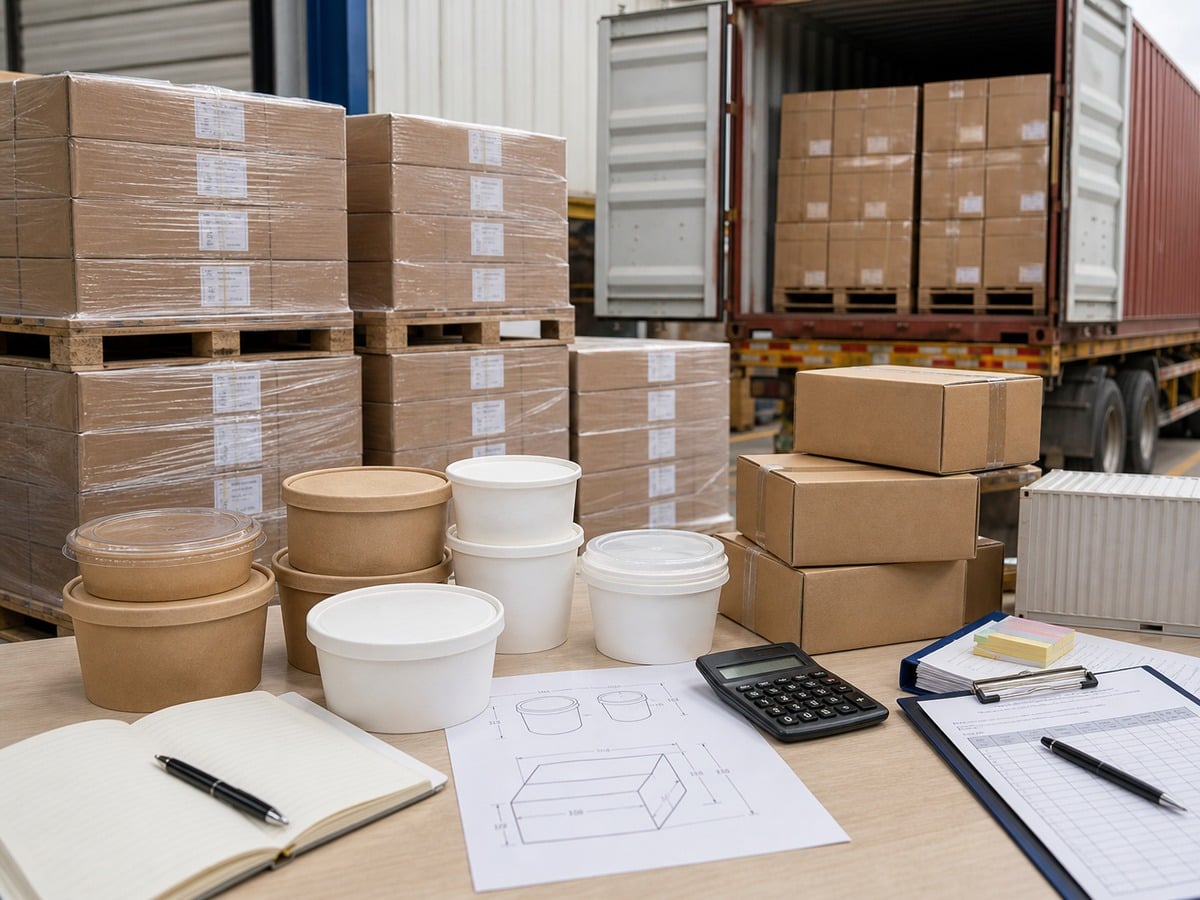
Many buyers start by asking for the cheapest unit price for one size. That can work for a simple single-SKU order, but it often creates problems for restaurant chains, wholesalers and distributors that need multiple bowl sizes. At Bioleader®, a paper bowl quotation is usually reviewed together with menu use, lid compatibility, printing method, carton dimensions and shipping method.
Buyers comparing paper bowls should first define the use case: hot soup, rice bowl, salad, noodle, dessert, meal prep, fruit packaging, catering, retail shelf packaging or delivery meals. Each use case has a different capacity requirement, shape preference and lid expectation. Once the Bioleader® size mix is clear, MOQ and loading can be planned with fewer surprises.
A practical Bioleader® purchasing plan answers five questions: which bowl shapes are truly needed, which sizes can sell fast, which lids can be shared, which SKUs require custom printing, and how many cartons can fit into the planned shipping method. This is where factory export experience matters, because carton design and packing density can affect the final landed cost as much as the quoted unit price.
Bioleader® Paper Bowl Shape and Size Range
Bioleader® paper bowls are not limited to one shape. Buyers can choose round paper bowls for soup, noodles and salad bowls; square paper bowls for premium salad and meal presentation; and rectangular paper bowls for meal prep, fruit, deli food and compact takeaway packing. Each shape has a different lid structure, carton volume and application logic.
| Bioleader® bowl line | Common size range | Typical food application | Buyer planning note |
|---|---|---|---|
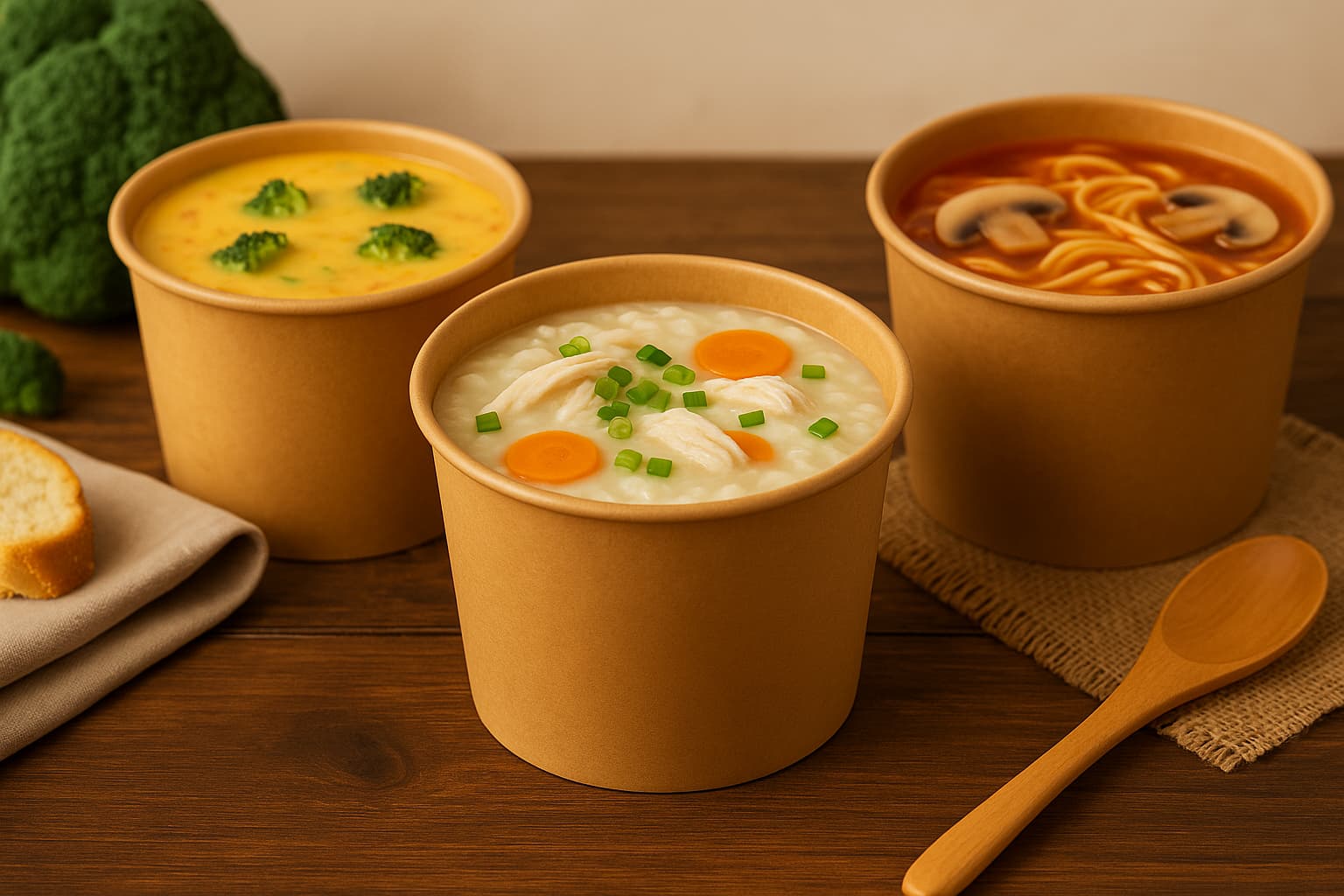
| Round paper soup bowls / soup cups | Commonly 4oz, 8oz, 12oz, 16oz, 20oz, 26oz and 32oz | Hot soup, noodles, porridge, sauces, desserts and hot takeaway meals | Best when hot food service, hand feel, lid fit and leak resistance are the main concerns. |
| Round salad / to-go bowls | Commonly around 500ml to 1300ml depending on model | Salad, grain bowls, rice bowls, pasta, poke bowls and delivery meals | Good for brands that need a familiar takeaway bowl format with matching PET, PP or paper lids. |
| Rectangular paper bowls | Commonly 500ml, 650ml, 750ml and 1000ml | Meal prep, fruit, salad, rice sets, side dishes and compact takeaway meals | Useful when shelf display, packing footprint or rectangular meal layout is important. |
| Square paper bowls | Commonly 750ml, 1000ml, 1200ml and 1400ml, with related square formats available by project | Premium salad, poke, mixed meals, cold food and retail food packaging | Strong visual presentation, but lid matching and carton planning should be checked carefully. |
For buyers planning both soup and salad packaging, Bioleader® usually recommends separating hot-food bowl logic from cold-food and display bowl logic. A soup bowl order should focus on hot-fill stability and lid fit, while a salad bowl order should focus on presentation, moisture resistance, lid clarity and stacking.
How to Choose Bioleader® Paper Bowl Sizes for Real Menus
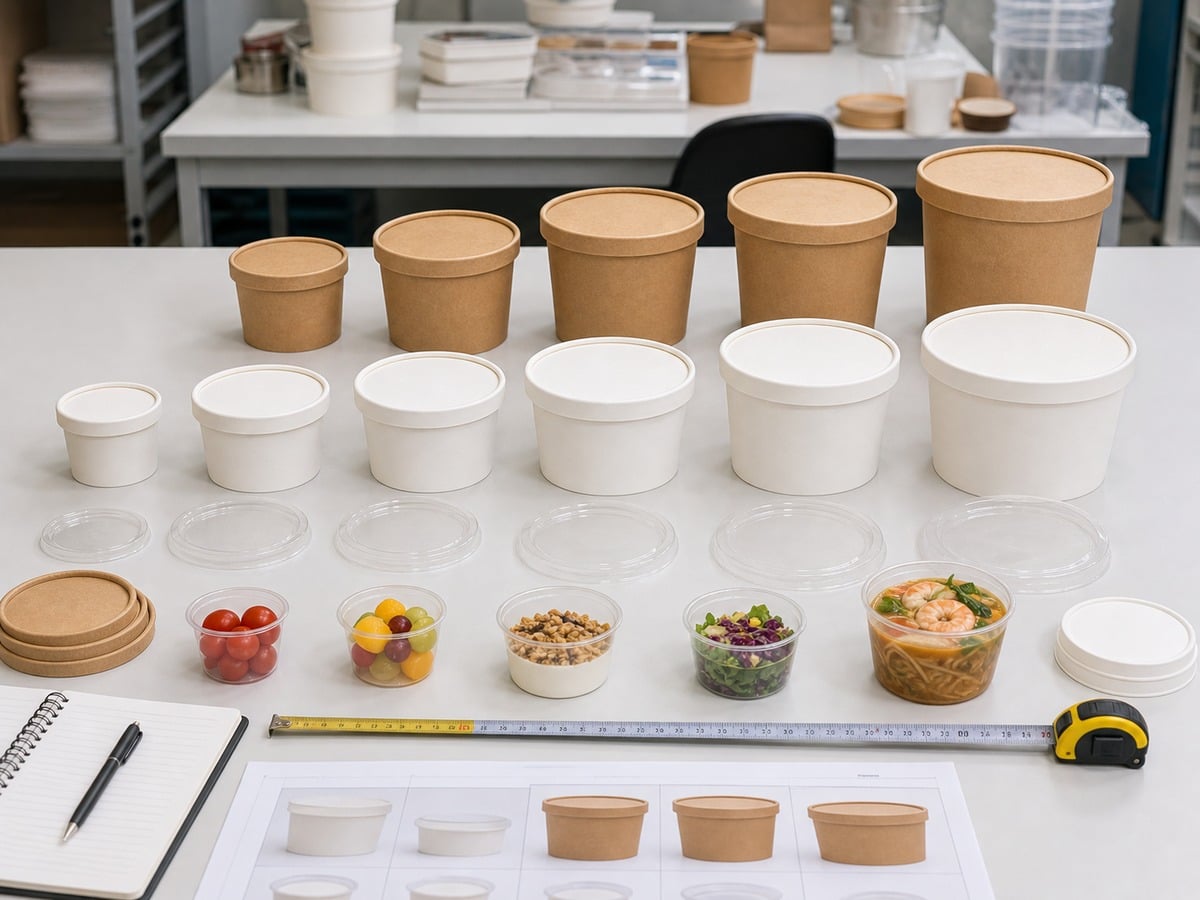
Nominal bowl capacity does not always equal practical serving volume. A 24 oz bowl should not always be filled to the brim, especially for hot soup, sauced noodles or delivery meals. Buyers should consider headspace, lid clearance, food movement, hand feel and customer presentation when selecting a Bioleader® paper bowl size.
| Common Bioleader® size range | Typical use | Buyer planning note | Common risk |
|---|---|---|---|
| 4-8 oz | Small soup, sauces, tasting portions, desserts and side dishes. | Useful for soup shops, tasting programs and small takeaway items. | Too small for meal delivery if lid headspace is ignored. |
| 12-16 oz | Soup, noodle side, dessert, small salad, rice snack. | Often used as a flexible entry-size SKU. | May not be enough for main meals or large toppings. |
| 20-24 oz | Meal bowls, salad, pasta, noodles, hot food and delivery meals. | Good range for quick-service restaurants and food delivery brands. | Practical fill volume should be tested with real food. |
| 26-32 oz | Large soup, large salad, family portion, catering and premium meal bowl. | Useful for high-value menu items and larger portions. | Carton volume and storage space increase quickly. |
| 500-1400ml square / rectangular formats | Salads, meal prep, fruit, rice sets, deli food and retail food packaging. | Good for visual presentation and shelf-friendly packing. | Each shape needs exact lid matching and carton calculation. |
Buyers sourcing 16, 20 and 24 oz disposable paper bowls should compare the bowl with real food volume, not only catalog capacity. For salad programs, the visual fill line and lid clearance can be more important than maximum capacity. For soup and sauced meals, splash control, lid tightness and hand feel matter more.
Bioleader® MOQ Logic: Plain Bowls, Custom Printing and Trial Orders
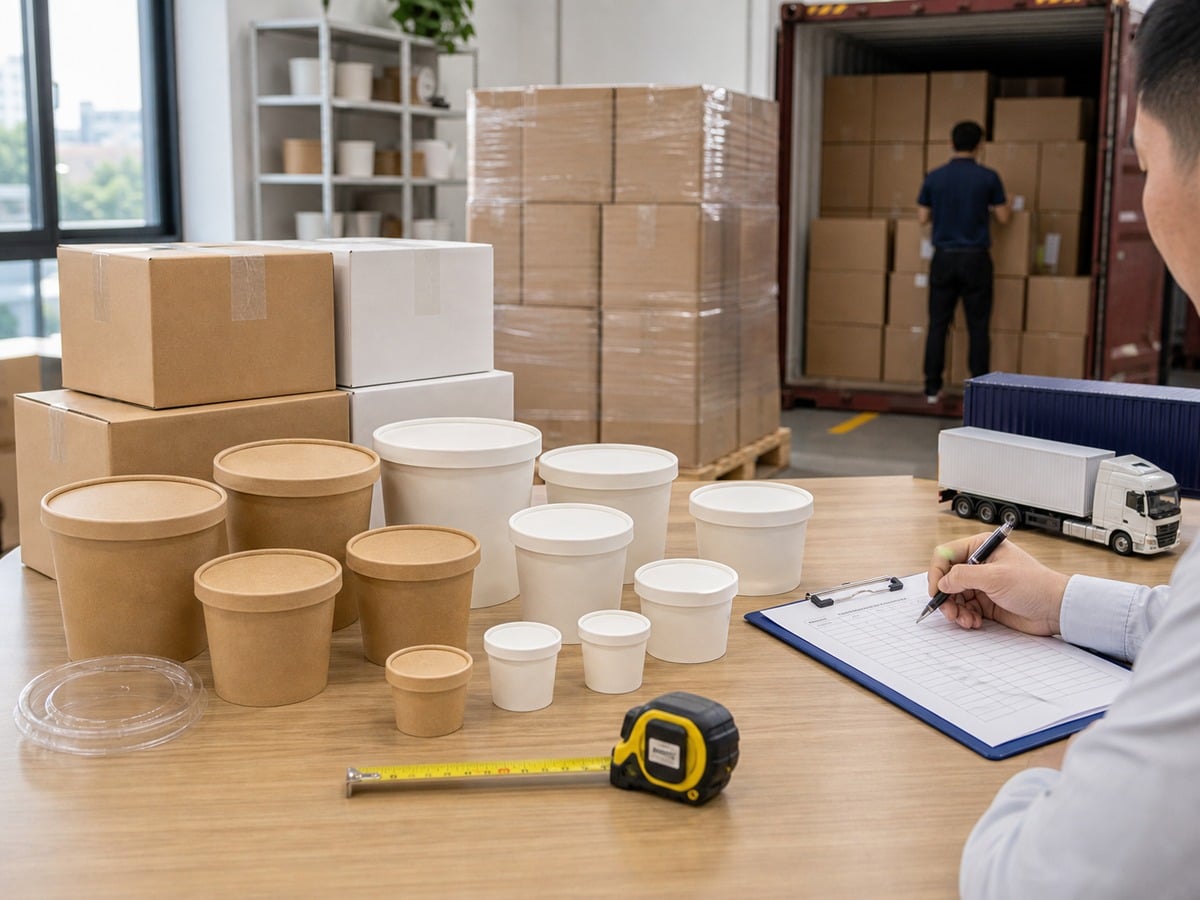
MOQ is not a single universal number. It depends on whether the buyer needs plain bowls, custom printed bowls, mixed sizes, matching lids, special packing or an export shipment. In Bioleader® paper bowl sourcing experience, the normal bulk-order logic is different from the trial-order logic.
For standard plain paper bowls without custom printing, Bioleader® usually plans practical bulk orders from about 30,000 pcs per item. For custom printed paper bowls, Bioleader® usually recommends about 50,000 pcs per item because printing requires artwork review, plate or setup cost, color matching, production scheduling and print inspection.
Bioleader® can also support lower MOQ projects in some cases, such as several thousand pieces for market testing, sample programs or small brand launches. However, buyers should understand that low MOQ normally has a higher unit cost. The reason is simple: plate or setup cost, export handling cost, carton planning, local logistics and supplier operation cost are spread over fewer pieces.
| Bioleader® order type | Typical planning quantity | Cost logic | Best for |
|---|---|---|---|
| Plain standard bowls | Usually around 30,000 pcs per SKU for practical bulk planning | No custom artwork setup, easier production scheduling and carton planning | Distributors, restaurants and buyers testing standard Bioleader® packaging sizes |
| Custom printed bowls | Usually around 50,000 pcs per SKU for stable custom production | Artwork review, plate or setup cost, color control and print inspection are involved | Private label buyers, chain restaurants and branded food packaging programs |
| Low MOQ trial order | Several thousand pieces may be possible depending on SKU and stock condition | Higher unit cost because setup, export and operation costs are spread over fewer pieces | Small brands, product validation, market testing and sample launch programs |
| Mixed container order | Planned by CBM, carton quantity and SKU balance | Can reduce landed cost if the Bioleader® product mix loads efficiently | Importers and distributors buying multiple Bioleader® sizes or shapes together |
For biodegradable paper bowls in bulk wholesale sizes, MOQ planning should start with realistic monthly demand. A new brand may want many Bioleader® shapes and sizes, but low turnover across too many SKUs can create storage pressure and cash flow risk. It is often better to launch with fewer high-rotation sizes, then add specialist sizes after sales data becomes clearer.
MOQ Questions to Ask Bioleader® Before Quotation
- Which Bioleader® bowl shape should I start with: round, square or rectangular?
- What is the MOQ for plain stock bowls and matching lids?
- What is the MOQ for custom printed bowls with one-color and multi-color artwork?
- Can round, square and rectangular bowls be mixed in one order?
- Can different sizes share lids, cartons or printing setup?
- Can mixed sizes be loaded into one container or one consolidated shipment?
- Does the MOQ change if the buyer accepts Bioleader® standard carton packing?
- What is the lowest trial quantity, and what extra cost will apply?
Bioleader® Custom Printing MOQ and Private Label Process
Custom printing changes the purchasing logic. A plain bowl order may be flexible, while a private label order requires artwork approval, color matching, print setup and production scheduling. For Bioleader® custom printed paper bowls, buyers should confirm whether the order uses one-color logo printing, multi-color artwork, full-wrap design or different artwork for different sizes.
For a paper bowl with lid customized logo print program, MOQ should be planned by SKU. A buyer may need one artwork across several sizes, or different artwork for soup, salad and meal bowls. Each variation can affect printing setup, carton labels and approval time.
| Bioleader® custom step | What Bioleader® checks | Buyer decision |
|---|---|---|
| 1. Shape and size selection | Round, square or rectangular bowl; capacity; practical fill volume; lid match | Confirm which SKUs are truly needed for the first order |
| 2. Material and coating | Kraft or white paper, coating choice, hot/cold food application and grease/moisture needs | Choose the material based on food use, not only appearance |
| 3. Lid selection | PET clear lid, PP lid, paper lid or other matching lid options | Confirm whether presentation, heat resistance or fiber-based look matters most |
| 4. Artwork review | Logo size, dieline, color reference, safe area, QR/barcode readability | Approve print-ready artwork before sampling |
| 5. MOQ and quotation | Plain quantity, printed quantity, plate/setup cost, carton plan and export handling | Compare normal MOQ and low MOQ cost before choosing order size |
| 6. Sample or proof approval | Printed proof, color, odor, lid fit, stacking and carton scuffing | Approve the physical sample before mass production |
| 7. Production and packing plan | Pieces per carton, carton size, mixed SKU loading and delivery schedule | Lock the final specification before purchase order release |
Private label buyers should avoid launching too many printed SKUs before demand is proven. A practical first Bioleader® order may focus on one or two core sizes, matching lids and one common brand design. After sales data confirms turnover, the buyer can add more sizes, seasonal artwork or market-specific packaging.
Low MOQ Orders: Bioleader® Trial Order Logic
Low MOQ can be useful, but it should be treated as a trial-order solution rather than a normal bulk-price benchmark. If a buyer wants only a few thousand pieces per item, Bioleader® may arrange the order from available stock, short-run production or consolidated shipment depending on the SKU. The factory still needs to handle communication, packing, export documents, local logistics and quality checking.
For custom printed low-MOQ orders, the cost pressure is even stronger. Printing plate or setup cost, artwork adjustment, color matching and production preparation may be similar whether the order is 5,000 pcs or 50,000 pcs. This is why low MOQ is possible in some cases, but the unit price is normally higher.
| Low MOQ factor | Why it increases cost | Bioleader® buyer suggestion |
|---|---|---|
| Printing setup or plate fee | The setup cost is spread over fewer pieces | Use simple artwork or start with plain Bioleader® bowls if budget is tight |
| Export handling | Documents, local handling and shipment coordination still require work | Combine several Bioleader® items or ship with another order when possible |
| Carton inefficiency | Small orders may not optimize carton or container space | Use Bioleader® standard carton packing instead of special packing |
| Mixed SKU complexity | Many low-volume SKUs increase checking and packing complexity | Start with fewer high-rotation sizes |
| Air or LCL freight | Freight per piece is much higher than full-container shipping | Use trial order for validation, then move to bulk quantity |
Container Loading and Carton Planning for Bioleader® Paper Bowls
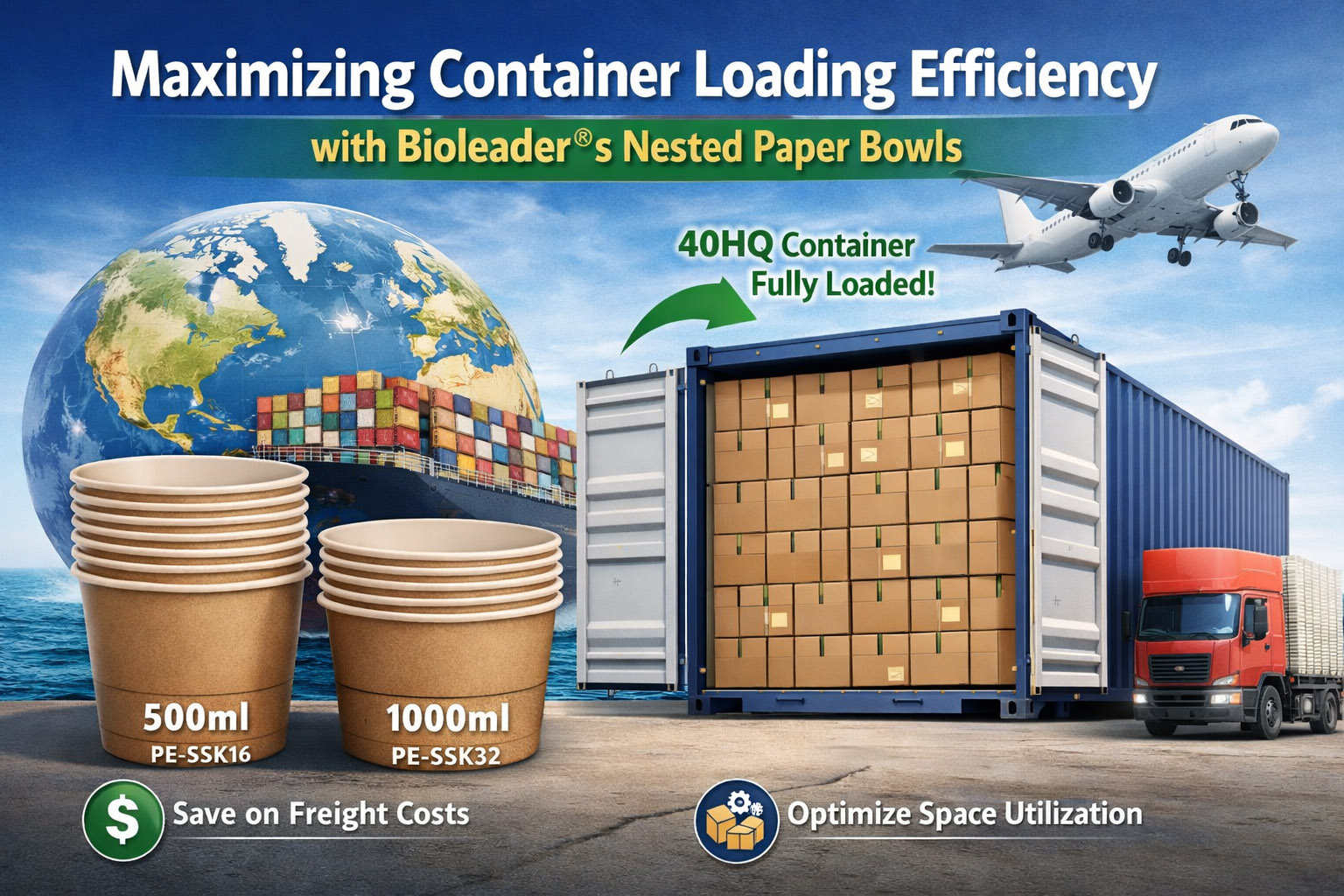
Paper bowls are light but bulky. This means the container may fill by volume before it reaches the maximum weight limit. Carton dimensions, pieces per carton, nesting efficiency and lid packing method can strongly affect shipping cost per piece. Bioleader® normally calculates loading by SKU, carton size, carton quantity and lid packing method before confirming the final order structure.
| Planning factor | Why it matters | Buyer action with Bioleader® |
|---|---|---|
| Pieces per carton | Controls carton count, storage space and handling cost. | Ask Bioleader® for standard and optional packing quantities. |
| Carton dimensions | Determines container loading efficiency and warehouse footprint. | Request length, width, height and gross weight for each SKU. |
| Mixed shapes | Round, square and rectangular bowls may load differently. | Ask Bioleader® to calculate mixed-shape loading before order confirmation. |
| Mixed sizes | Improves product range but may reduce loading efficiency. | Balance high-rotation sizes with limited trial sizes. |
| Lids packed separately | Lids may create additional cartons and different storage needs. | Confirm whether bowls and lids ship together or in separate cartons. |
| FOB China planning | Unit price alone does not show freight and destination cost impact. | Compare FOB price with loading quantity and estimated landed cost. |
For paper food containers and bowl-style packaging, carton efficiency should be reviewed before finalizing the SKU mix. A buyer may discover that a slightly different Bioleader® size, lid pairing or carton packing method improves storage and shipping economics.
Bioleader® FOB China Sourcing Checklist
When buyers source from China, FOB planning should include more than product price. The purchase team should confirm Bioleader® product specification, carton data, loading quantity, delivery schedule, artwork approval, sample approval, inspection method and export documentation before final order release.
For disposable paper bowls with lids, confirm whether lids are included in the same quotation and how they are packed. A low bowl price can become less attractive if matching lids require a separate MOQ, different carton space or delayed shipment.
Bioleader® helps B2B buyers review size mix, custom printing plans, carton quantity and loading logic before bulk production. This gives importers and distributors a clearer view of real order cost and reduces the risk of receiving a product mix that does not match market demand.
Recommended Bioleader® Planning Sequence
- Define menu use, fill volume and hot or cold food application.
- Choose Bioleader® bowl shape: round, square or rectangular.
- Select the smallest practical size range that covers the initial product program.
- Confirm whether PET, PP or paper lids can be shared across sizes.
- Separate plain item MOQ from custom printed MOQ.
- Decide whether the order is a low-MOQ trial order, normal bulk order or mixed-container order.
- Request carton dimensions and pieces per carton for each SKU.
- Ask Bioleader® for a mixed container plan when ordering multiple sizes or shapes.
- Approve samples and artwork before confirming mass production.
This sequence helps buyers avoid ordering too many slow-moving sizes, underestimating carton volume or approving custom printing before practical demand is clear.
Bioleader® Support for Size, MOQ and Loading Decisions
Bioleader® works with buyers planning kraft paper bowls, white paper bowls, soup bowls, salad bowls, bowls with lids, square bowls, rectangular bowls and custom printed paper food packaging. The most efficient order is usually not the largest possible SKU list. It is the order that matches the buyer’s menu, brand plan, warehouse capacity, shipping method and repeat-purchase strategy.
For first orders, Bioleader® can help review size selection, lid matching, custom print planning, low MOQ feasibility, normal MOQ difference and export carton details. For repeat orders, the discussion can shift toward sales data, SKU optimization, mixed container planning and more efficient reorder cycles.
FAQ: Bioleader® Paper Bowl Sizes, MOQ and Container Loading
What shapes of paper bowls does Bioleader® supply?
Bioleader® supplies round paper bowls, square paper bowls and rectangular paper bowls. Round bowls are commonly used for soup, noodles, salads and meal bowls, while square and rectangular bowls are useful for salad, fruit, meal prep, retail display and compact takeaway packing.
What paper bowl sizes does Bioleader® offer?
Bioleader® paper bowl sizes include common soup bowl sizes such as 4oz, 8oz, 12oz, 16oz, 20oz, 26oz and 32oz, as well as salad and to-go bowl formats around 500ml to 1300ml. Square and rectangular bowl ranges are also available depending on the model.
What is the normal MOQ for Bioleader® plain paper bowls?
For standard plain paper bowls without custom printing, Bioleader® usually plans practical bulk orders from about 30,000 pcs per item, depending on the exact size, shape, lid requirement and stock or production condition.
What is the MOQ for Bioleader® custom printed paper bowls?
For custom printed paper bowls, Bioleader® usually recommends about 50,000 pcs per item because artwork review, print setup, color matching, plate or setup cost and production scheduling are involved.
Can Bioleader® accept lower MOQ, such as a few thousand pieces?
Lower MOQ may be possible for some trial orders or stock-based projects, but the unit price is normally higher. Small orders may include extra costs related to print setup, export handling, carton planning, local logistics or less efficient freight.
Can I mix round, square and rectangular bowls in one Bioleader® order?
Yes, mixed orders are often possible, but Bioleader® should calculate carton quantity, loading efficiency, lid matching and SKU balance before confirmation. Too many low-volume SKUs may reduce loading efficiency and increase inventory complexity.
Should lids be included in MOQ planning?
Yes. Lids should always be planned with the bowl, because lid material, size compatibility, packing method and MOQ can affect the total order. Buyers should confirm whether PET, PP or paper lids are packed together or separately and whether they share the same shipment schedule.
How can buyers reduce landed cost for Bioleader® bulk paper bowl orders?
Buyers can reduce landed cost by selecting high-rotation Bioleader® sizes, improving carton efficiency, avoiding unnecessary SKU complexity, confirming lid compatibility and comparing FOB price together with loading quantity. The lowest unit price is not always the lowest delivered cost.
Conclusion: Plan the Bioleader® Order, Not Just the Bowl
Paper bowl sizes, MOQ and container loading should be planned as one purchasing decision. Buyers need the right serving capacity, practical shape selection, realistic custom printing quantity, matching lids and efficient export packing. When these factors are aligned, the order becomes easier to sell, store, ship and reorder.
For B2B buyers, the strongest Bioleader® paper bowl purchasing plan starts with real menu use and ends with a clear bulk order structure. That structure should include approved samples, confirmed artwork, MOQ choice, carton data, loading estimate and a supplier who can support repeatable export production.