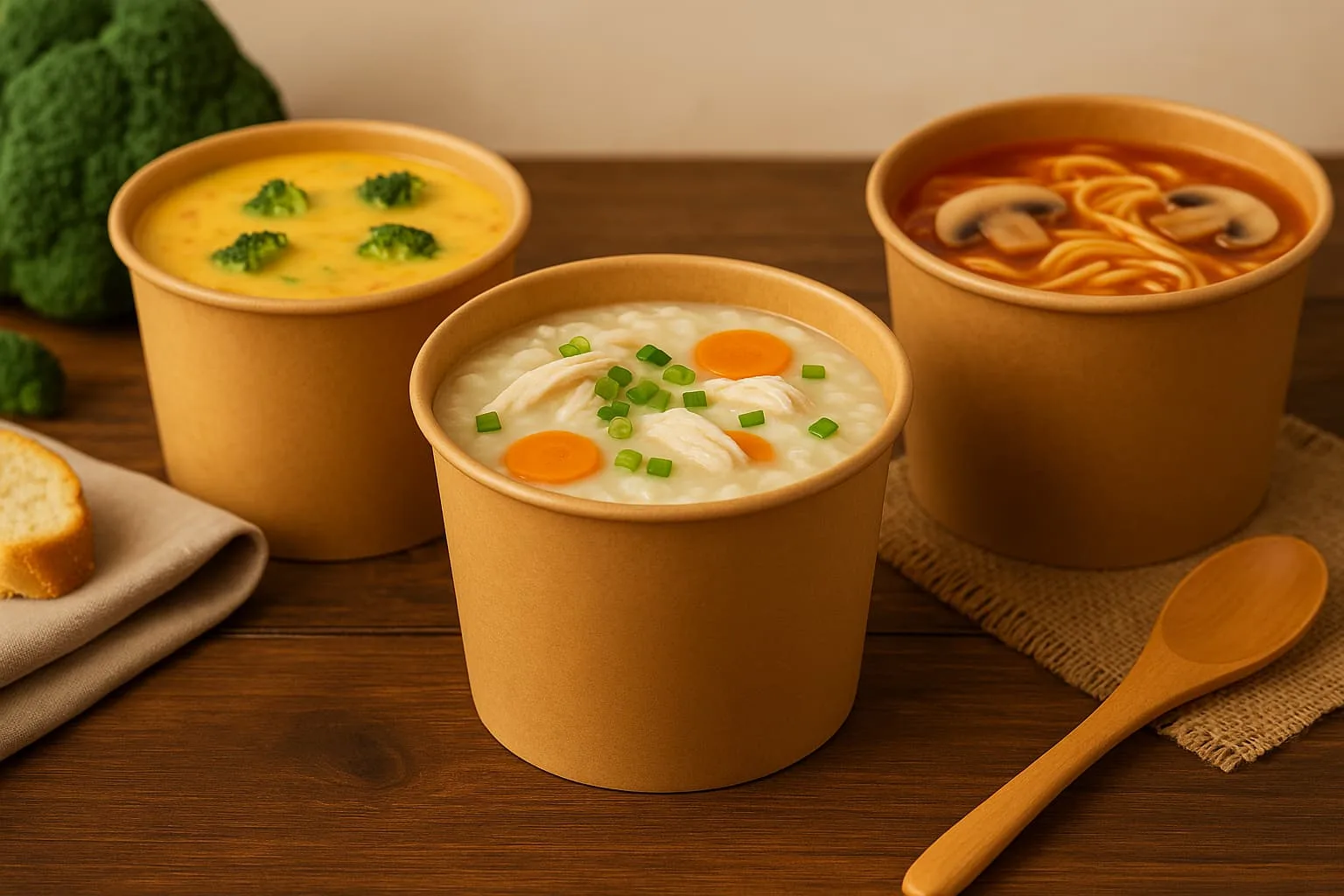










- Best for: restaurants, soup brands, noodle shops, takeaway operators, distributors and importers sourcing hot food bowls.
- Main decision: choose a bowl and lid combination that survives heat, liquid, oil and delivery movement.
- Buyer action: test hot-fill performance, lid stability, coating resistance and carton packing before confirming production.
Paper soup bowls for hot food need more careful evaluation than general takeaway bowls because heat, steam, oil and liquid weight create higher packaging risk. A bowl that works for salad or dry snacks may soften, leak or deform when filled with hot soup, noodles, curry or rice meals.
For B2B buyers, hot food packaging should be reviewed as a complete system: paperboard, coating, bowl size, rim strength, lid material, fill level, holding time and delivery route. Bioleader® helps buyers compare these factors before bulk ordering so the selected bowl is suitable for real foodservice use.

Hot food changes the risk profile
Hot food increases stress on the paperboard and coating. Soup and noodles add liquid weight, steam and movement. Oily sauces can challenge the coating layer. Delivery handling can tilt or compress the bowl. This is why buyers sourcing paper soup bowls should not approve products only from photos or capacity labels.
The first sourcing step is to define the food: clear soup, thick soup, noodles, rice bowl, curry, chili oil or hot side dish. Then define serving temperature, holding time, lid requirement and transport method. Once these points are clear, buyers can compare soup takeaway packaging and related hot food options more accurately.
Heat resistance and bowl stiffness
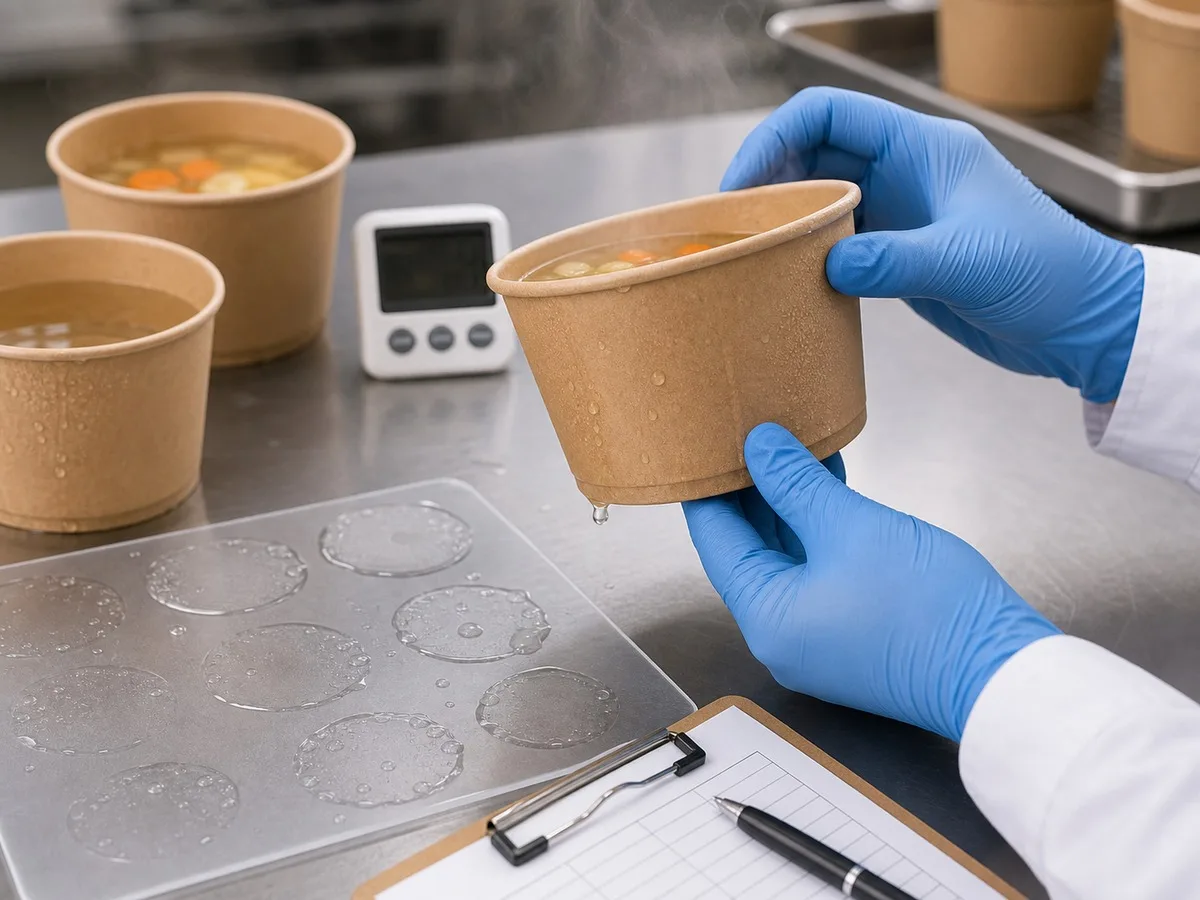
Heat resistance is not only about whether the bowl can hold hot liquid for a few seconds. Buyers should check whether the sidewall stays firm, whether the base remains stable, whether the rim keeps shape and whether the bowl can be handled safely after the intended holding time.
For soup bowls, stiffness affects customer experience and delivery safety. A softened wall can make the bowl feel weak, even if it does not immediately leak. Buyers should compare samples from heavy-duty large paper bowls for soup, disposable hot soup bowls and relevant product pages before choosing one specification.
Hot soup bowl buyer checklist
| Check point | What to test | Why it matters |
|---|---|---|
| Hot-fill stability | Fill at intended serving temperature and observe holding time | Reveals softening, swelling and handling risk |
| Coating resistance | Test hot water, soup, oil or chili oil depending on menu | Helps prevent leakage and coating failure |
| Lid fit | Snap lid after filling and check deformation from steam | Controls delivery spills and customer complaints |
| Stacking | Stack empty and filled bowls as used in operation | Prevents rim compression and unstable packing |
| Carton planning | Review carton strength and loading method | Protects bowls during export and warehouse handling |
Coating choice for soup and oily food
Hot soup bowls need coatings that match both water and oil exposure. A light broth may stress the bowl differently from chili oil, curry or creamy soup. Buyers should run simple hot-water, oil and red-oil observation tests before final approval. Related guidance such as safest material for takeaway soup bowls and heat and leak tested paper soup bowls can support the review.
Coating names such as PE, PP, PLA or aqueous are useful starting points, but buyers should approve the finished bowl. Paperboard structure, coating weight, forming quality and bottom sealing all affect real performance.
Lid choice for hot delivery
Hot food often needs a lid, but lid choice can create new risks. PET lids may offer visibility but can be less suitable for high heat. PP lids may be considered for warmer food. Paper lids can support a fiber-based packaging position but may change visibility and moisture behavior. Buyers should test the exact lid and bowl together.
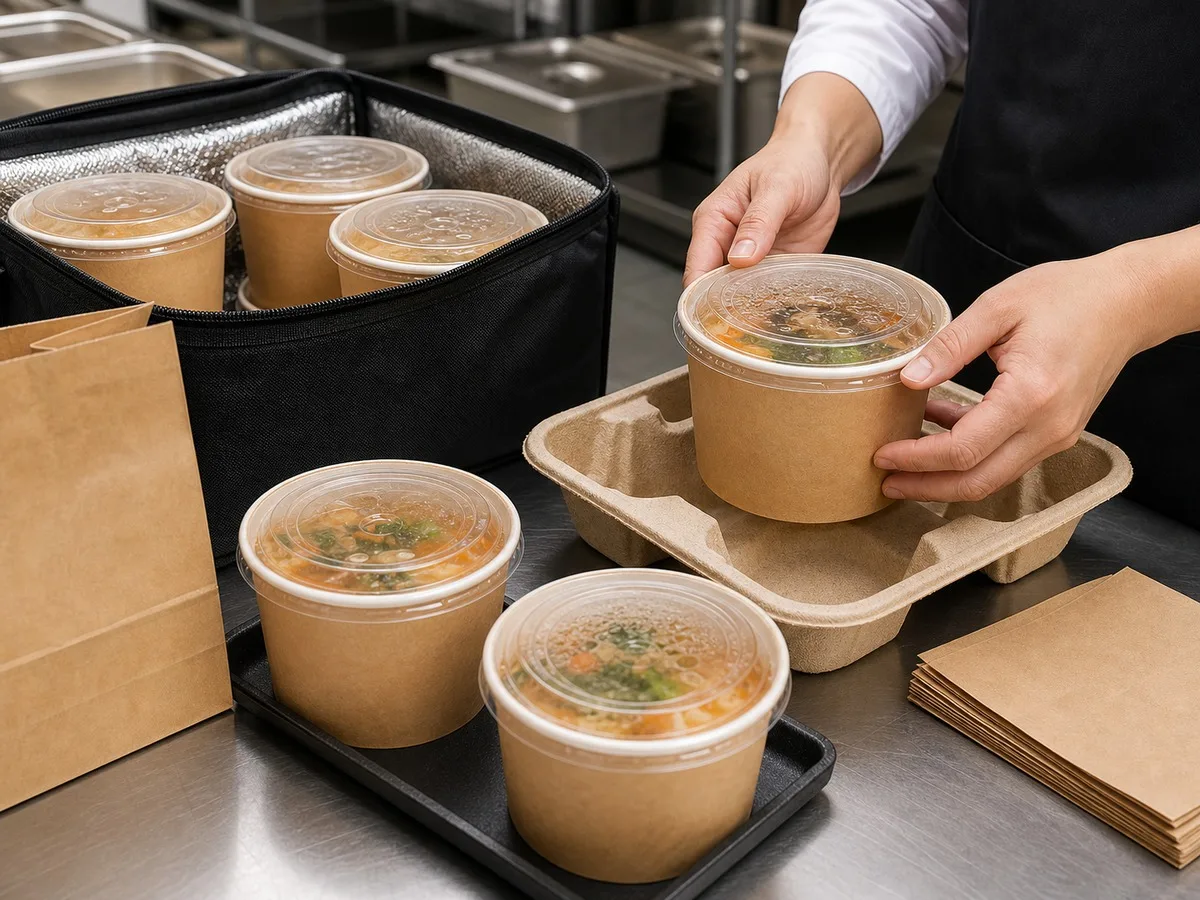
For lidded soup bowls, check snap-fit, steam behavior, removal force and leakage during movement. Products such as disposable soup bowls with lids should be reviewed with the real food temperature and delivery route in mind.
Manufacturer insight: hot food approval needs real samples
From a manufacturer perspective, hot food performance cannot be confirmed by material name alone. Bioleader® recommends testing the exact bowl size, coating, lid and packing method that will be used in production. This helps identify soft rims, weak bottoms, lid deformation and leakage before a container order is placed.
Leakage and softening checks
Leakage may come from coating weakness, bottom sealing, rim deformation or lid mismatch. Softening may appear before leakage, especially when the bowl is held for a longer time. Buyers should record test time, food temperature and failure point so suppliers can adjust the specification if needed.
Sample test table for hot food paper bowls
| Test | Method | Approval signal |
|---|---|---|
| Hot-water hold | Fill the bowl and observe wall, base and rim for the target time | No leakage, no severe softening and safe handling |
| Oily food test | Use real sauce or red oil to check barrier behavior | No oil mark, no seepage and no coating separation |
| Lid delivery test | Fit lid, tilt gently and simulate delivery movement | Lid stays stable and food does not spill |
| Stacking test | Stack bowls as used in restaurant or carton packing | No rim crushing or unstable stack |
How Bioleader® supports hot food sourcing
Bioleader® supports hot food buyers by reviewing soup bowl size, coating, lid material, sample testing, custom printing and export packing. Buyers can also compare large paper soup bowls and microwave paper bowls safely when the application requires larger portions or reheating guidance.
Conclusion
Paper soup bowls for hot food should be approved through heat, coating, lid and delivery tests. Buyers who test real food conditions before bulk ordering are more likely to avoid leakage, softening, deformation and customer complaints.
If your team is sourcing hot soup bowls, Bioleader® can help compare product structures, prepare samples and support a practical path from testing to export order planning.
FAQ
What should buyers check first for paper soup bowls?
Buyers should first check food temperature, holding time, oil level, fill weight, lid requirement and delivery method. These factors decide the required bowl strength, coating and lid material.
Can paper soup bowls hold hot soup safely?
Paper soup bowls can hold hot soup when the paperboard, coating and lid are matched to the application. Buyers should test hot-fill stability, leakage, softening and handling before approving bulk orders.
Which coating is best for hot soup bowls?
The best coating depends on soup temperature, oil level and holding time. Buyers should compare finished samples using hot water, soup and oil tests instead of relying only on coating names.
Do hot soup bowls need lids?
Many takeaway soup bowls need lids for delivery, but the lid must match the bowl rim and heat exposure. Buyers should test snap-fit, steam behavior and leakage during movement.
Why do paper soup bowls soften?
Softening can come from weak paperboard, insufficient coating, high temperature, long holding time or oily food. Testing helps identify whether the issue is material, coating, structure or application mismatch.
How can Bioleader® help with hot food bowls?
Bioleader® can help buyers compare soup bowl sizes, coatings, lids, sample tests, custom printing and export packing so the final package fits hot food service and delivery conditions.